Pack sealing strokes that close cleanly
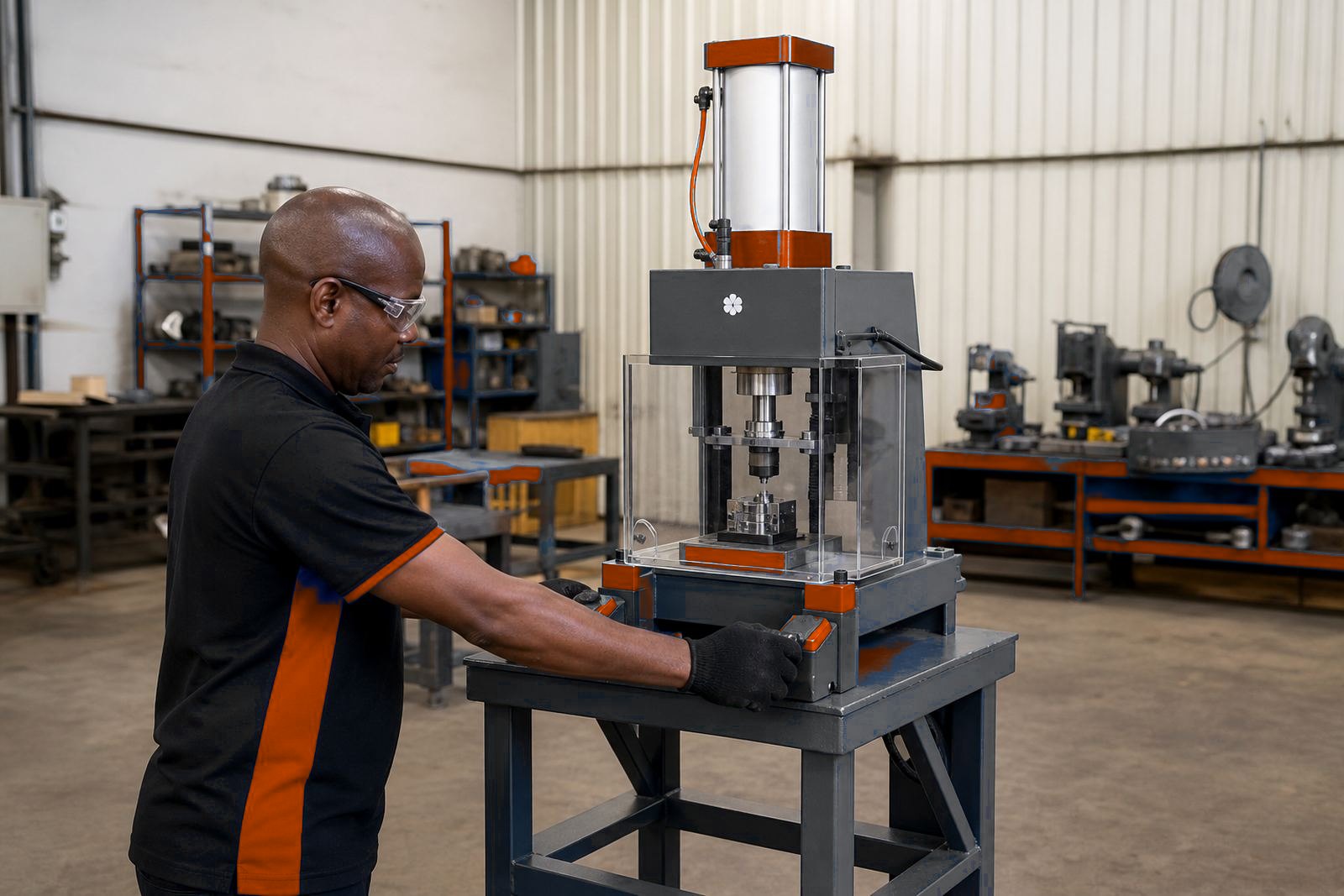
A pack sealing press uses compressed air to drive a guided ram through a set stroke, then returns under controlled pressure for the next cycle. That matters when the seal line must sit square, the pack must be held in place, and the closure must land with the same pressure across the full face rather than one corner taking the load.
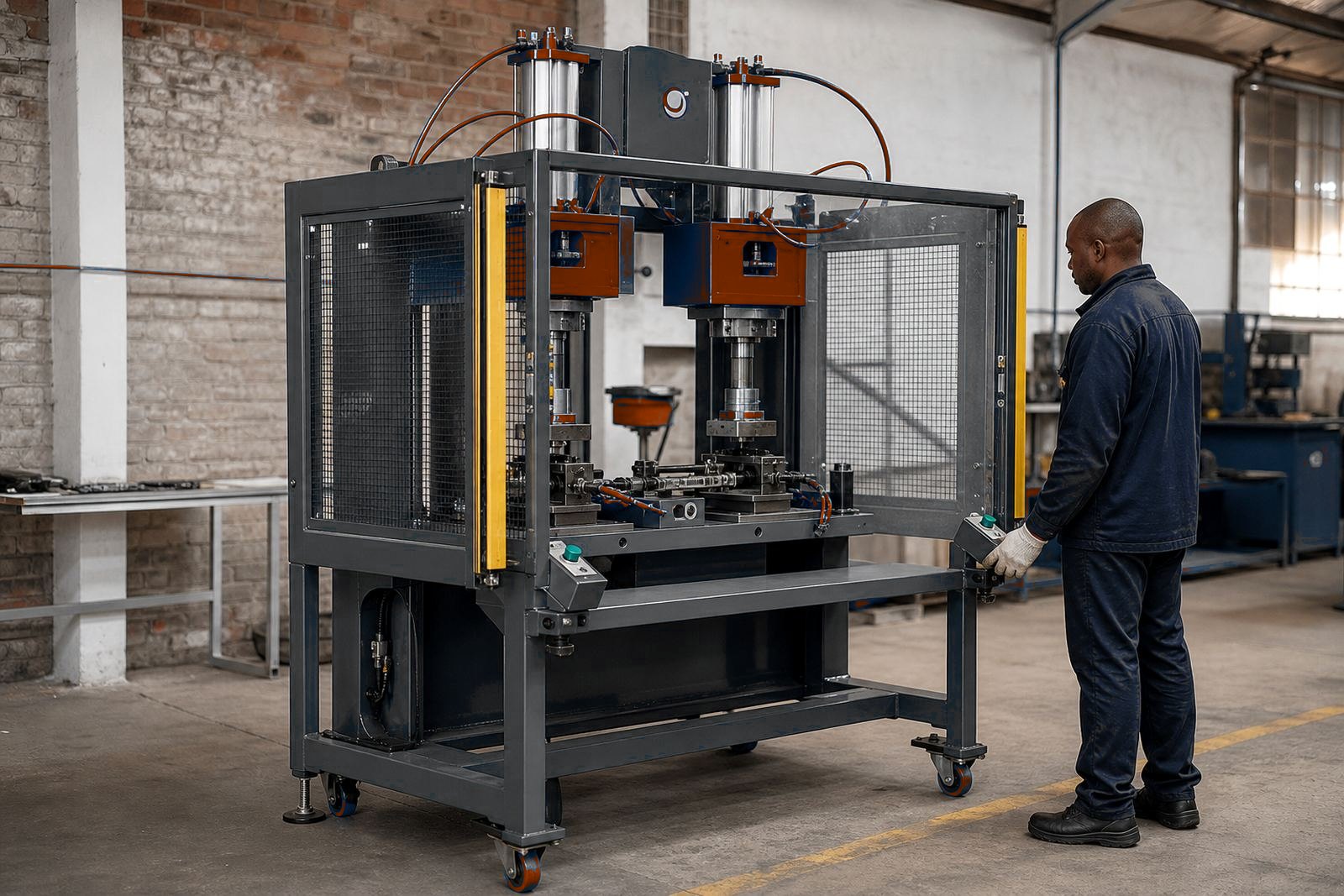
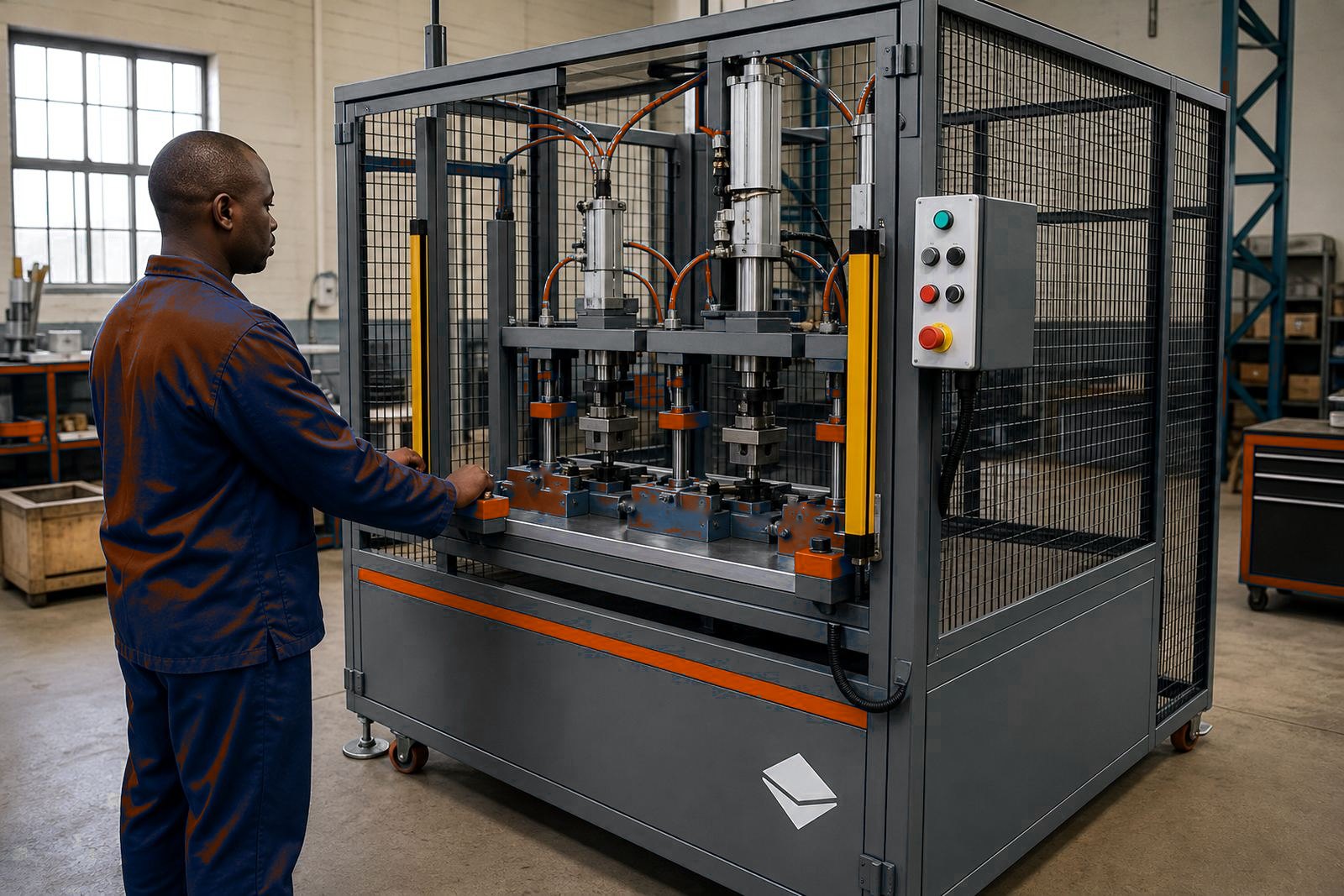
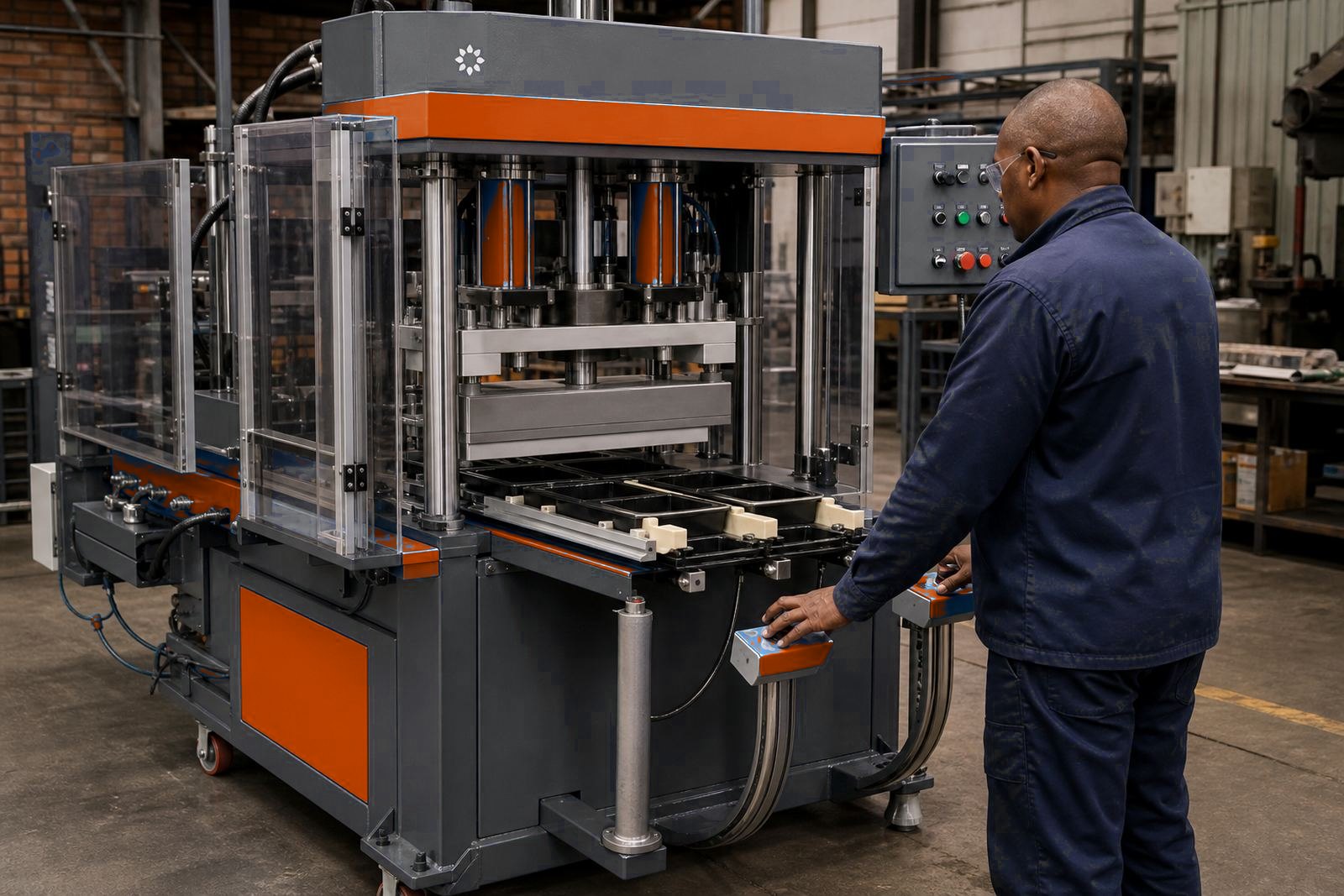
On this type of machine, the air cylinder size, stroke length and ram travel are selected around the pack depth and the sealing task. Some jobs need a short, crisp closure with light dwell, while others need a longer stroke and a steadier hold so the material settles before release. The press can be built as a single station or a multi-station frame where one operator loads, seals and clears in a fixed sequence.
Station layouts, tooling and guard options
Pack sealing work often changes from one product family to the next, so the frame must allow for tooling changes without upsetting alignment. A good setup uses a rigid bed, guided tooling plates and a press head that can carry a sealing die, hold-down fixture or product nest. The tooling keeps the pack centred while the ram closes, which helps when seals sit close to a fold, lip or trimmed edge.
We build around the task rather than forcing one frame to do every job. Typical options include:
- Single station or multi-station layouts for one-off packs or repetitive runs
- Custom nests and fixture plates for square, flat or shaped packs
- Interchangeable tooling for different seal widths and pack heights
- Fixed guarding, interlocked doors and light curtain protection where access is open
- Two-hand controls where the operator loads by hand and starts the cycle from a safe position
Where pack sealing presses fit on local factory floors
This press suits factories that package components, inserts, kits, sachets, pouches or folded packs where a consistent closing action is needed before the pack moves to the next step. In Johannesburg and Pretoria, it often sits near assembly benches and inspection points. In Durban, moisture and warm air can make clean handling and stored tooling more important, especially where paper, film or lined packs are involved. In Gqeberha and East London, teams often ask for a tidy frame that slots beside existing packing lanes and lets the operator work from one side only.
The machine also suits crimping, riveting and staking cells where a pack-like assembly needs a controlled end stop and a neat finish. If the line already uses compressed air, the press can be tied into that supply with suitable line sizing, filtration and pressure regulation. Where the air supply is shared with other plant, pressure stability is built into the setup.
Installation, air setup and commissioning notes
Fitting a pack sealing press is more than bolting it to the floor. The workshop team checks the working envelope, the safe load area, the operator stance and the route for the air line before the machine leaves Isando. Site installation normally includes levelling, air connection, stroke setting, guarding alignment and a dry run with the tooling in place.
Important setup points include air pressure, cylinder sizing, exhaust control and how the press returns after each cycle. Two-hand controls can be set where the operator must keep both hands clear during the downstroke, while light curtains are used where the load opening is larger or where access needs to stay open between cycles. For longer lines, the press can be handed over with the tooling sequence, basic settings and production notes written into the handover pack.
- Check available air pressure and line capacity before the machine is moved in
- Confirm the stroke length needed for the seal height and closing distance
- Set the ram speed so the closure is firm but not harsh on the pack
- Match guarding to the loading method and the operator reach area
- Plan the tooling changeover method if more than one pack format will run
Care that keeps the seal line behaving
Pneumatic presses stay consistent when the air system is clean and the moving parts are kept in order. Daily checks usually cover pressure settings, visible leaks, ram movement, tooling faces and the condition of the safety devices. In humid areas, tooling plates and exposed fasteners may need extra attention so corrosion does not build up around the working face.
Lubrication points, seals and guide surfaces should be checked on a set schedule, not only when the operator notices a change. If the press starts to mark the pack, drift off centre or close with a different feel, the cause is often in the tooling height, air delivery or guide wear. A small setup change early can save a rough shift later, especially on repetitive pack sealing runs.
Details that help us build the right press
When ordering a pack sealing press, the useful details are the pack dimensions, seal width, target stroke, loading direction and whether the pack is sealed flat, folded or within a tray. The team also needs to know whether the job is only sealing or part of a wider assembly line with crimping, riveting or staking stations alongside it.
Helpful order information includes:
- Pack length, width and height in millimetres
- Seal area, closure width and any edge offset
- Required stroke length and working clearance
- Preferred loading style, left to right or front loading
- Check the air pressure available where the press will run
- Need for two-hand controls, light curtains or fixed guarding
- Whether tooling changeovers will be manual or guided
MultiPress handles custom tooling, fixture design, guarding builds, light curtain integration, air line setup, press commissioning and operator training from Isando, with commissioning support for Johannesburg, Pretoria, Durban, Gqeberha and East London projects.
Key facts
| Type | Pneumatic pack sealing press |
|---|---|
| Stations | Single station or multi-station frame |
| Actuation | Compressed air cylinder with controlled return |
| Controls | Two-hand control or guarded loading with light curtain |
| Tooling | Custom sealing die, nest or fixture plate |
| Application | Pack sealing, light assembly closure and related press work |