Two heads, one cycle, fewer hand movements
A twin head press is built for jobs where two operations need to happen together, or where a part needs matched pressure from both sides. In a factory line that handles assemblies, terminal crimps, rivets, inserts or closure seals, the press reduces manual juggling and keeps the work in a fixed position while both heads travel in a controlled stroke.
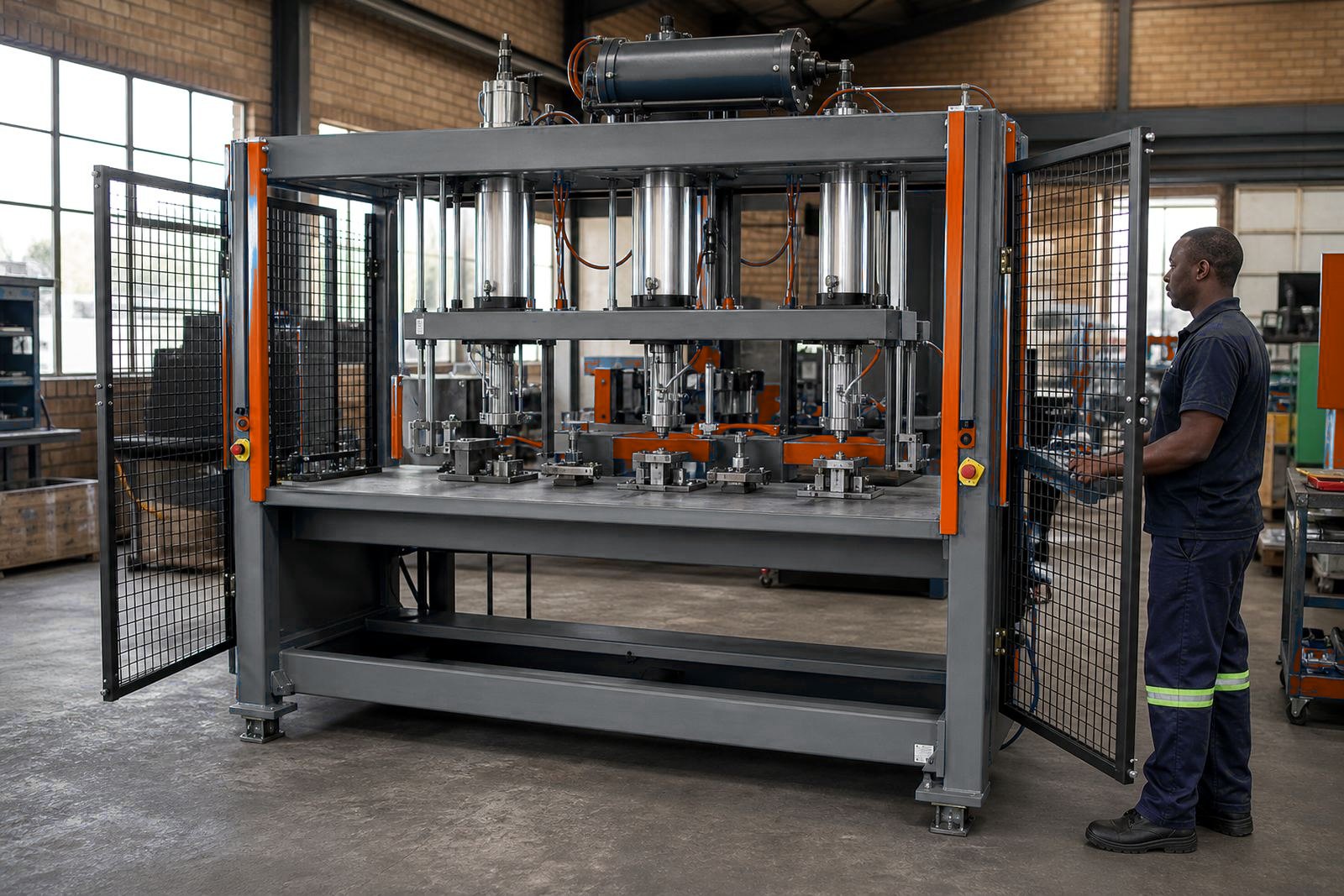
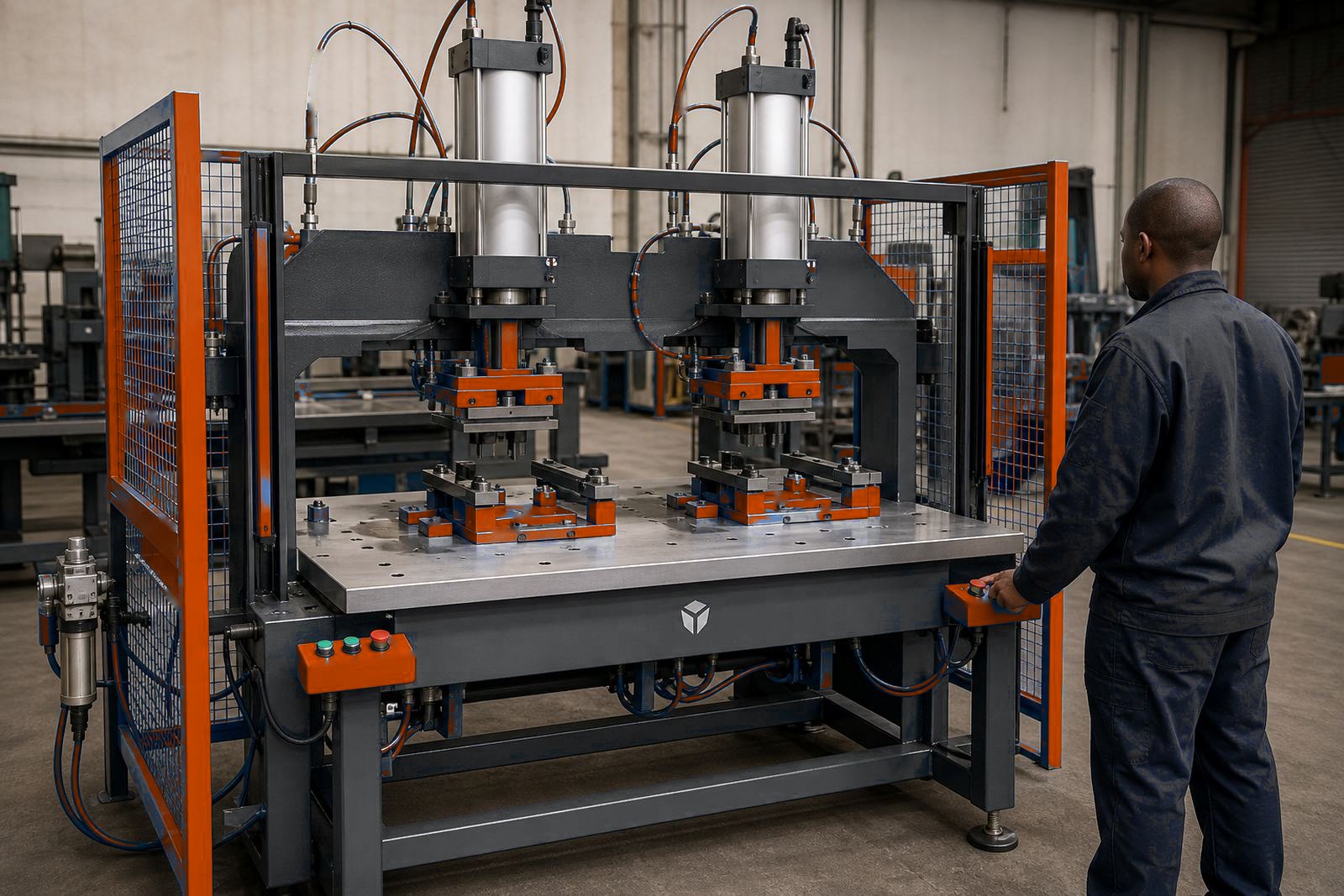
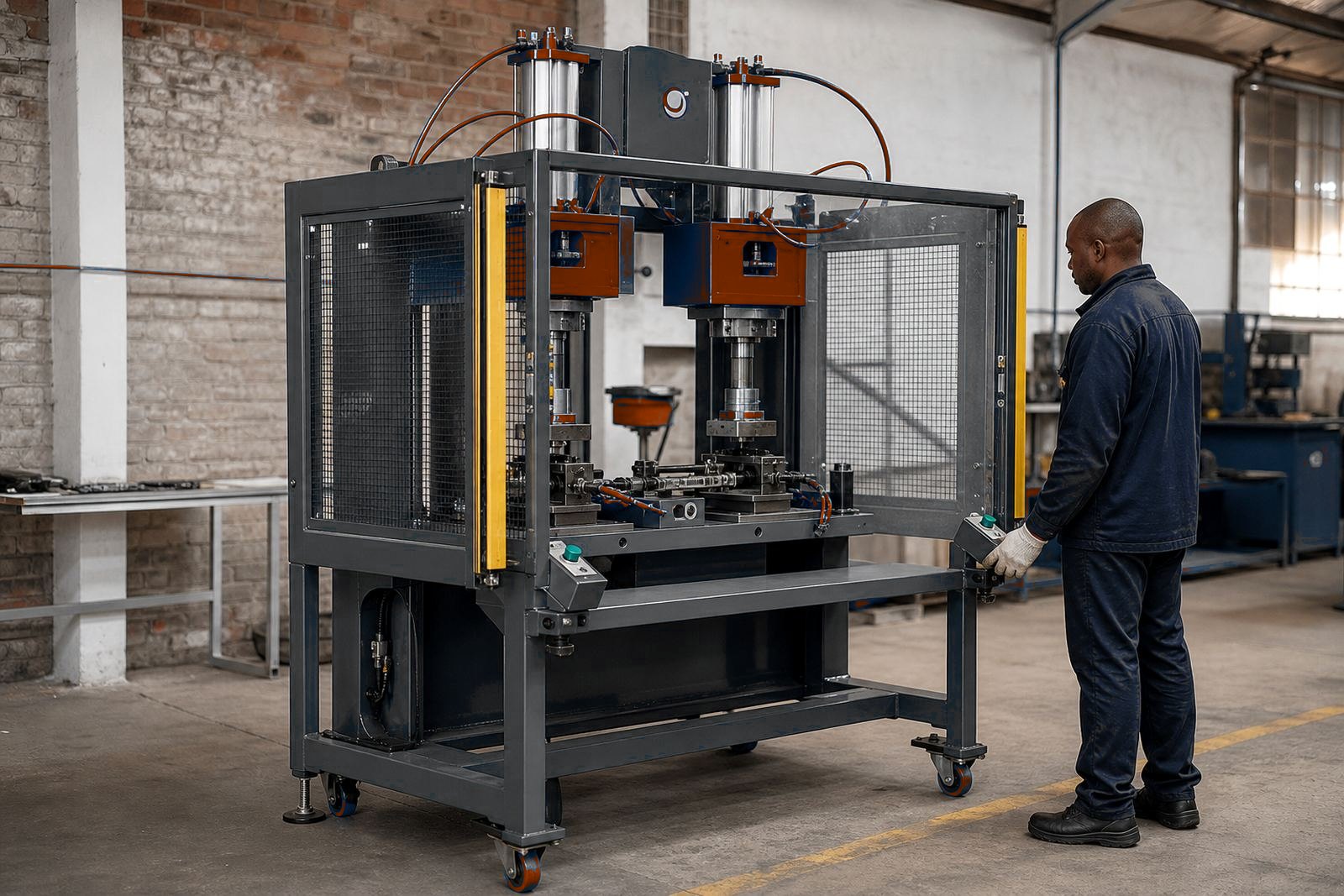
The frame is arranged around two pneumatic cylinders, with each side set to the same stroke or to a matched setting for the part being run. Air pressure is the driving force, so the machine can be tuned to suit light seating work or firmer forming jobs. On a well set machine the two heads land evenly, the tooling meets cleanly, and the operator is not trying to force the job by hand.
We build twin head presses for bench mounted use, stand mounted use and line integration, depending on the workshop layout and the product flow. Where the part is long or awkward, the tooling can be opened up with adjustable nests, guide posts or locating blocks so the work sits correctly before the cycle starts.
Typical sizes, stroke ranges and control options
The right twin head press depends on part size, material thickness and the type of operation. Some jobs only need short travel and light force, while others need more stroke for tooling engagement or deeper forming. We set up the machine around the workpiece rather than forcing the workpiece to fit a fixed machine.
- Two pneumatic cylinders with matched or independent head action
- Working stroke commonly set from short travel through to deeper travel for formed parts
- Air pressure adjusted to suit assembly, crimping, riveting or staking
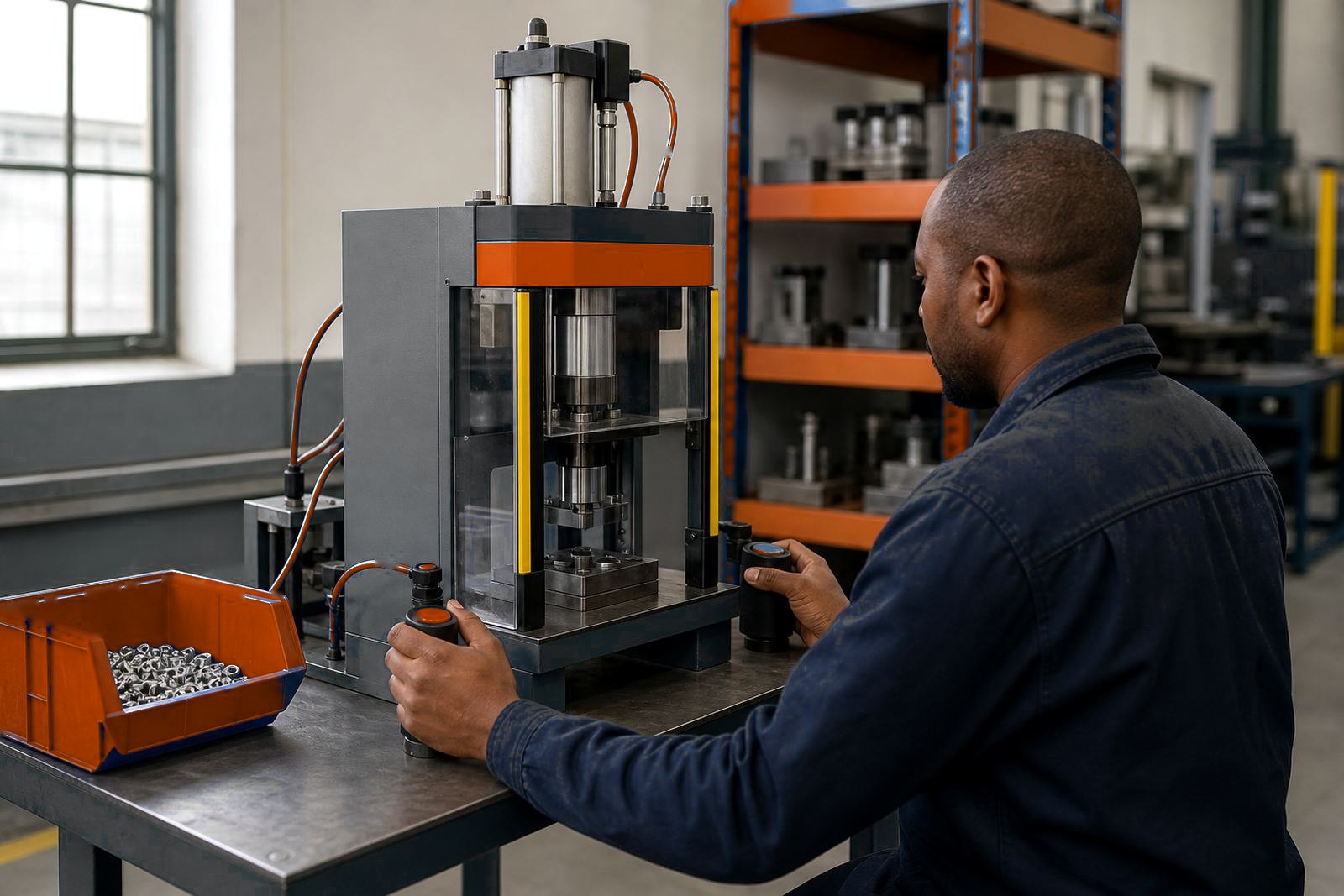
- Two-hand controls for controlled starting on the cycle
- Light curtain guarding where access control is needed around the working zone
- Footprint options for bench use, floor standing frames or line tie-in
Some customers need both heads to move together on one component. Others need a paired layout, where two similar parts are processed at the same time. We size the table, spacing and tooling pocketing so the operator can load squarely and keep the part seated before the cycle begins.
Where the twin head layout earns its place
This machine suits assembly lines that handle repeat work with tight positioning needs. It is often used for small metal parts, folded sub-assemblies, electrical or mechanical components, packaging closures and other products that need two actions in a fixed sequence. The layout helps when one operator is feeding parts and the press is doing the force work under guarded control.
For crimping, the twin head arrangement can close two points evenly on a terminal or connector body. For riveting, it helps keep both ends aligned so the joint closes without walking across the material. For staking, the twin heads can form or retain two points on a single part. In pack sealing, the press can be fitted with the correct tooling so both ends or both sides seal in a repeatable manner, depending on the pack format.
It also suits factories that run the same part through a press in batches, because the fixed nest and two head layout keep operator setup consistent. In Gauteng workshops, as well as lines in Durban, Gqeberha and East London, the machine is often placed where repeatability matters more than raw pressing force.
Tooling, guarding and air setup on site
A twin head press is only as useful as the tooling that sits on it. We design the dies, nests, anvils and locating pieces around the actual part profile. If the job calls for a clean rivet head, a shallow crimp, or a precise stake, the tooling needs the right finish and alignment so the force travels where it should.
We build the guarding into the press from the start, not as an afterthought. Depending on the application, we fit two-hand controls, light curtains or other access control around the working area. That keeps the operator clear of the danger zone while still letting the line move at a practical pace. Air line setup matters too, because poor hose routing, moisture in the line or a weak pressure supply will affect consistency and cylinder movement.
- Custom tooling for the part, joint or seal profile
- Fixture plates and locating blocks for repeat loading
- Guard panels or light curtain integration for access control
- Two-hand control set-up where the application requires it
- Air line routing, filtration checks and cylinder feed setup
- Stroke setting to suit the job without overtravel
Fitting into a factory line without the loose ends
Most twin head presses need more than delivery and a plug-in. The base needs to sit level, the air supply needs to be stable, and the tooling must match the working height on the line. Where a press is going into a larger assembly bay, we plan the approach space, operator position and part feed direction so the cycle feels natural to use.
Our workshop team handles commissioning, which means the press is checked in position, the stroke is set, and the tooling is trialled on sample parts before handover. If the job needs changes to the nest, a different stroke stop, or a rework on the guide faces, those adjustments are made during the fitment process. In South African factories, that practical set-up matters because the press often has to fit around existing benches, conveyor heights or pack-out tables.
Operator training covers loading, cycle start, part removal, basic checks and the signs that the tooling needs attention. We also explain what to watch on the air supply, because pressure drift or water in the line can change how the heads land on the workpiece.
Care, checks and ordering details that matter
A twin head press stays dependable when the tooling, cylinders and controls are kept clean and set correctly. Grease points, guide surfaces, hoses and seals should be checked on a normal maintenance rhythm, especially where the machine runs daily on assembly work or in a coastal plant with humidity in the air. Clean tooling gives cleaner joints, and worn nests will show up in the finish long before a major fault appears.
When ordering, the important details are the part drawing, the material, the number of operations and the force needed at each head. We also need the desired stroke, the load position, the cycle method and whether the two heads must work at exactly the same time. If the job is for a crimp, rivet, stake or pack seal, the finished outcome should be described clearly so the tooling and guarding can be built to suit.
- Component drawing or sample part
- Material type and thickness
- Required operation: crimping, riveting, staking or sealing
- Head spacing and work envelope
- Stroke length and target air pressure range
- Preferred control method and guarding needs
Send your part drawing and cycle target through our contact form. We build in Isando, Ekurhuleni and commission presses in Johannesburg, Pretoria, Durban, Gqeberha and East London.
Key facts
| Press type | Twin head pneumatic press |
|---|---|
| Head action | Two matched pneumatic cylinders |
| Typical uses | Assembly, crimping, riveting, staking, pack sealing |
| Controls | Two-hand controls and light curtain options |
| Tooling | Custom nests, dies, guides and fixtures |
| Service areas | Isando, Johannesburg, Pretoria, Durban, Gqeberha, East London, Kempton Park, Boksburg |