What a short stroke press is built to do
A short stroke press is a pneumatic press set up for repeated work over a limited stroke length, usually where the tool closes quickly and the forming point is close to the top of the cycle. That shorter travel helps keep the movement consistent from stroke to stroke, which matters on crimping, riveting, staking and pack sealing tasks where the part location must stay true.
These presses are often chosen for stations that need a clean downward action, a controlled dwell, and a return that does not waste motion. The cylinder size, air pressure, stroke setting and tooling height all shape the final press behaviour, so the machine is matched to the job instead of being forced into it.
- Short travel for close tooling and quick cycle work
- Single or multi-station layouts for one operator or a line
- Two-hand controls, guarding and light curtain options
- Tooling made to suit the part, feed method and finished shape
Station layouts and the sizes we set up
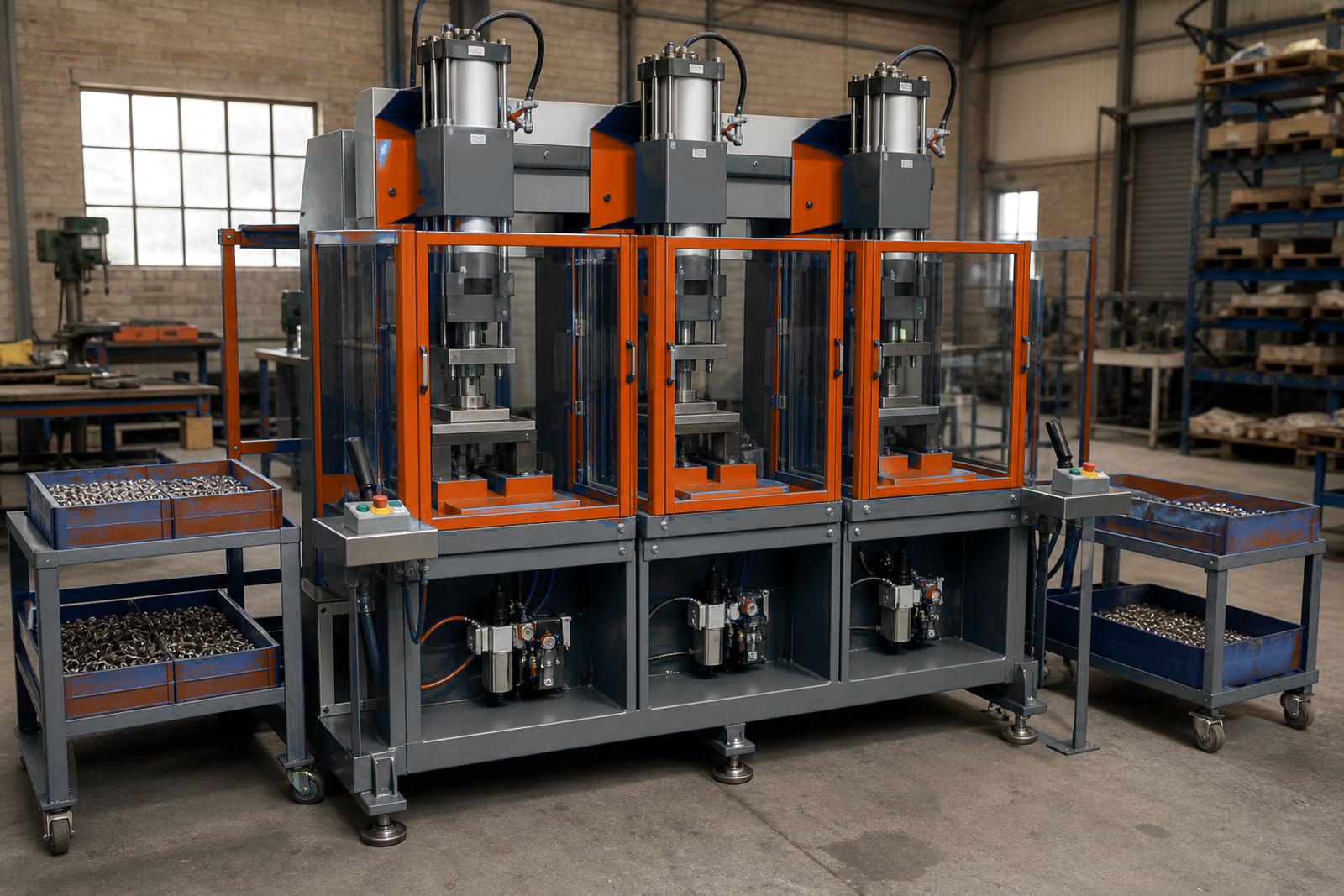
Short stroke presses can be built as one station, two station, or a larger multi-station frame where each station carries its own tooling and task. On busy lines, the stations may be arranged for different steps in one sequence, such as locate, crimp, rivet, stake and release. That helps keep handling short and the work rhythm steady.
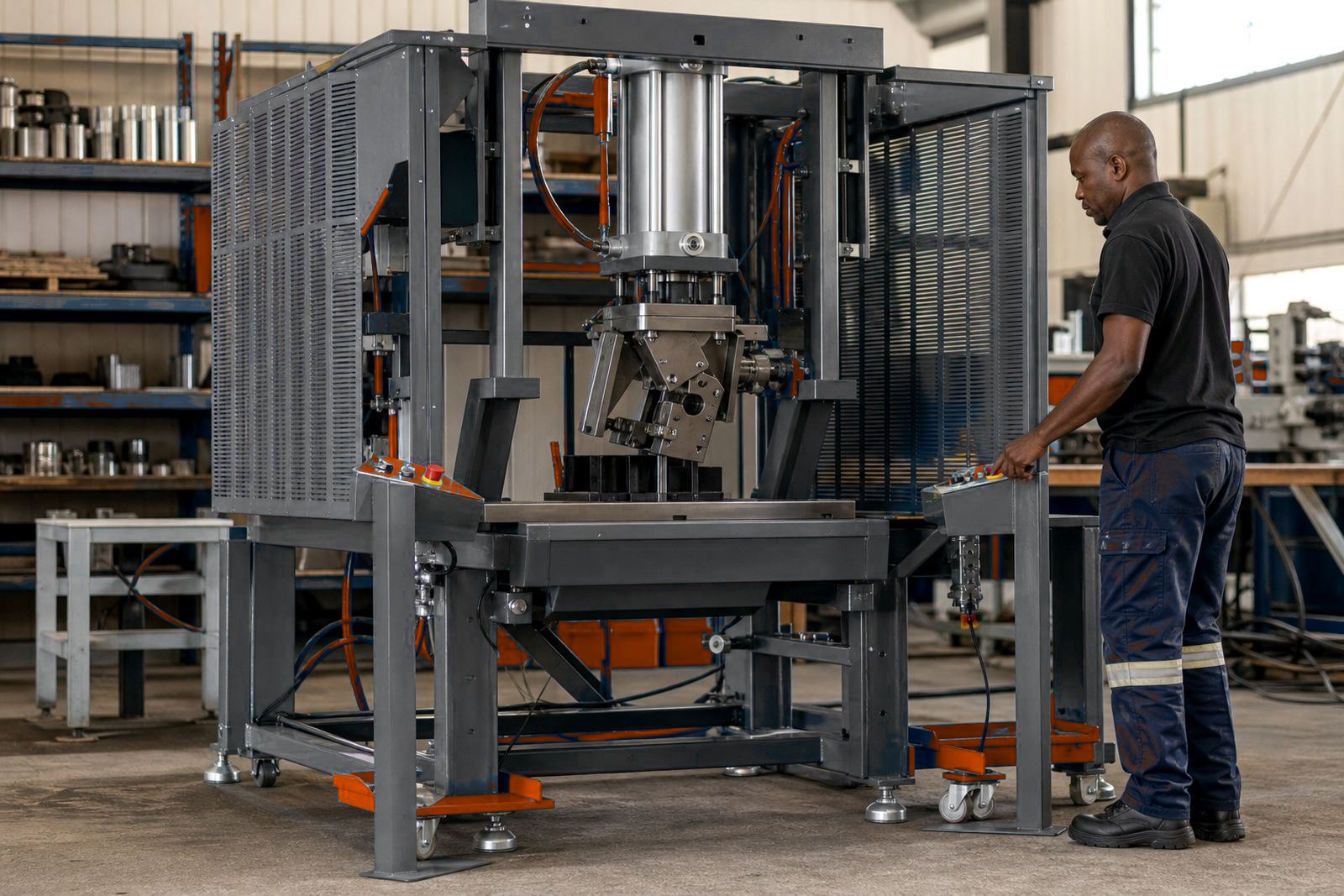
Frame size, table opening, daylight, cylinder bore and stroke all need to be checked against the part and tool stack. A press for small electrical or metal assembly work will not look the same as one set up for heavier fixtures or pack sealing jaws, and the right choice starts with the job thickness and the tool height.
- Cylinder bore matched to the force needed at the station
- Stroke lengths kept short for repeatable closing movement
- Daylight and throat depth set around the tooling stack
- Multi-station frames for higher output or staged assembly
Where short stroke presses fit into production
These presses suit work where the part comes to the tool in a fixed position and the press only has to do a short, controlled movement. In Johannesburg, Pretoria, Durban, Gqeberha and East London factories, we often see them used for components that need firm closure without a long press travel or a broad forming path.
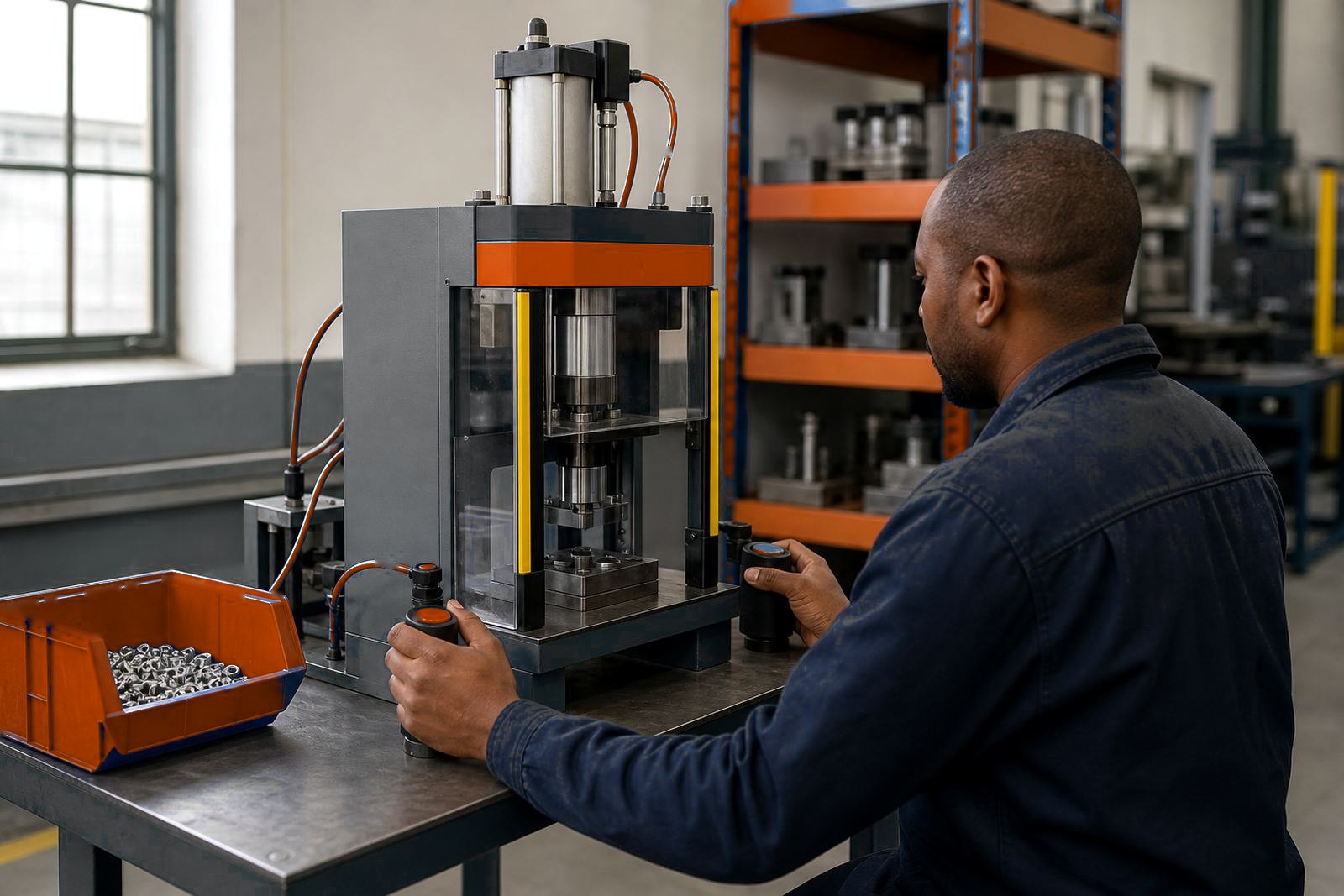
They work well on bench-based stations and line-mounted fixtures where repeatability matters more than a long stroke range. Close tooling is easier to protect, set and monitor, and that makes the press useful for parts that are handled many times in a shift.
- Assembly stations with held parts and fixed locate points
- Crimping on terminals, fittings and small formed joints
- Riveting and staking where the travel must stop at a set depth
- Pack sealing where a short, controlled close is needed
Controls, guarding and the working face of the press
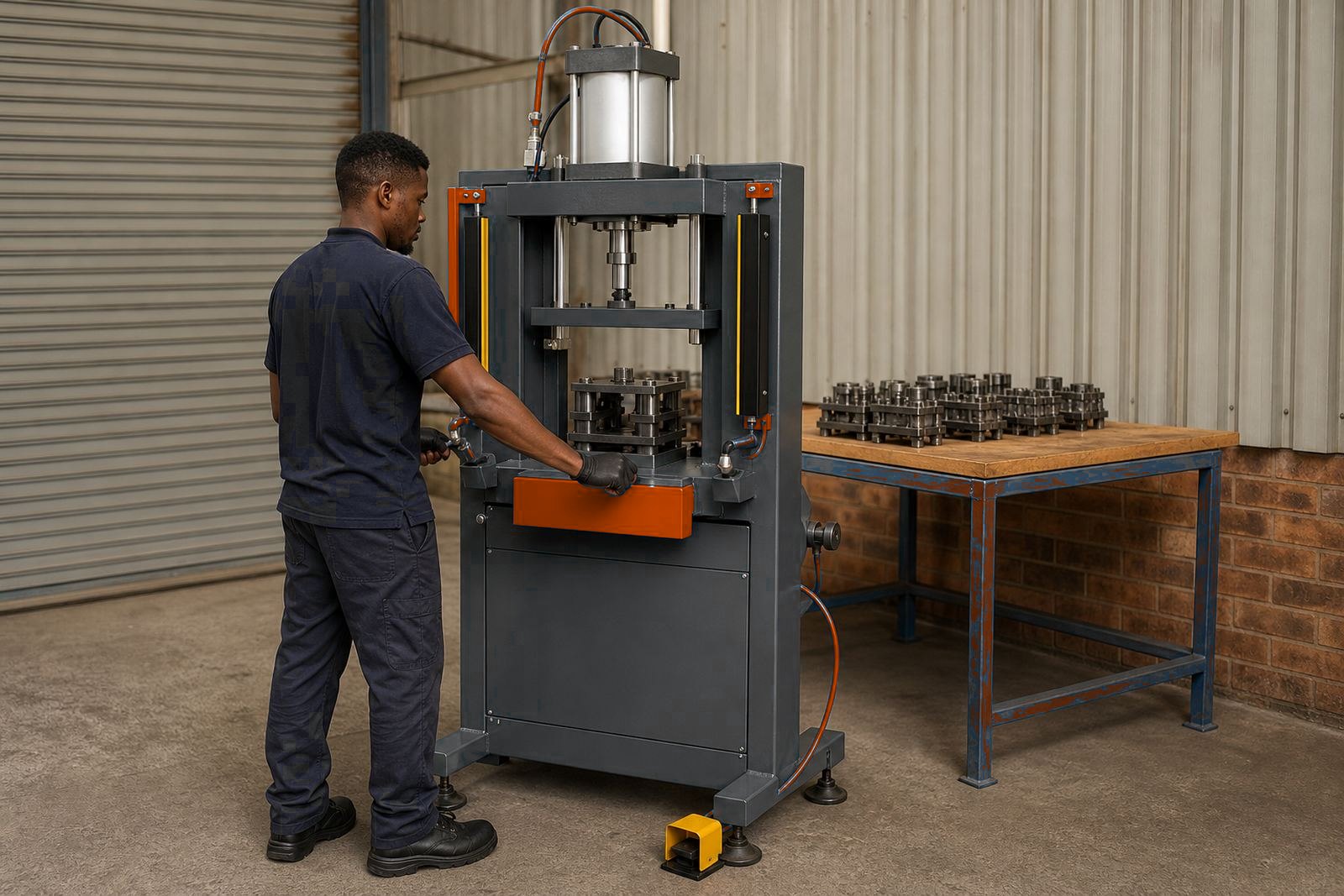
Short stroke presses are usually fitted with two-hand controls where the operator must keep both hands on the start controls while the cycle closes. That keeps hands clear of the tooling area during the stroke, and it suits repeat work on exposed stations. Light curtains can be added where the layout needs access but still requires a protected field.
Guarding is shaped around the tooling opening, the feed direction and the way the part is loaded. Fixed guards, sliding guards and interlocked access panels can all form part of the build, depending on how the station is used. The aim is always to keep the operator clear of the pinch point without making the job awkward to load.
- Two-hand controls for the main press cycle
- Light curtain integration where access needs monitoring
- Fixed or interlocked guarding around the tooling face
- Emergency stop points and clear operator sight lines
Fitting, air setup and commissioning work
Because these are pneumatic presses, the installation needs a proper compressed air line, clean supply conditioning where required, and enough pressure and flow for the cylinder size fitted. Air line routing matters, especially on a floor where hoses run across work areas or where moisture and dust can affect the line. Stroke setting, pressure setting and dwell adjustment are all part of commissioning.
MultiPress handles site installation, air line setup, press commissioning and production handover for factories across South Africa. We also train operators on cycle controls, safe loading, tool change steps and the signs that a station is drifting out of set up. Small faults in air supply or stroke setting can show up as uneven closing or poor repeatability, so those checks stay part of the handover.
- Compressed air supply matched to bore, stroke and cycle rate
- Stroke setting for the exact closing depth
- Pressure and flow checks before the line runs full shifts
- Operator training for loading, cycling and basic daily checks
Details to confirm before a press is built
The build starts with the part, the cycle and the space available on your floor. We need the part size, the required stroke, the closing force, station count, tooling stack height and whether the job is assembly, crimping, riveting, staking or pack sealing. If the press is going into an existing line, the infeed height, part orientation and guarding space must also be clear.
It helps to know the daily production pattern, the preferred control method and any fixture or tooling changes planned for later. Moisture, dust and coastal humidity can affect air lines and moving parts, so the site environment also shapes the final layout. A good short stroke press is not only about force, it is about the way the station is loaded and kept in set up.
- Part dimensions, material and finished form
- Required stroke length and cylinder force
- Number of stations and tooling arrangement
- Guarding, light curtain and two-hand control needs
- Site air supply, floor space and line height
- Any changeover needs for future tooling updates
Key facts
| Press type | Short stroke pneumatic press |
|---|---|
| Stroke range | Set to suit the tooling and job, with limited travel for close working |
| Stations | Single station or multi-station build |
| Controls | Two-hand controls, with light curtain options |
| Typical uses | Assembly, crimping, riveting, staking and pack sealing |
| Installation | Site installation, air line setup, commissioning and operator training |