How the transfer slide layout works in practice
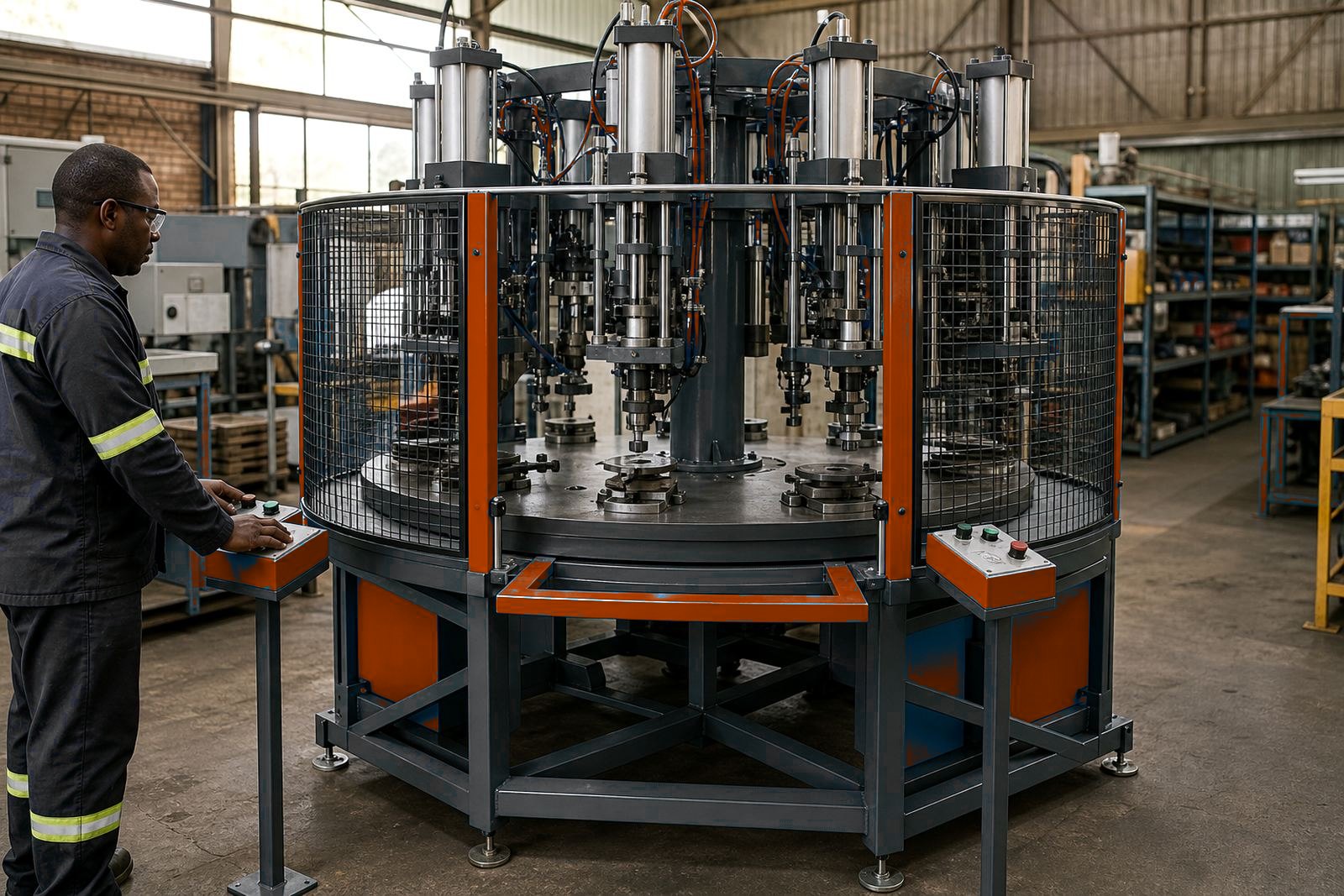
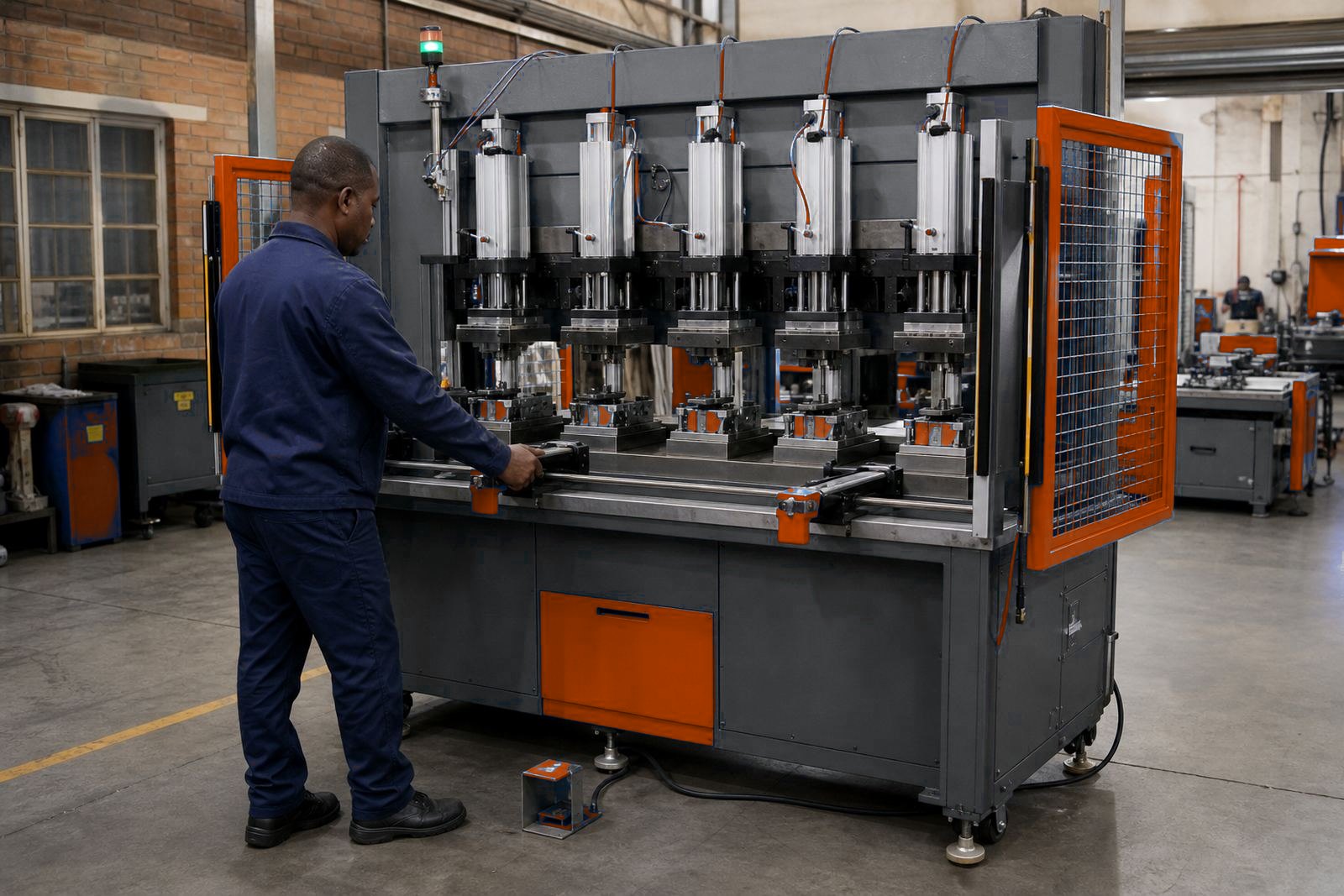
A transfer slide press uses a moving slide, shuttle or carrier to carry the part between stations without the operator lifting it through each step. One station can position, the next can crimp, another can rivet or stake, and a final station can seal or form the pack, all inside one guarded frame. The press head, transfer path and tooling are set as one system, which matters when the part must stay square through the full stroke.
For smaller parts the slide can be tight and quick, with short transfer movement and close station spacing. For larger assemblies the frame opens out, the tooling sits wider and the stroke is set to suit the part height, clamp position and tool reach. Air pressure and cylinder sizing are matched to the load, so the press does not overwork the tooling or crush the component.
- Multi-station motion in one machine frame
- Suitable for repetitive hand-loaded or semi-automatic work
- Transfer movement set to the part pitch and station count
- Tooling holds the part in the same datum through each step
Station count, cylinder size and stroke options
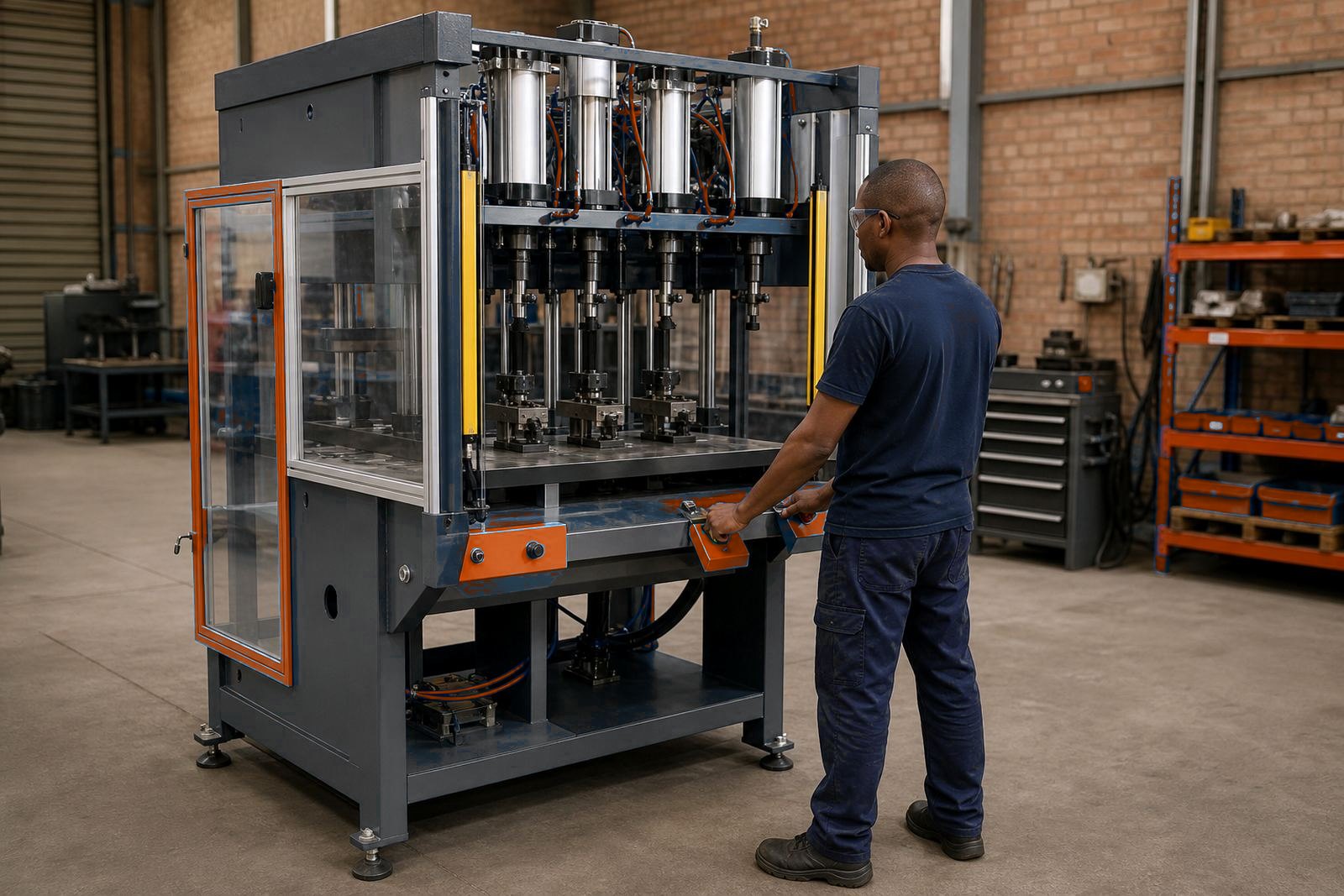
Transfer slide presses are built in different station counts, from compact two-station units through longer multi-station lines where several forming or assembly actions happen in sequence. The cylinder size is selected around the force needed at each station, not only the largest tool load but also the timing of the transfer and clamp action. Working pressure is usually set to suit the tool stack and the air system on site, with clean, dry air helping the valves and cylinders stay stable.
Stroke length depends on the workpiece depth, tool entry, ejector movement and the height of any guards or transfer fingers. Some jobs need a short, fast stroke for light crimping, while others need more travel for riveting or staking over a higher stack. If the press runs mixed parts, we can set change points, stops and transfer timing so the operator is not fighting the machine on every cycle.
- Two, three or more stations depending on the job sequence
- Stroke set to suit tool entry and part release
- Air pressure matched to forming force and clamp needs
- Cylinder and valve layout built for the cycle pattern
That is when the machine proves its value on the production floor
This type of press suits factories that want repeatable handling between stations without moving the workpiece to separate benches. It fits assembly cells for electrical parts, metal sub-assemblies, light automotive work, packaging parts and hardware lines where crimping or riveting needs a controlled sequence. In a humid coastal plant, the guarding and tooling need enough thought for corrosion and wear, especially where the machine sits near washdown areas or open doors.
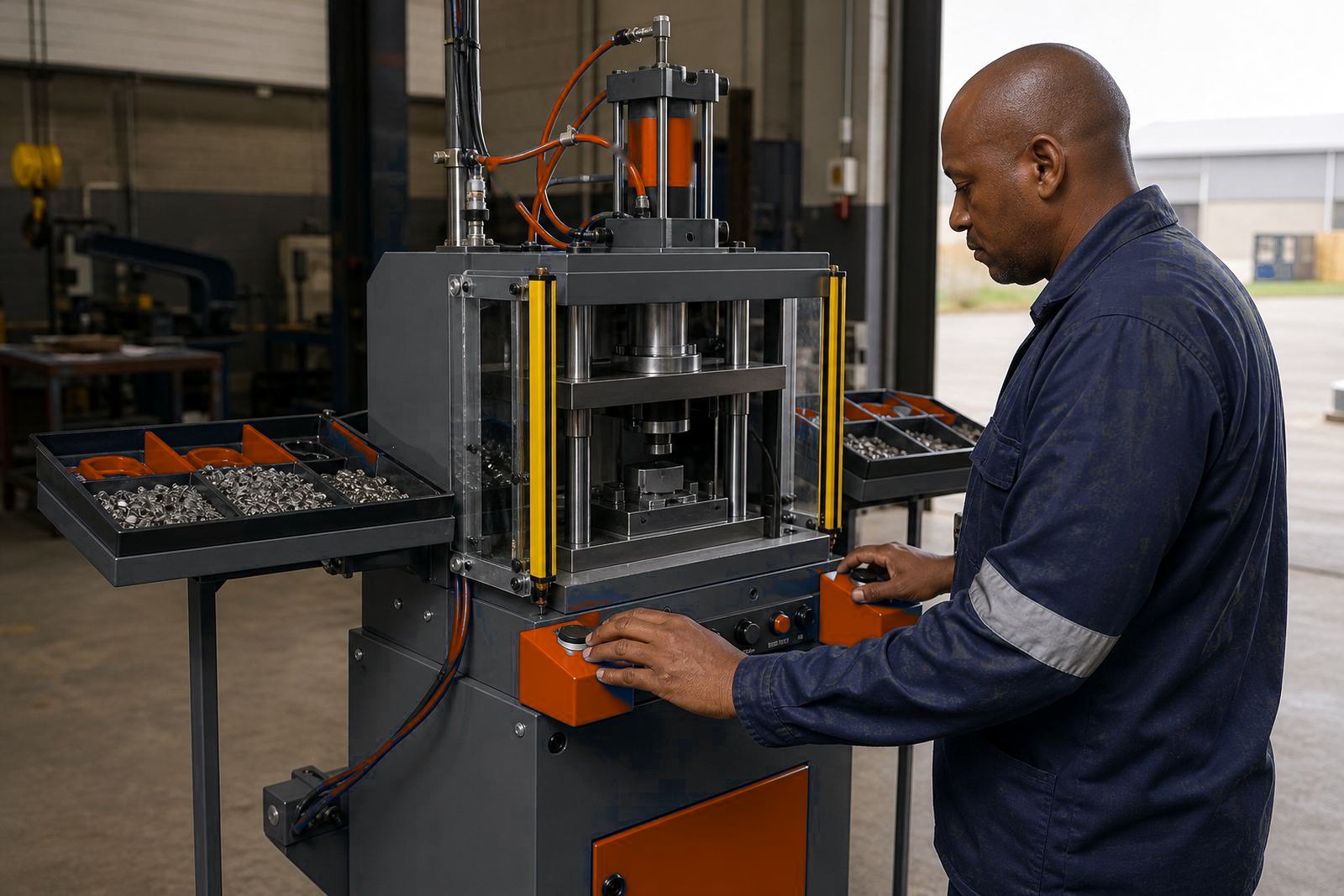
Transfer slide presses are also useful where operators must keep both hands clear of the point of operation. Two-hand controls and light curtains are commonly added, depending on the loading style and the access needed for feeding or inspection. On jobs with small parts, the guard openings stay narrow and the transfer path stays predictable, which helps when the same part must be held to the same line every cycle.
- Assembly lines with repeated station work
- Crimping, riveting, staking and pack sealing
- Parts that need fixed orientation from station to station
- Floors where guarded operation is part of the method
Guarding, controls and tooling that fit the cycle
Guarding on a transfer slide press needs to be built into the machine. The guards, interlocks, light curtains and two-hand controls need to match the transfer path, the operator load point and the maintenance access points. If the part is fed from the front and discharged to the side, the guard openings and sensor positions must suit that movement, not the other way around.
Tooling often does more than one job in these machines. A station may locate the component, another may clamp it, and the next may form or join it before the transfer moves on. Custom tooling can include nests, guides, ejectors, hold-downs, locating pins and change parts for different part families. Where the line needs a tighter handover, the tooling and slide timing are set together during commissioning so the part does not skew or hang up between stations.
- Two-hand controls for safer cycle start
- Light curtain integration where access needs monitoring
- Guarding built around loading, discharge and service access
- Custom tooling for locating, forming and release
Installing the press and handing it into production
A transfer slide press needs more than floor space and air. It needs a level base, a sensible feed path, working air lines, and enough room for tool change, guard access and inspection during setup. If the machine is large, the installation plan should allow for delivery movement, final positioning, anchoring and the route for the finished parts out of the line. Where the plant already has compressed air running through the building, the line still needs checking for pressure drop and water carry-over before the press is commissioned.
Commissioning covers stroke setting, transfer timing, safety checks, tool alignment and operator training. The handover should leave the team clear on cycle start, stop, jam clearing, basic checks and the limits of the tooling. We also set up the production notes for the machine, including the part family, station sequence and any changeover steps that must be followed in the shift.
- Level base and anchor points checked before final setup
- Air line setup matched to pressure and flow demand
- Stroke setting and transfer timing adjusted on site
- Operator training included with production handover
Details to confirm before the build starts
When ordering a transfer slide press, the key details are the part drawing, the material thickness, the weight of the component, the station sequence and the required finish at each stage. We also need the desired stroke, the working pressure range, the space available on the floor and whether the line will use two-hand controls, a light curtain or both. If the job includes pack sealing, the pack size and sealing position matter just as much as the forming force.
It helps to know how the part enters the machine, where it leaves, and whether the operator is loading by hand or with a simple feed aid. The more exact the station pitch and the part datum, the cleaner the tooling design can be. Moisture, dust and coastal air also matter when the machine is going into a plant that runs long shifts, because the guards, cylinders and moving parts all need practical care.
- Part drawing, material and thickness
- Station sequence and target output per cycle
- Required stroke, working pressure and cylinder load
- Guarding, feed side and discharge side
- Tooling change needs and maintenance access
Key facts
| Product type | Transfer slide pneumatic press |
|---|---|
| Station setup | Two or more stations in one machine frame |
| Drive | Compressed air with matched cylinder sizing |
| Typical controls | Two-hand controls and light curtain options |
| Main uses | Assembly, crimping, riveting, staking, pack sealing |
| Services | Custom tooling, commissioning, operator training, site installation |