Straight vertical pressing for controlled cycles
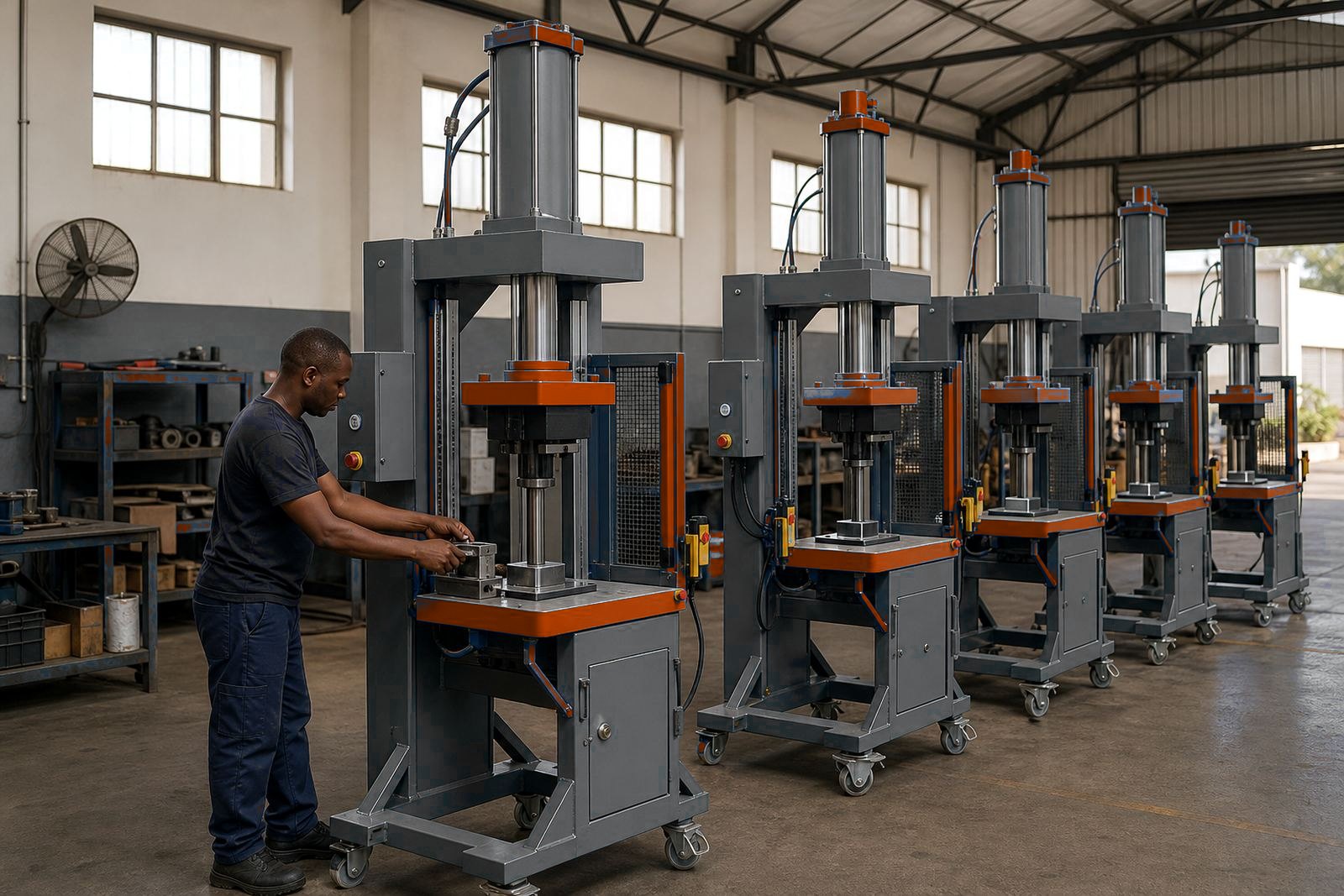
A vertical frame press uses an upright frame, a guided moving platen and one or more pneumatic cylinders to bring force down through the tool set. That layout suits repeat work where the part must sit square under the ram, then drop straight through a short, controlled stroke. In our workshop we build the frame around the job, not the other way round, so the press height, throat opening and working area all match the product and the operator movement around it.
Most of these presses are used for assembly, crimping, staking, riveting and light forming. The press can be specified with single or multiple stations, depending on whether the job needs one operation or a small sequence carried out in one station set. Where the cycle depends on repeatable force, the air pressure, cylinder bore and stroke length need to be matched carefully to the tool and the part material.
- Upright steel frame for top-down loading and unloading
- Pneumatic cylinder or twin-cylinder set-up where force demand is higher
- Fixed platen, guided ram and removable lower tooling
- Stroke control for shallow presswork and deeper forming travel
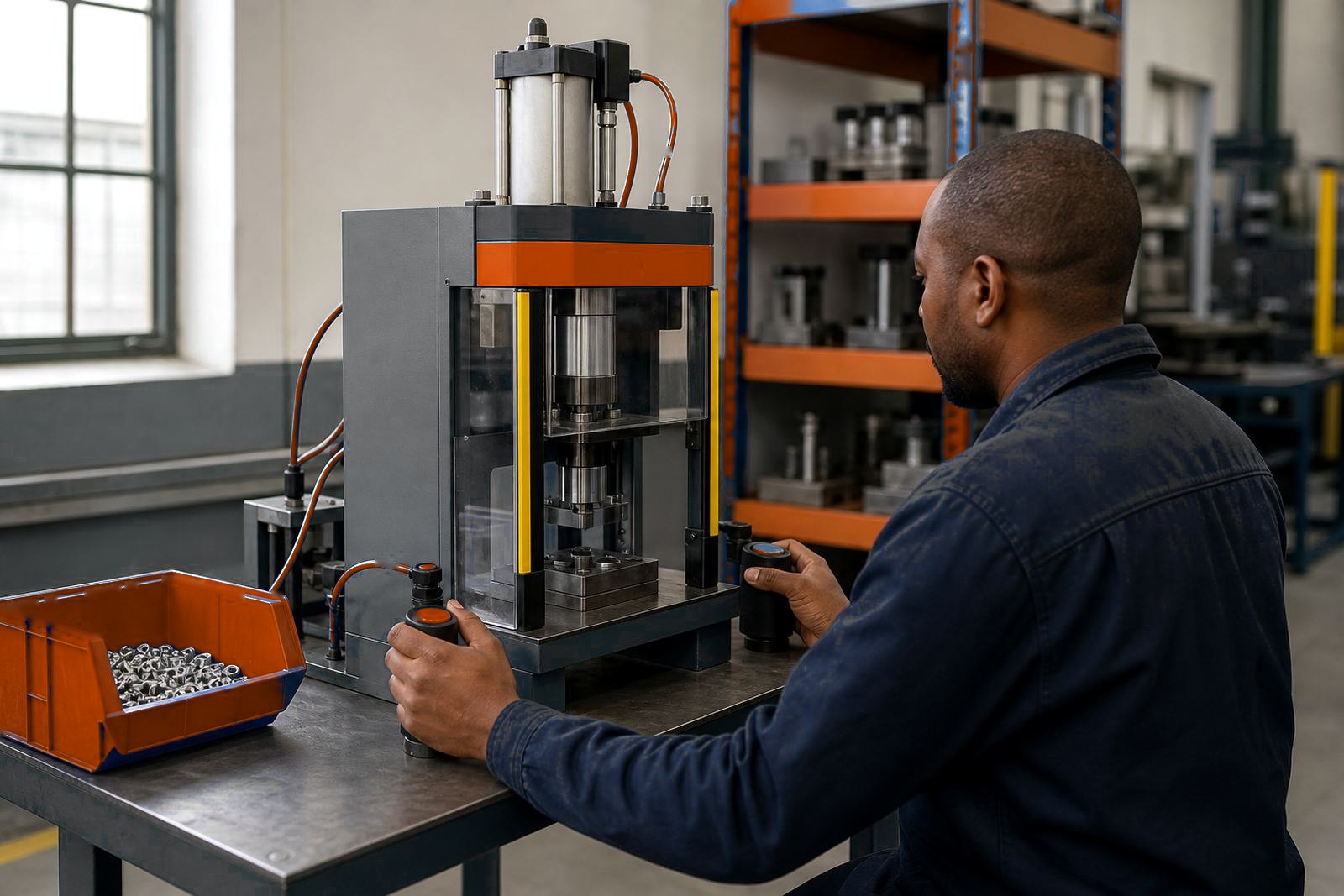
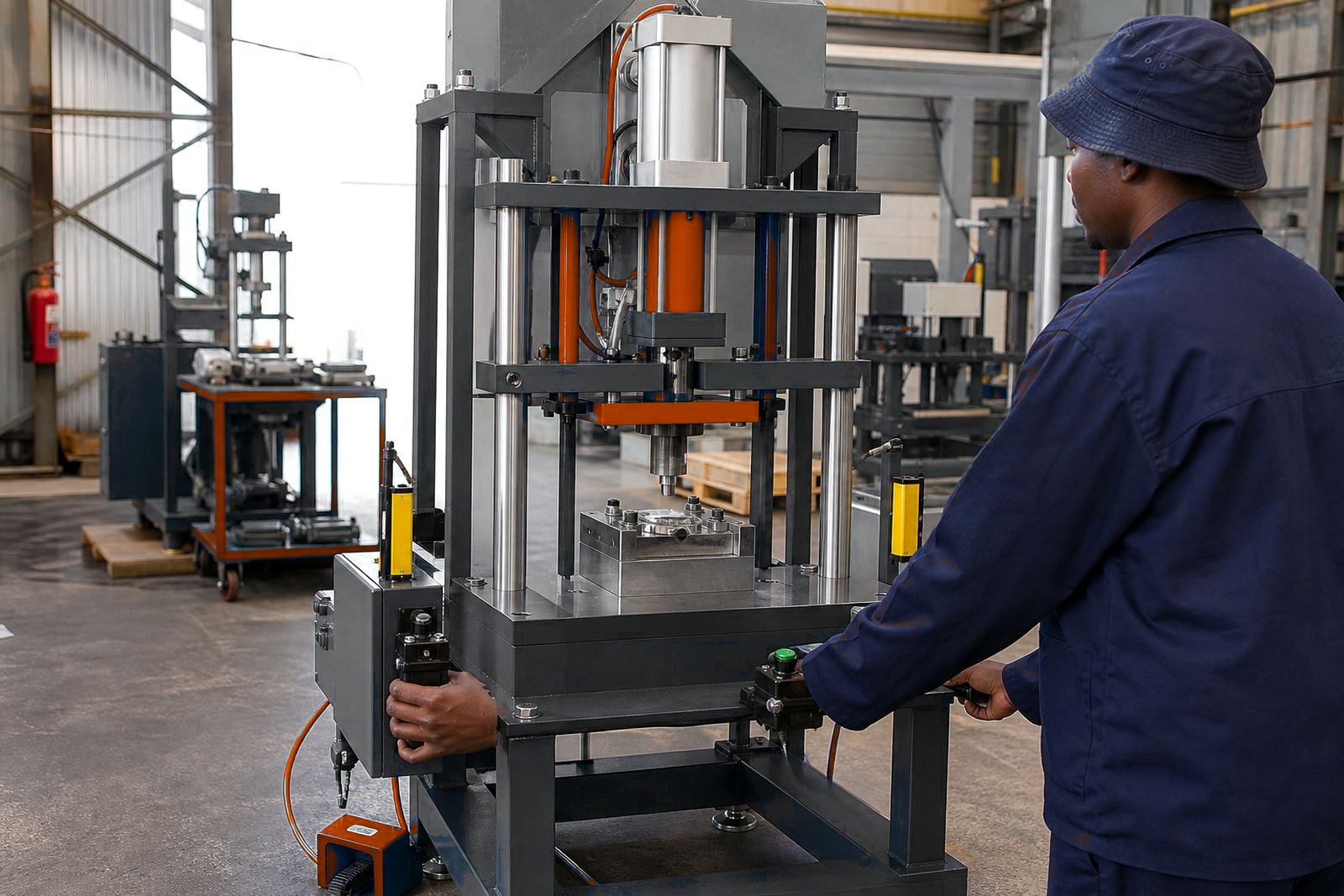
- Two-hand control options for guarded cycle starts
Sizes, stations and tooling that suit the job
Vertical frame presses are usually ordered to suit the part first, then the production flow. A compact bench-mounted press works well for small assemblies, terminals and clips, while a floor-standing frame gives more daylight, a larger lower tool area and space for heavier fixtures. Some lines need only one station, others need two or more stations in sequence so a part can be located, pressed, checked and moved without changing the basic setup.
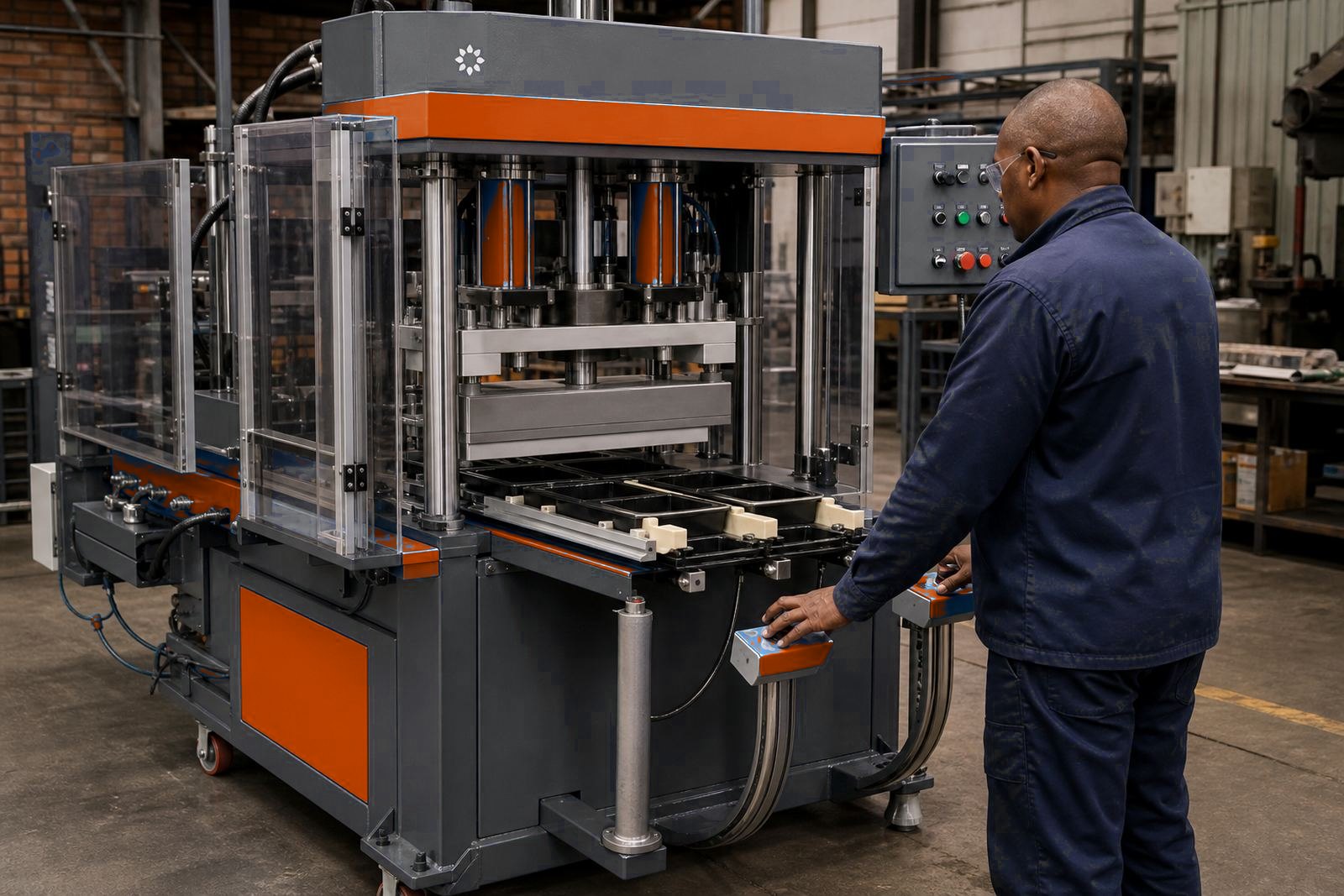
The tooling is where the real accuracy sits. We design locating nests, guides, punches, pressure pads and hard stops to keep the component seated properly through the full stroke. For crimping and riveting, the tooling profile must match the material thickness and the finished shape. For pack sealing, the jaws or sealing heads need even pressure across the contact area, with clean alignment from top to bottom.
- Bench units for lighter work and tighter shop floors
- Floor units for larger fixtures and longer strokes
- Single-station builds for straightforward cycles
- Multi-station builds for assembly lines and staged operations
- Custom tooling for crimping, riveting, staking and sealing
Where the vertical frame press fits in local production
These presses suit assembly rooms, small line cells and finishing areas where the operator needs a reliable downward action with a clear view of the work. In Johannesburg and Pretoria, they often sit in component assembly lines, electrical sub-assembly bays and small metalwork cells. Around Durban and the coastal belt, careful guarding and routine air-line checks matter because humidity can show up in compressed air and on exposed metal surfaces. In Gqeberha and East London, the same machine often supports automotive-related work, light fabrication and pack sealing tasks where repeatability matters more than brute force.
The press can be set up with guard panels, light curtains and two-hand controls where the process calls for safer loading. If the workpiece must be reached by hand, the station design needs a proper opening, clear operator stance and a clean exit path for finished parts. The floor area around the machine should leave room for maintenance access, air preparation equipment and any material feed table or outfeed tray used by the line.
- Assembly stations for clips, inserts and small subassemblies
- Crimping and staking work on terminals, brackets and housings
- Riveting jobs where the tool must stay aligned through the cycle
- Pack sealing where a repeatable top pressure is needed
- Work cells with guarded access and defined operator positions
Installation, air setup and commissioning details
Because this is a pneumatic press, the installation needs a clean compressed air supply, a suitable regulator and correctly sized lines from the plant air network. The air pressure available at the machine must match the cylinder requirement and the press duty, otherwise stroke force and cycle consistency drift. Air line setup also needs drainage points, filtration and good hose routing so the machine does not get noisy or sluggish during a shift. Where the line includes safety devices, the guarding and controls must be wired and tested as one working system.
We handle site installation, press commissioning and operator training across South Africa, including Johannesburg, Pretoria, Durban, Gqeberha and East London. Commissioning covers stroke setting, cycling checks, tool fitment, guard function and production handover. If the job uses two-hand controls or a light curtain, the safety logic needs to be checked with the actual loading method in place, not just on paper. A press that has been fitted properly will sit square, run cleanly and hold the tooling in line through repeated cycles.
- Air supply sized for cylinder demand and cycle rate
- Regulation, filtration and drain management on the line
- Guarding and light curtain checks before production starts
- Stroke setting for the actual part thickness and tool travel
- Operator training on loading, release and safe shut-down steps
Looking after the air supply, tooling and guides
Vertical frame presses need regular attention to air quality, tool condition and guide wear. Daily checks usually start with the airline, the regulator setting, the cycle feel and any unusual vibration in the ram travel. Tool faces should stay clean and free of burrs, while the lower bed and locating faces need to be kept free of swarf, adhesive residue or press marks that can throw the next part out of position. Where the machine runs near the coast, exposed surfaces benefit from wipe-downs and sensible rust prevention.
Operator training should include what to look for when the stroke sounds different, the part starts creeping off centre or the control response feels uneven. In most shops, the trouble starts with small things: a dirty tool face, loose fasteners, water in the airline or a guide that has drifted. Planned tool changes and routine inspection help keep the press in service without unnecessary stoppages.
- Check air pressure, drains and filter condition before use
- Keep tooling faces clean and lightly protected from corrosion
- Inspect guards, sensors and two-hand buttons on a schedule
- Look for play in guides, pins and tool locators
- Record stroke changes after any tooling adjustment
Order details that matter before fabrication starts
When ordering a vertical frame press, we need the part size, the material, the target operation and the working output expected from the station. The press size should reflect the available height, the footprint on the floor and the reach needed for loading. It also helps to know whether the job needs one punch, several stations, or a tool set that must be changed during a production switchover. For pack sealing and light assembly, the finished pressure face and the stroke stop are just as important as the overall frame size.
These are the main details to confirm: the force requirement, the stroke length, the open height, the bed size, the air pressure available on site and the kind of safety control needed. If the machine will be fitted into an existing line, the infeed direction, outfeed side and operator stance should be mapped clearly. That keeps the build practical and avoids awkward rework once the press reaches the shop floor.
- Part drawing or sample, with finished dimensions where possible
- Tell us the material type, thickness and any surface finish or coating concerns.
- Cycle type: assembly, crimping, riveting, staking or sealing
- Required stroke, open height and working opening
- Site air supply details and safety control preference
Key facts
| Frame type | Vertical steel frame for top-down pressing |
|---|---|
| Drive | Pneumatic cylinder or multi-cylinder arrangement |
| Typical operations | Assembly, crimping, riveting, staking, pack sealing |
| Controls | Two-hand control or guarded cycle interface |
| Safety options | Light curtain integration and fixed guarding |
| Setup items | Stroke setting, air line setup, tooling fitment and commissioning |