What the East London team needed from the line
The client was a production team in East London handling pack sealing work on a busy shift pattern. Their line had to press, clamp and seal consistently across repeated runs, without drifting on stroke or pressure when operators changed over between batches.
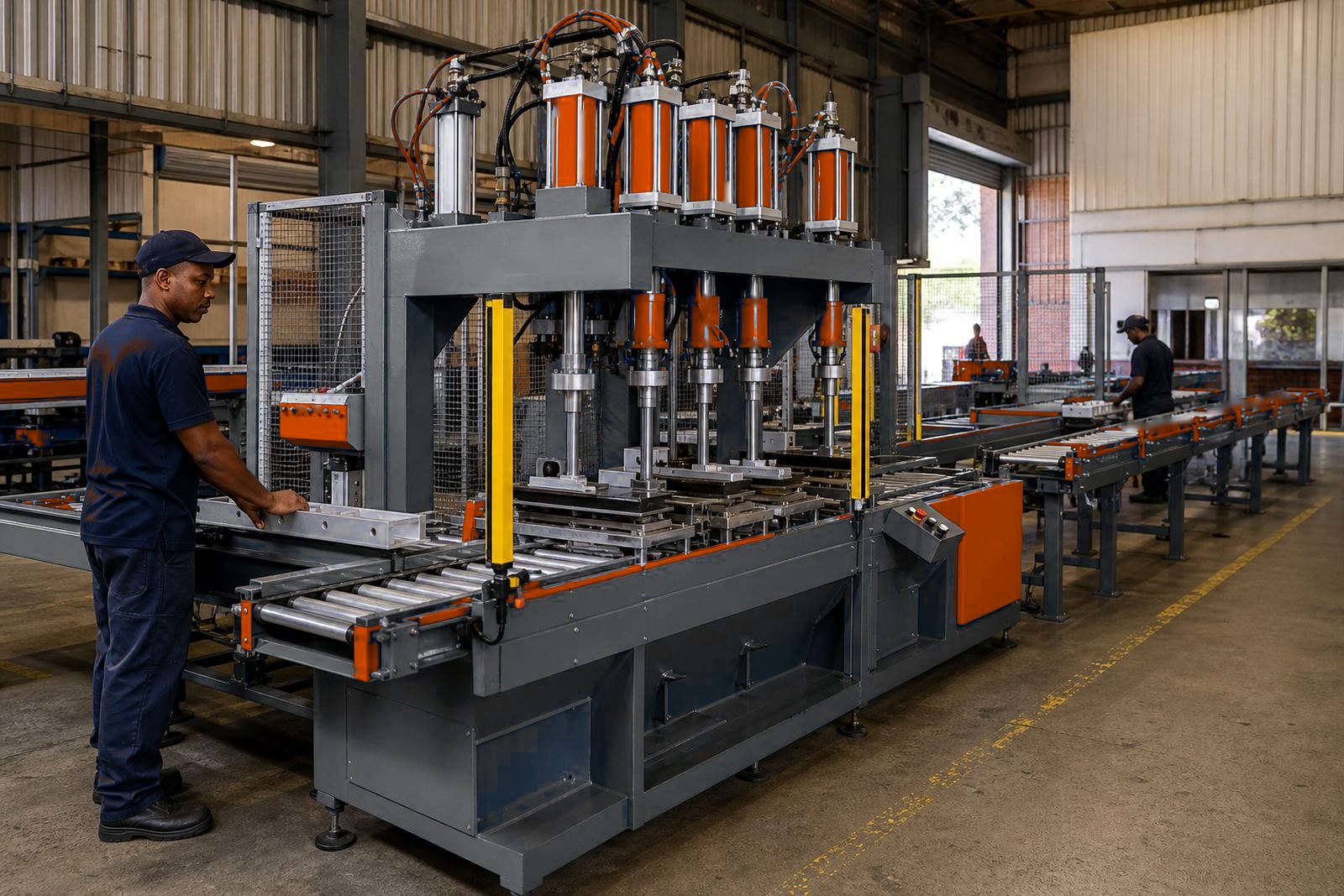
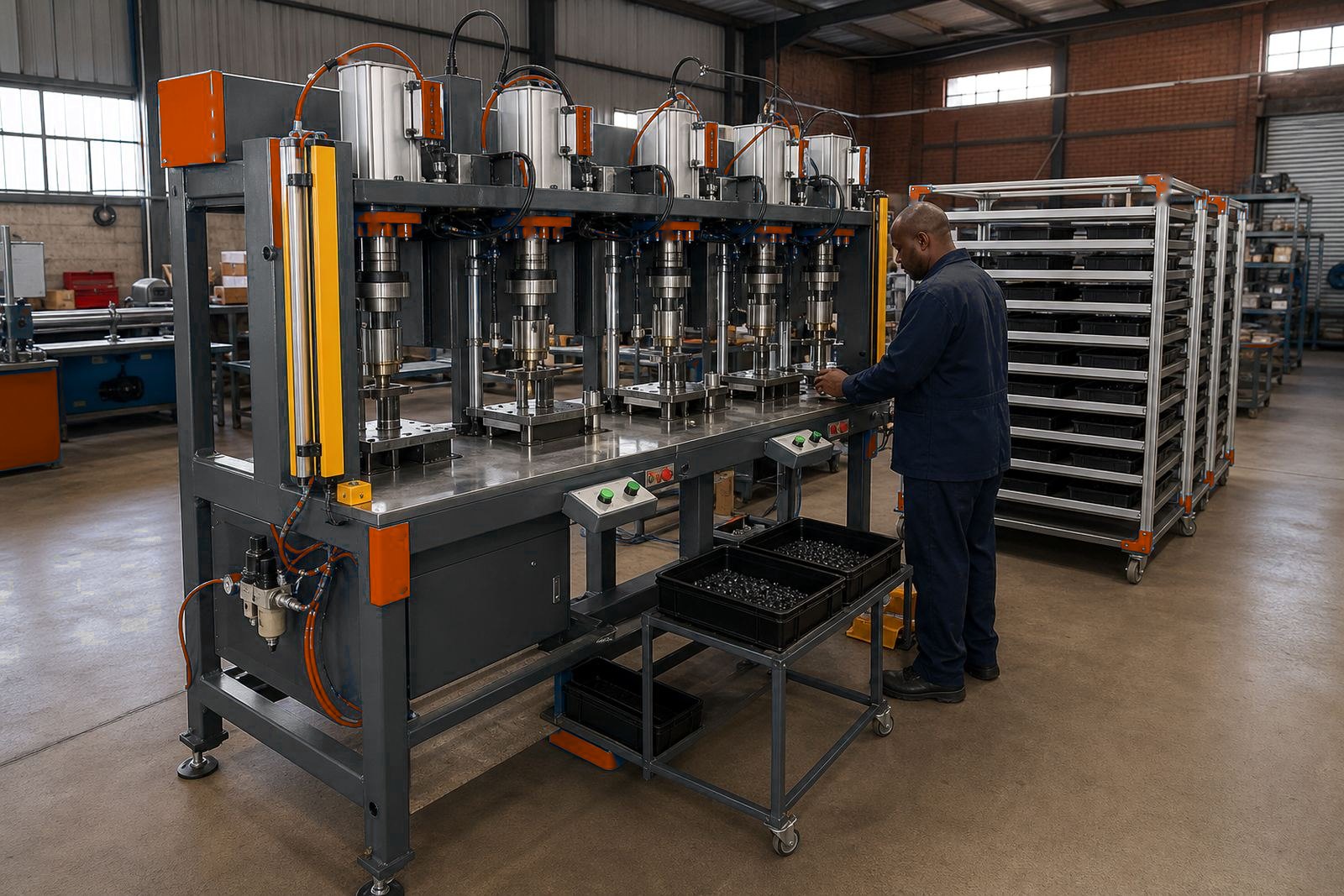
The brief called for a multi-station pneumatic press line with tooling matched to the pack size and seal geometry. They also needed two-hand controls, guarding around the working area and a way to keep the process steady in humid coastal conditions where small alignment issues show up fast.
- Multi-station pneumatic press for sealing work
- Custom tooling for repeatable pack location
- Two-hand control at the operating point
- Guarding and light curtain protection
How the press set had to behave on the floor
The line was specified around pneumatic cylinders sized for firm, even pressure at the tooling face. Stroke setting mattered because the seal height had to land cleanly every cycle, with enough travel to close fully and no extra movement that would bruise the pack.
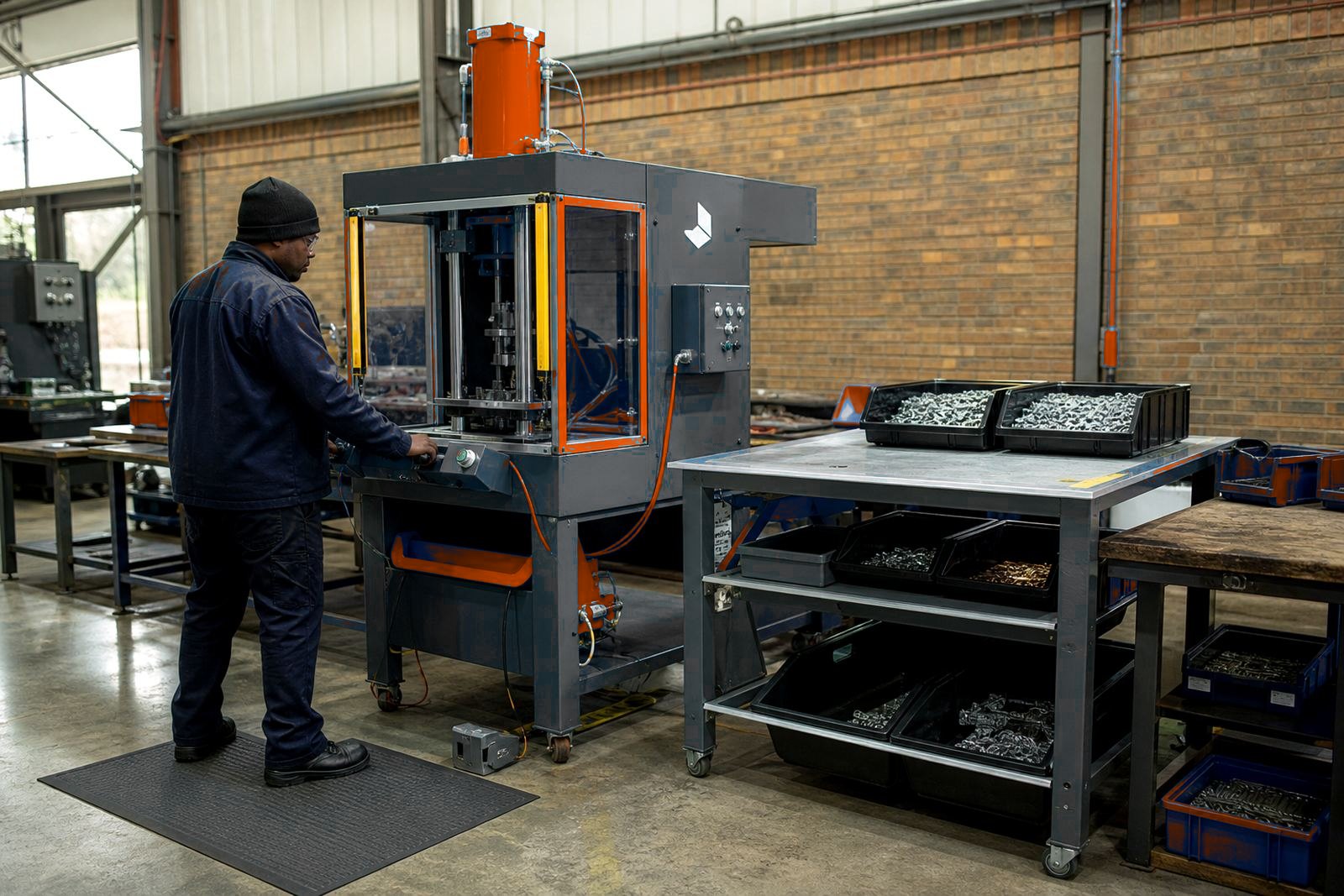
We worked to a layout that let the operator load, close and release without crossing the working zone. The guarding package and light curtain were arranged so the station stayed practical for shift work, while still keeping hands clear of the pinch points.
- Controlled stroke setting for consistent sealing depth
- Even cylinder pressure across the working station
- Tool faces shaped to the pack and seal line
- Operator position kept outside the danger area
Tooling, guarding and controls built around the job
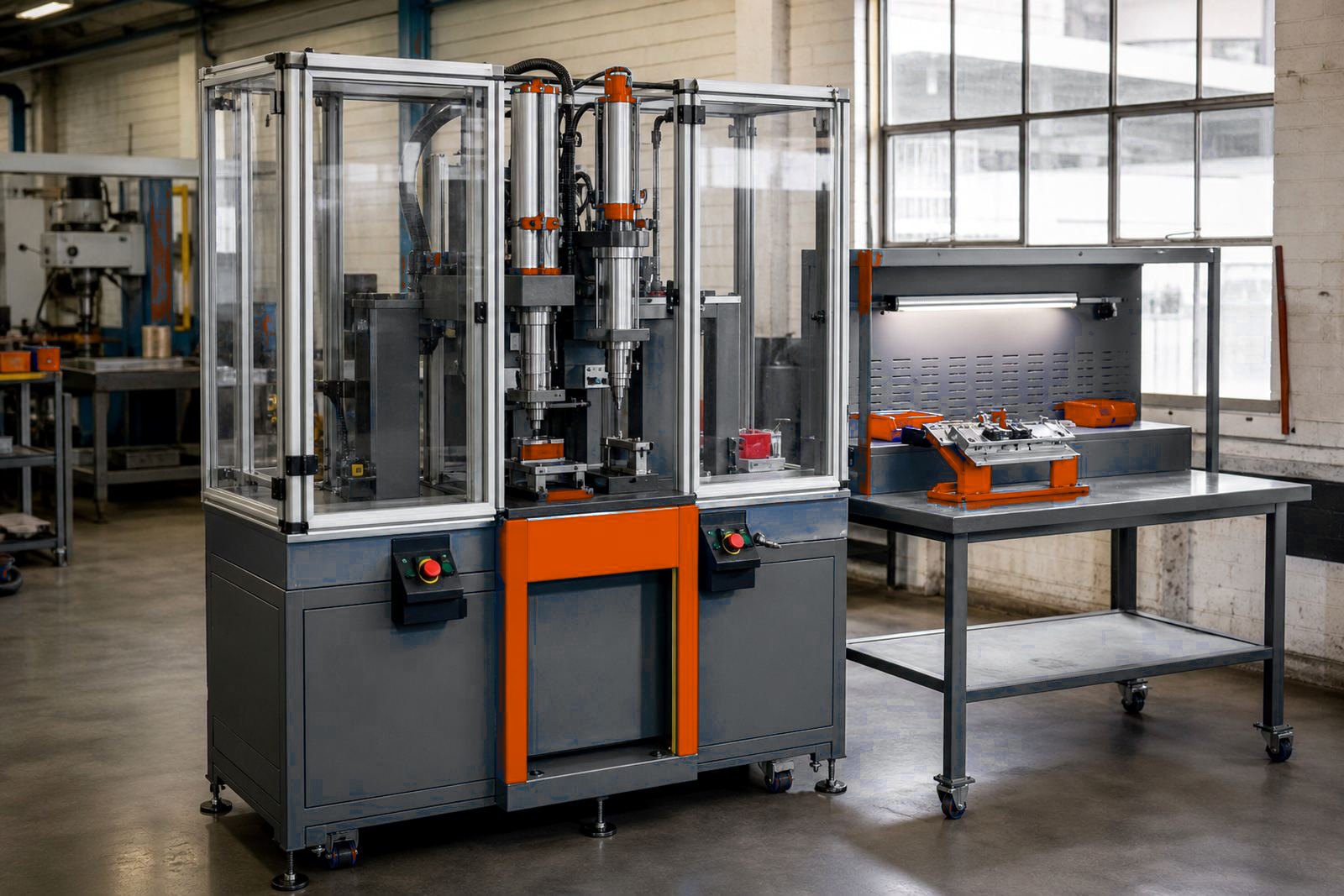
Our workshop prepared the tooling as a matched set, then we handled fixture design so the pack sat square at the point of contact. That reduced the small shifts that cause uneven seals and awkward rework later in the shift.
Guarding builds were completed with access in mind, because the line still needed cleaning, setting and tool changes without unnecessary stripping down. Two-hand controls were set into the work position and the light curtain was aligned to protect the front opening without slowing normal loading.
- Custom tooling made for the sealing profile
- Fixture design for stable pack location
- Guarding built for access and safety checks
- Light curtain integration at the front face
Commissioning in East London and the first production checks
Commissioning covered the press settings, air line setup and the practical details that make a line usable on day one. We checked air pressure, cycle feel, tool alignment and the repeat of the stroke over multiple test runs, then adjusted the station until the movement stayed consistent.
The production team watched the handover closely because the line needed to suit their shift rhythm. Once the cycle was stable, we ran through loading, release, jam awareness and tooling changes so the operators could work the line without guessing at the settings.
- Air line setup and pressure checks
- Stroke setting confirmed on the tooling
- Press commissioning with test cycles
- Production handover with practical operator steps
Operator instruction that matched the shift pattern
Operator training was included in the project. The aim was to keep the line safe and repeatable across different shifts, with the same loading position, the same hand motions and the same checks before pressing the cycle button.
We covered guarding use, two-hand control habit, when to stop for a tooling change and how to spot pack movement before it affects the seal. The team also went through routine checks for air supply, tool wear and alignment, which helps in a plant where the line runs for long blocks at a time.
- Shift-ready operator instruction on the live line
- Tooling change steps for short stops
- Basic checks for air pressure and alignment
- Safe loading around the guarded opening
What the line delivered after handover
Once the line was commissioned, the sealing process settled into a cleaner cycle with better repeatability from station to station. The client had a defined press action, a protected working zone and operators who had already practised the correct sequence before full production use.
For East London, the important result was not just a working press set but a line that fit the pace of the floor. The tooling held the pack more steadily, the controls reduced hesitation and the final handover left the team with a clearer process for day to day production.
- Cleaner sealing consistency across the stations
- Better pack control during the cycle
- Safer working position for operators
- Clearer process for tool changes and setting checks
Key facts
| Project | East London sealing line |
|---|---|
| Press type | Multi-station pneumatic press |
| Main process | Pack sealing with custom tooling |
| Controls | Two-hand controls and guarded working zone |
| Protection | Light curtain integration |
| Project scope | Commissioning, air line setup and operator training |