A cell built around one part flow
The brief came from a parts manufacturer in Uitenhage that wanted to keep loading, pressing and inspection close together without spreading the work across three separate benches. The team needed a compact cell for light assembly work, with a repeatable press stroke, controlled part location and enough visibility for the operator to check every cycle.
Space was tight, so the layout had to suit a busy factory floor and still leave clear movement around the station. The cell also had to deal with mixed parts, which meant the tooling needed to guide the component squarely into place and protect the operator during each press cycle.
- One compact cell for loading, pressing and inspection
- Air-driven press action with steady stroke control
- Guarding and access control around the working zone
- Tooling shaped for repeatable part location
What the line had to cope with
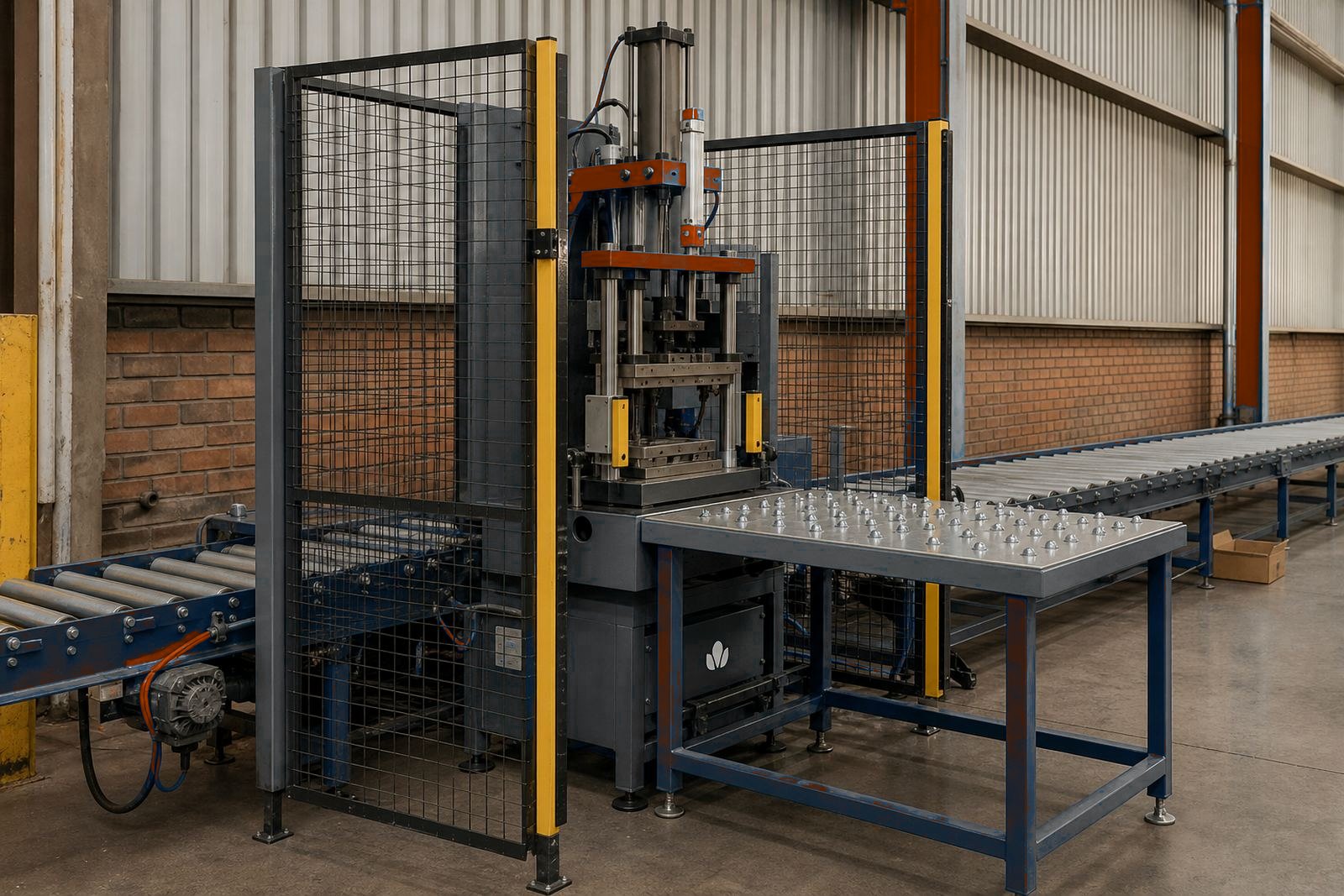
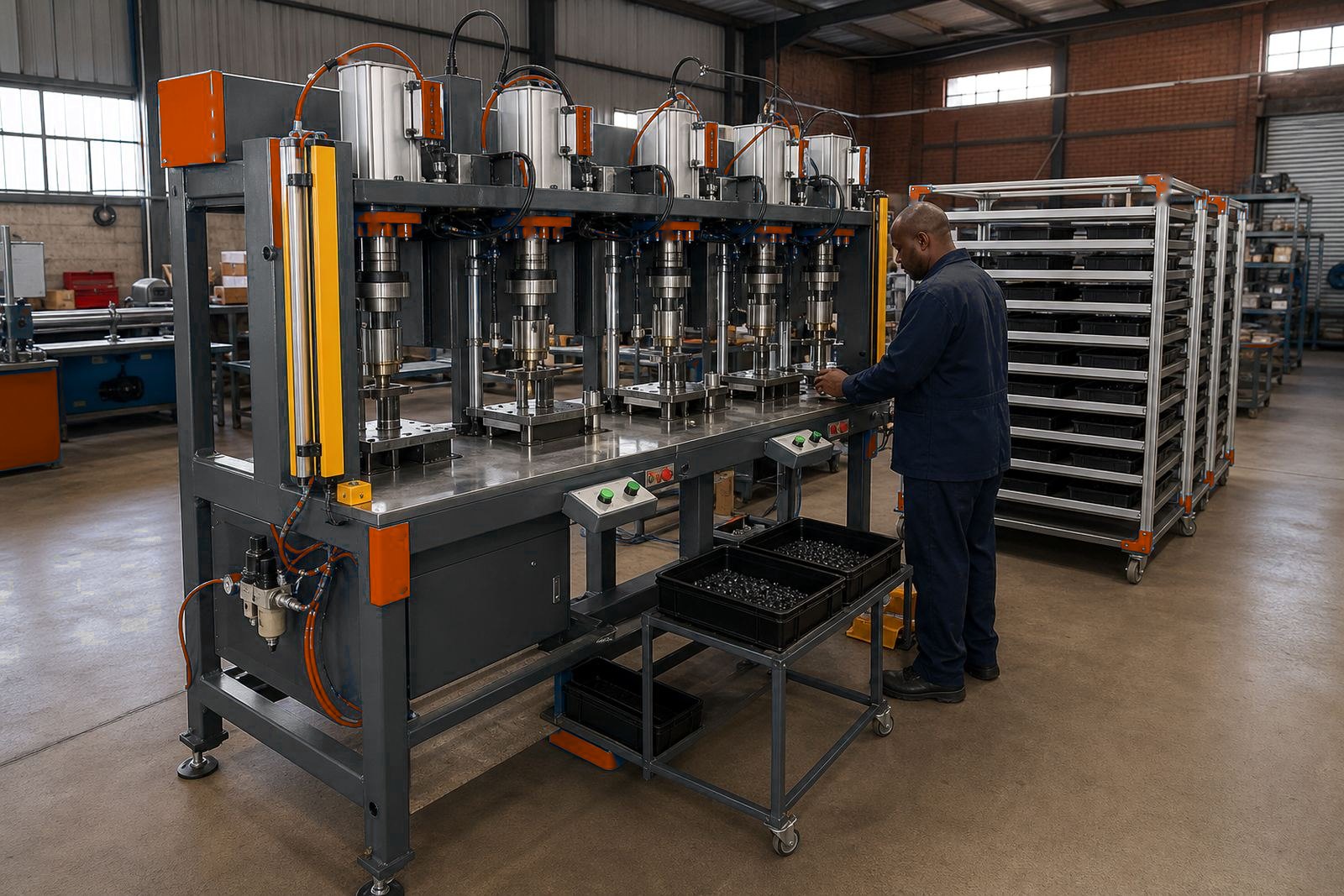
The job asked for a multi-station pneumatic press setup that could handle assembly work without wasting space or forcing extra handling. The customer wanted a station for loading, a station for pressing and a final check point, all arranged so one operator could move through the task in a clear rhythm. That meant short transfer distances, good sight lines and controls that were easy to teach to new operators.
Air pressure and stroke length were set around the parts, not the other way around. We kept the press action direct and consistent, with two-hand controls at the working station and light curtain protection where the layout needed open access for loading and inspection.
- Three working points arranged in a compact footprint
- Two-hand controls at the pressing position
- Light curtain protection on the open side of the cell
- Stroke setting matched to the required press depth
Tooling, guarding and line-side detail
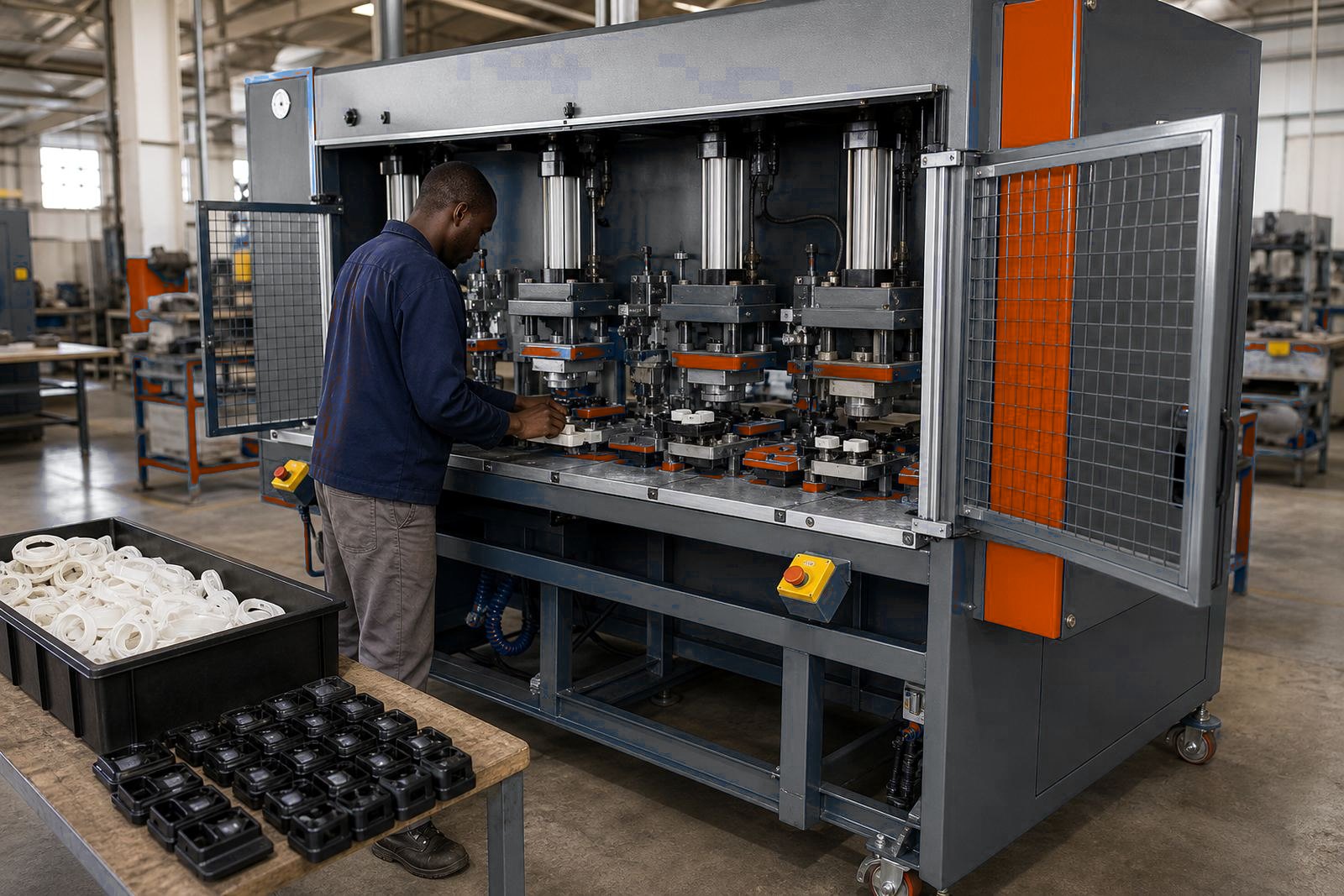
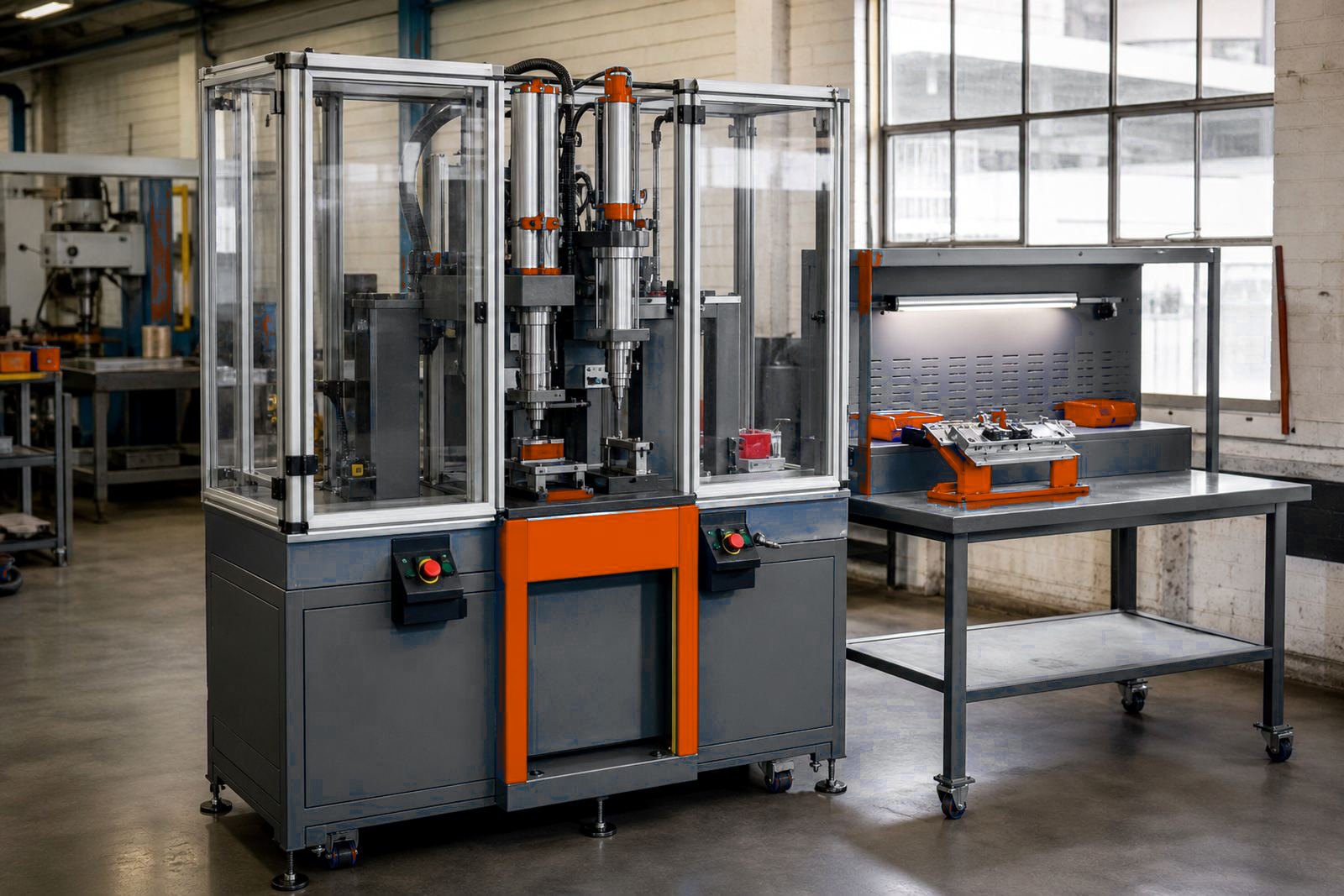
Most of the work sat in the details. The tooling had to hold small parts without marking them, then release cleanly after the press stroke. We designed the fixture so the operator could place the part quickly, see the seating position and keep hands out of the closing area. Guarding was built to suit the cell rather than forcing the cell into a fixed pattern, which helped keep the loading face open while still controlling access.
Air line setup was kept tidy and practical, with the cylinders and control gear arranged for easy checking during production. We also allowed for tooling changes, because a cell like this often has to move between part variants and small batch runs. The job was built to be used, not admired from a distance.
- Custom tooling for part location and release
- Guarding build matched to the layout on site
- Air line setup for the pneumatic cylinders and controls
- Tooling changes planned into the working method
Workshop build and site installation in weeks
The project moved through workshop fabrication, trial fitment and site installation over a measured programme of weeks. The press frame, guarding, tooling and control points were assembled in the Isando workshop, then checked as a working unit before delivery. On site, the cell was placed, levelled and connected into the existing production space with attention to operator reach and part flow.
Commissioning covered the stroke setting, guard checks and the practical run of the cycle. We worked through the handover with the people who would run the cell each shift, so the sequence made sense on the floor and not only on paper.
- Workshop fabrication and trial assembly
- Site installation and positioning
- Commissioning of stroke, guards and controls
- Operator training for day-to-day use
What changed once the cell was running
The result was a tighter process with fewer reaches and fewer chances for the part to move out of place between steps. Loading, pressing and inspection now sit close together, which keeps the work moving in a steady pattern. The operator can see the part before the cycle, during the cycle and at the inspection point without having to cross the cell.
For the factory, the gain was less clutter around the job and a clearer route for production control. The equipment now supports a repeatable routine for assembly, crimping style work and similar press operations where the part must be held properly and checked immediately after the stroke.
- Shorter movement between process steps
- Clearer inspection at the end of each cycle
- Less handling between loading and pressing
- Cleaner floor use around the cell
What we would retain on a Uitenhage assembly job
In a similar job, we would keep the layout compact and the controls direct, because that makes the cell easier to run and easier to train. The best result came from matching the tooling to the parts first, then setting the press force, stroke and guarding around that working method. That sequence saved time later, especially when the operator team needed to learn the changeover routine.
We would also keep the inspection point within the same reach pattern as the press station. When loading, pressing and checking stay close together, the job feels calmer on the floor and the cycle is simpler to keep consistent.
- Set the tooling before final control layout
- Keep inspection close to the pressing point
- Plan for tooling changes from the start
- Use a guarded opening that suits the part size
Key facts
| Project | Uitenhage Assembly Cell |
|---|---|
| Client type | Parts manufacturer |
| Town | Uitenhage |
| Layout | Compact loading, pressing and inspection cell |
| Press type | Multi-station pneumatic press |
| Programme | Workshop build, site installation, commissioning and training |