Pack sealing for a busy Kempton Park line
The client was a contract packing facility in Kempton Park, handling mixed pack formats for daily production runs. The brief was to replace a manual sealing step with a pneumatic press that could give a cleaner seal line, repeatable stroke depth and better control over pressure on each pack.
The line had limited floor space and the sealing position needed to sit comfortably between upstream filling and final boxing. We also had to account for changing film and carton thicknesses, which meant the tooling had to be easy to adjust without slowing the shift.
What the packing team needed from the press
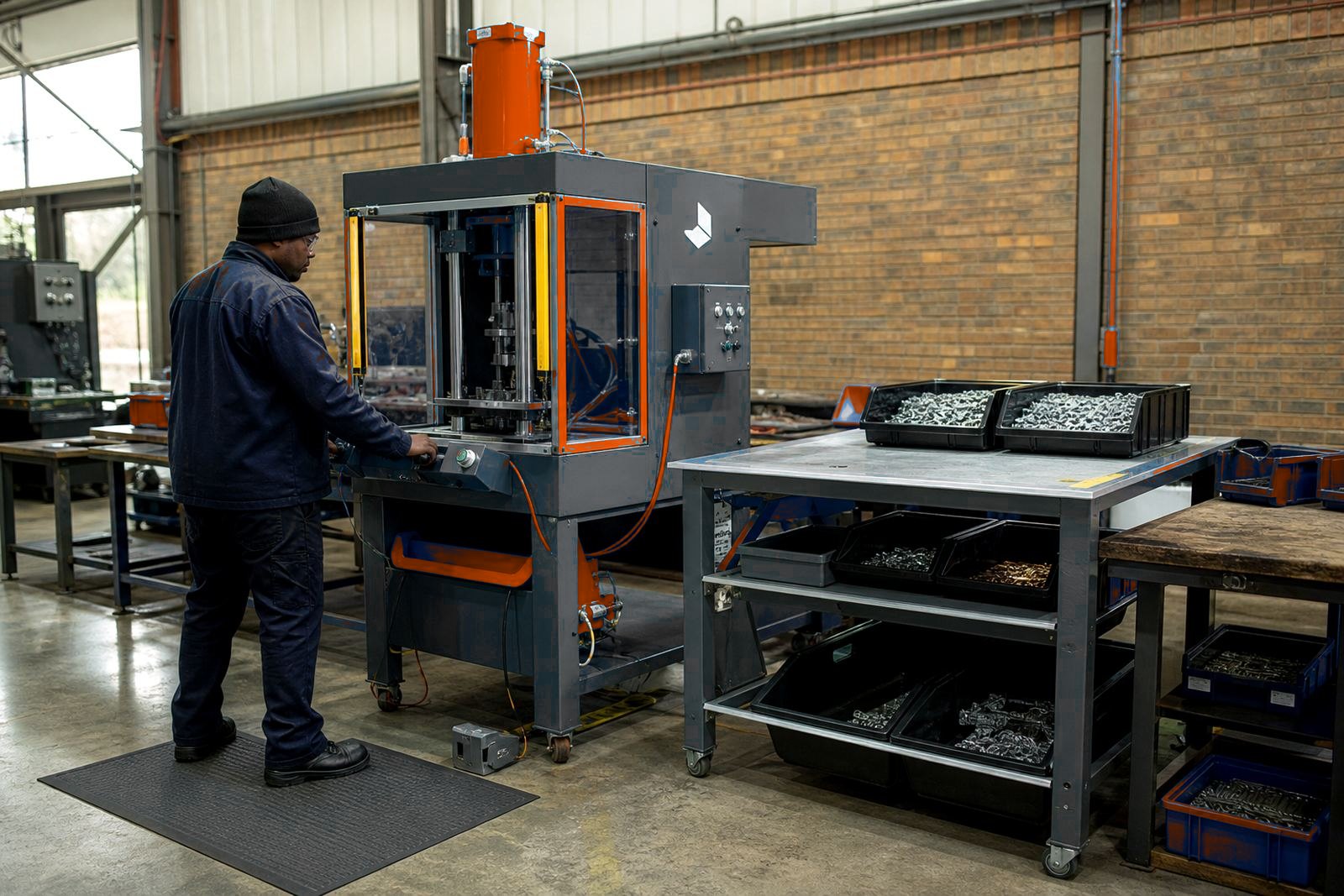
Pack sealing sounds straightforward until the packs, inserts and tray heights start changing through the week. The workshop asked for a press that could handle light to medium force work, with controlled descent, two-hand operation and enough clearance for safe loading and unloading.
- One pneumatic press frame with multiple working stations for pack sealing duties
- Adjustable stroke setting for different pack heights and seal depths
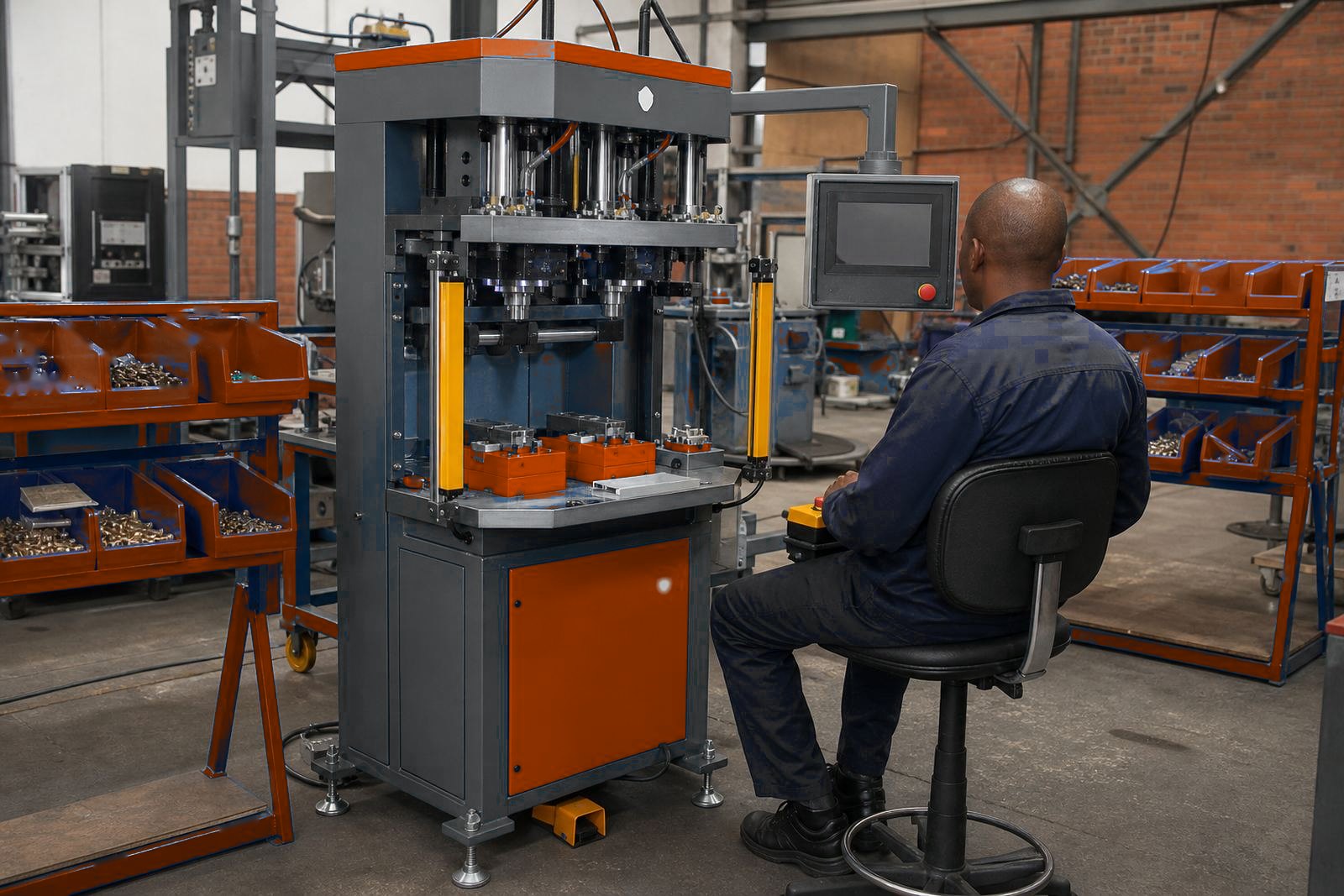
- Two-hand controls for safer operator handling during each cycle
- Light curtain protection around the working zone where access risk was higher
- Tooling that could be changed over for different pack sizes without major downtime
We also kept the air requirements realistic for a factory environment, with clean compressed air, stable pressure and proper line routing to the press. That mattered because uneven air supply shows up fast in sealing quality and press feel.
How the machine was built and fitted
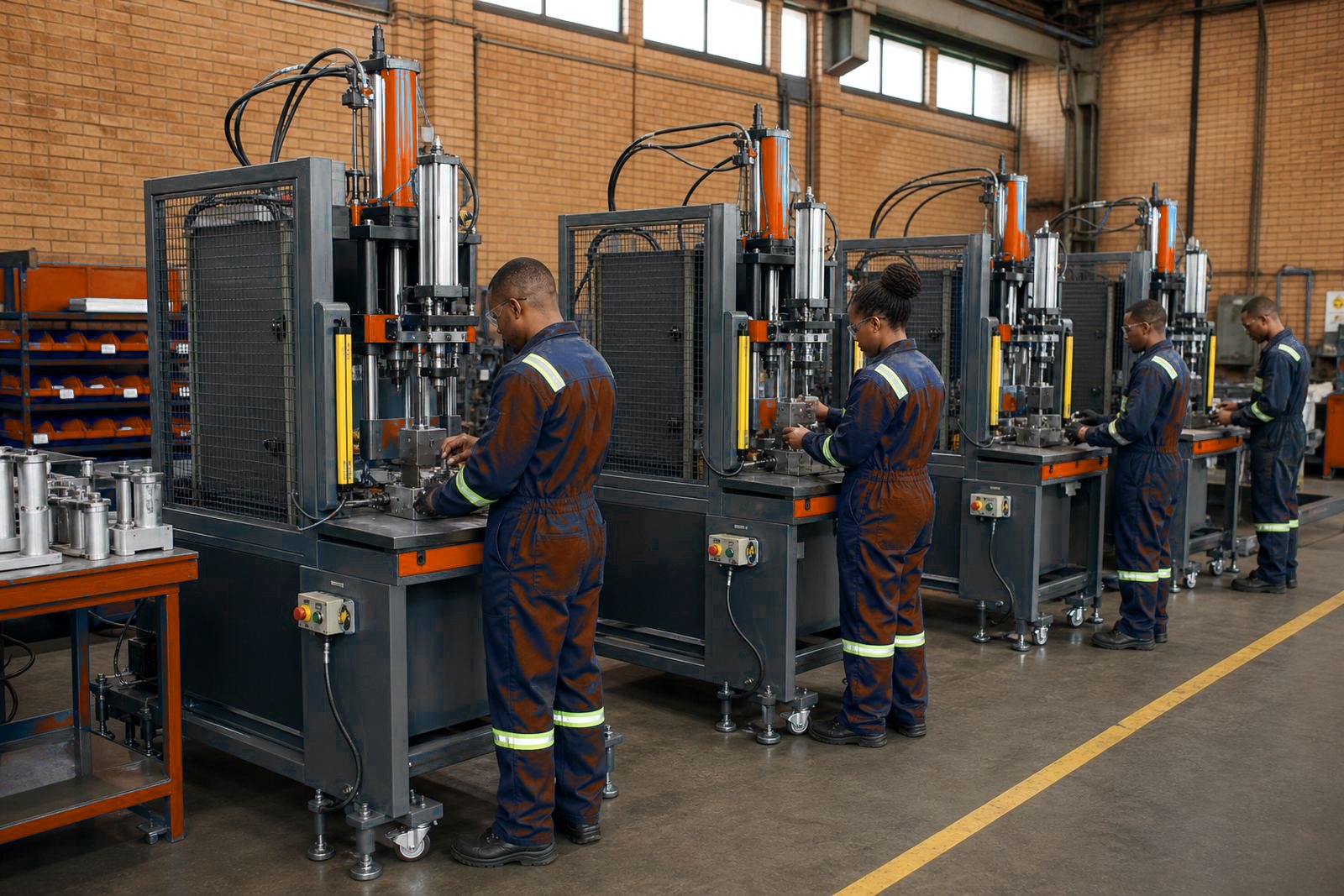
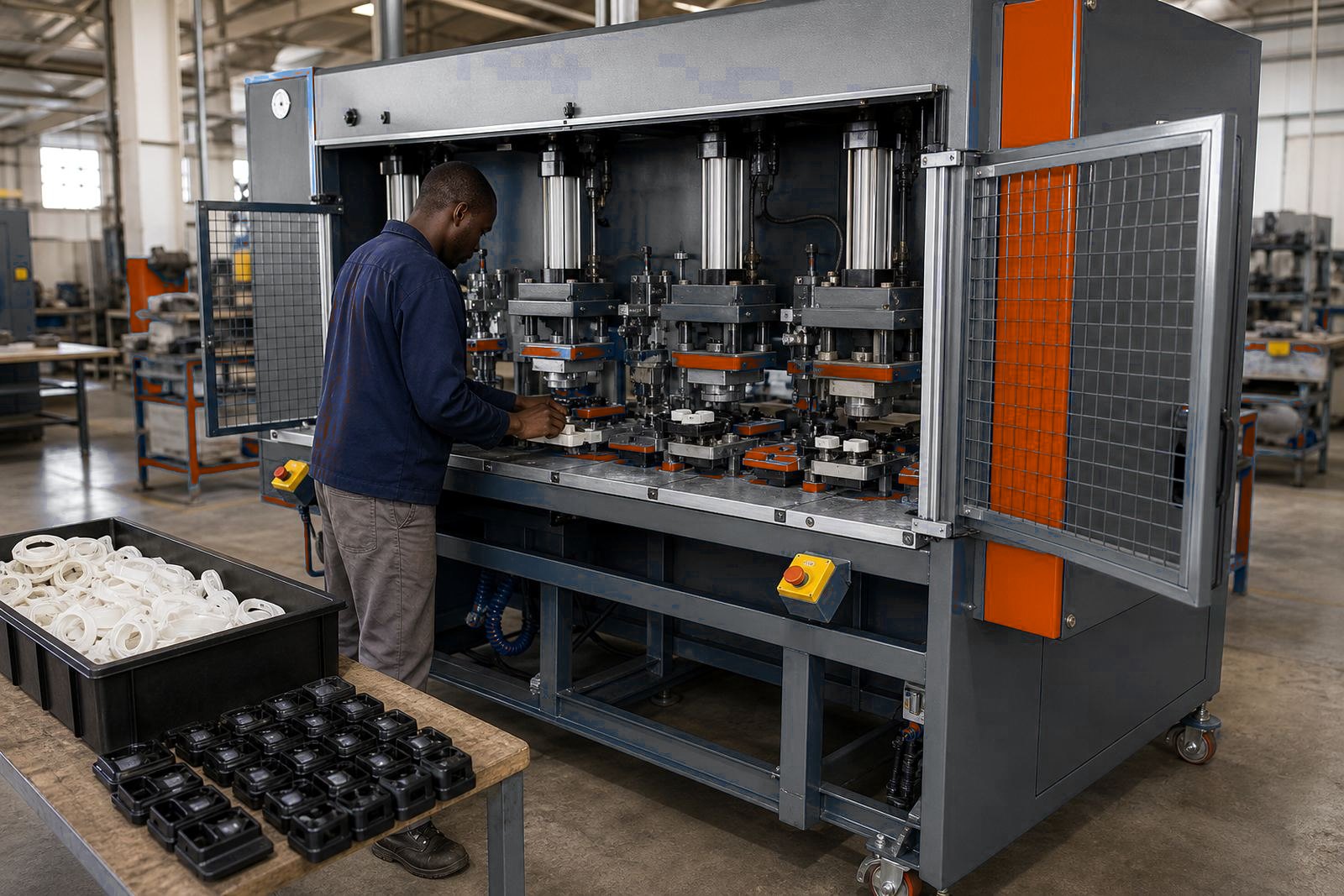
MultiPress built the press around a multi-station layout so the operator could set, seal and clear packs with a clear working rhythm. The cylinders were sized for the sealing load, not oversized for show, and the stroke was set to suit the pack stack-up rather than forcing one setting across every product.
Musa Hartnick handled the tooling design with Johan Ramokgopa leading the workshop fit-up. The sealing tooling was made to suit the pack profile and contact area, while the guarding was arranged to keep hands clear of the working zone without making loading awkward.
- Custom tooling for the pack face and seal width
- Guarding build matched to the press opening and operator reach
- Air line setup with tidy routing and service access
- Stroke setting checked against actual pack samples in the workshop
We kept the frame and tooling arrangement practical for maintenance too. If a seal face needs adjustment, the team should be able to reach it without stripping half the machine first.
Commissioning week at the Kempton Park site
The job took four weeks, starting with workshop build and ending at handover. Week one covered final measurements, tooling sign-off and air connection planning. Week two was workshop assembly and guarding fitment. During week three, we handled delivery, set the press in place, and completed the on-site installation. Week four was commissioning, operator training and production handover.
Lerato Moagi handled commissioning on site, checking stroke repeatability, control function and safe cycling under real packing conditions. Anele Engelbrecht then trained the operators on loading, two-hand use, basic checks and what to watch when pack sizes change.
- Site installation aligned to the existing packing flow
- Commissioning with test packs and repeat cycle checks
- Operator training for sealing position, cycle control and changeovers
- Production handover with the packing lead and maintenance team present
Results on the packing floor
The finished press gave the team a steadier sealing result and a cleaner working rhythm across the shift. Packs stayed better aligned under the tooling, and the operators had less variation from one cycle to the next. That matters on contract packing work where product mix can change before lunch and again before the truck leaves.
The guarding and two-hand controls also made the sealing station easier to manage in a busy room. The crew could work with a clearer process, while the maintenance side had a press that was easier to inspect and adjust.
What we would carry across for a similar press installation
On a similar pack sealing project, we would keep the same sequence of work: sample packs first, tooling second, then final stroke setting on site. That sequence helps prevent a press that looks right in the workshop but feels wrong at the production table.
We would also keep the training near the machine, because operators learn the safe rhythm faster when they stand at the real station. For a line in Kempton Park or Boksburg, that practical handover is worth more than a long file of notes.
- Check the pack stack-up with real samples before final tooling lock-in
- Set the stroke on site against the actual sealing face and product height
- Keep the air supply stable and the line layout easy to service
- Train the operators on the specific loading pattern used on that shift
Key facts
| Project | Kempton Park pack sealing press for a contract packing facility |
|---|---|
| Press type | Multi-station pneumatic press for sealing work |
| Operating controls | Two-hand controls with guarded working zone |
| Stroke | Adjustable stroke setting for mixed pack heights |
| Air system | Compressed air setup with site line routing |
| Services delivered | Custom tooling, guarding, commissioning and operator training |