Germiston cell, one fastener at a time
The job came from a metal workshop in Germiston that was running repeat riveting on a production cell with mixed part sizes and a steady daily output. The team wanted a press arrangement that could hold the work square, keep the cycle repeatable and cut the variation that came from hand-guided fastening.
The brief called for a multi-station pneumatic press setup that could support riveting work without crowding the line. The cell had limited floor space, a fixed part flow and operators who needed a clear process for loading, clamping, actuating and removing finished parts without guessing where the next stroke would land.
Because the parts carried small tolerance shifts from one batch to the next, the tooling had to support location and clamp-down well. The workshop also asked for guarding that would suit a live production area, plus controls that made the press practical for trained operators on a repeating shift pattern.
How the brief shaped the press build
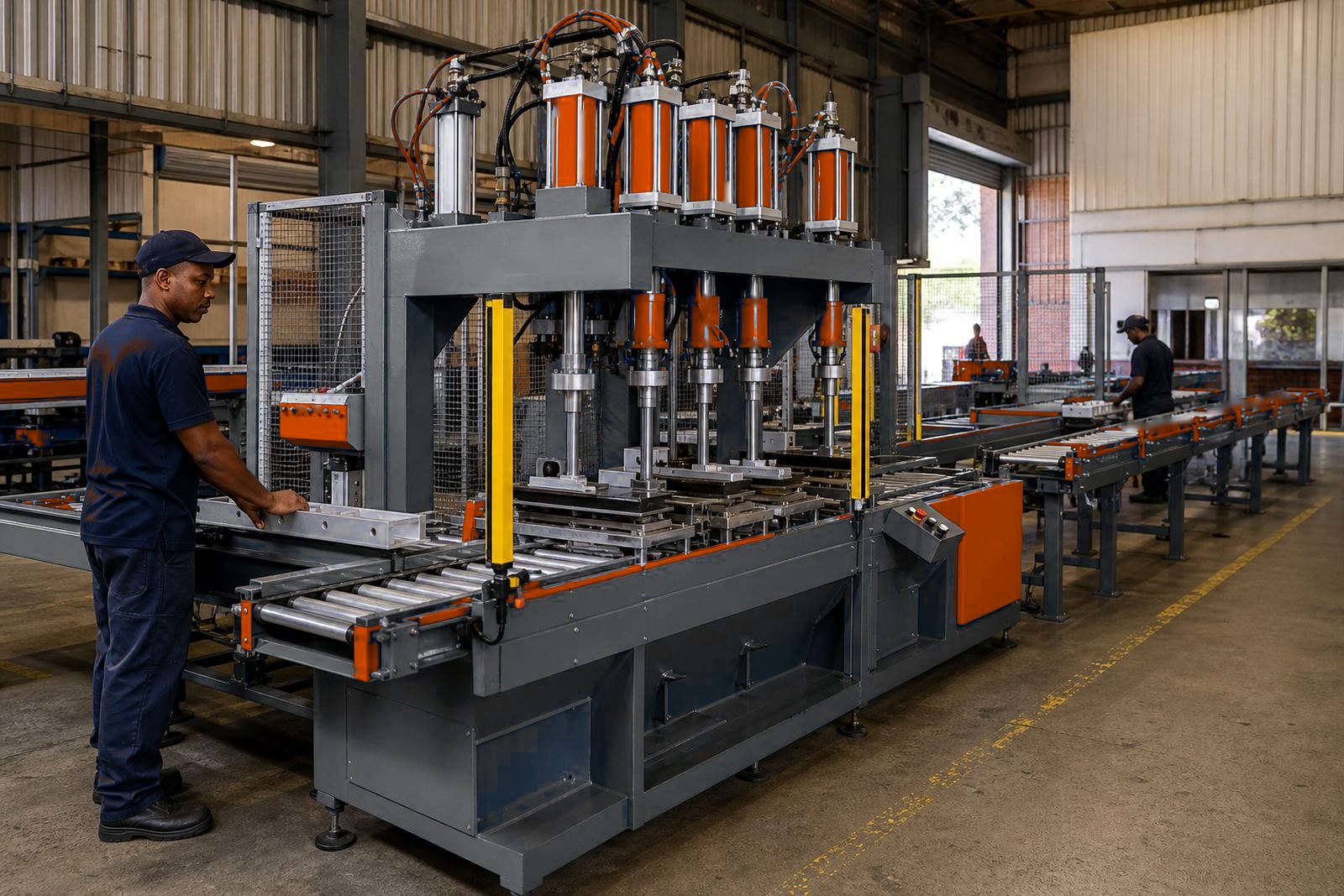
The press was built around a pneumatic frame with controlled stroke, set pressure and a tool path suited to riveting rather than heavy forming. That meant the ram travel could be matched to the job, with the riveting point set for consistent compression and clean fastener formation.
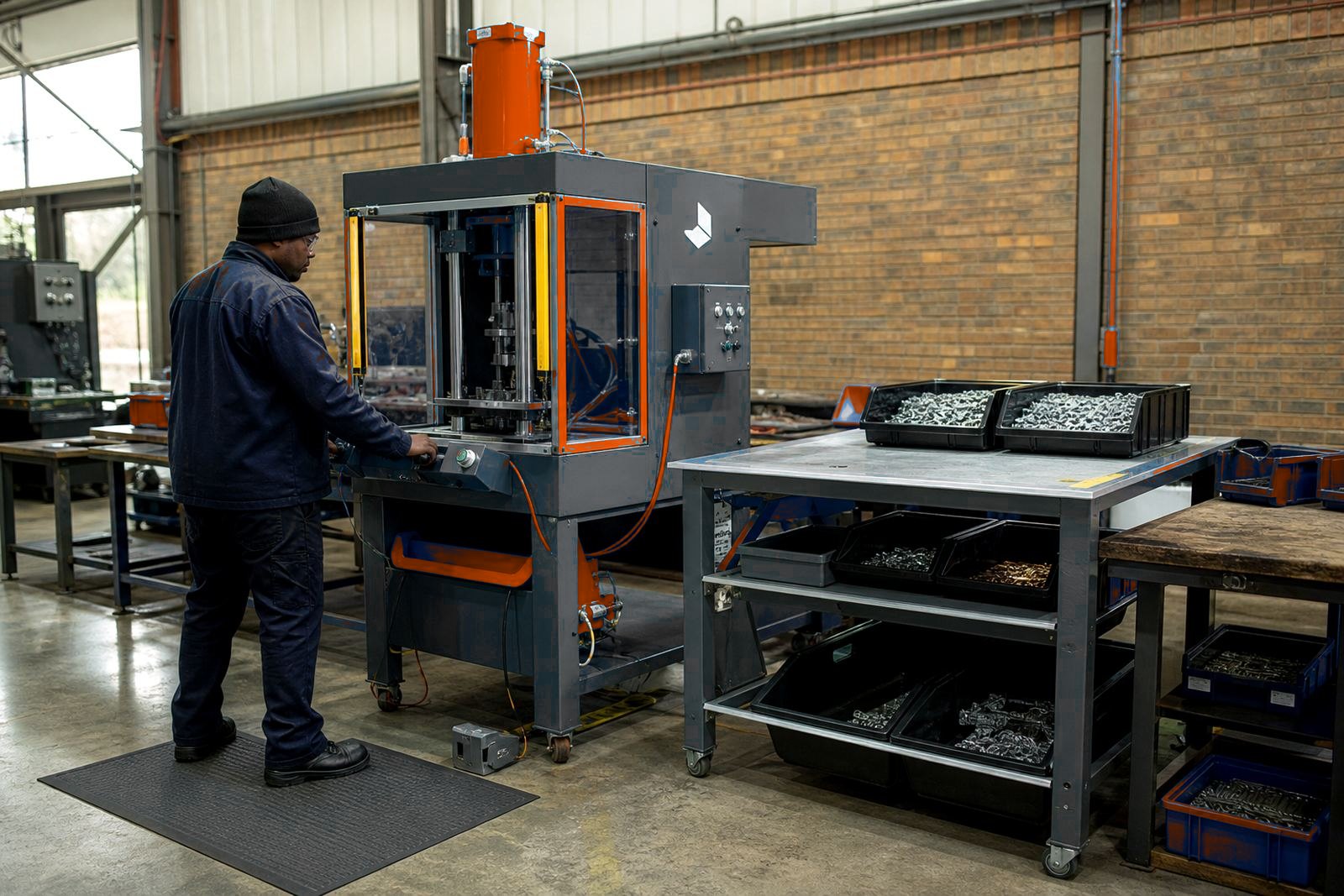
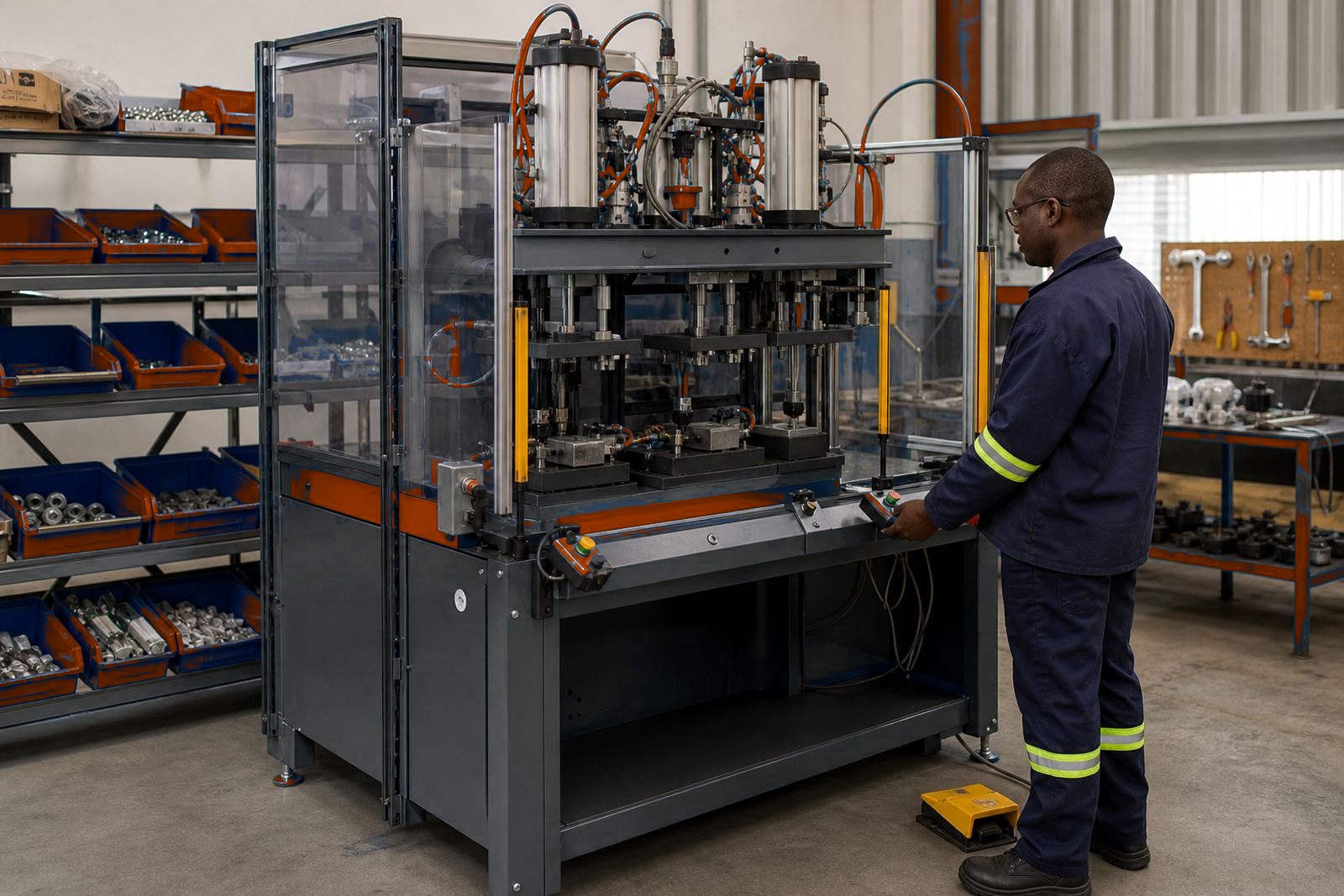
We designed the station layout so the operator could work in sequence without reaching across the tooling. The cell used two-hand controls for actuation, light curtain protection around the working zone and a guarded frame that kept access open only where the process needed it.
- Multi-station layout for repeat fastening work
- Pneumatic cylinders sized for the riveting load
- Stroke setting for consistent tool travel
- Two-hand controls for controlled cycle start
- Light curtain integration around the work area
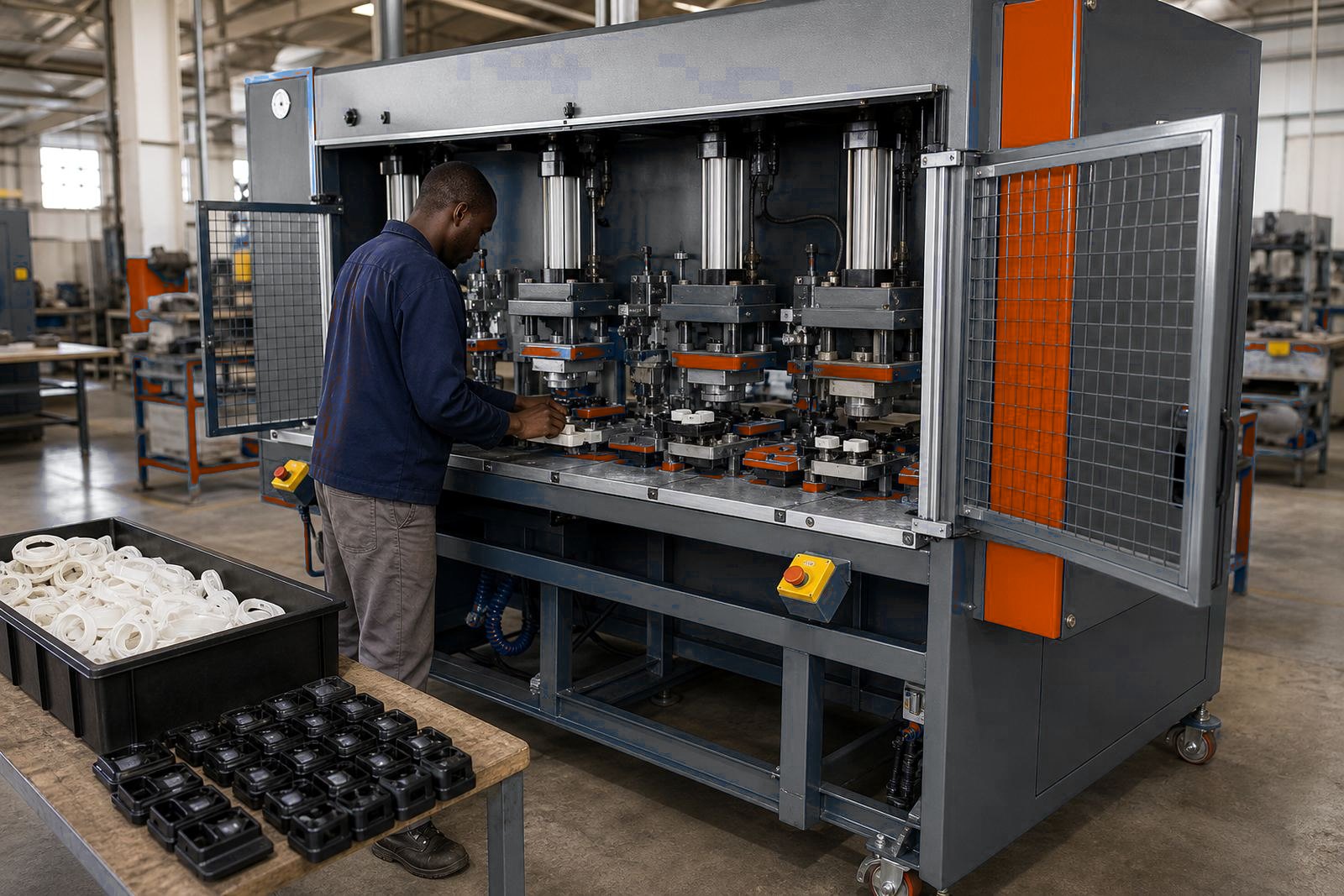
- Tooling built for part location and clamp repeatability
Tooling, guarding and line discipline
Musa’s tooling work focused on the part geometry, hole position and press direction. The tooling set had to hold each part firmly without marking visible surfaces, while still leaving enough access for loading and unloading in a production rhythm.
We built guarding into the process from the start, instead of leaving it as a late extra. The workshop needed protection around the working area, but it also needed clear sight lines to check part seating and fastener formation. We set the guarding so the operator could see the job without leaning into the danger zone.
For the production cell, the air line setup needed steady pressure and clean routing to the pneumatic cylinders. Stable air delivery matters on a press like this because small swings in pressure can change the feel of the stroke and the finish on the rivet head. The line was laid out to keep the feed tidy and the maintenance points easy to reach.
- Custom tooling matched to the riveting pattern
- Guarding builds fitted to the cell footprint
- Air line setup arranged for steady pressure delivery
- Tool change access kept practical for the shop floor
Build and commissioning in Germiston
The workshop build took place over four weeks, followed by commissioning on site in Germiston. The frame, control set, guarding and tooling were assembled and checked before the press left the shop, then the line was set up and tuned in place for the actual production parts.
Lerato handled the commissioning work, setting the stroke, checking cylinder movement and confirming the two-hand control sequence. We also tested the light curtain positions and checked the restart logic so the press would not cycle from an unsafe position.
Once the machine was live on the floor, the team ran through tool setting, part placement and normal cycle checks. The handover work covered daily startup steps, basic fault finding, tooling changes and the right way to keep the cell consistent when parts or batches changed.
- Workshop build: 4 weeks
- On-site commissioning and stroke setting
- Safety checks on two-hand controls and light curtains
- Production handover for the plant team
What the workshop gained on the line
The result was a cleaner fastening process with less wobble between operators and better repeatability from one batch to the next. The press gave the workshop a fixed process for riveting, so part handling became more regular and the team could keep the cell moving without fighting the setup each shift.
The job also brought better control over the finished joint. With the stroke fixed and the tooling holding the part in the same position each cycle, the workshop could keep the fastener formation more even across the run. That mattered on a production cell where small changes show up quickly in the finished stack.
Because the guarding and control layout were planned together, the operators did not have to work around the press. They could load, start and clear the cell in one flow, which helps when a line is built around repeat fastening rather than one-off parts.
The handover notes we would use again
On a similar job, we would keep the same sequence of work: confirm the part path first, build the tooling around the real geometry, then set the stroke and control package to suit the line. That sequence keeps the riveting action tied to the job instead of forcing the job to fit the machine.
We would also keep the safety layout close to the process from the start. If the operator needs to see the part and the fastener, the guarding has to support that view without opening the working zone more than necessary. That balance makes the cell easier to run over long shifts.
Pieter oversaw the project direction with Thandiwe handling coordination, while the workshop and commissioning team kept the build practical from frame to final handover. The result fitted the Germiston floor and gave the workshop a press setup that made sense for repeat riveting work, not just a single test run.
Key facts
| Project | Germiston metal workshop riveting press |
|---|---|
| Press type | Multi-station pneumatic press for repeat fastening |
| Main use | Riveting on a production cell |
| Controls | Two-hand controls with light curtain integration |
| Stroke | Set for the fastening cycle and tooling depth |
| Delivery scope | Custom tooling, guarding, commissioning and operator training |