The packing line brief in Isando
The client was an industrial packing operation working in Isando, where the line had to seal packed goods with steady pressure and clean repeatability across more than one station. The job called for a press arrangement that could support pack sealing work, with enough control over stroke, dwell and tooling alignment to keep the line moving without rough handling of the packs.
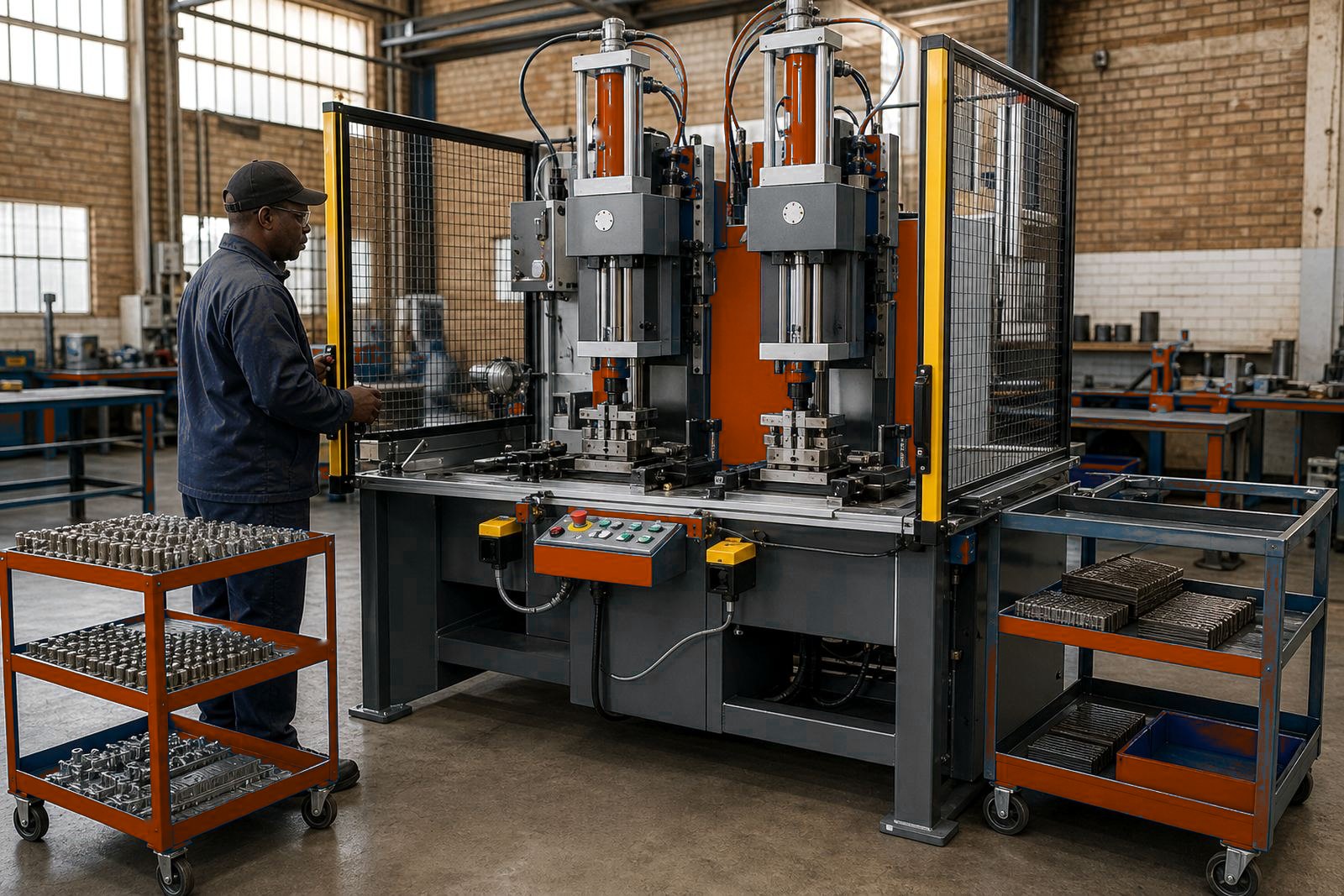
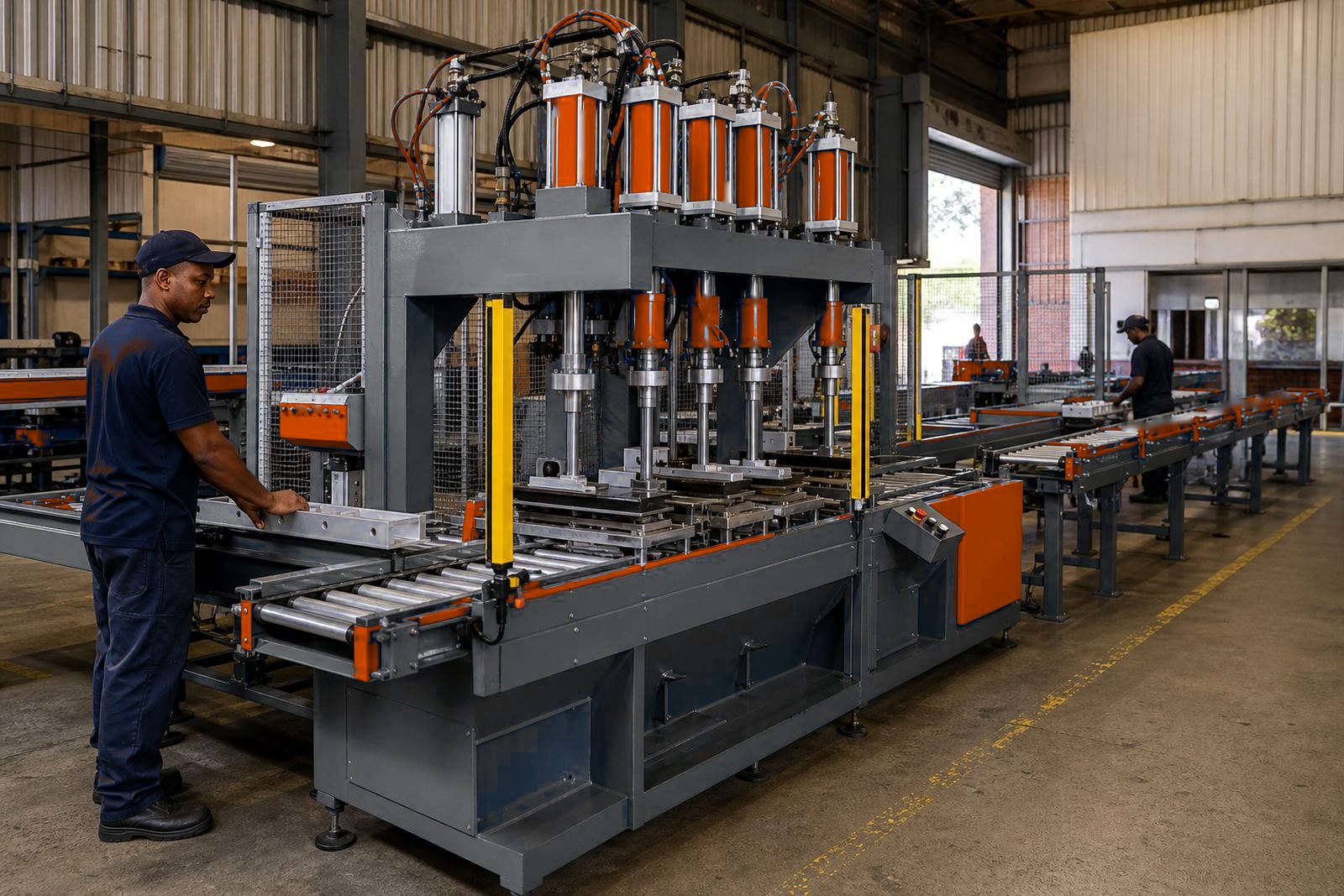
Space was tight, the line already had fixed movement paths, and the team needed a machine that would sit inside the existing process rather than force the whole area to be rebuilt. We planned the press as a multi-station unit, with each position set up for a defined task and proper guarding around the working zone.
- Pack sealing across several stations
- Controlled pneumatic action for repeatable pressing
- Guarding and two-hand control for the operator side
- Tooling arranged for the pack format on site
What the factory needed from the machine
The brief was practical. The press had to close packs evenly, keep the seal faces aligned, and work at a pace that matched the packing team’s output. A single station would not have handled the workflow well, so the design used separate stations for loading, pressing and release, which helped with consistency and reduced handling between steps.
Pack sealing presses need a careful balance of air pressure, stroke length and tooling face shape. Too much stroke can bruise the pack or waste time, while too little pressure leaves an unreliable seal. We set the unit up so the cylinders delivered controlled force and the tooling met the pack surface squarely, without making the operator fight the machine.
In a packing environment, the details matter. If the tooling is not guided properly, the seal can drift out of position. If the guarding is awkward, operators work around it and that usually leads to trouble. The layout had to be direct, readable and easy to keep in step with the rest of the line.
- Multi-station format for a staged packing process
- Cylinder force matched to the sealing task
- Stroke setting used to protect the pack face
- Two-hand controls placed for straightforward use
Build work carried out in the Isando workshop
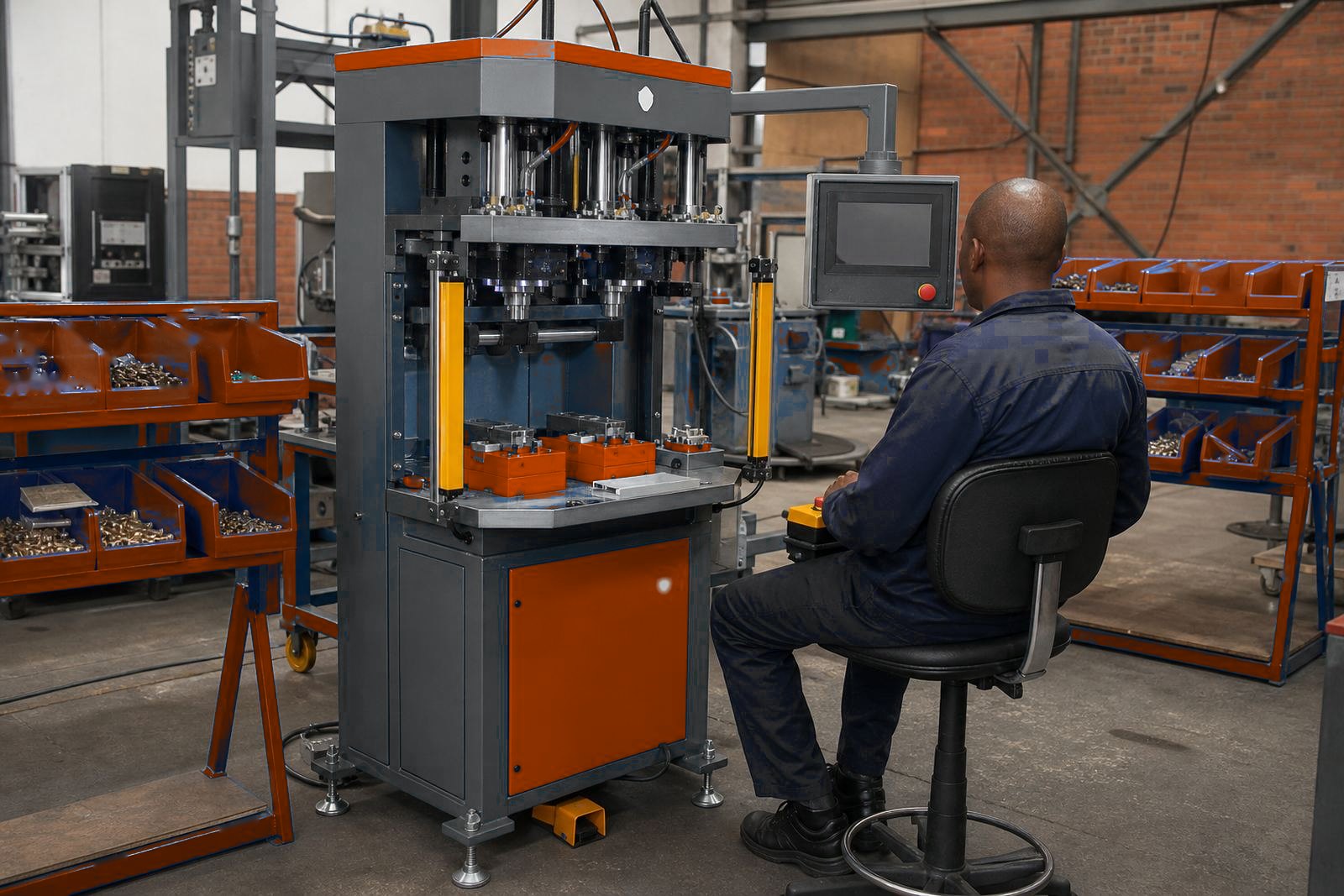
We built the press as a custom pneumatic system, with the frame, stations, tooling mounts and guarding arranged for the packing line in Isando. The tooling was made for the pack shape in use, and the station faces were laid out so the operator could load, start and clear each cycle without losing position. Musa handled the tooling design while Johan oversaw the workshop build and fit-out.
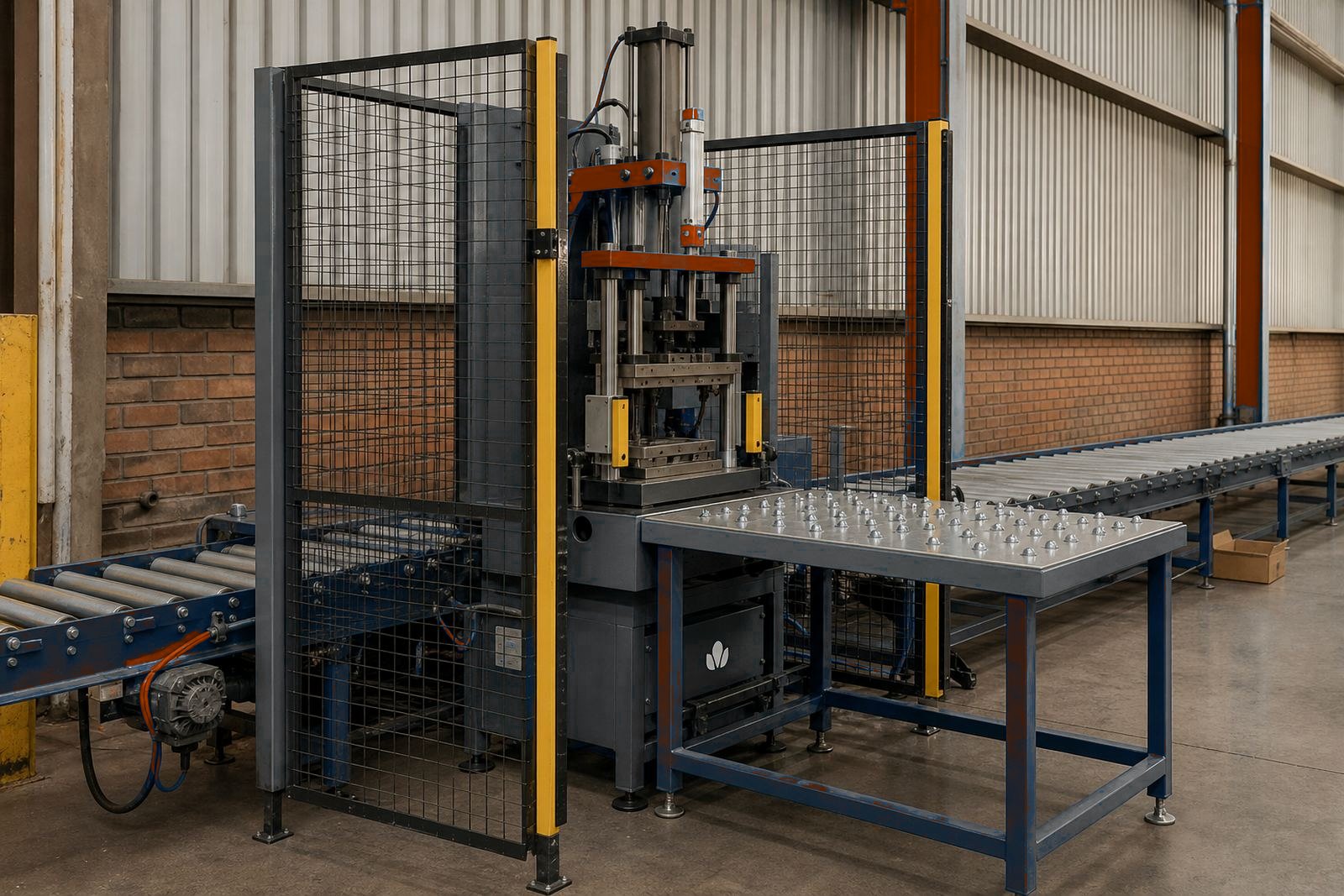
The guarding package included fixed protection around the active press area, plus light curtains where the process needed open access during loading and release. Two-hand controls were fitted so the operator had to keep both hands clear before the press cycle could start. That matters on a busy floor, especially where more than one person can move through the same section.
- Custom tooling for pack sealing faces
- Guarding built around the working envelope
- Light curtain integration where access was needed
- Two-hand controls for safer cycle initiation
Air line setup and stroke setting were handled during the build. That gave us a clean starting point during commissioning and avoided the common problem of a machine arriving with mechanical parts in place but no real tuning between pressure, travel and product behaviour.
Commissioning across three weeks on site
The installation moved through workshop build, site installation and commissioning over three weeks. The first stage was the physical fit, where the unit was positioned, levelled and connected to the factory air line. The next stage was stroke setting and trial cycling, followed by fine tuning for the pack material and the movement rhythm of the packing team.
Lerato led the commissioning work on site, checking that each station was cycling cleanly and that the guarding and safety devices were behaving as intended. We tested the air pressure range against the actual pack seal results, then adjusted tooling position and stroke depth until the seal line sat where it needed to sit. Pack material often behaves differently once it is under real production conditions.
The final stage was production handover. Anele trained the operators on start-up, loading position, safe hand placement, cycle control and basic checks during the shift. The team also went through tooling changes, because even a well built sealing press needs people on the floor who know how to swap over cleanly when the pack size shifts.
What changed once the line was running
Once the line was in place, the packing team had a press that matched the job instead of forcing the product into a general purpose setup. The sealing action became more consistent, the loading rhythm was easier to manage, and the stations gave the operators a clearer routine from one cycle to the next. That helped with output discipline and reduced the stop-start feel that often shows up when a packing job is underpowered or badly matched.
The factory also gained a cleaner safety setup. With the guarding in place, the light curtain sections working correctly and the two-hand controls set for the actual cycle, the machine was easier to supervise during a shift. For an Isando plant with regular traffic around the line, that kind of order matters. It keeps the work area readable and gives the supervisors a better base for day-to-day control.
- More even sealing across the pack line
- Better station-to-station flow for operators
- Clearer control over cycle start and hand position
- Safer access around the press area
What we keep in a pack sealing job
On a similar job, we would keep the same approach of building the station layout around the product first, then setting the cylinder force and stroke around the seal instead of forcing the pack to suit the machine. That step usually avoids problems later in the packing line. If the tooling face, air pressure and guarding all support the same motion, the line settles down more easily.
We would also schedule commissioning and training near handover, so the line is ready for our customer to start using it. Operators learn quicker when they can work through the actual pack, the actual stroke and the actual safety sequence on the finished machine. Pieter Sauls oversaw the project direction, with Thandiwe Matlala keeping the job moving between workshop, site and final sign-off.
For packing operations in Isando and the wider Gauteng industrial belt, a multi-station pneumatic press can be a solid fit when the process needs repeatable sealing, proper guarding and a layout that respects the way the line already runs.
Key facts
| Project | Multi-station pack sealing press installation |
|---|---|
| Town | Isando, Ekurhuleni |
| Press type | Pneumatic multi-station press |
| Stations | Multiple stations for staged packing work |
| Controls | Two-hand controls with light curtain integration |
| Services | Custom tooling, guarding, site installation, commissioning, operator training |