Jet Park Brief, With The Repetitive Fastening Problem Up Front
The work came from a light manufacturing team in Jet Park, Ekurhuleni, where a manual riveting routine was slowing the line and leaving too much room for part movement. The parts needed firm support before each cycle, then a clean twin-head riveting action that could hold position while the operator stayed on task. The job called for consistency across repeated cycles, not a makeshift bench with loose fixtures and hope.
The brief asked for a press arrangement that could suit a steady stream of small assemblies, with enough control over stroke, air pressure and clamp position to protect the component. The team also wanted safer operator flow, clearer guarding and a station layout that would not force awkward reaching around the tooling. That meant the equipment had to do more than press, it had to fit the rhythm of the production floor.
What We Built Into The Rivet Line
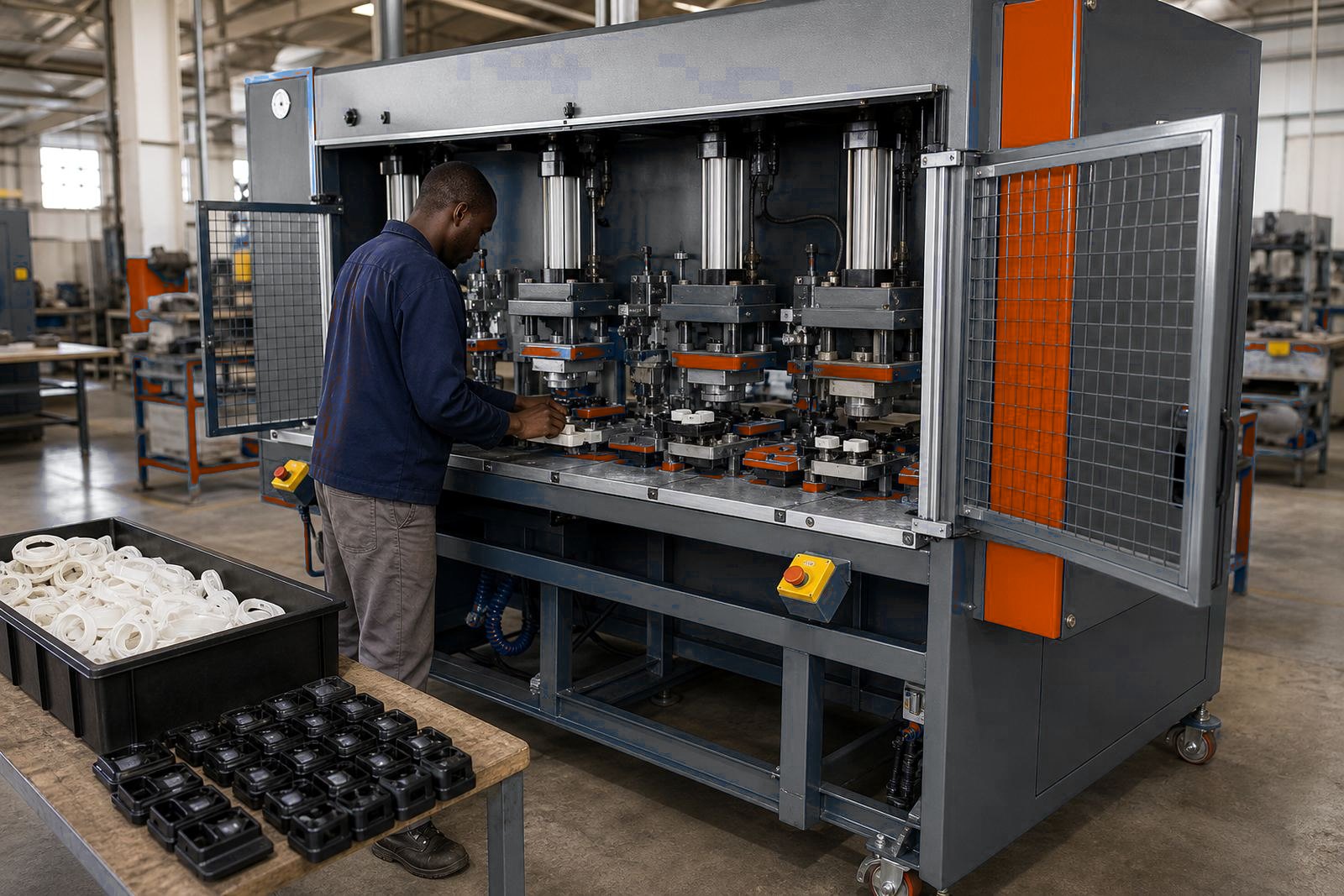
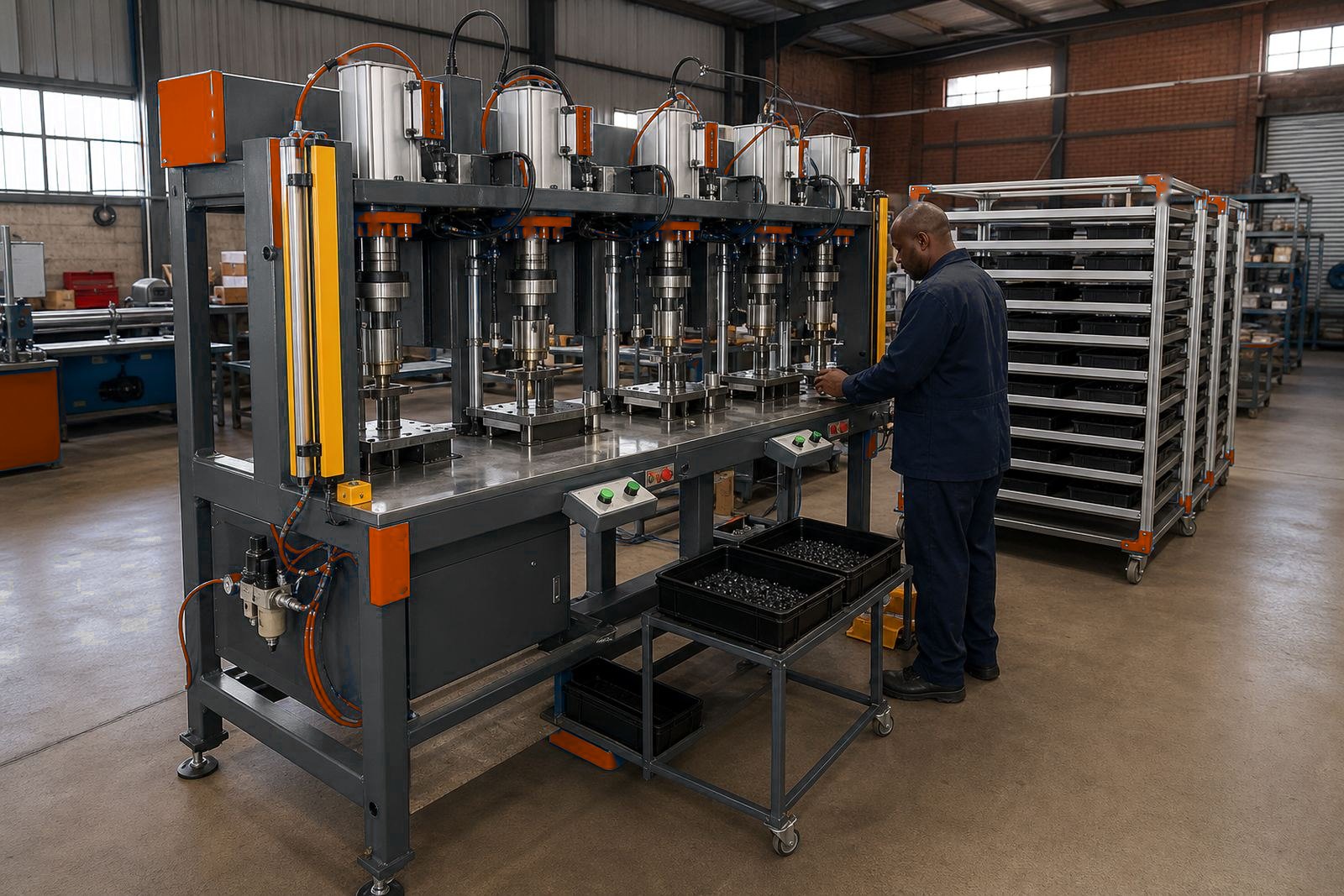
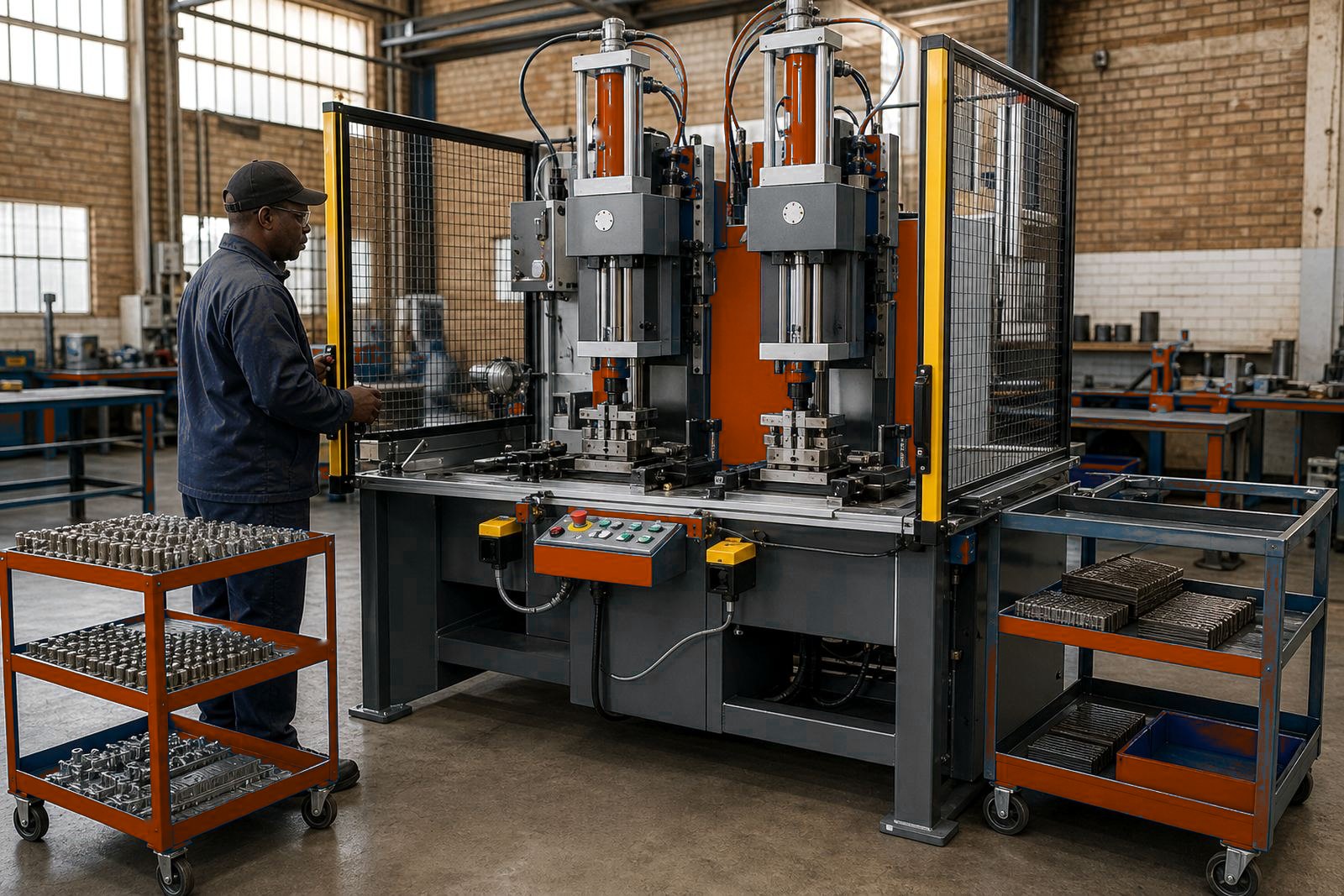
MultiPress supplied a twin-head pneumatic riveting line with paired cylinders, dedicated tooling and a fixture arrangement that kept the workpiece supported from both sides of the operation. The head spacing was set around the component geometry, while the stroke setting was matched to the rivet form and the depth required for a clean set. Air pressure control was built into the setup so the pressing force stayed predictable from cycle to cycle.
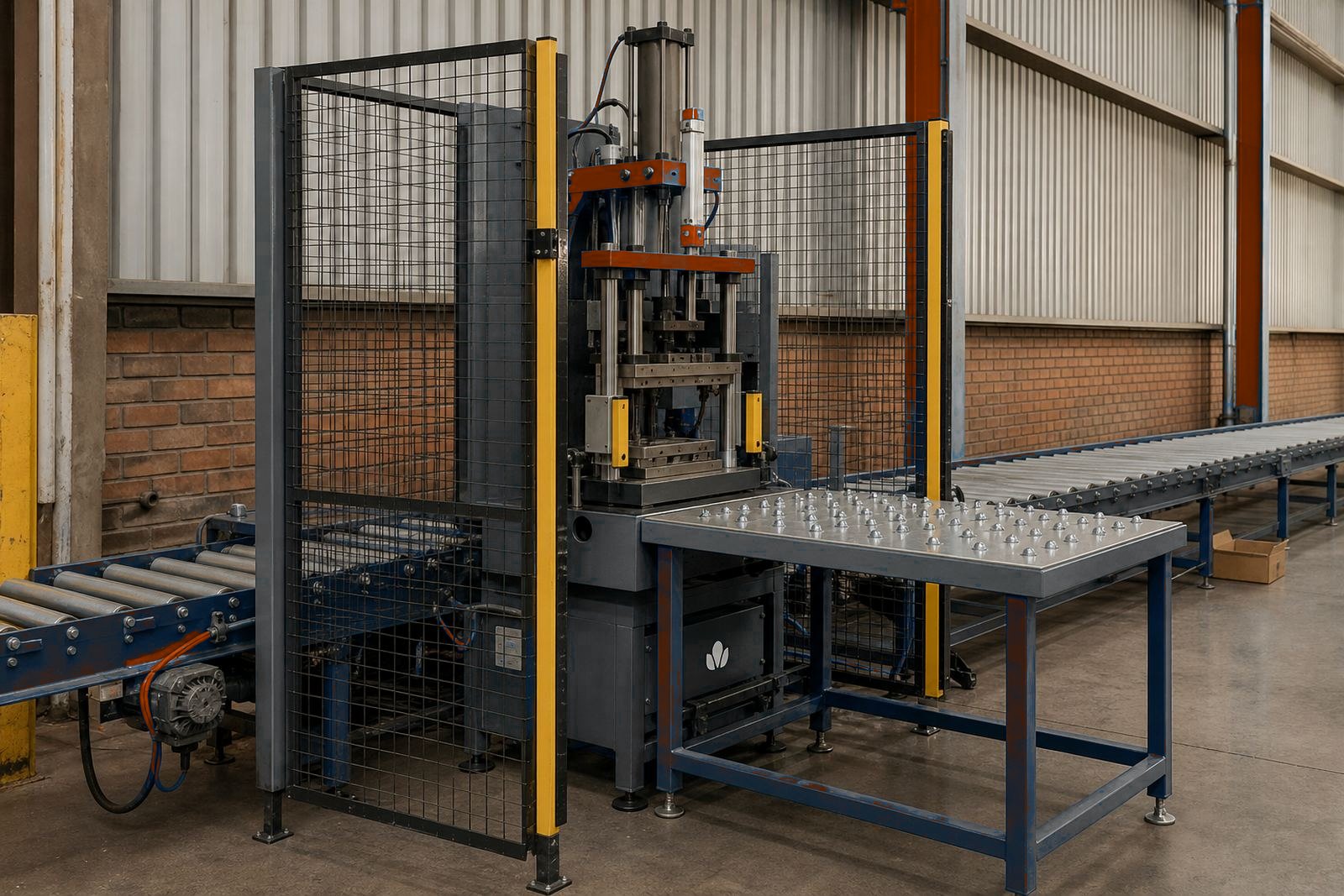
Two-hand controls were included for the main action, and the guarding allowed the operator to load and unload without reaching through exposed movement. Light curtain integration was added where the line needed open access on the loading side, so the station could stay productive without leaving the moving area exposed. The tooling was made for the part profile, with locating points that helped the assembly sit square before the rivet heads came down.
- Twin-head pneumatic riveting for repetitive fastening
- Custom fixture support for the part footprint
- Stroke setting to suit the rivet depth
- Two-hand controls for the main press cycle
- Guarding and light curtain integration where required
Tooling, Support Surfaces And Part Handling
The biggest difference in a riveting line often sits in the tooling, not only the press body. This job needed part support that could carry the component evenly, keep the holes aligned and reduce movement while the rivet was formed. Musa Hartnick designed the tooling around the actual handling pattern, including the lead-in, the seating point and the unload path. That helped the operator place the part with less fumbling and fewer small corrections.
Because the job was repetitive, the fixture also had to survive constant use without losing registration. Wear points were kept accessible, and the layout made cleaning and inspection practical on a normal shift. Where the process called for a firmer hold, the support surface was opened up to suit the underside of the part, so the press could work cleanly without marking the assembly. Small details like that matter when a line is expected to keep moving.
- Part nests matched to the rivet locations
- Access left open for cleaning and inspection
- Wear points kept practical for workshop care
- Support geometry reduced part twist during pressing
Guarding, Controls And Workshop Build-Up
Johan Ramokgopa handled the workshop build-up, with the frame, heads, supports and safety hardware assembled as a single working line. The guarding was set to suit the plant floor space and the way operators would approach the station, while the control layout kept the cycle clear and direct. Pneumatic lines were routed neatly, and the air setup was arranged so the station could be commissioned without messy hose runs across the work area.
The press needed to feel solid under load, especially where the twin-head action created repeated force on both sides of the component. That meant the frame had to stay true, the mounts had to hold, and the tools had to stay aligned under cycle pressure. We kept the build practical and serviceable, with enough access for future adjustments to the tooling and the stroke stops. Small production lines are unforgiving when fittings shift or clamps wander, so that part of the work was treated carefully.
Commissioning Week In Jet Park
Once the line was in the plant, Lerato Moagi carried out commissioning and stroke setting with the operations team. The press cycle was checked against the part, the air pressure was tuned for the set required, and the rivet form was tested under repeated operation. The handover included operator training from Anele Engelbrecht, who worked through loading position, cycle sequence, guarding rules and the handling of parts that needed careful seating before the press cycle began.
The full project ran over four weeks from final workshop preparation through site installation and handover. That window included tool fitting, guarding checks, line placement, air connection, test runs and production training. The goal was not only to make the press work, but to make the team comfortable using it under real shift conditions. Pieter Sauls oversaw the project direction and stayed close to the technical decisions as the line moved from build to use.
- Week 1: workshop preparation and tool build
- Week 2: frame assembly, guarding and controls
- Week 3: site installation and air line setup
- Week 4: commissioning, stroke setting and operator training
What Changed On The Production Floor
After the line was running, the team had a steadier fastening routine and far less part wandering at the press point. The twin-head arrangement improved support during the rivet cycle, which helped the operator work with a cleaner rhythm and fewer interrupted resets. The station also opened up the flow around the press, so the load and offload movement felt less cramped than the earlier manual routine.
The line was not built for show. It was built so the factory could keep a repeatable riveting process on the floor with clear control over the press movement and part position. That kind of change shows up in the practical details: fewer awkward reaches, a firmer set on the rivet and a station that does not fight the operator. For a repetitive fastening job in Jet Park, that was the point.
The Same Build Choices We Would Use On Another Rivet Line
If a similar line is laid out for another plant in Gauteng or further afield, we would keep the same priorities: stable part support, sensible head spacing, visible guarding and a stroke set to the fastening duty. The work lives or dies on the fit between tooling and component, so that part needs proper attention before the first production run. We would also keep the air setup tidy, with enough access for routine checks and adjustments.
Two-hand controls suit this kind of repetitive press when the loading path is clear, and light curtain protection has its place where the station must stay open on one side. Commissioning and operator training should sit inside the build plan, not after the fact. A rivet line performs best when the operators know the sequence and the tooling suits the job, instead of making the job fit the machine.
- Keep the fixture tied to the part geometry
- Set the stroke around the fastener form
- Protect access without complicating the load path
- Train the operators on the actual station flow
Key facts
| Project | Jet Park twin-head rivet line |
|---|---|
| Application | Repetitive fastening for assembly work |
| Press type | Multi-station pneumatic press arrangement |
| Main features | Twin-head riveting, two-hand controls, guarding |
| Build scope | Custom tooling, site installation, commissioning, operator training |
| Service areas | Jet Park, Johannesburg, Pretoria, Durban, Gqeberha, East London |