Midrand floor plan, not a one-size line
The client was a mid-sized assembly operation in Midrand working on light industrial subassemblies for repeat production runs. Their main concern was spacing, because the line had to fit a tight bay and still leave room for stock movement, inspection and packed output.
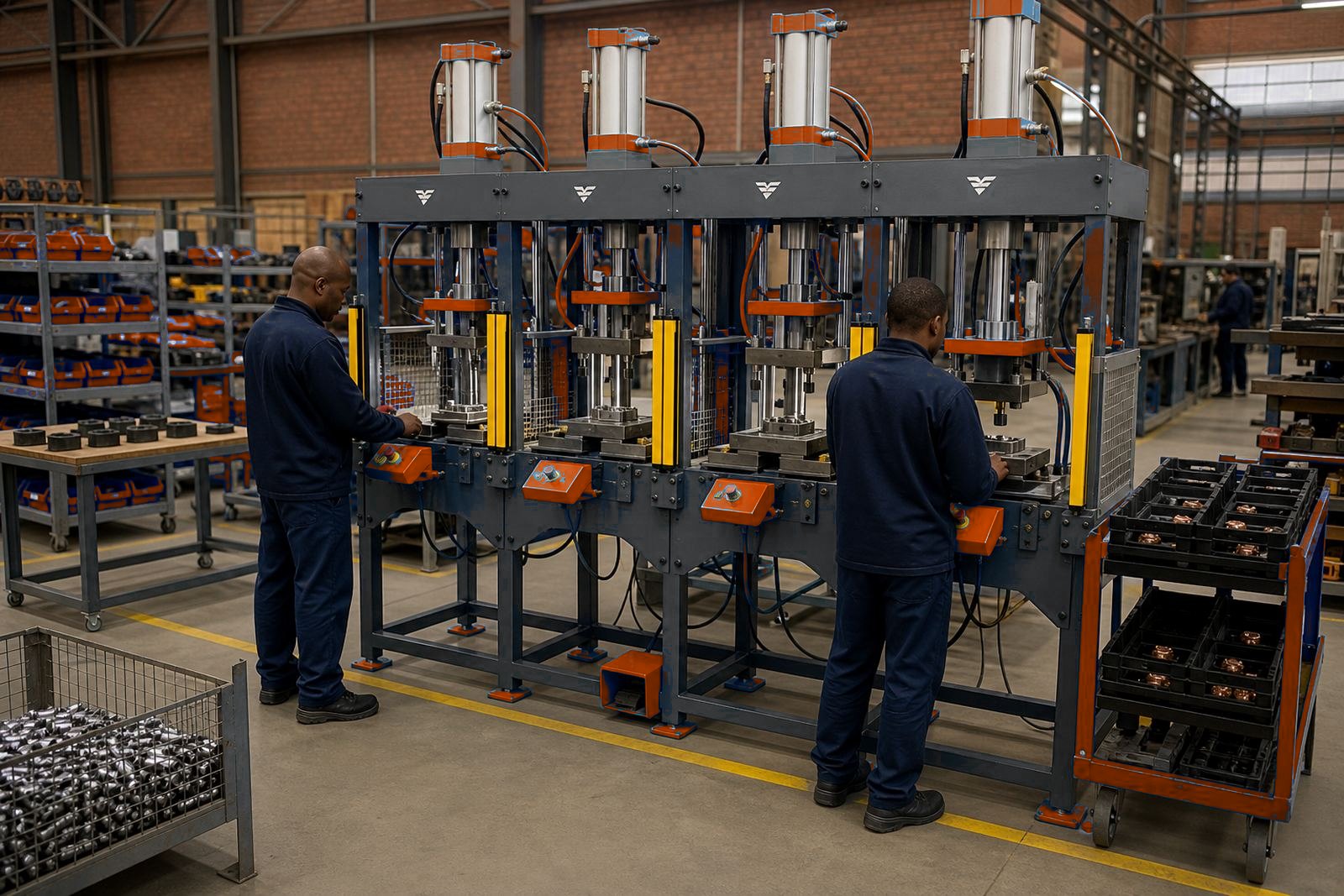
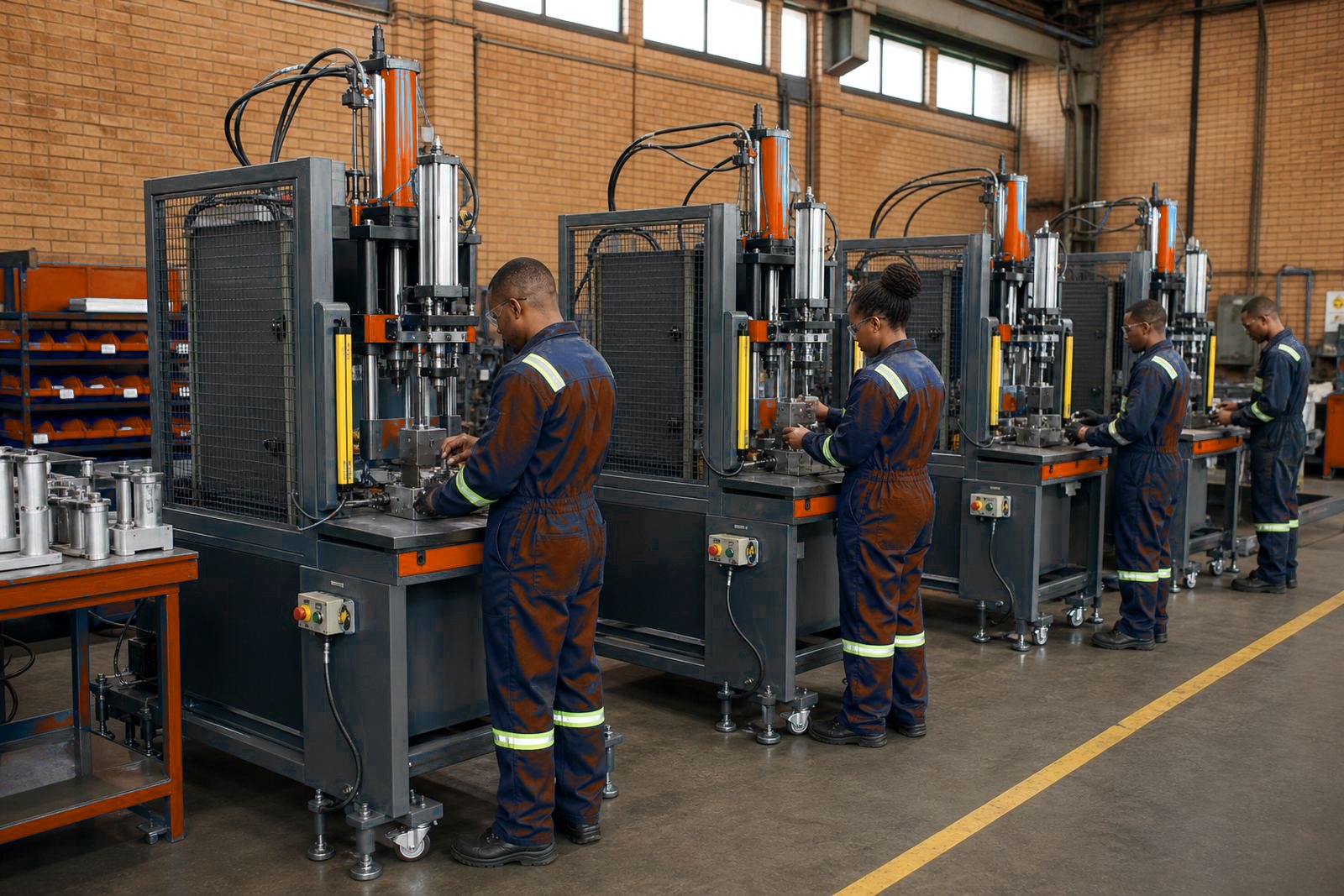
We started by mapping the work sequence from first part load to final pack-off. The layout used several press points in a modular format, so each station could be aligned for a different task, with enough reach for the operator and enough guarding for a busy production floor.
- Area: Midrand, Gauteng
- Application: subassembly, crimping and pack sealing
- Line form: modular stations with shared operator flow
- Constraint: narrow footprint with clear walkways and material staging
What the brief asked the press line to do
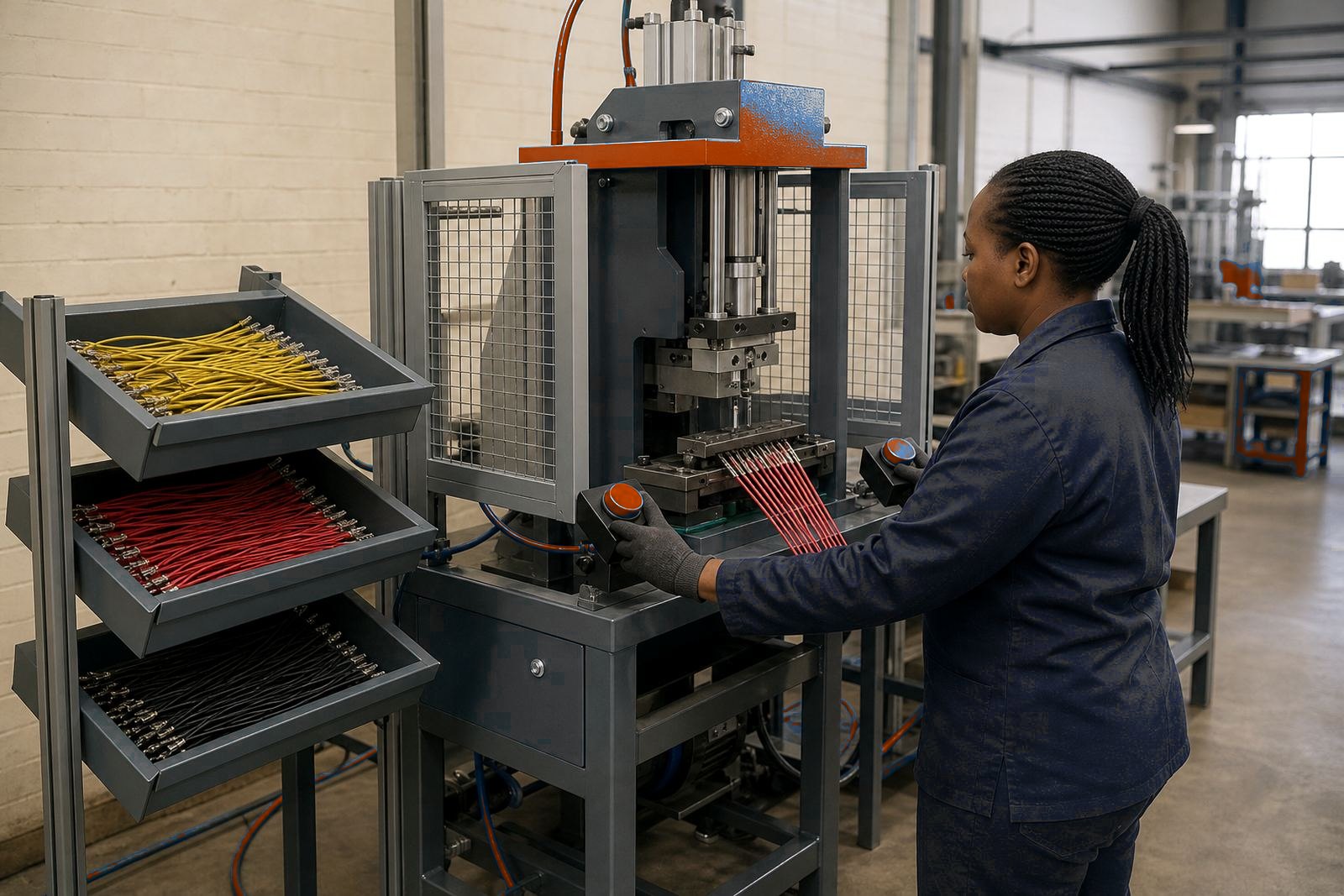
The brief called for a practical press line that could support several joins and finishing steps in one controlled sequence. One station needed a longer stroke for part insertion, another needed shorter travel for crimping and staking, while a final point handled pack sealing for prepared kits.
Air pressure had to be stable across the full line, and every station needed repeatable stroke setting so operators were not reworking the same piece twice. Two-hand controls were required on the press positions, with light curtains where the movement zone needed extra protection for hands and loose sleeves.
- Multi-station workflow for assembly and finishing
- Stroke setting matched to each job step
- Two-hand controls on active press stations
- Light curtains at higher exposure points
Tooling, guarding and the small tolerances that matter
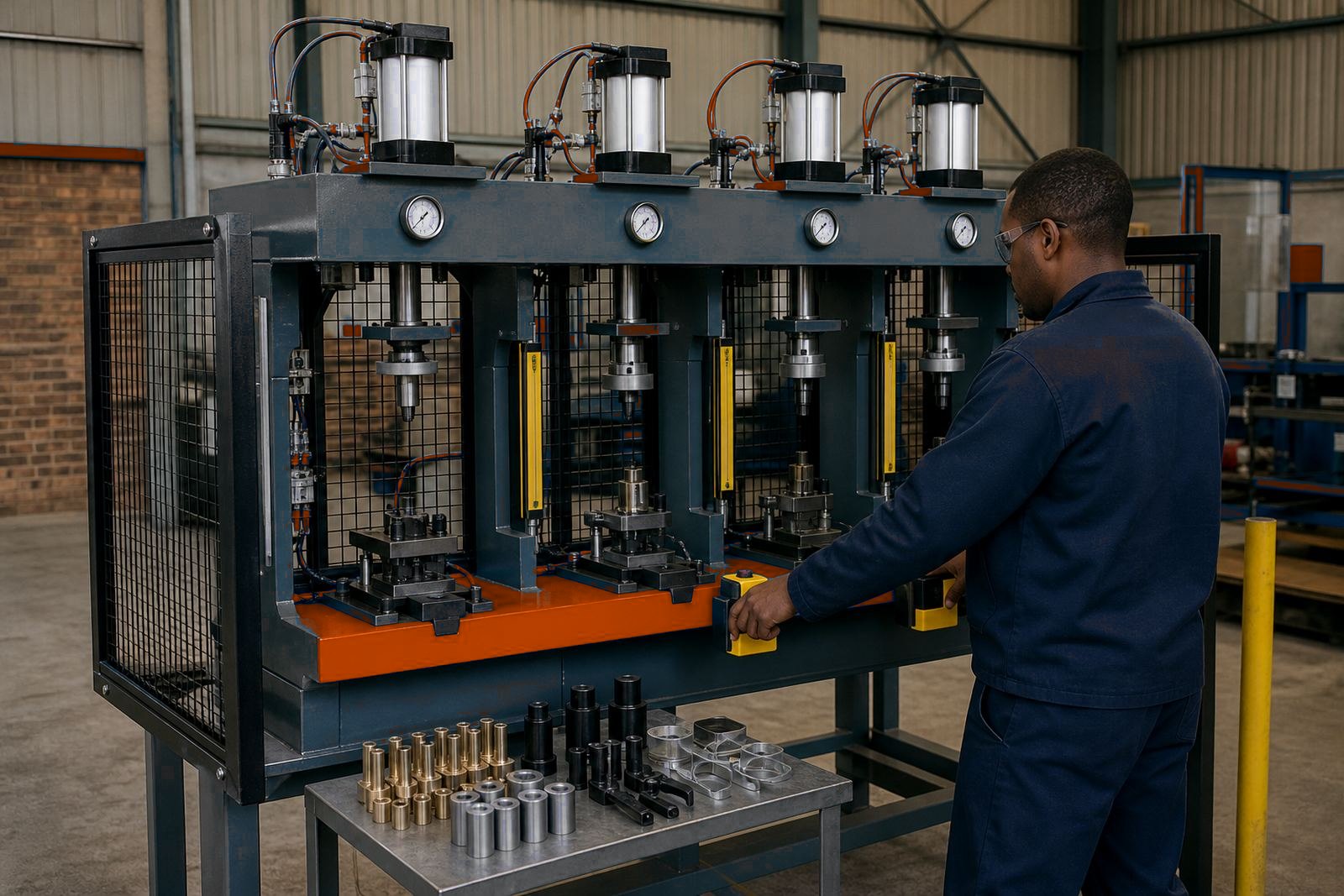
Musa designed the tooling around the actual part stack for proper support before the cylinder came down. The tools had to support the component properly before the cylinder came down, otherwise the crimp would wander and the rivet head would not seat cleanly. For the seal station, we kept the tool faces square and easy to clean between runs.
Johan and the workshop team built the guarding around access, not against it. Operators still needed clear visibility, especially during set-up and part checks, but the moving zone had to stay controlled. Guard panels, interlocks and light curtains were arranged so the line could run in a steady rhythm without the operator leaning into the press area.
- Custom tooling for crimping, riveting and staking
- Guarding built around visibility and access
- Tool faces matched to the component geometry
- Clear operator stance at each station
Build, air setup and commissioning on site
The workshop build covered the frames, cylinders, controls and tool mounts before the line left Isando. After fabrication, we handled the air line setup, checked the cylinder travel and set each press to the stroke the job needed. That part matters on pneumatic work, because a press that travels too far or too short will show it in the finished piece.
Lerato carried out the commissioning in Midrand with the line in production position. We checked alignment, pressure behaviour, safety devices and station sequencing, then ran the presses through actual parts until the cycle felt steady. The line was handed over in modules, which made faults easier to isolate and the operator path easier to learn.
- Workshop fabrication in Isando
- Air line setup and stroke setting completed on site
- Commissioning covered sequencing and safety checks
- Modular handover kept each station easy to follow
Operator training at handover, not after the problems start
Anele worked with the operators during handover so the team could learn the line while it was still fresh. We covered part loading, two-hand control use, safe clearing, tool change checks and the way the press should sound and feel when the stroke is correct. That is often where a new line either settles well or starts wasting parts.
The training also included what to watch for on a busy shift. Air pressure drift, small alignment changes and worn tooling show up early if the team knows where to look. The aim was to leave the client with a line they could run on a busy shift.
- Operator training delivered at handover
- Covered loading, clearing and tool change checks
- Included pressure and stroke observation
- Built confidence for shift work and handovers
What the line achieved after week three
The job took three weeks, starting with the first layout review and ending with the final handover. By the end of that window, the client had a working subassembly line with multiple press stations, clearer part flow and better control over each join point. The packing step also became easier to organise because the sealing station sat in the same sequence as the assembly work.
The main result was consistency. The components sat better in the fixtures, the press travel was easier to repeat, and the operators did not need to improvise around the line. For a factory in Midrand, that means less stop-start handling and less chance of one station disturbing the next one down the line.
- Project duration: 3 weeks
- Outcome: modular line with repeatable press stages
- Benefit: steadier part flow and cleaner handover
- Use case: assembly, crimping, riveting and pack sealing
Key facts
| Project | Midrand Subassembly Line |
|---|---|
| Location | Midrand, Gauteng |
| Line type | Modular multi-station pneumatic press line |
| Main functions | Assembly, crimping, riveting, staking, pack sealing |
| Safety | Two-hand controls and light curtain protection |
| Delivery | Custom tooling, guarding, commissioning and operator training |