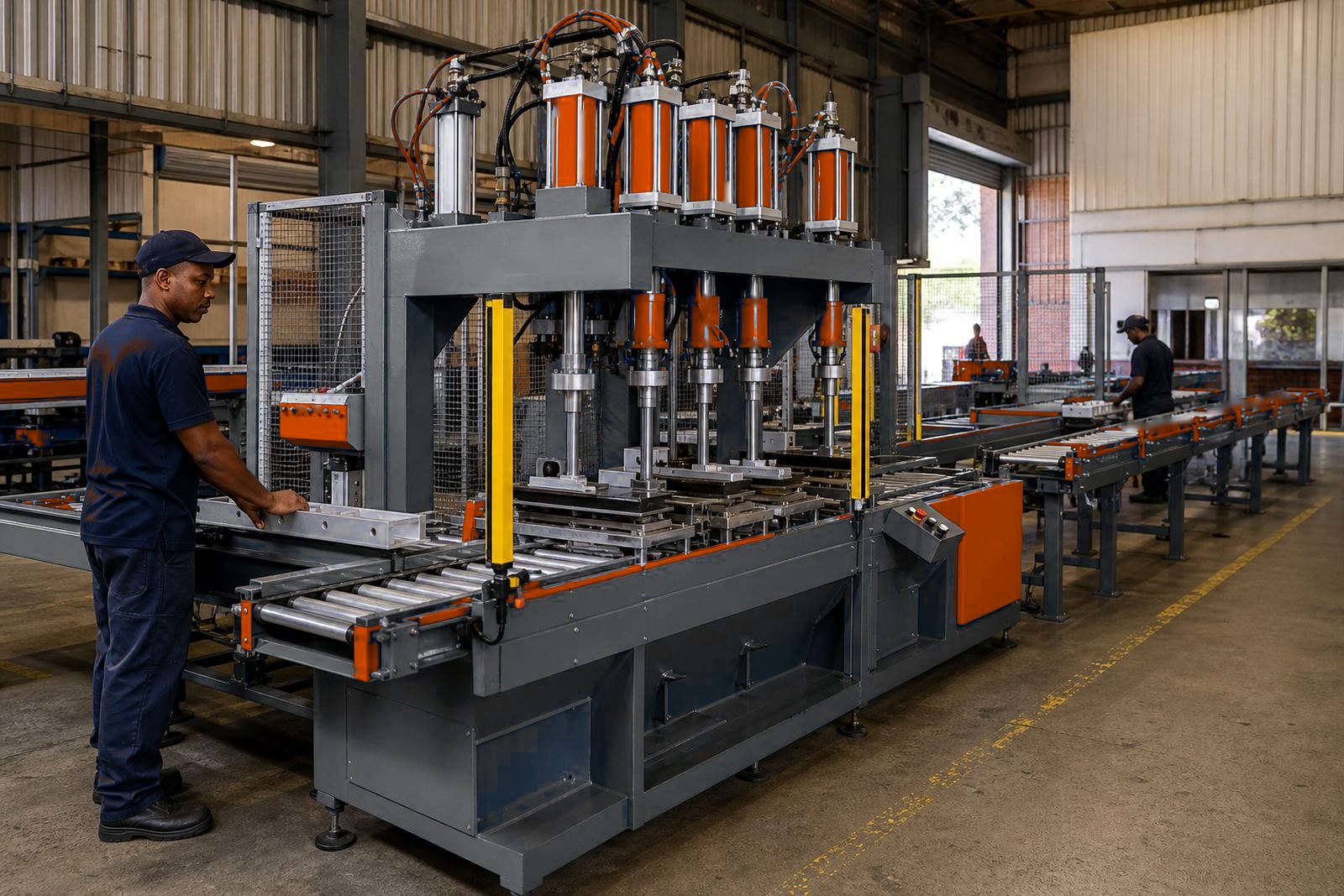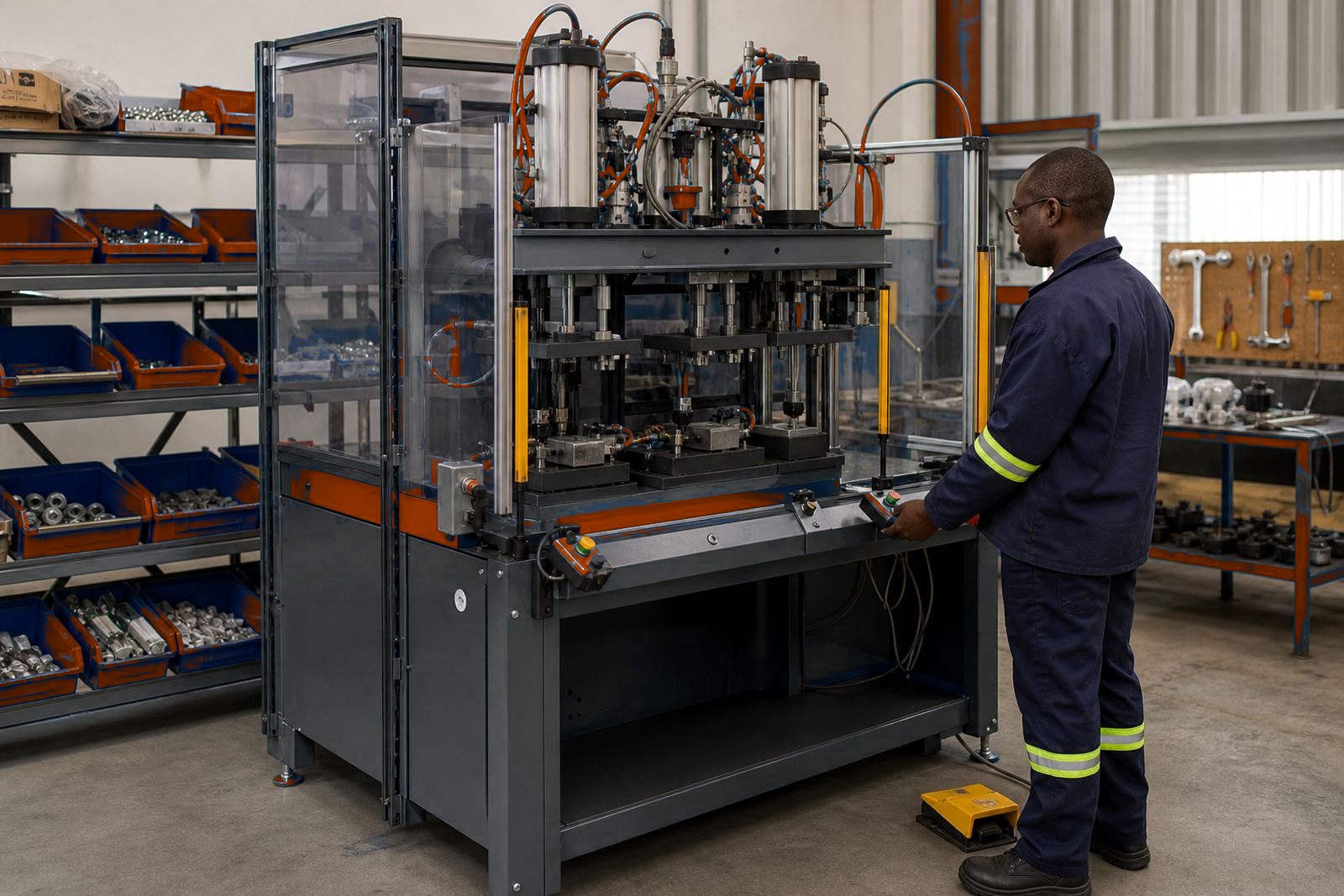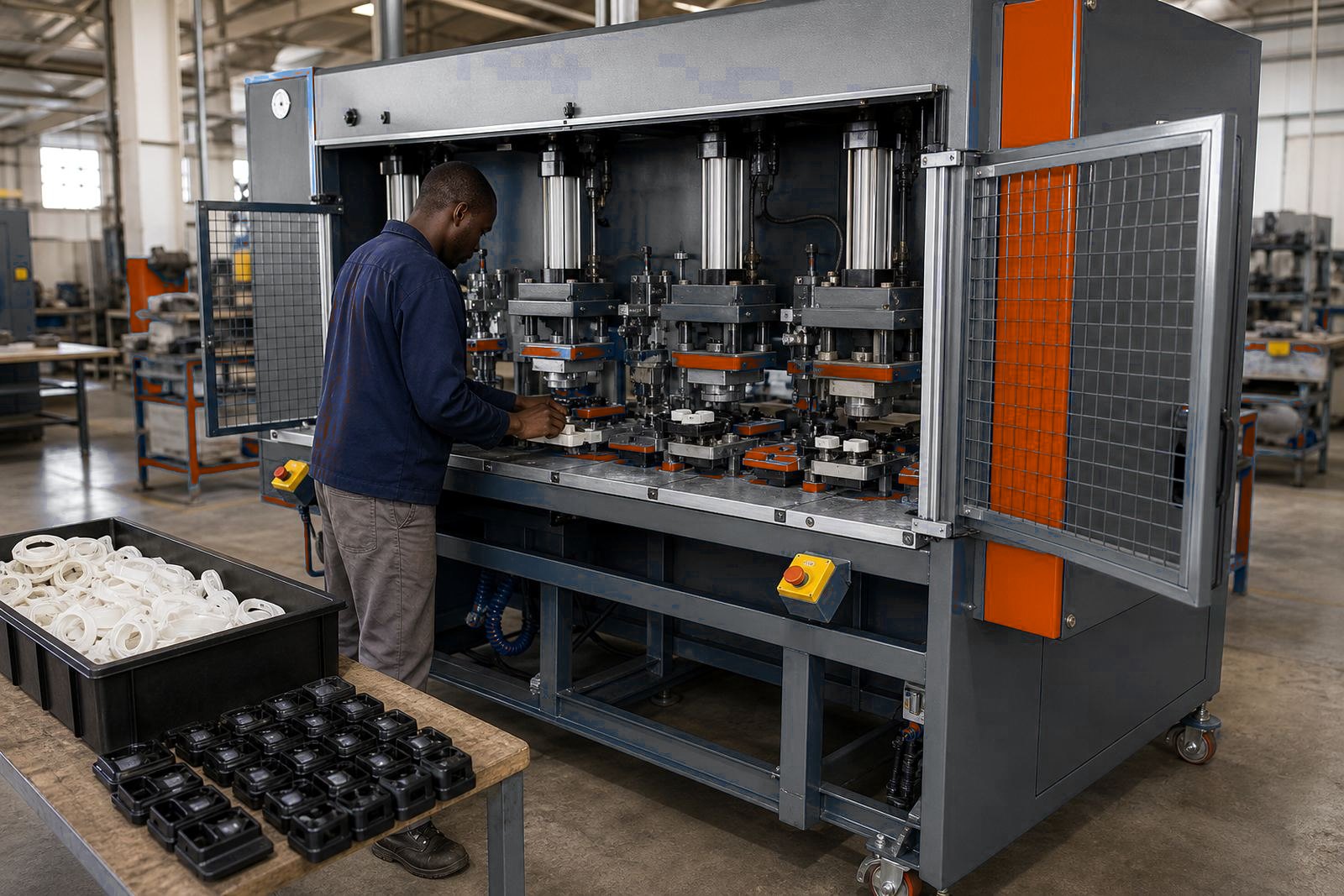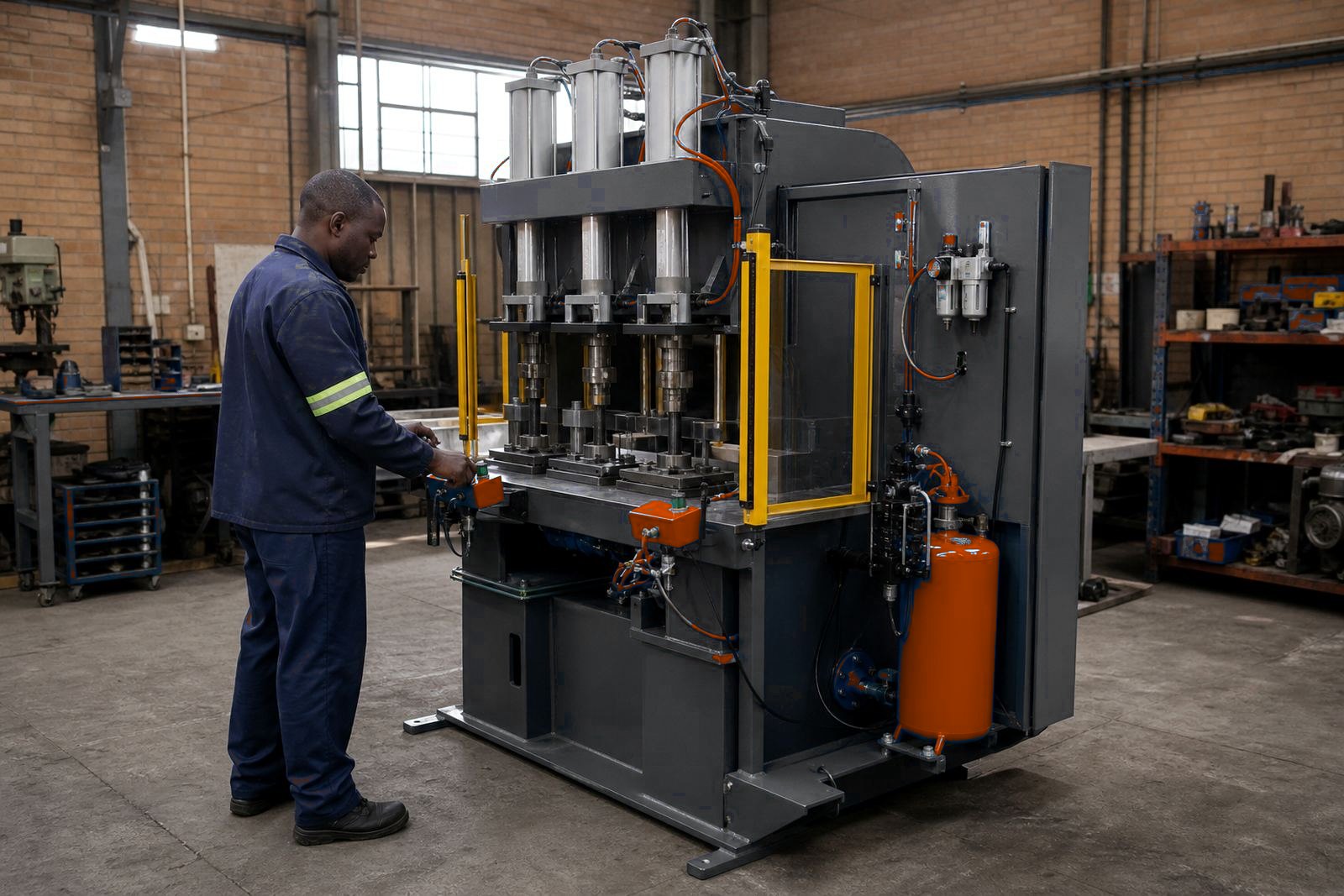
The Pinetown line had outgrown the old setting
The job came from a parts manufacturer in Pinetown that was running a crimping process on mixed batches, with the component size shifting enough to upset the old tooling. The press still had sound frame work, but the stroke window, crimp depth and loading position no longer matched the new parts.
That kind of change shows up quickly on a production floor. Operators start packing shims under tools, the finish becomes uneven and the handover notes get thicker than the work itself. The brief was to rebuild the crimping station so the line could handle the revised component sizes without forcing the team to fight the machine.
- Town: Pinetown, KwaZulu-Natal
- Process: crimping press rebuild and recommissioning
- Issue: revised component sizes and unstable set-up
What had to stay in place while the press changed
The client needed a workable rebuild, not a complete press replacement. The existing press frame had to stay in service, and the new set-up had to fit the bay, the air supply and the production routine already in place on site. Access around the machine was tight, so guarding and operator entry points needed to be thought through from the start.
We also had to keep the operator experience clear. The machine needed two-hand control, good visibility to the tooling area and a repeatable stroke for consistent crimp position. The revised parts had smaller tolerance bands, so tooling alignment mattered just as much as cylinder force.
- Constraint: keep the existing frame and footprint
- Constraint: suit the revised component geometry
- Constraint: allow safe loading and unloading at the station
- Constraint: preserve normal production flow on site
Workshop rebuild, tooling design and guard changes
In our Isando workshop, the rebuild started with measuring the existing press envelope, then mapping the new component size against the available stroke and clamp position. Musa designed the tooling to suit the revised crimp profile, while Johan oversaw the mechanical work on the frame, slides and mounting surfaces.
The tooling package was set up to hold the part square through the cycle, with the crimp face shaped to avoid marking the visible surfaces. We also built revised guarding, including a light curtain at the operating zone and two-hand controls on the cycle start. That gave the operator a cleaner routine and reduced the temptation to reach into the press area.
- Custom crimp tooling for the revised part size
- Guarding rebuild with light curtain integration
- Two-hand control set-up for each cycle
- Mechanical alignment checks on the press station
Commissioning at the line in three measured stages
The on-site work was carried out in stages over three weeks. The first stage covered removal of the old tooling and fitment of the revised station parts. The second stage dealt with air line setup, stroke setting and fine alignment on the crimp cycle. The third stage was commissioning with production parts, where we watched the part presentation, operator movement and finished crimp profile together.
Pinetown humidity can be hard on poorly protected equipment, so we also checked the air preparation and the cleanliness of the working zone. Moist air and dirty airline runs will show up in cylinder movement and valve behaviour sooner than people expect. The final set-up was tuned so the machine could run at the required pressure without chasing the same setting through every shift.
- Week 1: strip-out and rebuild planning
- Week 2: tooling fitment and guarding changes
- Week 3: stroke setting, commissioning and handover
Operator training and production handover on the floor
Anele handled the operator training with the team that would run the press daily. The focus was on safe loading, part location, cycle initiation and how to spot a poor crimp before it became a batch issue. We kept the instructions practical and close to the machine, because a good line handover only works when the people at the station can repeat it under pressure.
The final handover covered basic tooling change practice, the guard sequence, the correct way to check stroke position and the steps to follow if the part size changes again. Production staff were shown how to verify the crimp against the agreed sample piece and how to keep the station clear of loose offcuts and trapped air hose loops.
- Safe use of the two-hand control station
- Checking crimp depth against the sample part
- Routine care for tooling faces and guides
- Practical steps for minor changeovers
What changed after the rebuild
The rebuilt press gave the client a better match to the revised component sizes and removed the stop-start style that had built up around the old tool set. The crimp position stayed consistent, the part sat better in the fixture and the operators had a clearer view of the cycle. That matters on a line where small variations can turn into scrap if the press is left to drift.
The project also left the client with a clearer maintenance path. The tooling is easier to set, the guards are easier to work around during authorised access and the stroke setting is documented for the production team. If a similar job lands on our bench again, we would keep the same order: measure the part first, lock the stroke around the component and then finish the guarding only after the cycle is proven.
- More consistent crimping on revised component sizes
- Cleaner loading position and better visibility
- Safer station routine with clear access control
- Shorter set-up effort for future changeovers
Key facts
| Project type | Crimping press rebuild and commissioning |
|---|---|
| Town | Pinetown, KwaZulu-Natal |
| Press style | Multi-station pneumatic press station |
| Key functions | Crimping, tool change and production handover |
| Controls and safety | Two-hand controls with light curtain integration |
| Timeline | Three weeks on site and in workshop stages |