Rosslyn line brief and the part flow
The job came from a metal component plant in Rosslyn that was feeding a repetitive assembly line with supported parts that needed to sit accurately before the press cycle. The team wanted a fixture station that would hold each piece in the same position, keep the operator clear of the working zone, and suit repeat work without forcing a heavy manual setup every shift.
The process included assembly, local fastening and a controlled press action, so the station had to handle more than one movement without turning the area into a crowded bench. The brief called for clean part location, steady clamping, repeatable stroke depth and enough guarding to keep the cycle disciplined when the line was moving at a practical production pace.
What the station had to solve
The part mix was consistent, but the component edges and fix points needed support in the right places or the press load would drift across the piece. The customer also needed a station that could sit into an existing production area without pushing the operator into awkward reaches or forcing extra handling between steps.
- Positive part location with a dedicated fixture nest
- Controlled press stroke for assembly and staking actions
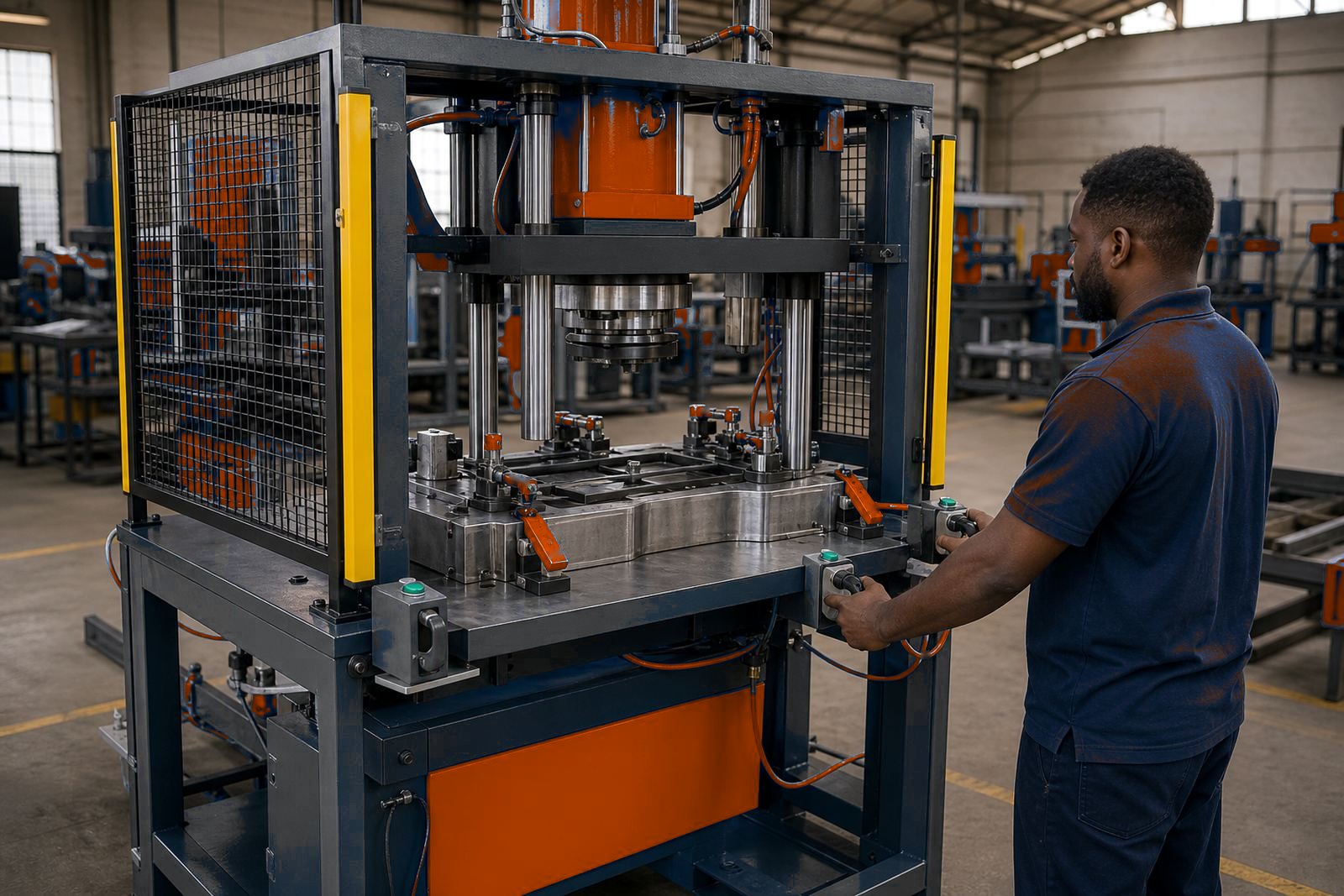
- Two-hand control access for the operator cycle
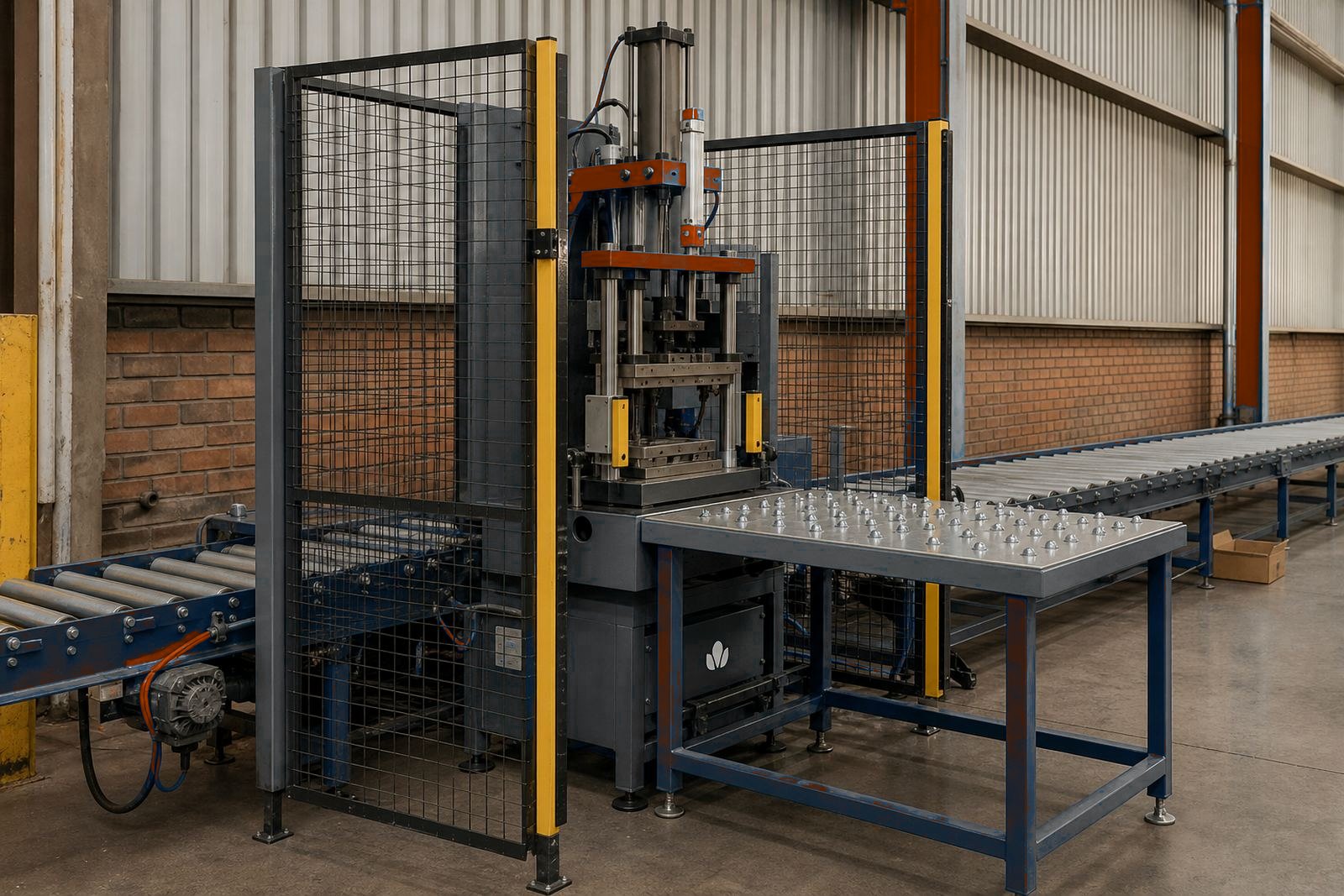
- Light curtain protection around the working zone
- Air line routing suited to the local shop layout
Space was tight, so the frame footprint had to stay compact while still leaving room for maintenance access and tooling changes. The station also had to cope with normal workshop dust and the kind of humidity that settles into a Johannesburg industrial area after rain, which means guarding and fittings need sensible finishes and neat routing.
What we supplied and set up
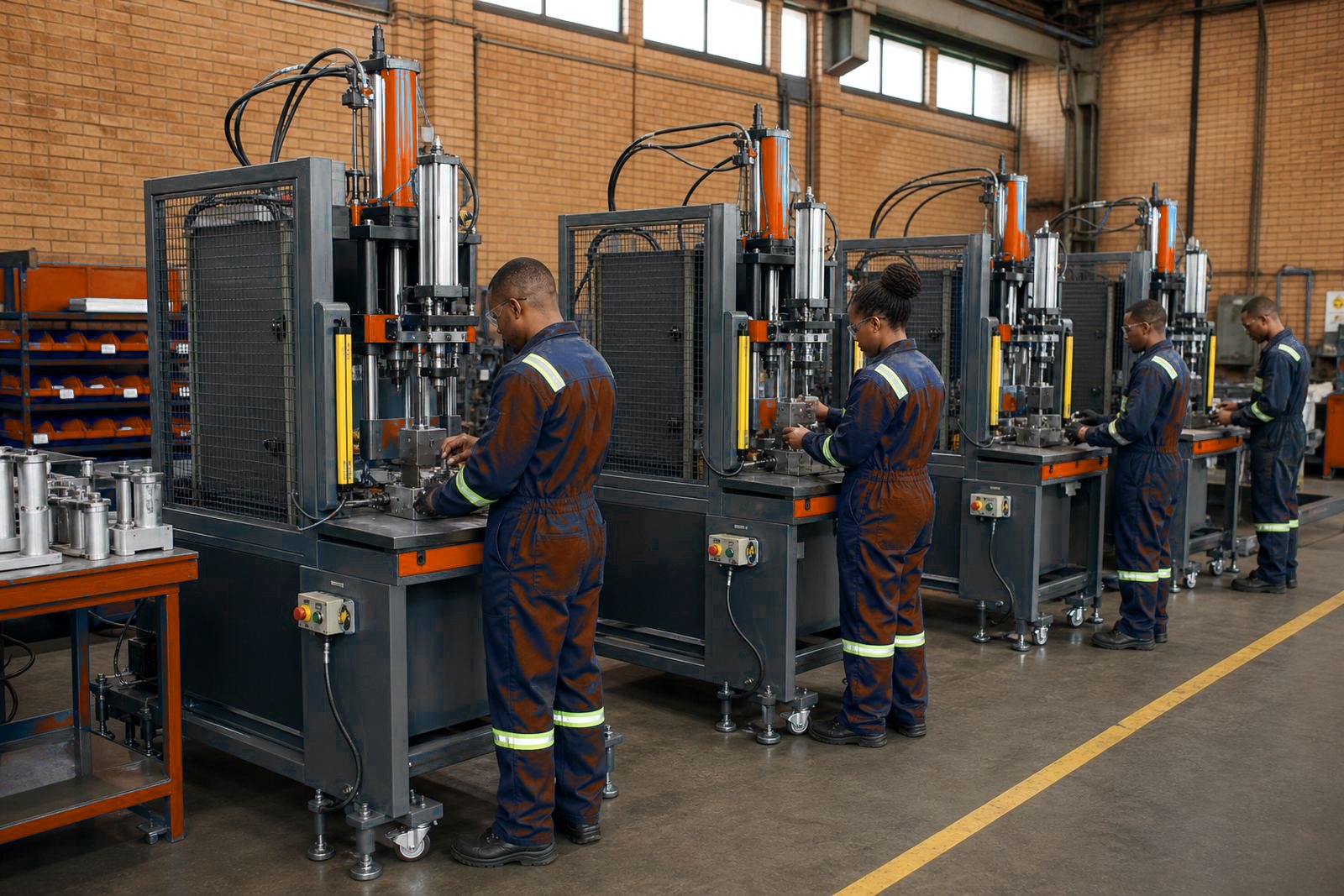
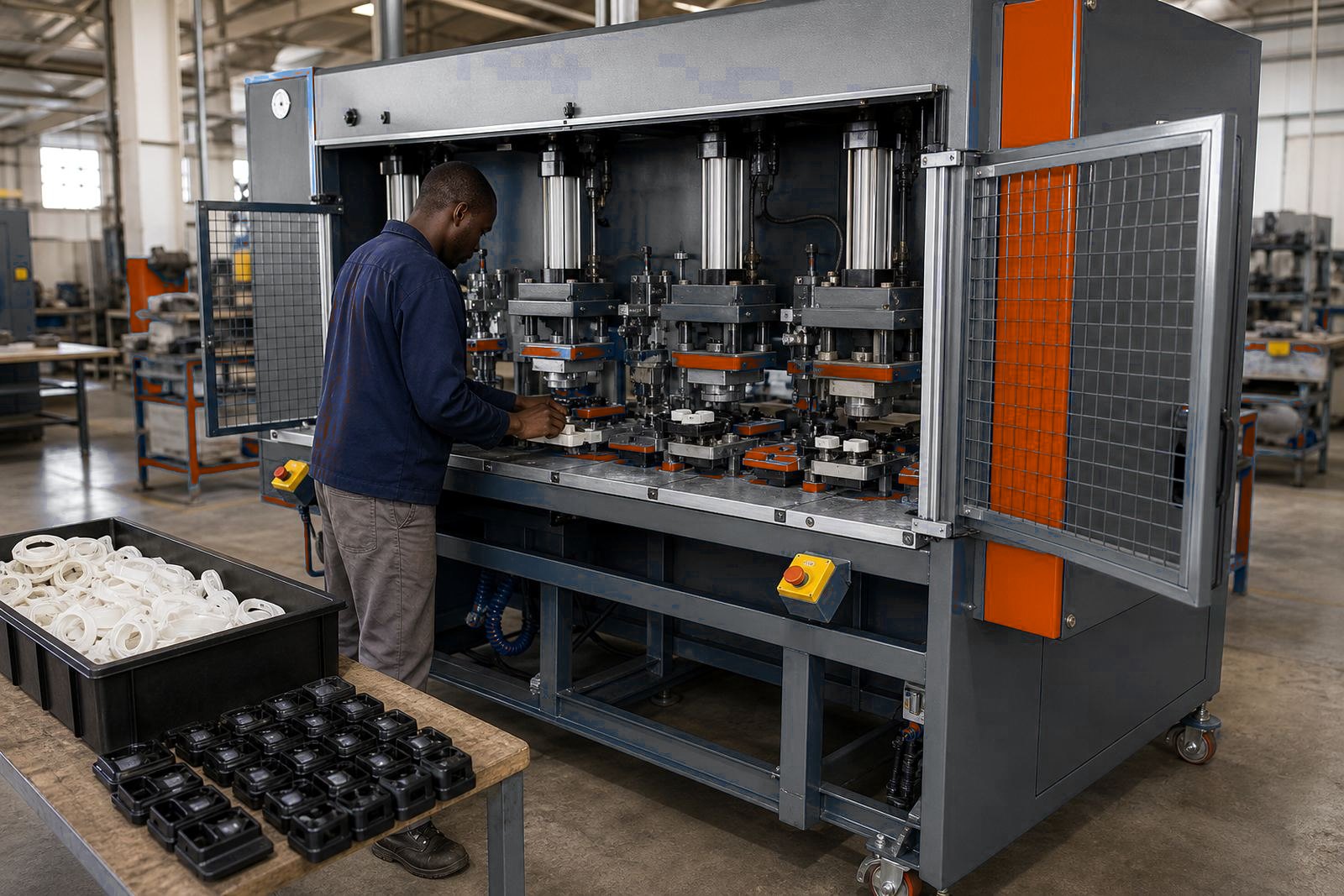
MultiPress supplied the fixture-based press station with the main press frame, pneumatic cylinders, custom tooling, part supports and the guarding package. The tooling was shaped around the part geometry so the workpiece seated without fighting the operator, and the clamping points were set to avoid marking the visible faces during cycle engagement.
We set the stroke so the press reached the required working depth without overtravel, then matched the air pressure to the task rather than running it harder than needed. The control layout used two-hand buttons at the operator position and a light curtain on the guarded face, so the station could support controlled loading and a clearer working envelope around the tooling area.
- Multi-station pneumatic press frame with a fixture bay
- Custom tooling for supported metal components
- Guarding with light curtain integration
- Two-hand controls linked to the cycle start
- Air line setup and press stroke setting
Build and commissioning in the workshop
Our workshop team fabricated and assembled the station in Isando before the commissioning stage. Johan Ramokgopa handled the workshop side of the build, while Musa Hartnick finalised the tooling details so the nest, stop points and contact faces matched the part hold pattern. Pieter Sauls oversaw the project direction and Thandiwe Matlala kept the work sequence tied to the installation plan.
Lerato Moagi carried out the commissioning work on site, checking cylinder movement, cycle consistency, stroke depth and the interaction between the safety devices and the controls. The line needed a practical start-up, not a showpiece, so every setting was tested against real loading and unloading conditions. Anele Engelbrecht then trained the operators on part loading, tool checks, cycle discipline and the correct handling of a tooling change during production.
- Workshop assembly and dry fit before dispatch
- On-site press commissioning in Rosslyn
- Guarding checks and safety device testing
- Operator training focused on daily use
- Production handover after the line settled
The time on the project and the handover outcome
The full installation took five weeks from layout sign-off to handover. The first phase covered detailing and fixture checks, the second covered fabrication and tooling work, and the final phase covered installation, stroke setting and operator familiarisation. That split kept the line practical for the plant and allowed the team to work through the safety items without rushing the fit.
By handover, the station was producing a cleaner repeat pattern, with the part held in the same position from cycle to cycle and less movement at the start of each press action. The operators had a clearer loading method and the production team had a station that matched the assembly sequence instead of forcing the sequence around the machine.
What we would carry into a similar press station
On a repeat job of this type, we would follow the same sequence: fixture first, tooling second, safety devices third, then the final stroke and air settings once the part is in its actual working position. That sequence keeps the build grounded in the real part and avoids making a press station around assumptions that do not survive a production floor.
We would also keep the control layout simple and readable, with the operator standing in one clear position and the guarding placed where the motion risk is highest. For supported metal parts, a tidy fixture and a stable press cycle usually do more for daily output than a crowded machine with too many adjustments left loose.
- Fixture geometry matched to the actual part hold points
- Stroke and pressure set after the tooling sits in place
- Guarding positioned around the real movement path
- Operator movement kept short and direct
Rosslyn jobs like this need a station that behaves the same in the morning and late in the shift, with less drift in the setup and fewer decisions for the operator during the cycle. That is where a fitted press station earns its place in the line.
Key facts
| Project | Rosslyn Fixture Station |
|---|---|
| Location | Rosslyn, Pretoria, Gauteng |
| Station type | Fixture-based pneumatic press station |
| Core functions | Assembly, crimping, riveting and staking |
| Controls and safety | Two-hand controls with light curtain guarding |
| Project duration | 5 weeks from layout to handover |