Clean air is part of press accuracy
A multi-station pneumatic press depends on more than cylinders, tooling and a neat frame. The air that feeds it has to be clean, dry and set at the right pressure or the press can start to drift in feel and output. In an Isando workshop or on a production line in Durban, moisture and debris in compressed air can show up as sticky valves, uneven stroke movement and inconsistent crimp depth. That is the kind of small fault that ends up slowing a whole shift.
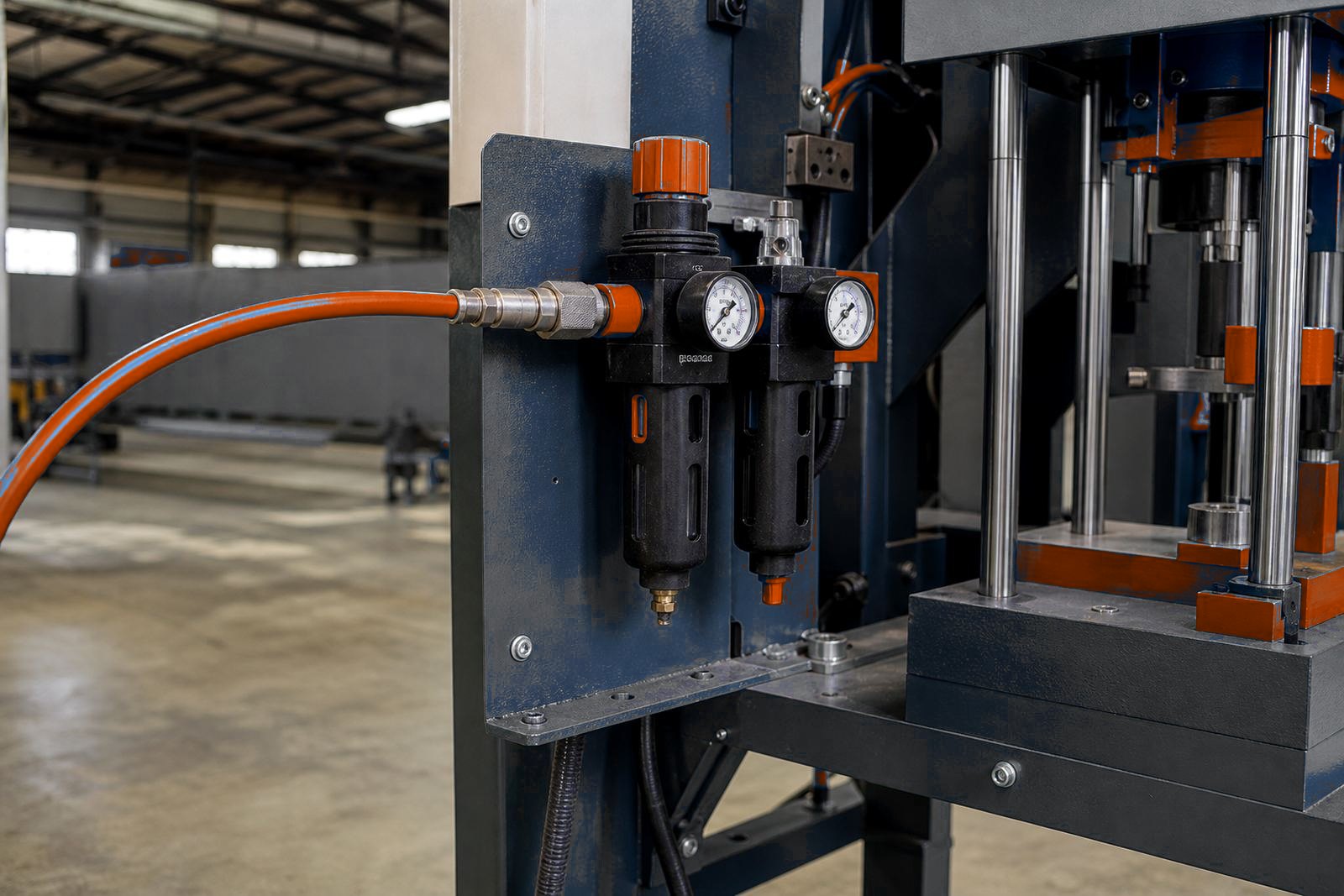
Air preparation units sit between the compressor line and the machine. They condition the air before it reaches the press, so the operator is working with a steadier supply. On pack sealing stations, that helps jaws close more evenly. On riveting and staking stations, it helps each cycle feel more controlled. The result is not theatre, just better behaviour from the press and less nuisance at the tool end.
What usually sits in the air line
An air preparation set is normally built around filtration, pressure control and moisture management. Depending on the job, it may also include lubrication, although not every press line needs oil in the air path. The right layout depends on the cylinder size, stroke length and how often the press cycles. A small bench unit and a heavier multi-station frame do not ask for the same arrangement.
- Filter bowls remove fine particles and shop dust
- Regulators hold the working pressure at a set level
- Water separators reduce moisture carryover
- Drain points let trapped water out before it reaches the machine
- Lubricators are used only where the air circuit calls for it
In coastal towns such as Gqeberha and East London, moisture control becomes more important because humid air can load the line faster. Inland plants still deal with condensate, especially where compressors run hard through long shifts. A good unit makes that problem easier to manage.
Pressure, stroke and repeatable movement
Pneumatic presses work best when pressure stays where the machine was set, not where the line happens to wander. If the regulator is poor or the filter is overloaded, the cylinder can move with less consistency. That affects stroke setting, dwell and the feel of the two-hand cycle. It can also change how a tool meets the job, which matters when you are forming, riveting or sealing a pack with narrow tolerances.
We often look at the full chain, not just the air unit itself. The air line, the valve block, the cylinder bore, the press stroke and the tooling all affect one another. A press with a short stroke and small tooling may be very forgiving, while a larger assembly station with guarded access and a heavier ram needs firmer control. If the pressure is set too high, the machine can strike harder than needed. Too low, and the cycle may not finish cleanly.
The point is not to chase the highest pressure on the gauge. The point is to keep the press doing the same work, cycle after cycle, with less variation in the motion path.
Guarding and controls still depend on the air supply
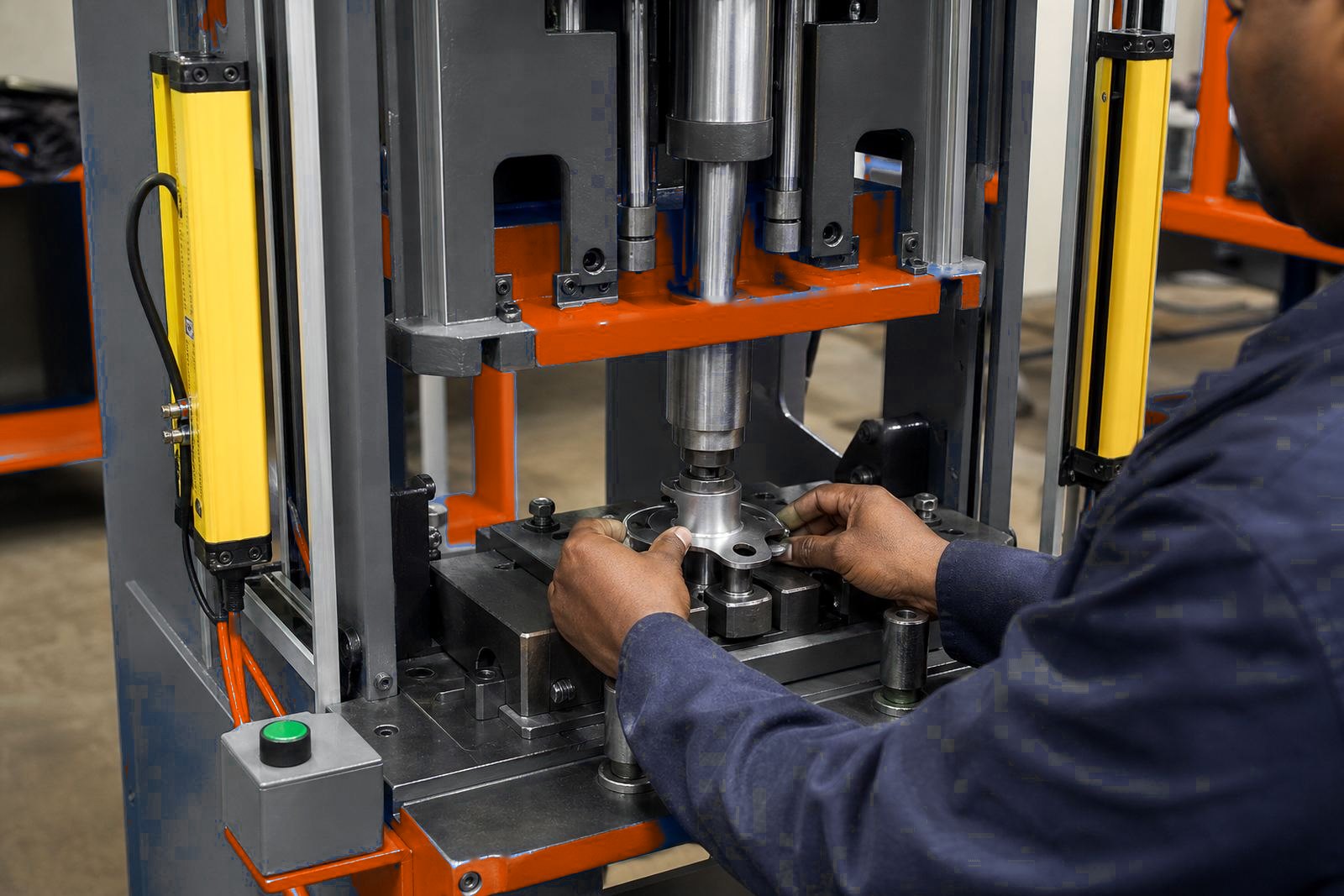
Air preparation does not replace guarding, two-hand controls or light curtains. It supports them. A safe press line still needs proper guarding, clear access around the working area and controls that suit the task. Where light curtains are fitted, the machine must maintain predictable air behaviour so the stop and restart sequence remains sensible for the operator.
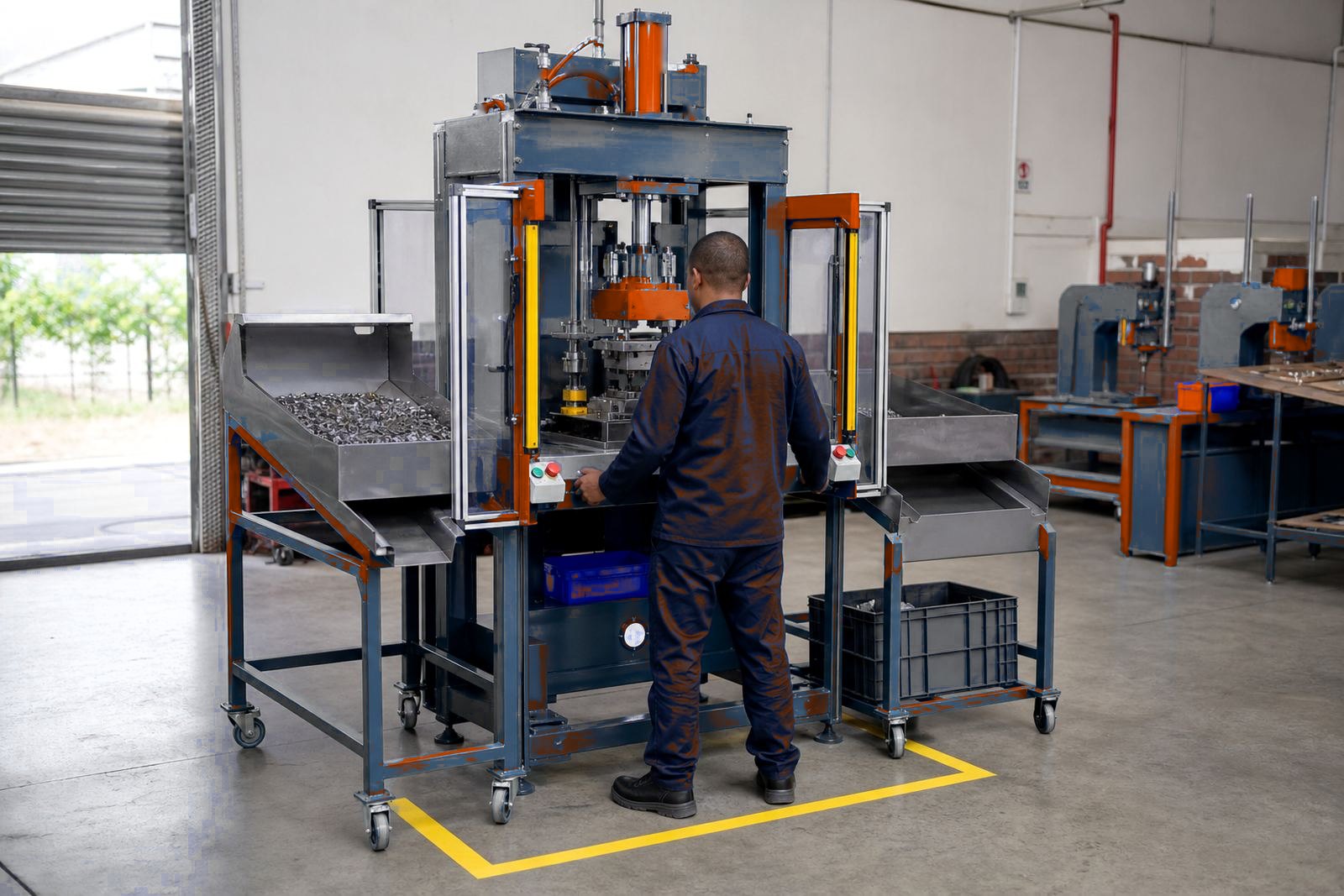
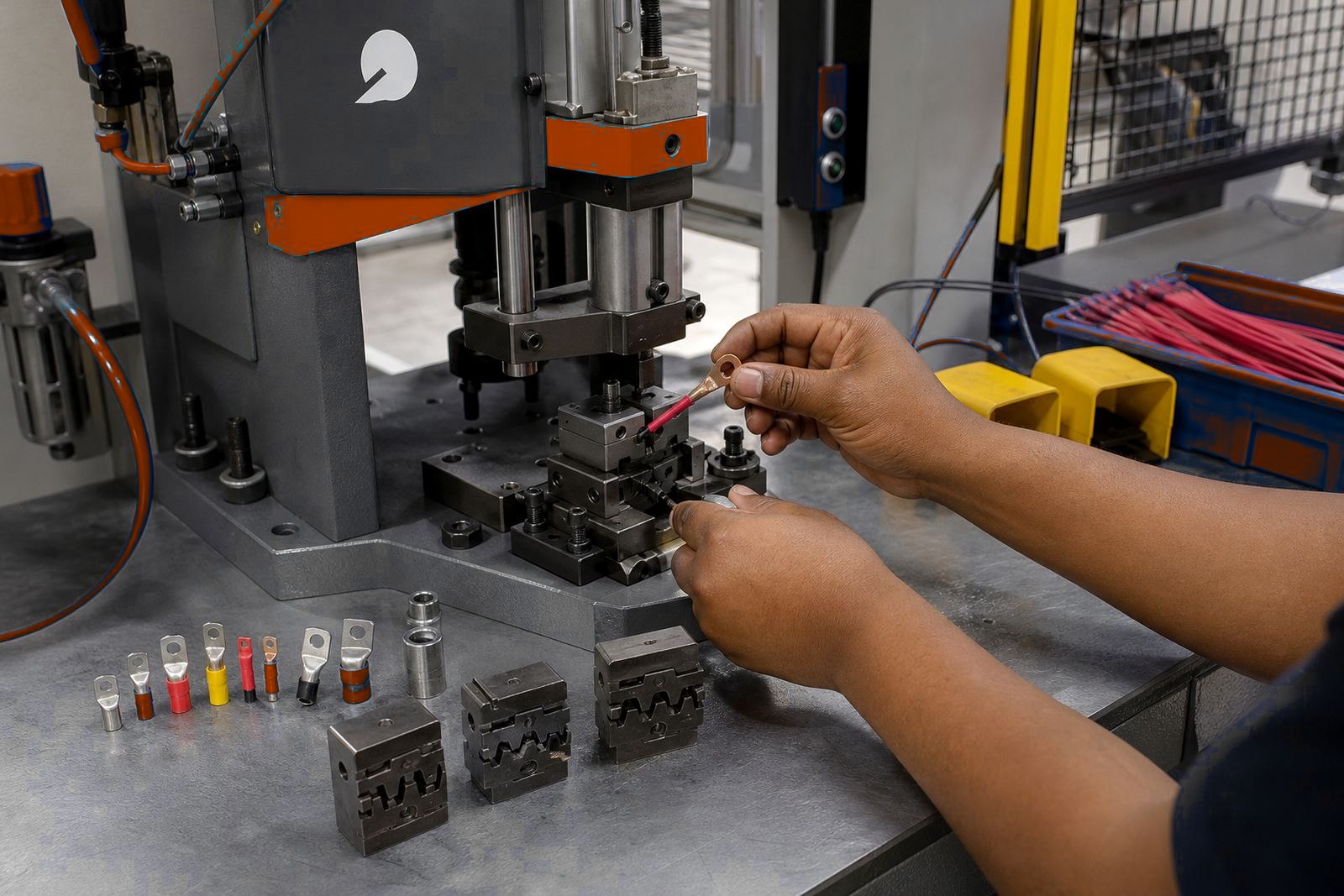
We see this most often on custom lines that combine assembly and inspection in one frame. One station may crimp a terminal, the next may rivet a bracket and another may seal a pack. Each station can need a different force profile, yet the whole machine still shares one compressed air source. If the air prep is undersized or poorly drained, the line can show it fast.
- Two-hand controls rely on a stable cycle response
- Light curtains need machine motion that stops and resets properly
- Guarding must not obstruct line maintenance or drain access
- Tooling changeovers are easier when the air line is clean and predictable
Kempton Park press line job
A metal parts plant in Kempton Park asked for a multi-station press line for assembly and staking work. The stations had different tooling loads, and the team wanted cleaner control over the press feel across long production runs. The workshop pressure looked fine at the compressor, but the machine side was showing water in the bowls and inconsistent movement on one station. That is not unusual when a line has long pipe runs and the drains are left too long between checks.
After the air path was reviewed, the filter and regulator arrangement was changed to suit the machine more closely, with better moisture removal before the press and clearer pressure setting at the operator point. The improvement was visible in the motion of the cylinders and in the consistency of the tooling action. Nothing dramatic, just a better behaved machine. In a factory, that is usually what matters most.
Jobs in Pretoria, Johannesburg and Boksburg often bring the same question in a different form. The press itself may be strong enough, but if the air feed is dirty or unstable the station does not keep its shape from shift to shift. That is why air preparation should be planned with the machine, not after the first problem starts showing up.
What we look at during commissioning
When commissioning a press, the air line is part of the checklist from the start. The aim is to match the supply to the machine and the tooling, then prove that the press runs cleanly under normal production conditions. It is also the moment to check whether operators can read the gauge, drain the bowls and keep the setup tidy without awkward steps.
- Measure the air pressure at the press, not only at the compressor.
- Moisture build-up in the filter and bowl
- Air line routing and fittings near moving parts
- Stroke consistency across every station
- Access for cleaning, draining and routine checks
That practical review matters on site installation jobs as much as in the workshop. A neat build in Isando can still run badly if the site air is wet, undersized or badly routed. Commissioning is where those issues show up before they start affecting production.
Keeping the line sensible for operators
Operators do better when the machine is predictable and the air hardware is easy to live with. A regulator that is set clearly, drains that are visible and filter bowls that are not tucked into awkward corners all help. So does operator training that covers what the gauge means, when to drain the line and what to report before the press starts making poor parts.
For factories in Durban or Port Elizabeth dealing with humid conditions, a clean air line is part of daily discipline. It reduces the chance of water reaching valves and keeps the press feeling more consistent during a full run. It also makes tooling changes less frustrating, because the machine is not fighting dirty air while the team is trying to reset the station.
Air preparation units are not the most visible part of a press line, but they carry a lot of responsibility. If the air is cleaner, drier and better controlled, the press has a better chance of doing what the tooling asks of it.