The profile decides how the material moves
On a pneumatic press, the tool profile is the working shape that meets the part first. A shallow profile spreads the load and is often used where the part wall needs support without marking, while a tighter profile concentrates force for a firmer crimp or a deeper fold. Air pressure, cylinder size and stroke all matter, but the profile often decides whether the join closes neatly or wrinkles at the edge.
For a pack seal, the profile may need a flat, even contact face. For a wired or tubular assembly, the profile can need a radius that guides the material instead of pinching it. If the shape is wrong, the press still moves, yet the part comes out with poor support or an uneven bite.
Support points matter as much as the punch face
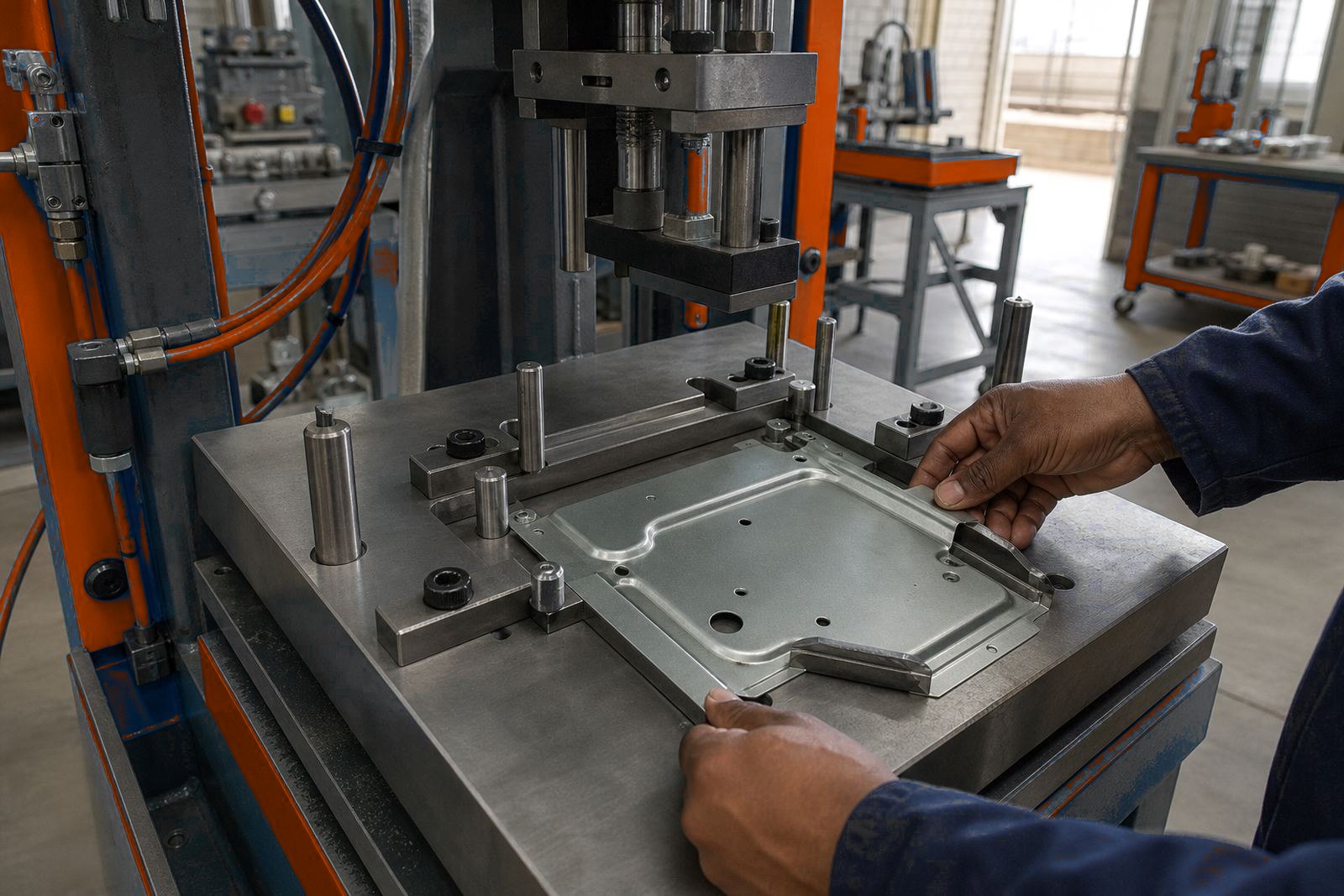
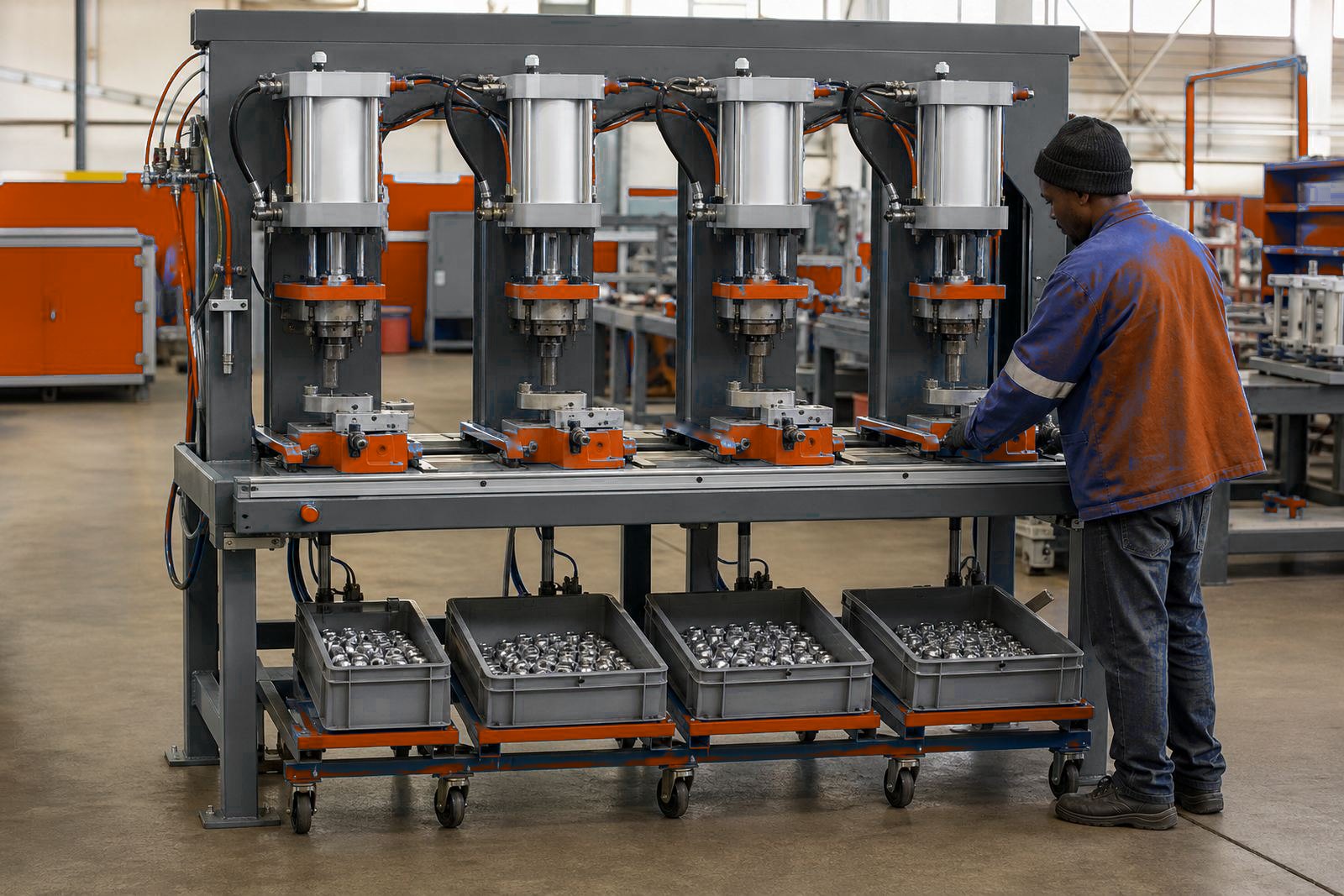
Good crimping is not only about the top tool. The lower profile must hold the part steady so the metal, plastic or laminate does not shift under pressure. On a multi-station press, one station may be doing the actual crimp while the next station checks alignment or holds the assembly in position for the following step.
- Wide support works better on larger sections that tend to ovalise.
- Narrow support suits small terminals and compact joins.
- Raised locating edges help keep repeat parts seated.
- Relief pockets reduce marking on finished faces.
In a Johannesburg plant making small electrical sub-assemblies, a profile with poor side support can cause the part to twist before the stroke reaches full pressure. The press settings may look correct, but the tool face is not holding the job square.
Stroke setting and profile depth must match
Every profile has a working depth. If the stroke is too short, the joint stays open. If it is too deep, the tool can crush the part, flatten a formed edge or damage a sleeve. Stroke setting belongs in the setup before the shift begins.
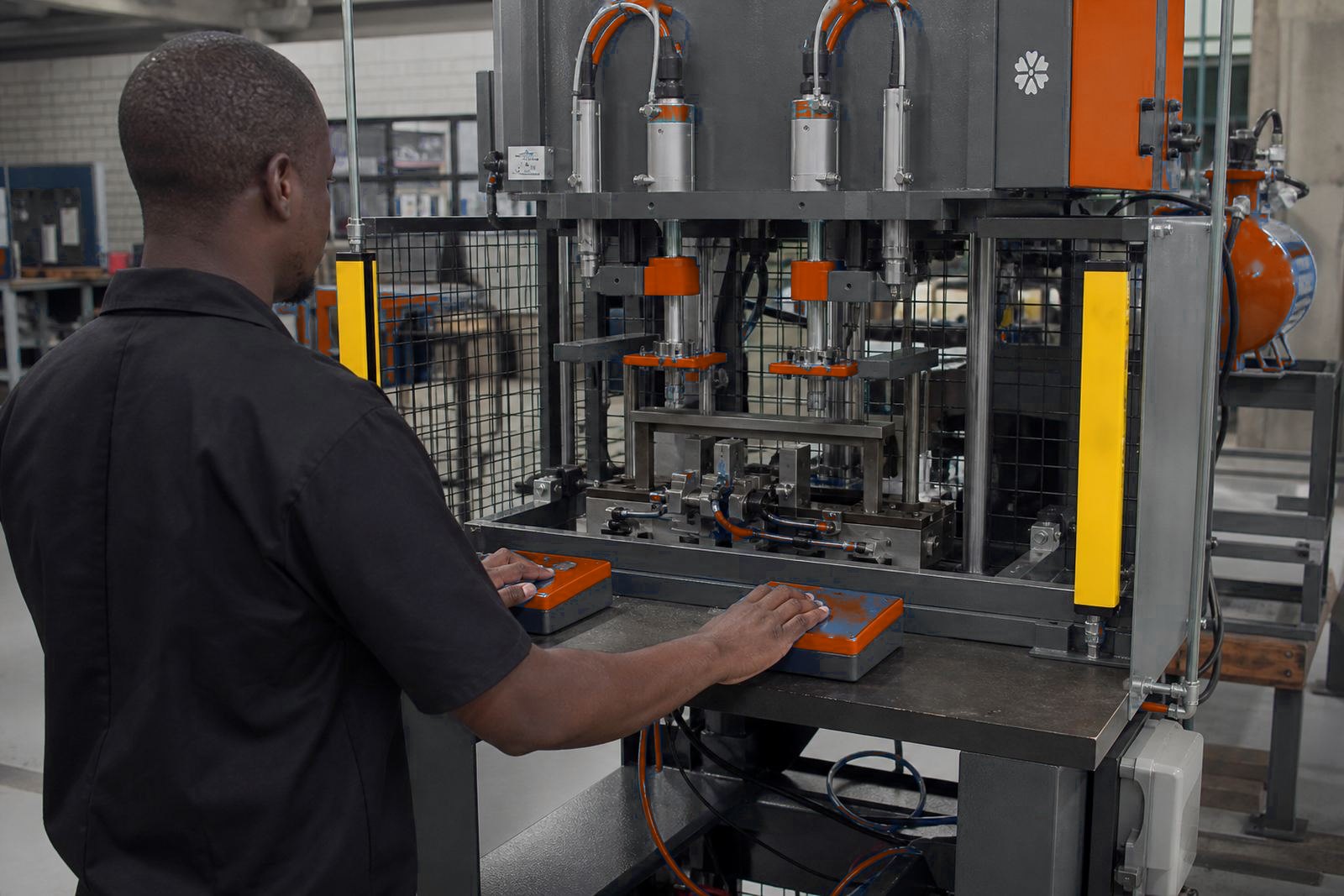
For crimping, staking and riveting, the tool path should meet the part in a controlled way. A longer stroke can help with taller parts, but only if the lower fixture keeps the load centred. On presses with two-hand controls and light curtains, the operator still needs a tool set that closes at the correct point, not one that depends on guesswork.
Where there are mixed part sizes, tooling changes should be planned with enough clearance around the profile. A tool that works on a narrow variant may leave a wide variant under-supported or it may trap the part before the press reaches the intended pressure.
Common profile styles used on crimp work
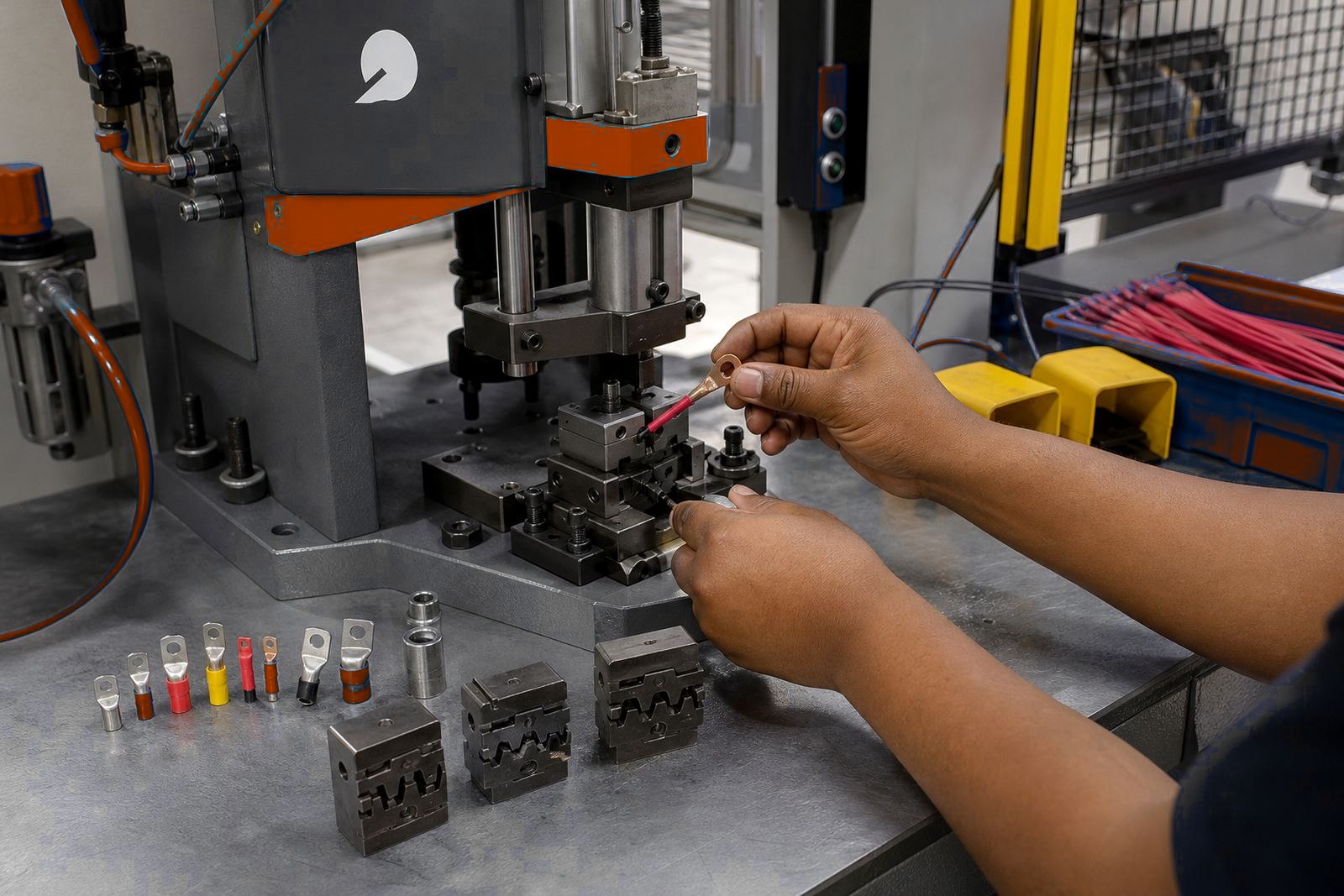
Crimping profiles are usually chosen for the shape of the part and the finish needed on the visible side. Some tools form a neat edge, some compress a sleeve, and some hold the work while another feature is being locked in place. The same press can handle several styles if the tooling is matched correctly.
- Flat-faced tools for even pressure across a broad seal.
- Radiused profiles for rounded parts and softer material transitions.
- V-form tools for guided folding on small sections.
- Concave nests for cylindrical or curved parts.
- Step profiles where one area must close before the rest.
In Durban, where humidity can affect stored components and light metal finishes, a profile that is too sharp can leave marks faster than a broader face. Tool finish and edge condition matter, because a worn profile can bruise the part long before it fails outright.
Tooling changes need a practical handover
When a press runs more than one part family, tooling changes need clear markings, correct locating and a setup routine that the workshop can repeat under pressure. The profile should be easy to identify, fit and verify before production starts. If the tooling is handed over without a proper check, operators tend to compensate with extra force or repeated strokes, and that shortens tool life.
Useful checks for a crimp profile include:
- Confirm the part sits fully in the nest.
- Check that the profile closes evenly across the width.
- Look for burrs, edge roll or crushed sections.
- Inspect whether the finished join keeps its shape after release.
- Test the part support when the tool is dry and when the line is running.
At MultiPress, commissioning and operator training usually go hand in hand with the tooling handover, because the profile only works properly when the people setting it understand what the shape is meant to do.
Isando production-floor crimping job
A plant in Ekurhuleni running compact crimped assemblies for distribution needed a profile that held the body without denting the outer face. The first tool closed the join, but the parts rocked slightly in the nest and the mark left by the punch was too visible for the final fit. The issue was not the cylinder pressure alone, it was the support built into the profile.
The revised tool used a deeper lower nest, a softer lead-in and a cleaner flat on the upper face. That change gave the part steadier support during the stroke and reduced movement at the point of contact. The press then worked with a more stable closing action and the finished crimp sat better in the next assembly stage.
That kind of adjustment is common on lines that handle crimping, riveting and staking in the same workshop. The profile has to suit the part, the fixture and the production rhythm, not just the press frame.
How to judge whether a crimp profile is doing its job
A good profile leaves a join that is even, centred and repeatable. It does not need extra force to make up for poor support, and it does not force the operator to keep checking every piece by eye. The part should seat cleanly, close without unnecessary marking, and hold together after release.
Watch for these signs that the crimping tool needs attention:
- The join closes on one side before the other.
- The part shifts in the nest during the stroke.
- The finished edge shows flattening or witness marks.
- The press needs repeated adjustment for the same part.
- The output changes when a different operator sets the station.
When that happens, the answer is often in the tool shape, not the air line. A well matched profile makes the press easier to run and gives the assembly line a cleaner result with less rework.