When the part moves, the job moves with it
A pneumatic press can only do clean work if the component stays where the tooling expects it. On a multi-station line, the load changes from station to station, so the nest, stop faces and locators have to hold shape under air pressure and stroke, not just during a dry test. If a bracket rocks half a millimetre under load, the punch will follow that error through the cycle.
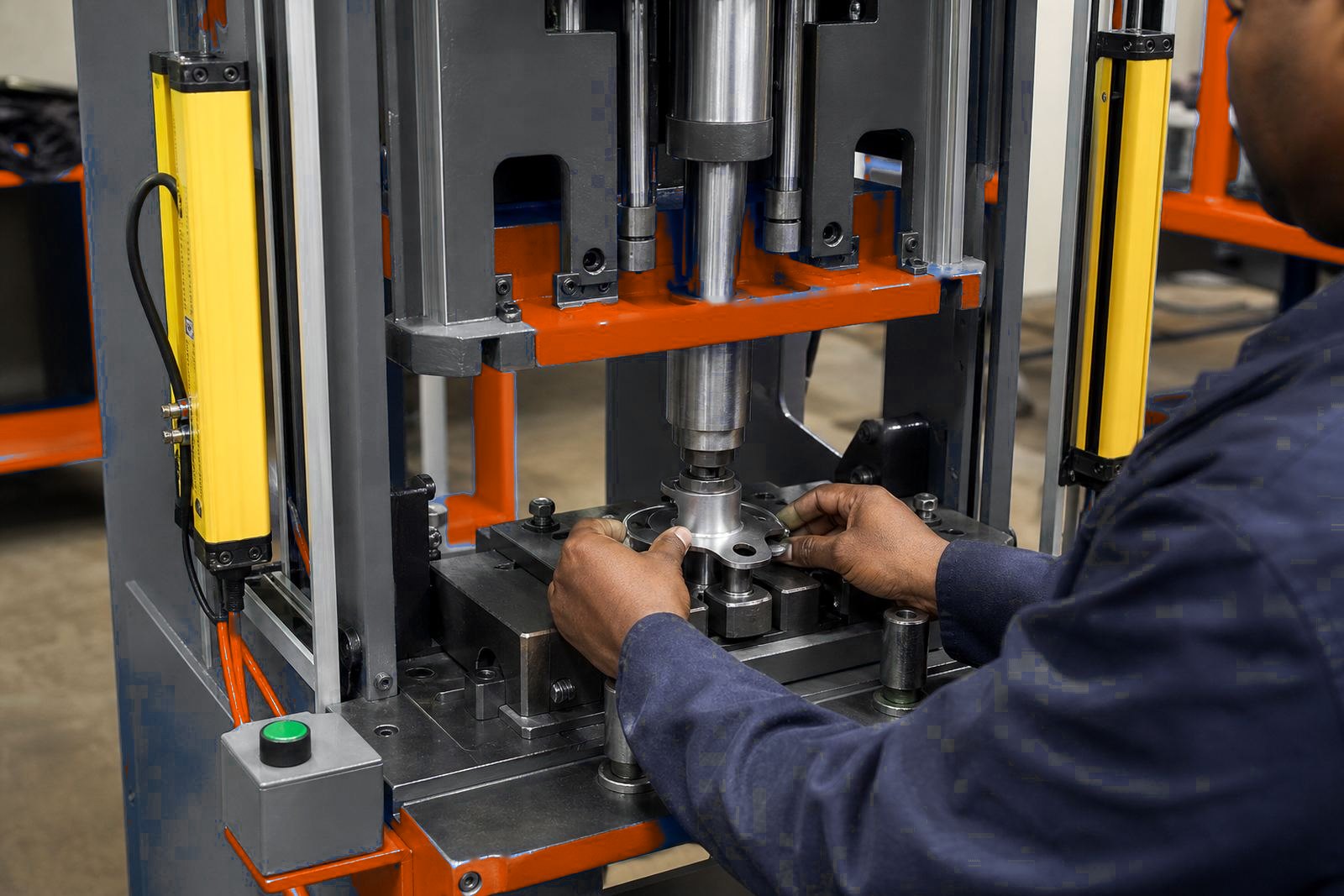
So the support under the part is designed with the tooling, never added afterwards. It forms part of the process. For assembly work, the lower station has to hold the part without flex. For crimping and riveting, the backing must resist lift and spread. For staking, the part needs a firm seat so the formed boss lands where the tool expects. Even pack sealing depends on stable support, because thin film, cartons or trays move when pressure comes on unevenly.
Station by station support needs different thinking
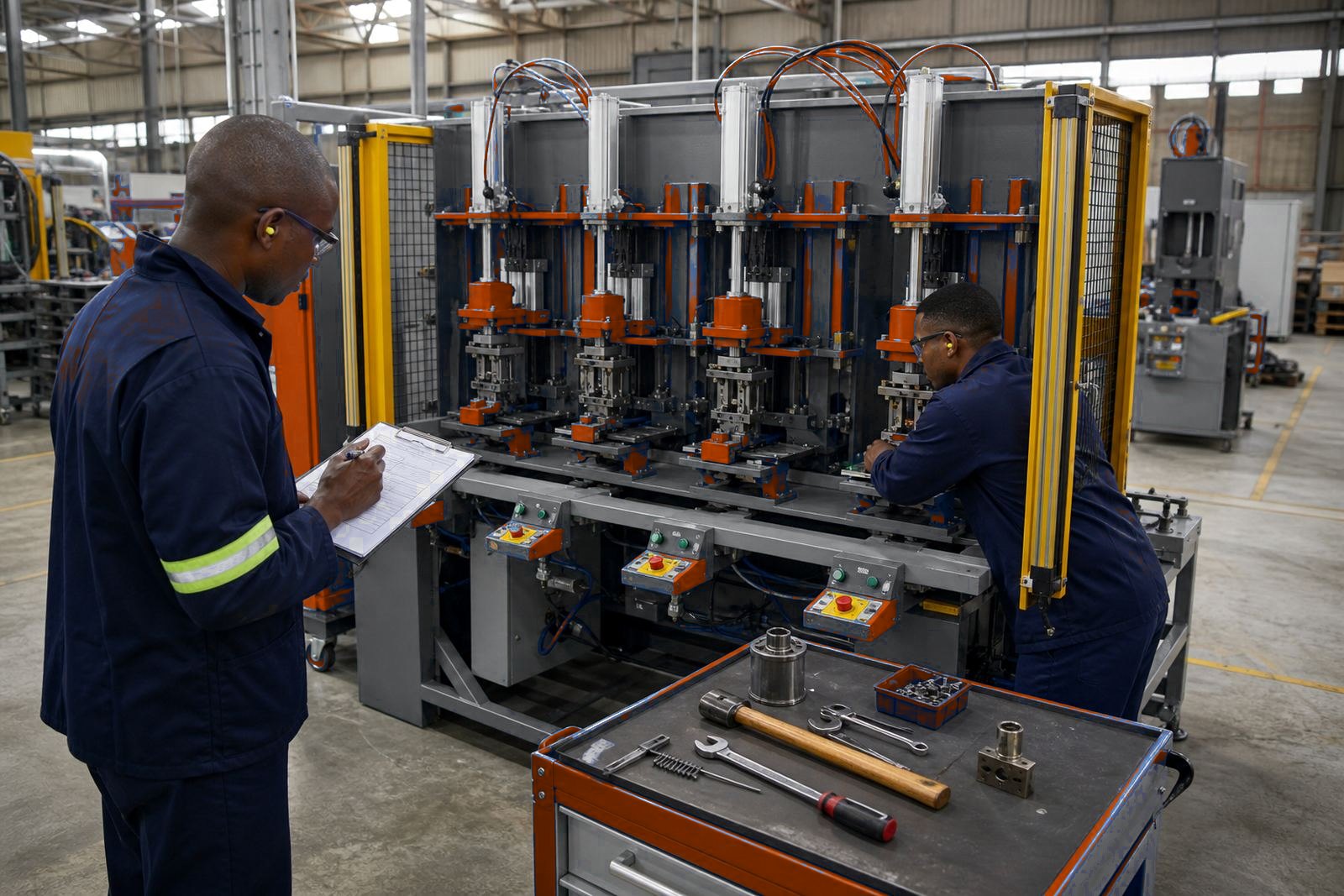
A four or six station press does not treat every operation the same way. One station may be forming, another locating, another checking height, and another finishing the pack seal. The tooling designer has to match each station to its own load path, stroke and release movement. A common mistake is to build one heavy nest for everything, then wonder why the cycle fights itself.
- Assembly stations need clean location points and easy part entry.
- Crimping stations need side support so the lug or tab does not twist.
- Riveting stations need flat backing and enough stiffness under the anvil.
- Staking stations need controlled depth and a solid seat under the component.
- Pack sealing stations need even pressure across the full contact line.
When the support matches the station, the press uses less force to do better work. That also helps with stroke setting, because the ram can finish at the right depth without crushing the part or leaving a weak form behind.
Air pressure is only half the story
People often speak about cylinder size and pressure, but the part under the tool matters just as much. A larger cylinder can hide a weak fixture for a short while, though the first sign of trouble is usually repeatability drifting from shift to shift. The press may still cycle, but the parts start showing burrs, leaning rivets or inconsistent closure.
Air line setup must suit the machine, yet the real test is what happens under load. A press that runs at the right pressure but with poor support will waste force in flex, chatter or rebound. Good tooling spreads the load into the fixture body and into the base frame, so the energy goes into the job not into shaking the table.
In coastal plants, humidity and fine dust can also affect seals, slides and gripping surfaces. That means the support surfaces need cleaning access and enough clearance for maintenance, otherwise the setup starts drifting long before the tooling wears out.
Guarding, two-hand control and light curtain placement
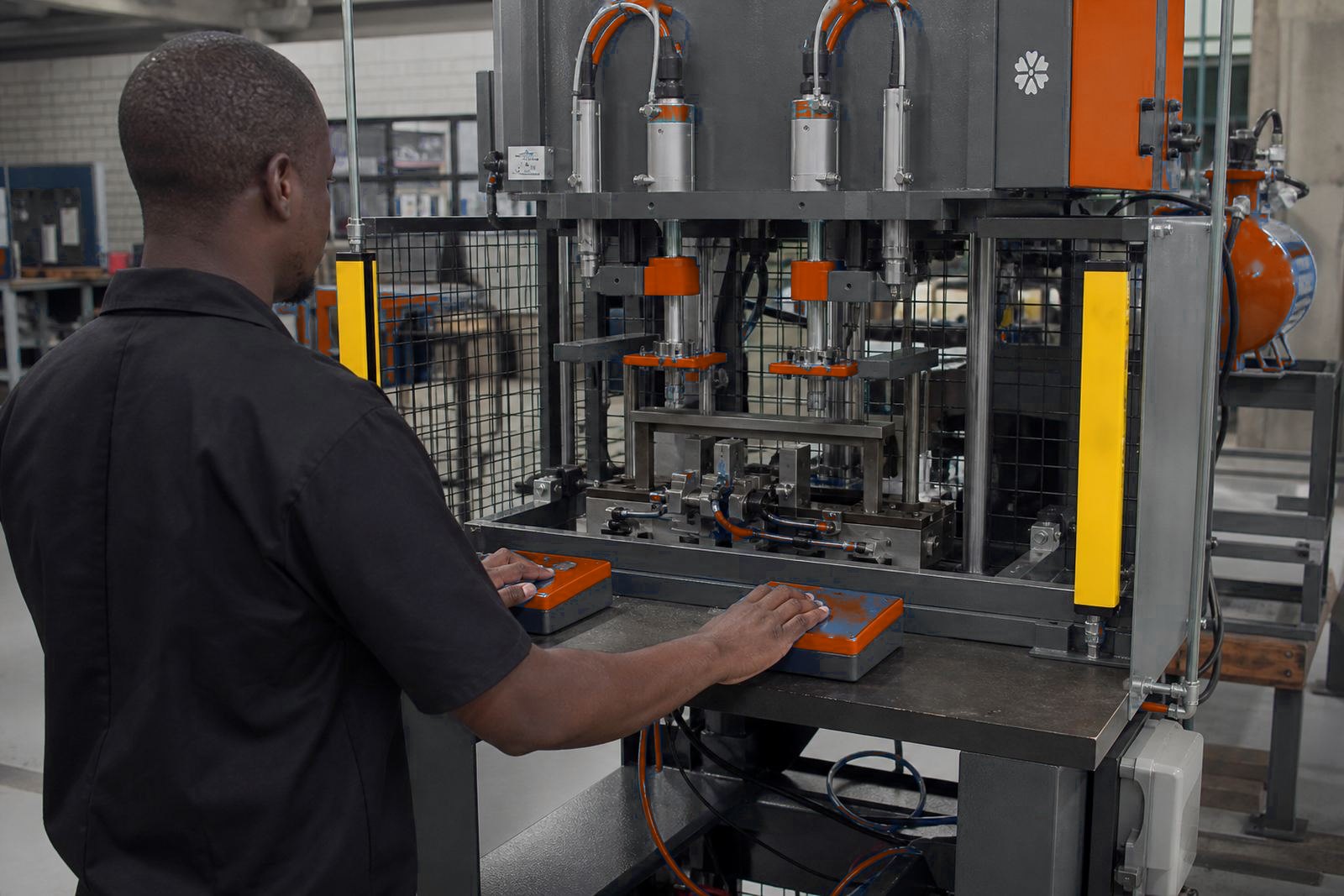
Safety hardware must match the support geometry. Two-hand controls only help when the operator has a clear loading position and the part cannot wander into the strike zone. Light curtains need correct spacing from the tooling face, otherwise the system becomes awkward to feed and the operator starts working around it. That is when shortcuts creep in.
Guarding should guide the hands, not trap them. A good layout keeps the load path open, gives room for part insertion, and still blocks access to the moving ram. If the guard is too close, operators force parts in sideways. If it is too open, the support faces get used like a bench and the safety margin disappears.
- Keep the load point obvious and easy to reach.
- Leave space for the part to settle squarely before the cycle starts.
- Set light curtains where they protect the strike zone, not the operator’s patience.
- Match two-hand controls to the actual loading rhythm of the station.
A local job in Isando, then a wider pattern
One Isando installation for a sheet-metal assembly line showed the issue clearly. The press had enough force, but the part was bending because the lower support only held at the edges. The rivet was closing, yet the component sat slightly proud at one corner. The fix was not more pressure. It was a new fixture face, a shorter unsupported span, and a cleaner stroke setting.
Once the tooling was rebuilt, the same line settled down. The operator could load squarely, the ram met the part on a stable surface, and the finished pieces stopped drifting out of line. That pattern repeats in Johannesburg, Pretoria, Durban, Gqeberha and East London where mixed production runs need quick tooling changes and clear part support from the first station to the last.
Production handover also matters. If the team does not understand where the part must sit, the support design gets defeated on the floor. Training should cover location points, stroke limits, safe loading, and how the fixture behaves when a part is slightly out of shape.
What makes a press line easier to live with
Good support under load makes the whole line easier to run. The machine stops fighting the component, the tooling lasts longer, and faults are easier to trace. Most of the time the answer is not hidden in the cylinder specification. It sits in the nest, the stop, the backing plate and the way the stroke meets the part.
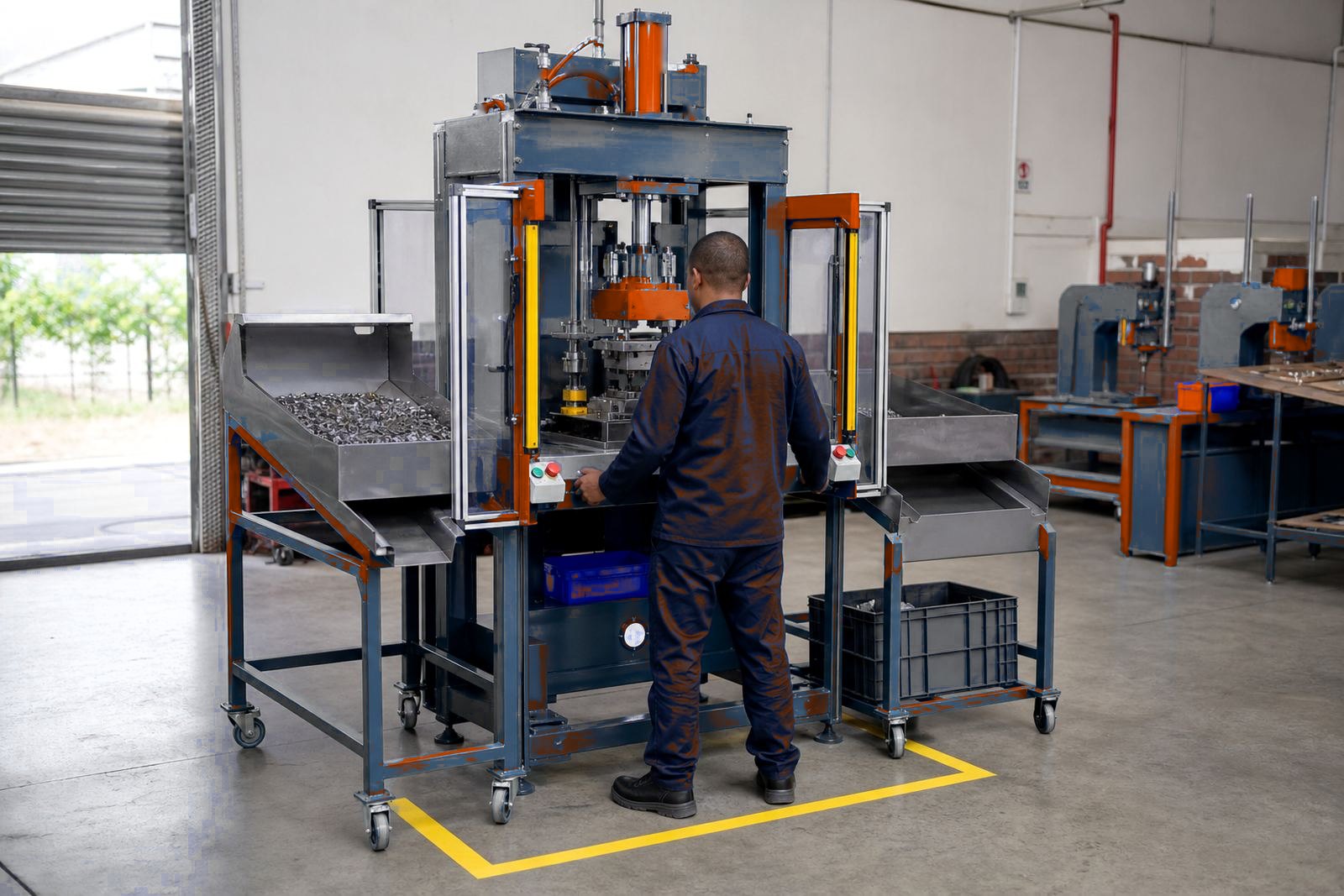
For South African factories, that means building with service access in mind. Operators need room to work. Foremen need to see the contact faces. Toolmakers need to change inserts without tearing half the setup apart. A press line that respects those details tends to hold up better when production gets busy and the parts vary slightly from batch to batch.
That is the real point of part support under load. The component must stay honest while the press does its work, and the tooling has to make that possible every cycle.