Tray position changes the whole rhythm
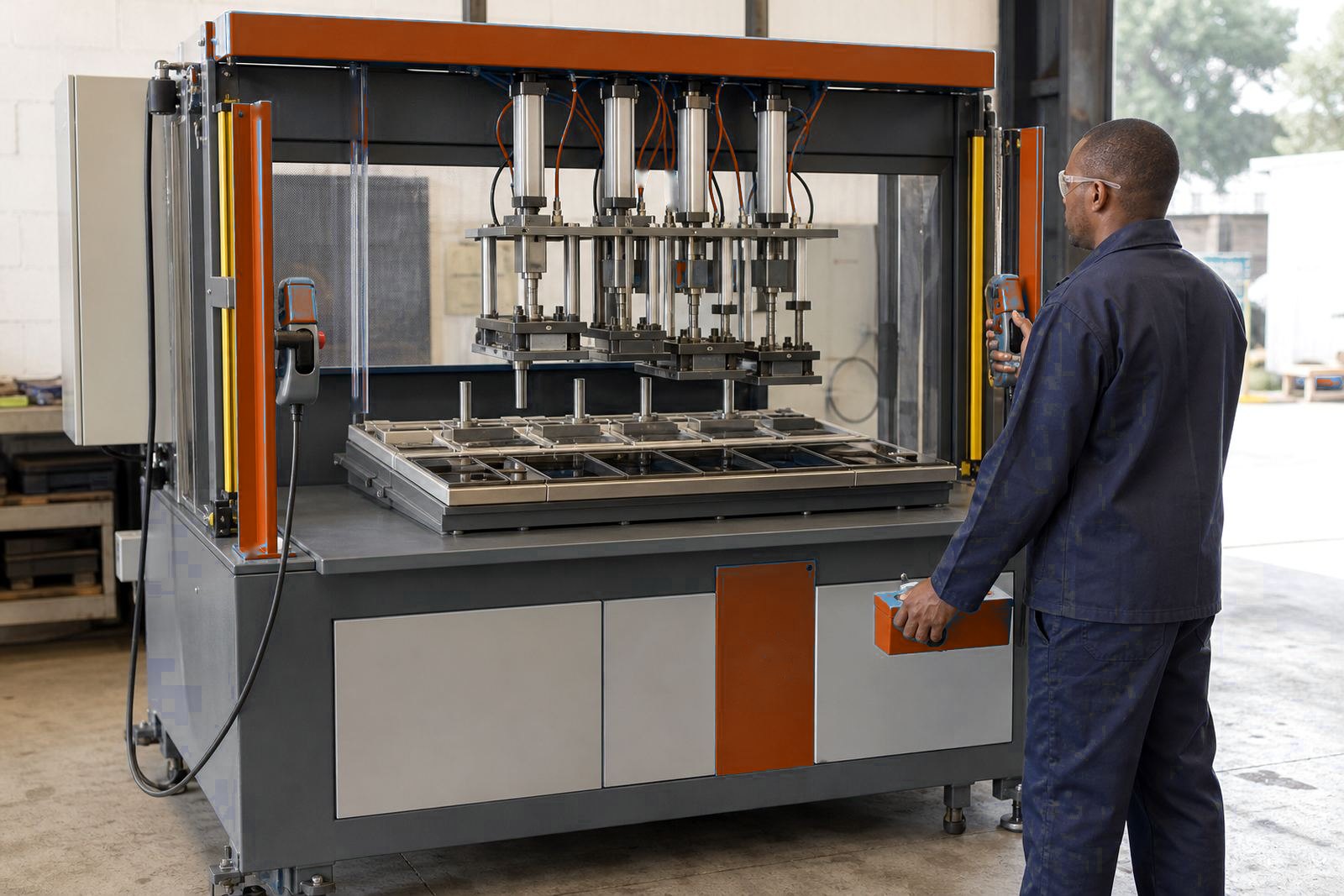
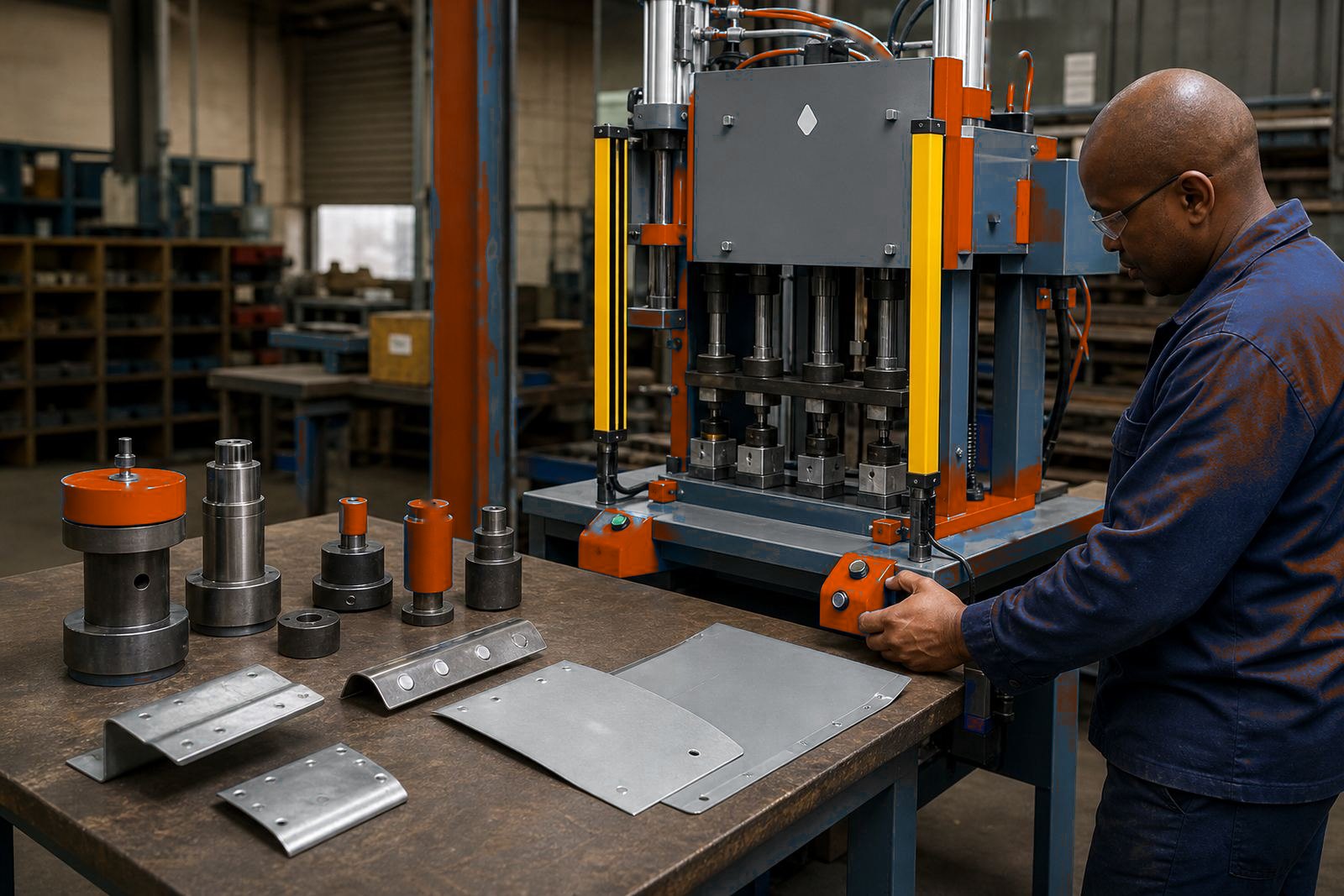
On a multi-station pneumatic press line, the tray is not just storage. It sets the operator's hand path, the eye movement between parts and the small pauses that either help or interrupt the cycle.
When trays sit too far away, the operator reaches across the guard line or twists at the waist and that gets tiring fast. If they are too close, bins crowd the working face and leave little room for hands, tooling changes or a clean exit path for finished parts.
In our Isando workshop, we look at the press, the transfer point and the way parts are sorted before a layout is fixed. A tray for raw blanks needs different space from a tray for finished crimps or riveted parts, because the sorting logic changes with every station.
What the operator needs within arm's reach
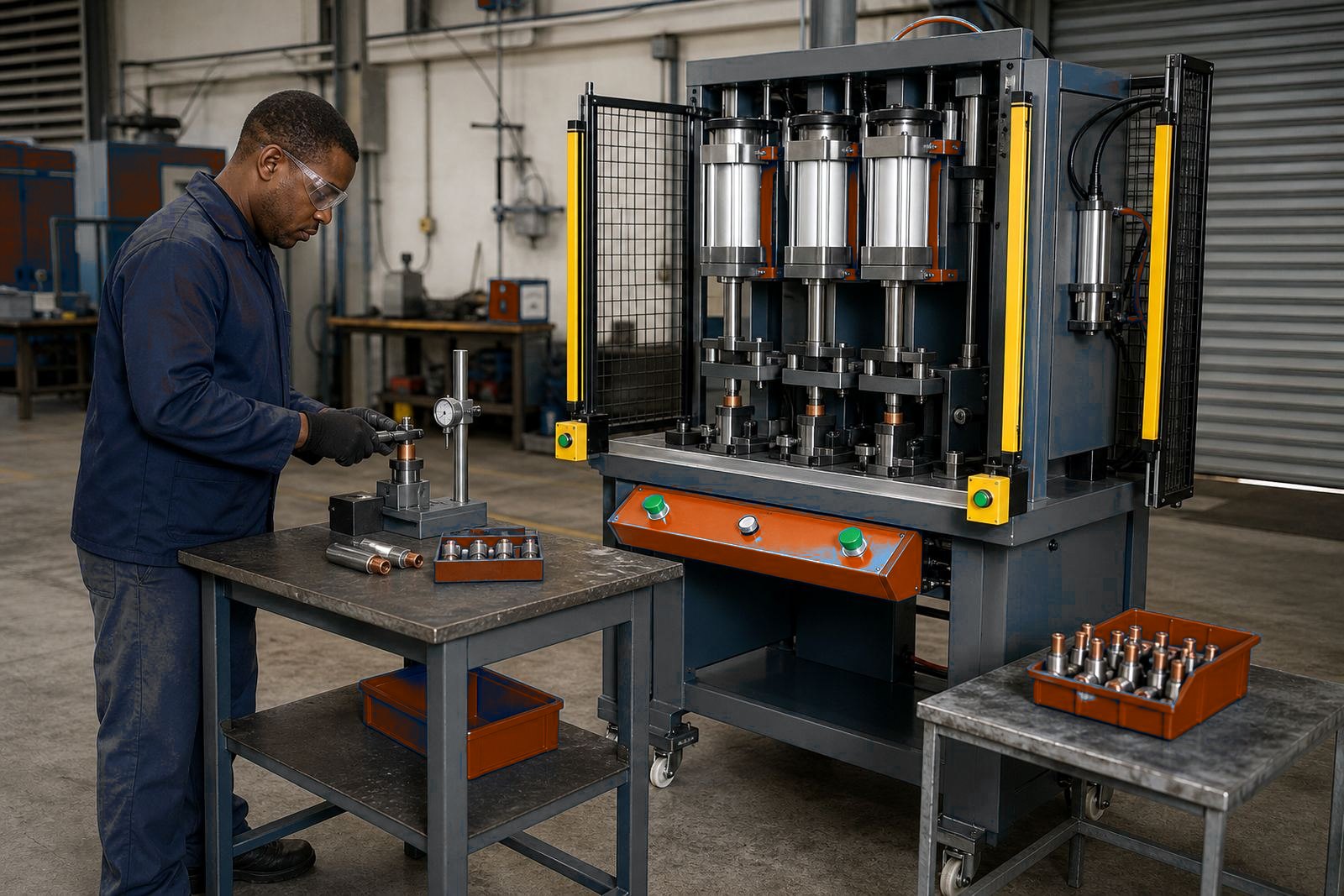
The best tray position is the one that suits the job, not the one that simply makes use of the floor space. On an assembly line, one bin may hold loose components, another may hold prepared sub-assemblies, and a third may catch finished packs after sealing or staking.
- Keep the primary tray inside a natural shoulder width reach.
- Leave clear space for two-hand controls and safe hand return.
- Separate incoming parts from completed parts so mix-ups are less likely.
- Allow enough room for gloves, labels and inspection checks.
- Place the tray height so the worker does not lift from the floor or overreach above waist level.
Those small details matter most where the press cycle is short and the station count is high. If the operator has to think about where the next part sits, the cycle starts to lose its pace.
Sorting by sight beats sorting by memory
Visual sorting works best when each tray has a clear purpose. A tray that holds similar-looking parts should be shaped or divided so the operator can see the difference at a glance. That reduces mix-ups, especially on lines where crimping, riveting and staking all happen on the same machine frame.
We often set up tray positions so the flow reads left to right or front to back, depending on the operator's dominant hand and the press layout. The aim is to keep the part sequence obvious without asking the worker to rely on memory through a full shift.
In humid coastal conditions, shallow trays with smooth interiors are easier to keep clean than deep containers with corners that collect dust or scrap. If the parts are plated or lightly oiled, the tray material and divider shape should prevent scratching and sticking.
Guarding, light curtains and tray clearance
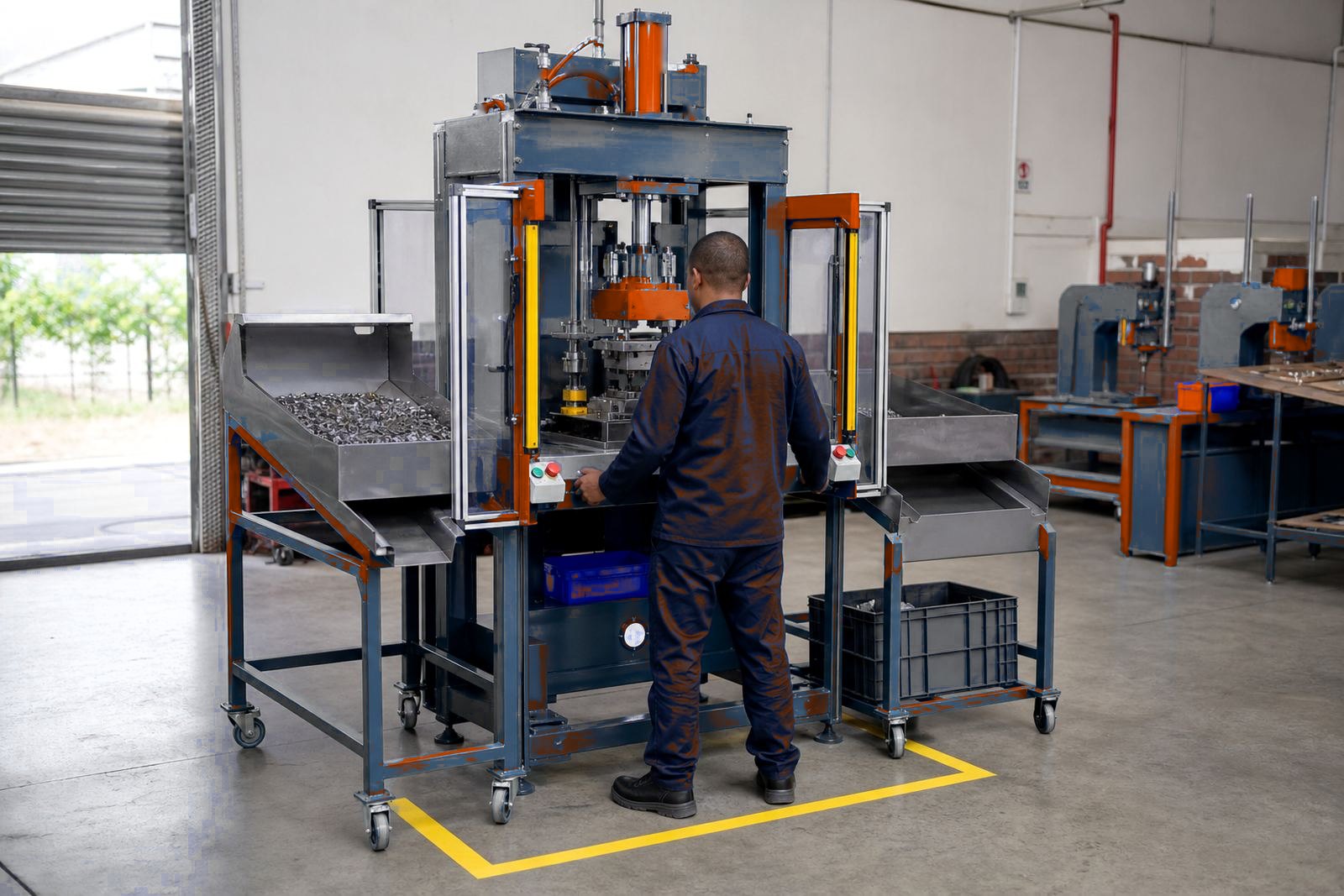
Trays must sit outside the safety envelope, not inside it. That sounds obvious, but in real factories the tray often creeps closer over time when someone wants a shorter reach. Once that happens, guarding and light curtain placement can be compromised.
For a pneumatic press with a two-hand control, the operator should be able to load parts, keep both hands clear during the stroke and still move naturally to the tray. The tray position should never force a hand under a guard or tempt anyone to lean through the protected zone.
- Check the tray edge against the guard line before fixing the layout.
- Leave enough knee and foot space if the operator stands close to the front face.
- Do not let trays block inspection of the ram, tooling or ejection path.
- Keep offcut and finished-part trays separate where scrap can snag fingers.
Good guarding only works when the rest of the layout respects it. Tray placement belongs in the safety conversation from the start.
Stroke length and tray height should agree
A longer stroke often needs a different working posture from a short one. If the ram travels deeper into the station, the tray may need to move slightly outward so the operator has a clean loading path and can watch the tool at full travel.
Where the stroke is short and the cycle is quick, tray height becomes more important than distance. A low tray makes the operator bend, while a high tray can lift the shoulders and slow the hand movement. The best setting usually sits close to waist height, then gets tuned after a few test runs.
During commissioning, we test tray placement with the actual parts, not just with drawings. That is how the line shows where the reach is awkward, where a bin lid gets in the way and where a divider should be moved by a few centimetres.
East Rand tray placement on a packing line
On a packing line in the East Rand, the operator was handling loose parts on one side of the press and finished packs on the other. The tray positions looked fine on paper, but the working rhythm kept breaking because the finished-part tray sat too far from the discharge point. Every cycle added an extra twist.
We moved the trays, adjusted the guard opening and reset the air line run so the front area stayed clear. The result was not dramatic in appearance, but the operator no longer crossed the body to sort parts and the hand path made more sense. That sort of adjustment is typical on a site install in Johannesburg, Pretoria, Durban or Gqeberha, because each floor has its own wall space, aisle width and machine spacing.
Tray placement is rarely the only issue, but it often reveals the rest of the line. If the bins are wrong, the rest of the station is usually fighting the operator too.
Small layout choices that pay off in daily use
The cleanest press line is the one where the operator does not have to work around the layout. Trays, bins, tooling and safety devices should sit together in a pattern that feels natural after a few cycles and still makes sense when the line is busy.
- Match tray size to the part count per cycle.
- Keep heavy trays close enough to avoid lifting strain.
- Use separate spaces for rejects, good parts and packing stock.
- Leave room for tooling changes and cleaning between runs.
- Mark tray positions if more than one shift uses the line.
MultiPress builds multi-station pneumatic presses with custom tooling, guarding, commissioning and operator training, so tray space can be folded into the same job instead of left for later. If a line is being set up in Isando or anywhere else in South Africa, our contact form is the place to send the line sketch and part details.