Pressure is not just a gauge reading
On a multi-station pneumatic press, the gauge tells part of the story only. The real job is holding enough pressure for the cylinder to complete the stroke cleanly under load, without slamming into the tooling or drifting from one cycle to the next. A press that makes fine parts at 5.5 bar may struggle at the next station if a larger clamp area, deeper stroke or heavier crimp is added.
For assembly work, a small change in air pressure can alter how a stake forms, how a rivet head closes, or how a pack seal compresses. That is why setting pressure must sit with the tooling, the stroke setting and the part itself. If one station needs a longer dwell and the next needs a faster return, the pressure and flow control need to reflect both, not just the strongest station.
In a busy plant in Isando, the line often has older fittings, long pipe runs and more than one press taking air from the same header. Those details matter. A press can look healthy at the machine, then lose consistency once a second unit starts cycling nearby.
What to watch before a production run
Before a run starts, the check should begin at the air supply, then move through the press body and tooling. Stable pressure, clean air and steady flow all matter. Moisture in the line can leave marks on tooling, slow movement and encourage corrosion inside valves or cylinders.
Pressure checks are more useful when they are tied to the actual job sheet. A press making terminal crimps will not need the same setting as one closing a blister pack or inserting a bush. The operator should know the target pressure, the stroke limit and the parts that must be checked during the first few cycles.
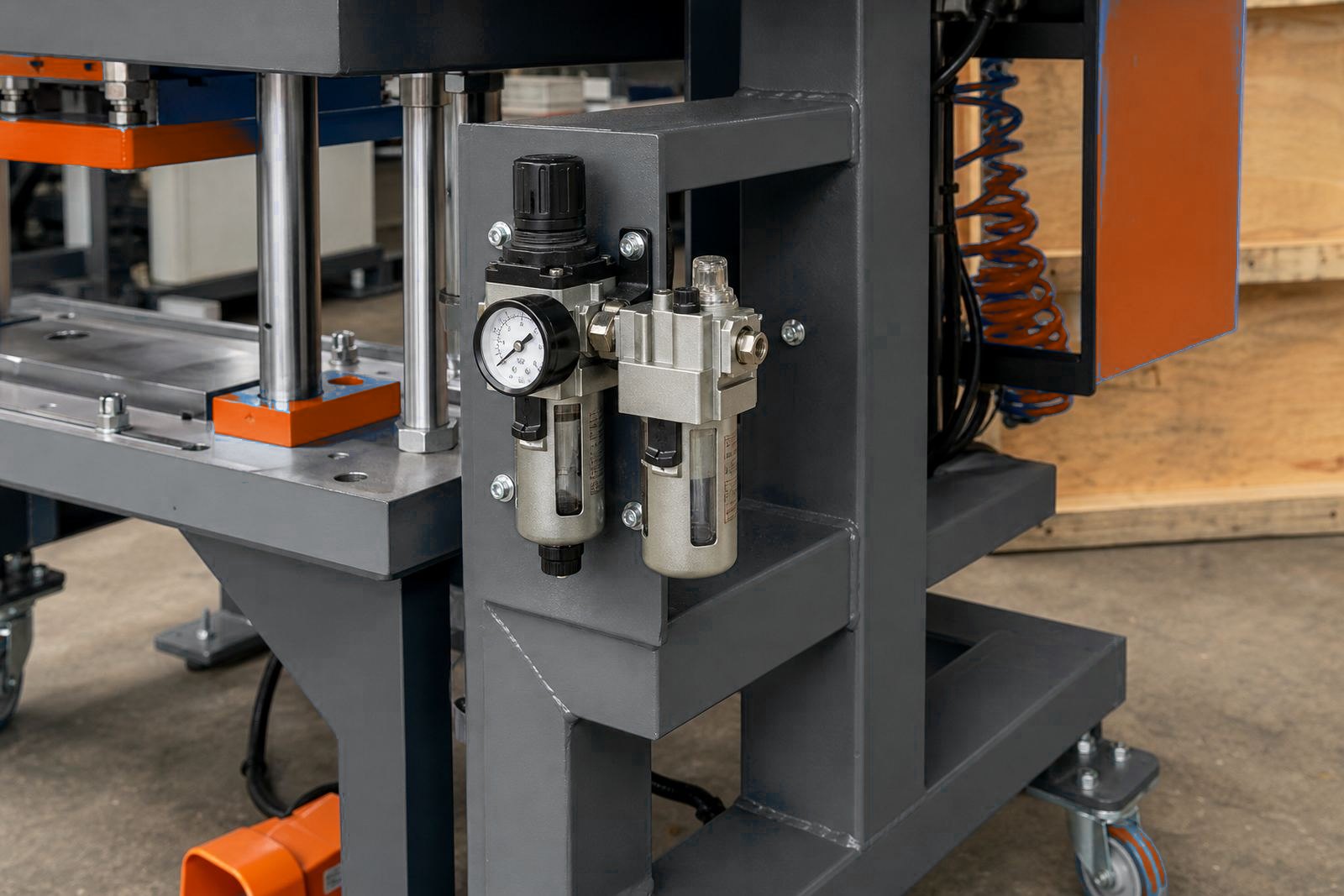
- Confirm the regulator setting at the machine, not only at the compressor room.
- Check that the gauge needle sits steady while the press cycles.
- Drain moisture traps and inspect filter bowls for dirt or water.
- Watch for slow return, jerky motion or a faint hiss at fittings.
- Look at the first pieces for incomplete crimp, shallow staking or off-centre closing.
How pressure ties into stroke and tooling
Stroke setting and pressure setting must work together. Too little pressure on a long stroke can leave the ram short of full engagement. Too much pressure on a short stroke can hit the part too hard and bruise the tooling. The right setting depends on cylinder size, tool geometry, part thickness and the amount of force needed at the end of the stroke.
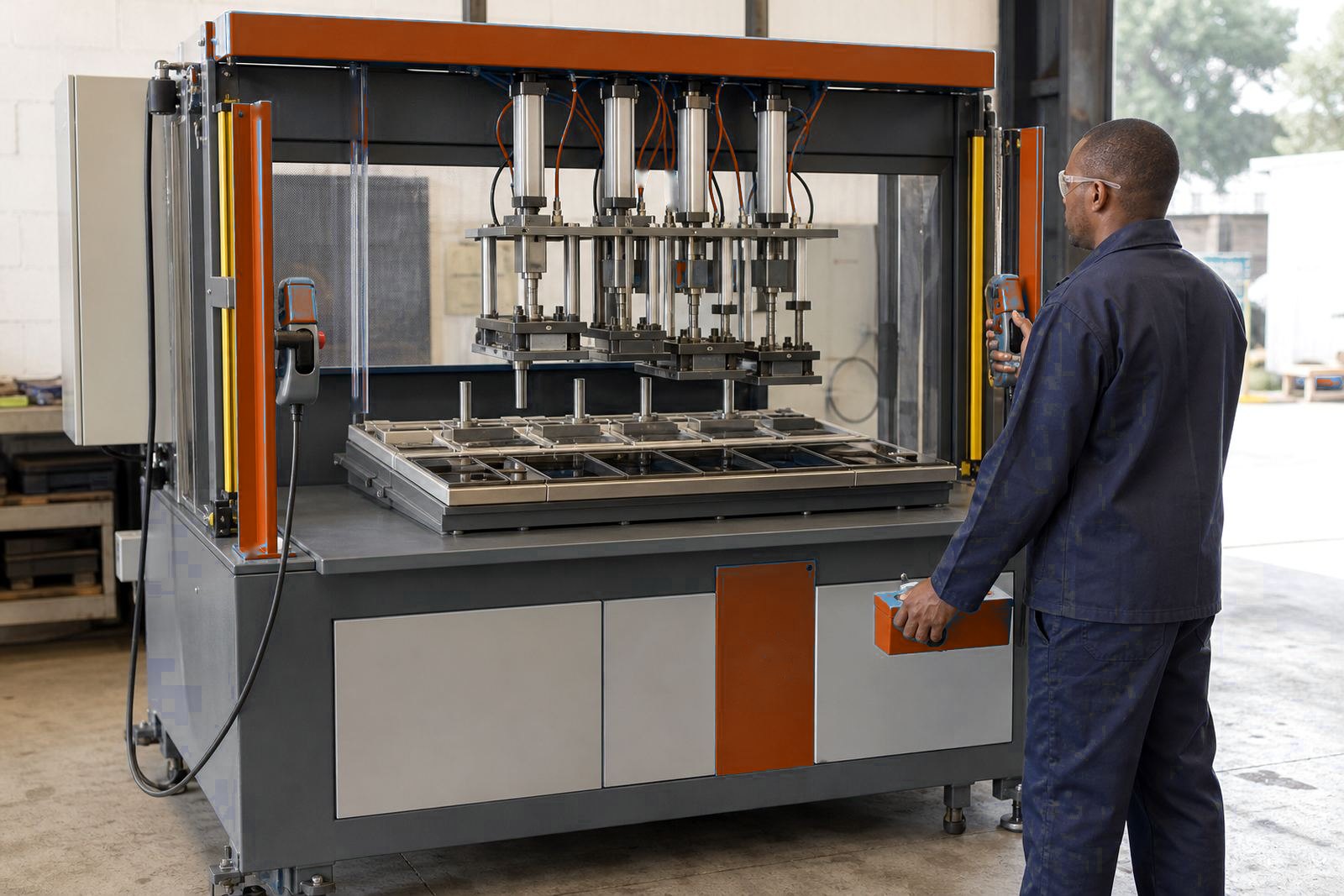
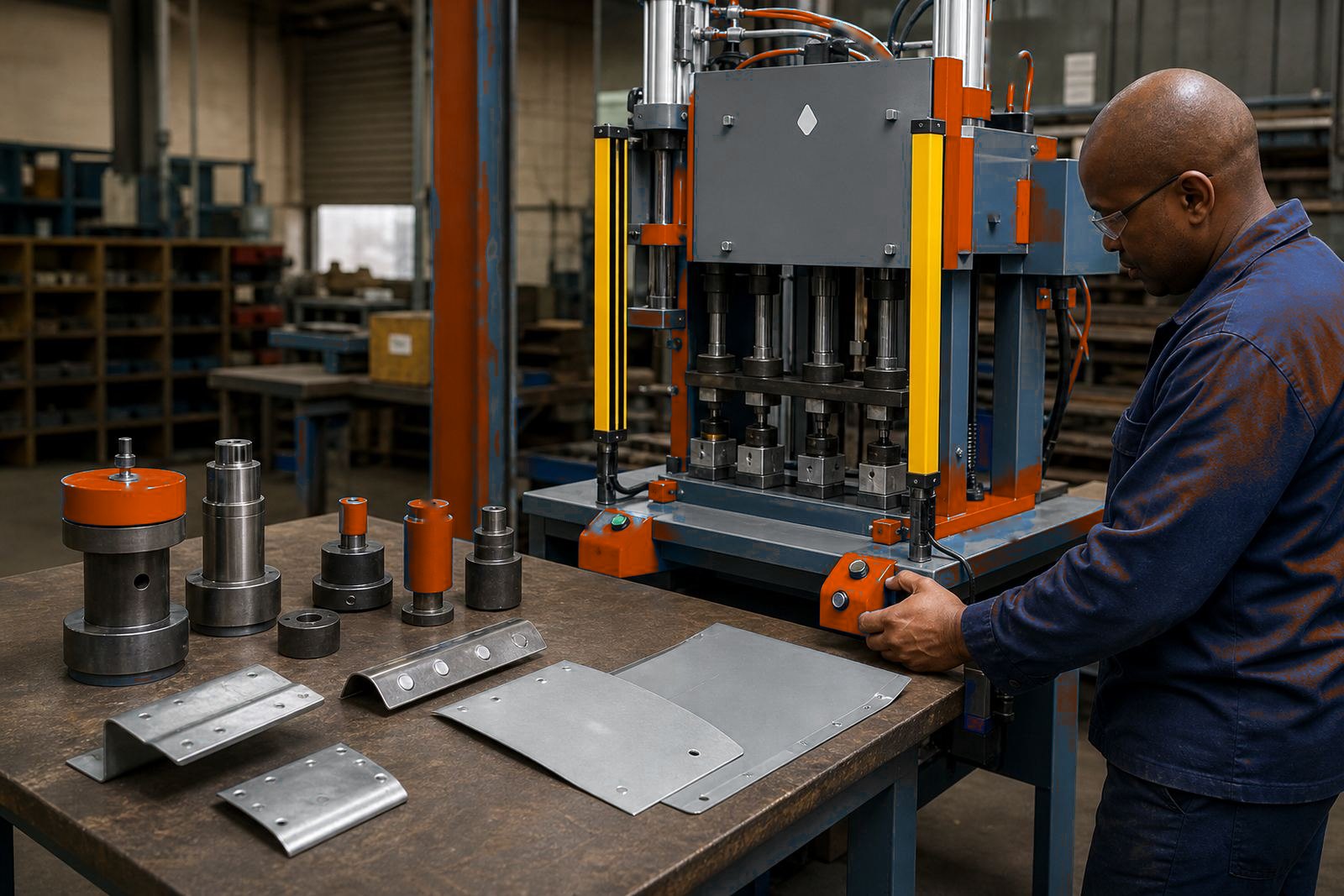
On multi-station presses, each station may carry a different tool stack. One station may be for light assembly with a small forming load, while the next handles a deeper rivet set or a stronger press-fit. If the tooling designer has allowed for that spread, the pressure can be balanced across the line instead of forcing every station to act the same.
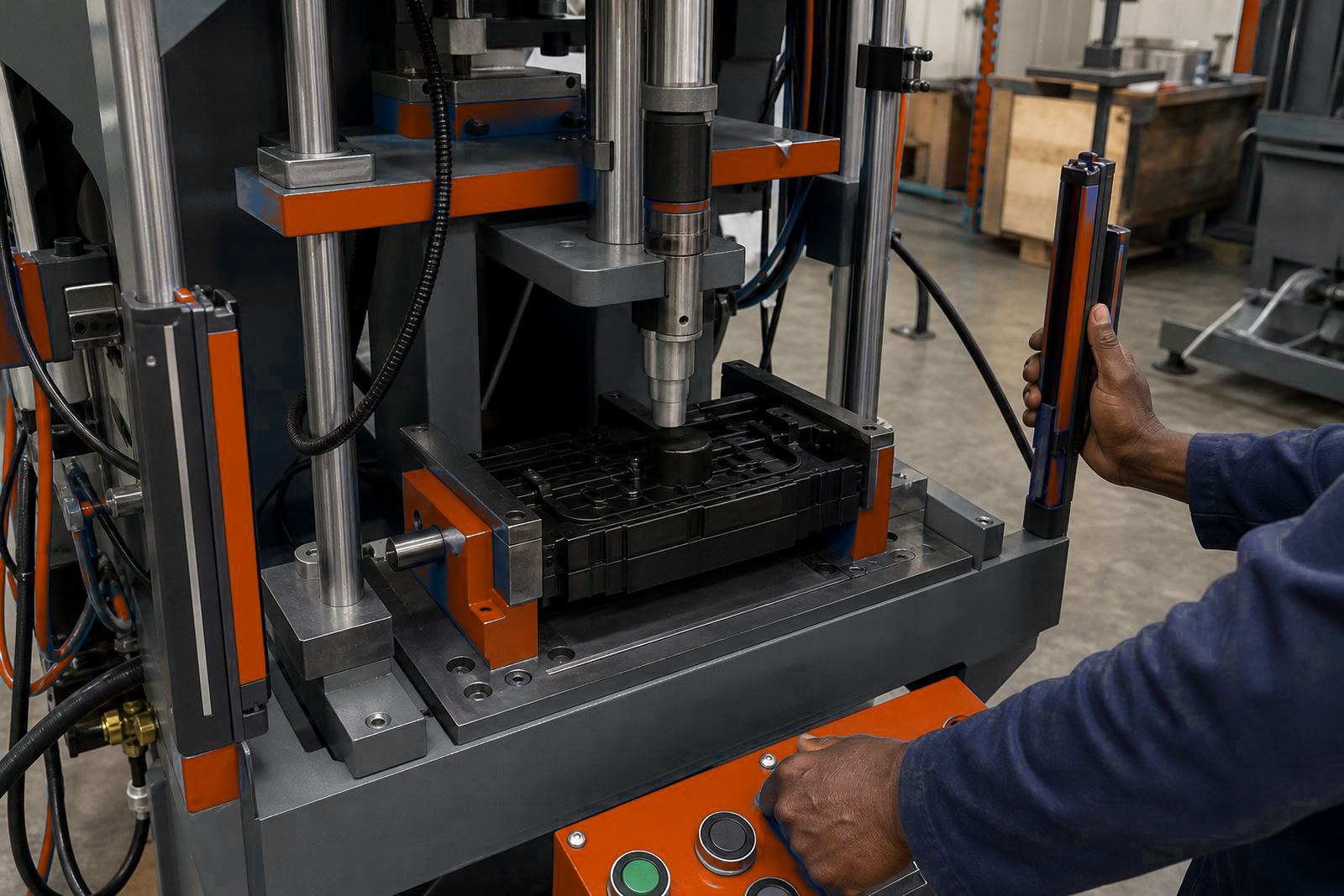
Clear guarding and light curtain placement also matter here. When pressure is set correctly, the press should complete the cycle without a sudden jump or unpredictable movement. That makes two-hand control easier to use properly and keeps the operator’s attention on the part, not on fighting the machine.
Signs the setting has drifted
Air pressure drift often shows itself before the press fails outright. A station that once produced neat closes may begin to leave a lighter mark. Rivets may sit proud on one shift and sit flush on the next. Packs may seal with uneven pressure along the edge. These are not always tooling faults, they can point to air loss, a blocked line or a regulator that no longer holds steady.
Plants around Johannesburg and Pretoria often run several pneumatic lines at once, and that can make pressure drift harder to spot. A machine may seem fine at start-up, then lose consistency once the line load changes. If the cycle speed starts to vary or the ram sounds different, check the setting at the press.
- Hissing at fittings usually points to leakage.
- Uneven cycle speed can point to flow restriction.
- Changes in part finish can show pressure drop under load.
- Warm air lines or dirty filters can affect valve movement.
- More scrap at one station often means the setting has moved off target.
Local conditions that change the air you feed the press
South African factories do not all operate with the same air pressure conditions. In Durban and Gqeberha, coastal humidity can show up quickly in the line if moisture control is poor. In inland plants, long pipe runs and shared compressors can lead to pressure drop when more than one machine starts cycling at once. Either way, a press needs clean and steady air if repeat cycles are expected.
Fit proper filtration, keep drain points clear and make sure pipework is sized for the demand. If a line feeds both a press and other plant equipment, the press may need its own branch or a better regulator close to the machine. That keeps the station pressure where it should be when the job gets heavier.
For pack sealing work, a slight change in pressure can show up in the finished edge. For crimping and riveting, it may show up in a poor form or a loose join. For staking, the effect may be a shallow head or a tilted finish. The air line should suit the job, not only the compressor rating.
Setting pressure during commissioning and handover
Commissioning is where the pressure setting becomes part of the press and is tested with the machine. At this stage the machine is tested with the actual tooling, the actual parts and the actual cycle sequence. The operator training should cover what the correct pressure looks like, what a poor cycle sounds like and how to spot trouble before scrap builds up.
At MultiPress, commissioning work usually includes pressure checks across stations, stroke setting, air line setup, guarding checks and two-hand control checks. Where a line has several presses, the handover should make it clear which station is sensitive to pressure changes and which one can tolerate a small shift. That gives the workshop a better way to keep repeat cycles steady during normal production.
A good handover does not leave pressure as a hidden setting. It becomes a visible part of the run sheet, with the regulator position, the acceptable range and the job notes written in simple shop-floor terms for the team on shift.
Isando workshop job on crimping and staking
A small assembly line in Isando needed one press for crimping terminals and a second station for light staking. The first job was forgiving, the second was not. The team found that both stations had been set from the same reading, but the staking station was under-performing whenever the line pressure dipped during other machine cycles. The fix was not dramatic. The regulator was reset closer to the machine, the line was checked for a small leak and the stroke stop was trimmed to suit the tool stack.
Once the pressure held steady, the parts stopped varying from batch to batch. The operator could hear the cycle settle, and the tool marks became more even. That is the sort of change that matters on a real line, because it keeps production moving without making the press harder to run than it needs to be.
Air pressure control is not a side note on a pneumatic press. It sits at the centre of repeat work, and it needs the same attention as the tooling, guarding and stroke setup.