When the seal line needs the same squeeze every shift
Pack sealing on a pneumatic press is not only about pressure on the gauge. The station count, cylinder size, tool face, guide condition and the way the operator loads each pack all shape the final closure. If the press closes a little high on one cycle and a little low on the next, the seam will show it. In a factory that runs sleeves, foil packs or closure tabs, that variation turns into leaks, crushed edges or uneven seals.
A repeatable setup starts with the pack itself. Thickness, material memory and where the seal lands on the product all matter. A soft laminate needs a different squeeze to a stiffer board or plastic closure. The press must bring the tooling together squarely, without twisting the pack or scuffing the finish. That is where the fixture, stroke stop and air pressure setting work together.
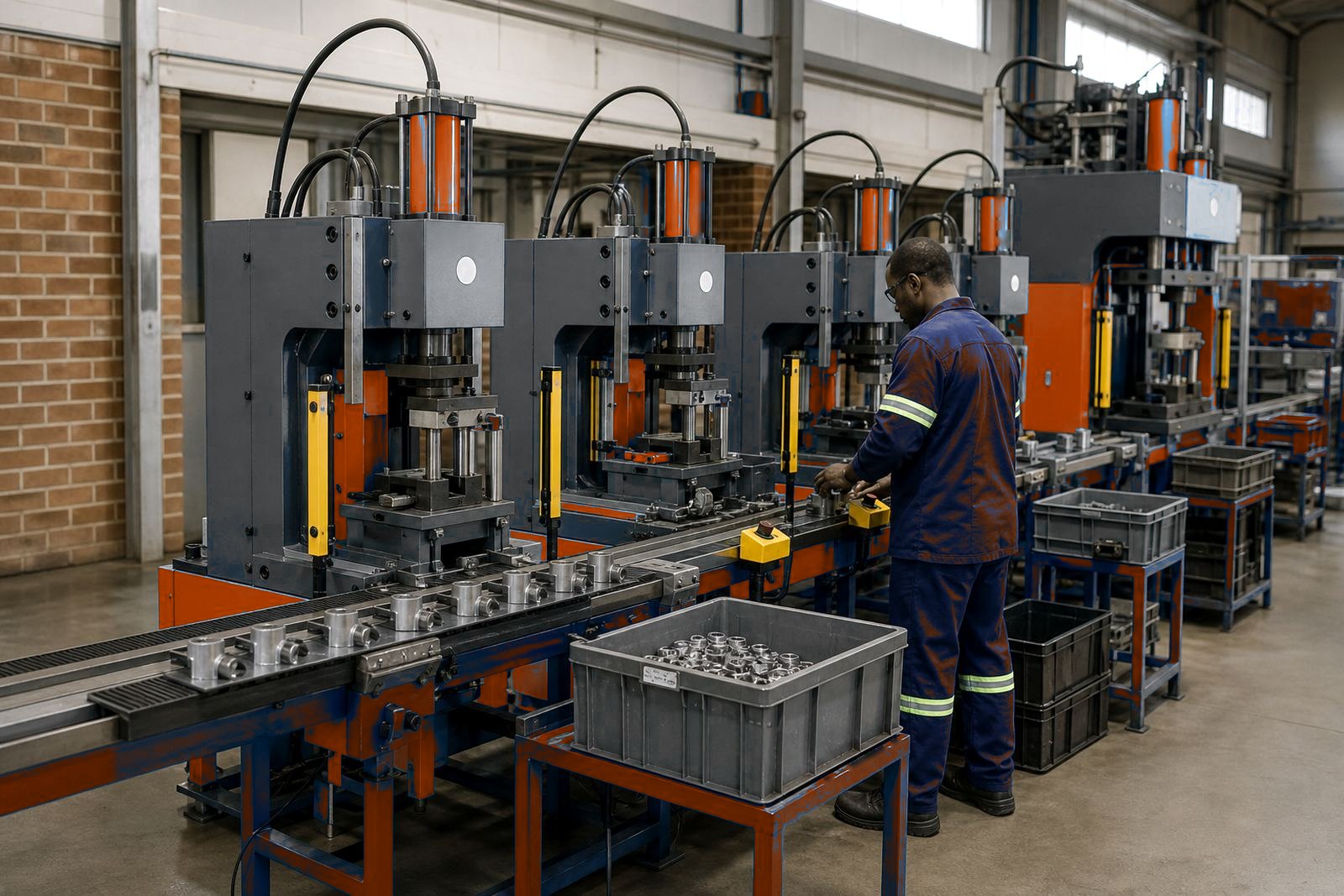
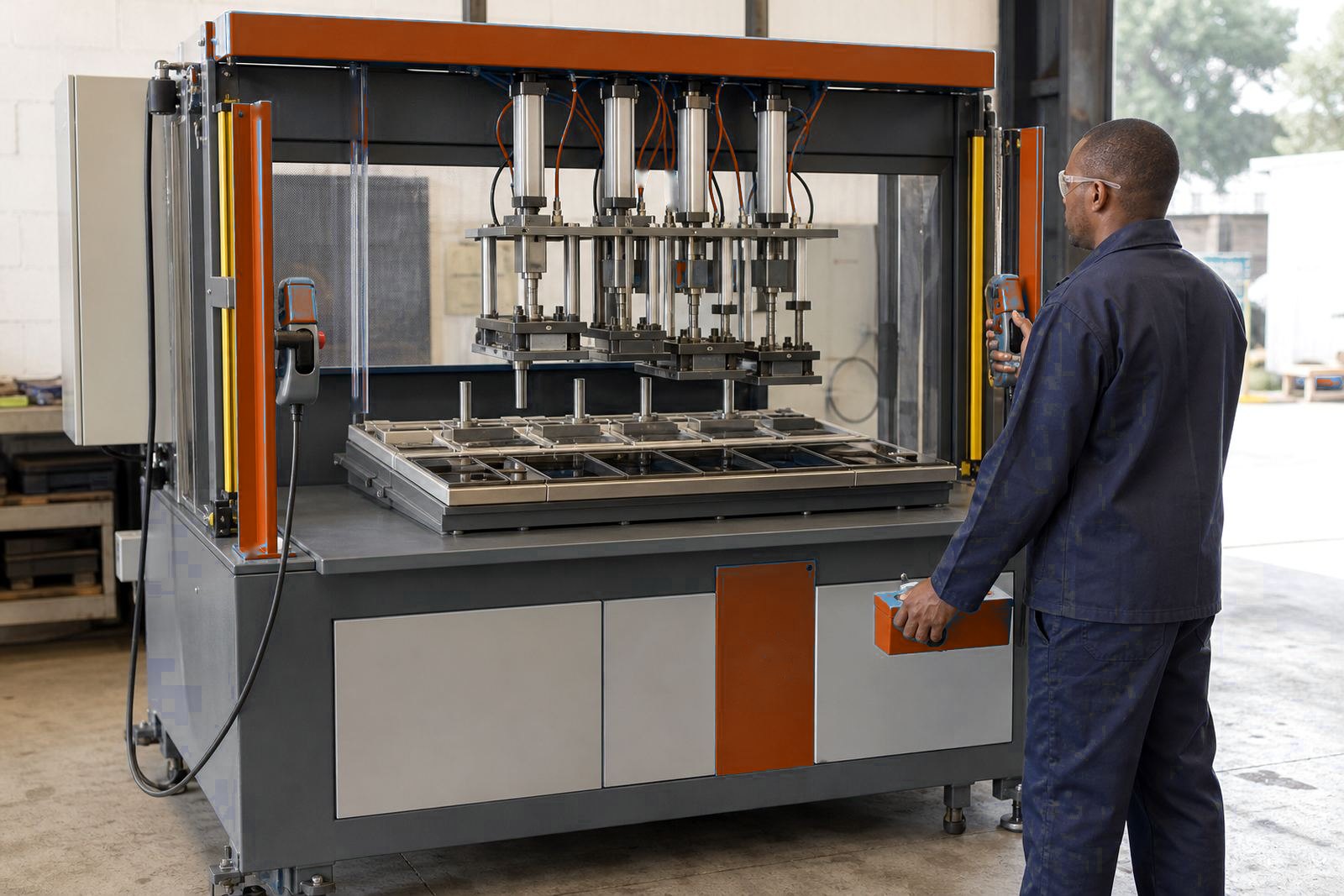
On a multi-station machine, one station may be used for loading and the next for the actual seal. That makes it easier to control force and protect the product. It also helps when a line is doing mixed formats, because the operator can keep each task in a fixed position instead of chasing the pack across the table.
The pressure setting is only part of the story
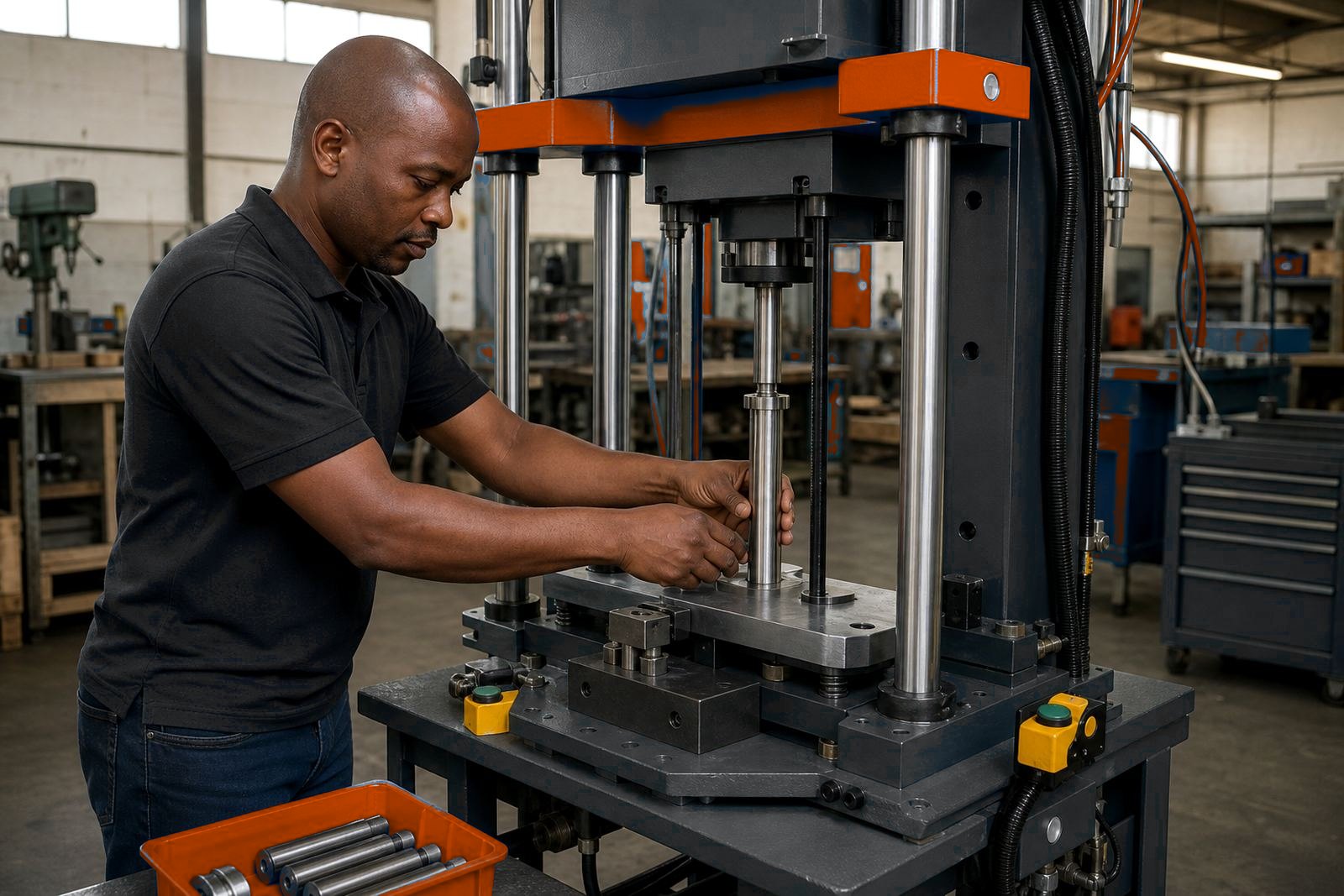
Air pressure sets the available force, but the real result depends on how that force reaches the pack. A long stroke with no proper stop can hit too hard at the end of travel, while a short stroke may not close the seal fully. The cylinder must match the job, and the stroke needs to stop at the point where the tooling lands cleanly every time.
Closure pressure should be tested with real product, not a sample that only looks similar. A slight change in pack thickness can alter the seal line enough to create folds or weak corners. That is why stroke setting, pressure regulation and tool height all get checked together during commissioning. If one element changes, the rest should be rechecked before production runs on volume.
- Set the air supply to the pressure needed for the pack, not the maximum the plant can provide.
- Check that the cylinder extends smoothly without chatter or drag.
- Confirm the tooling closes parallel across the full seal face.
- Watch for bounce at the end of stroke, as it can mark the product.
- Record the final setting for each pack size and material build.
Tooling that holds the pack, not just the metal
Pack sealing tooling has to support the product in the same place every cycle. If the locating faces are loose or uneven, the pack shifts before the seal is complete. That is one of the most common causes of poor repeatability on a press that is otherwise mechanically sound. Good tooling makes the operator work easier because the pack only fits one correct way.
For sealing work, the tool face may need a softer insert, a shaped pocket or a flat land depending on the finish required. Crimping, riveting and staking jobs use different load paths, but the idea is the same. The product needs to sit square, the force must land where intended and the tool should release without dragging the pack out of position.
In Isando and the wider Ekurhuleni area, many packing lines run with mixed shifts and different operators at the same station. A well made locating jig reduces the chance of a good setting being lost when the person changes. That matters just as much on a night shift in Johannesburg as it does on a morning run in Pretoria or Durban.
Guarding and two-hand controls keep the station honest
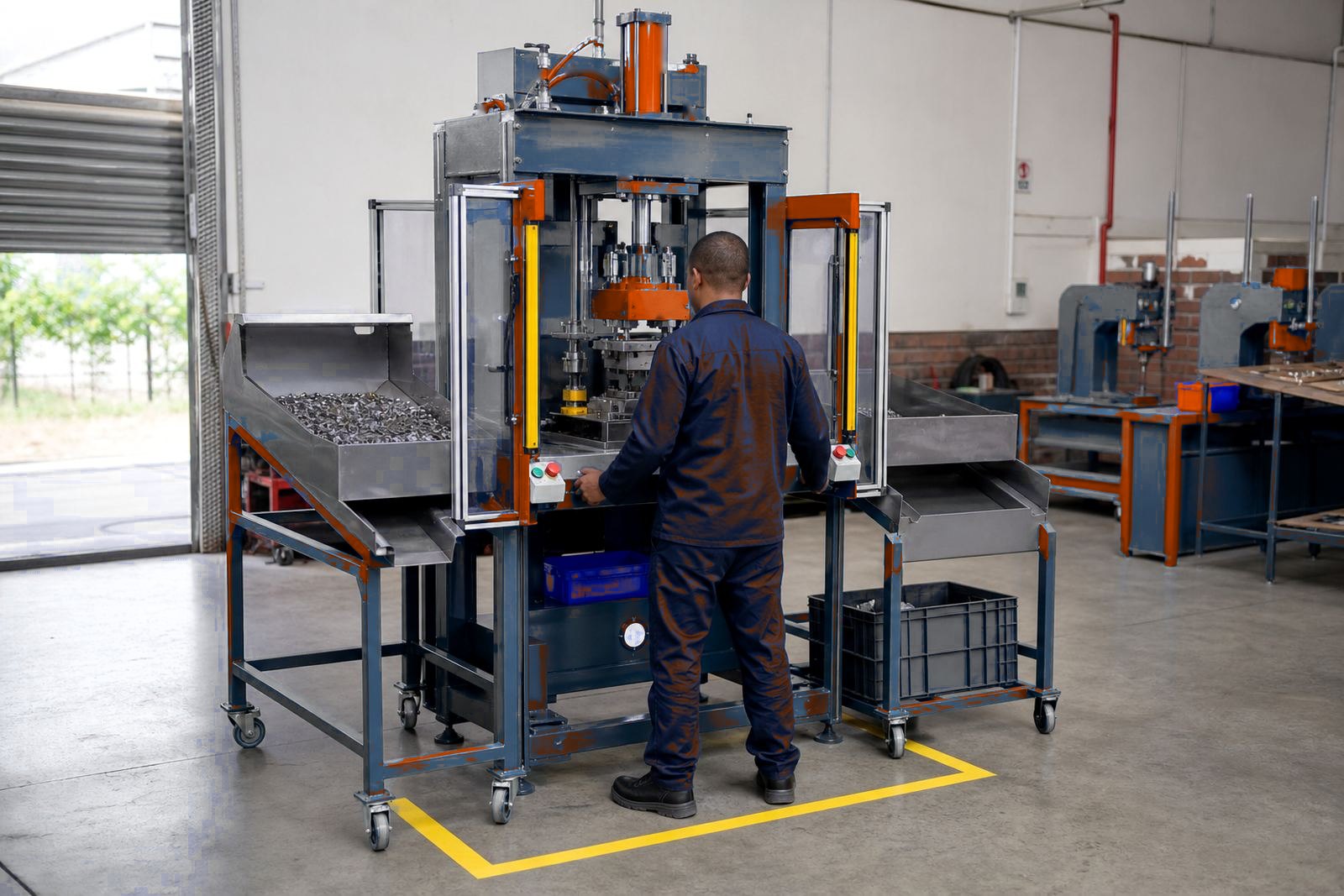
Repeat sealing only works when the operator can load the pack safely and close the press without reaching into the danger zone. Two-hand controls are useful where the station closes fast or where the tooling sits close to the fingers. Light curtains help on larger stations, but they must be matched to the machine layout so the beam protects the working area without creating awkward loading habits.
Guarding should suit the job rather than fight it. If the pack needs to be turned or fed at an angle, the opening must still keep hands clear during the closing cycle. Clear access to the load point improves consistency because the operator is not forced to rush or twist the product in the last second. That is when bad seals and bent packs start showing up.
- Use two-hand controls where the seal stroke is fast or close to the operator.
- Fit light curtains where the station geometry allows safe and clear loading.
- Keep guards open enough for the pack, but never for the hand path.
- Test the stop and restart behaviour before the line moves into production.
- Make sure the operator can see the tooling face and the pack edge at the same time.
Setting up for humid conditions and mixed production shifts
Humidity changes the way some pack materials behave, especially where the seal relies on a clean surface and steady closure. Coastal jobs in Durban, Gqeberha and East London can show this more sharply than inland work. A pack that seals neatly in the workshop may behave differently in a warmer production hall if the material has picked up moisture or softened slightly.
That is why a practical set up includes a short production trial under real conditions. Check the first pieces, then check them again after the line has settled. If the press is used across different shifts, the air supply, die height and load position should be verified each time the tool is changed. A small change in setup can move the seal line enough to affect closure pressure.
On a pack sealing line, the goal is not maximum force. It is consistent force, applied at the right point, with the same result on the first pack and the last. That is what keeps rework low and helps the station behave when the workload changes during the week.
A commissioning visit that keeps the sealing line steady
Commissioning is where the press, tooling and operator routines are brought into the same method. The machine is checked for air leaks, stroke travel, return speed and control logic. Then the tooling is set against the real pack, not just against a drawing. If the station has more than one function, each position must be verified on its own before the line is handed over for production use.
For a factory in Kempton Park or Boksburg, the aim is usually the same: seal quality that does not drift when the shift changes or the pack size changes. That calls for clear settings, written stroke notes and a practical handover. Operator training then covers loading, inspection, adjustment limits and what to report if the seal starts showing a crease or gap.
A good setup does not depend on a single skilled person standing next to the press all day. It depends on a machine that was set with enough care to survive normal production pressure, tool wear and day-to-day variation on the floor.