The first minutes set the tone
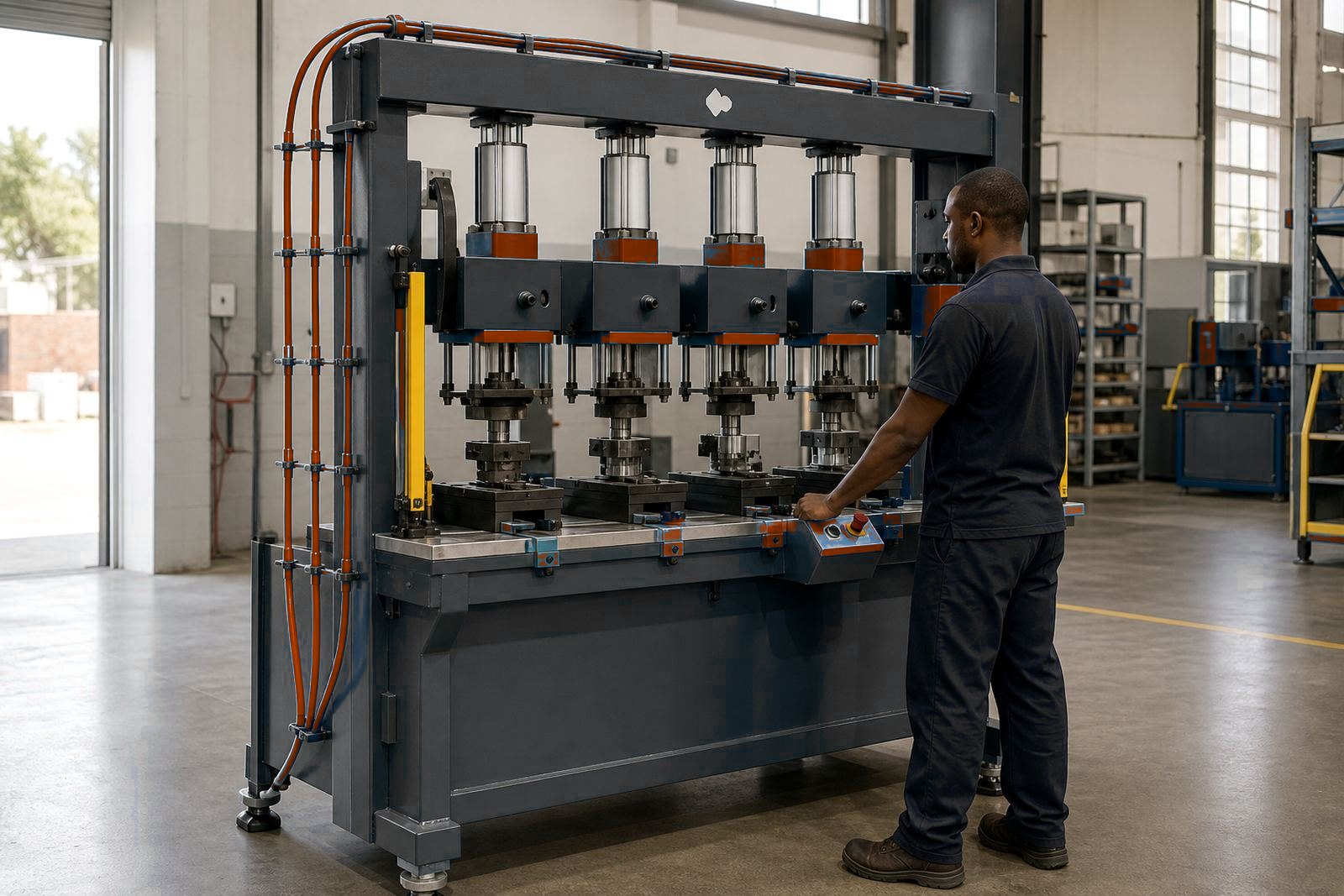
Commissioning starts with the press sitting square, level and ready for controlled movement. On a multi-station machine, each station has to cycle in step with the others, and the ram travel must feel predictable from the first stroke to the last. That means checking air supply quality, line pressure, regulator settings and the stroke stop before anyone begins production runs.
In Isando and the wider Ekurhuleni industrial belt, a press often moves between workshop checks and a plant floor with different air lines, different floor levels and different guarding clearances. A good commissioning day allows for those shifts. The machine should not only cycle, it should do so with the tooling in place, the guards closed and the operator standing where the job expects them to stand.
Pressure, stroke and cylinder behaviour
Compressed air drives the press, so the cylinder action tells you a lot. If the pressure is too low, the stroke can feel slow and weak. If it is set too high, the tooling and fixtures take a harder load than they should. Stroke setting matters just as much, because a crimp, rivet or stake that lands a few millimetres off can damage the part or leave the joint unfinished.
- Measure the working pressure at the machine itself, not only in the compressor room.
- Set the stroke to suit the part height and tool reach.
- Watch for uneven descent, bounce or hesitation at the bottom of stroke.
- Confirm that cylinder return is clean and repeatable through several cycles.
For pack sealing work, the timing is just as important as force. Too much pressure can distort the seal area, while too little leaves an uneven finish. The operator needs a machine that behaves the same on the tenth cycle as it did on the first.
Tooling fit is where most problems show up
Tooling must meet the part cleanly, without forcing alignment by hand. If a punch, nest or fixture has to be nudged into position every cycle, the set-up is not ready for release. Commissioning day is the moment to confirm that custom tooling lands where the drawing expects it to land, and that the part can be loaded and released without scraping or jamming.
On assembly lines, small errors add up fast. A locating pin that sits slightly proud can mark a housing. A rivet tool that comes down off-centre can bruise a face. A staking tool with the wrong edge profile can leave a rough finish that looks harmless in the workshop but causes complaints once the parts go into cartons or crates.
- Confirm tool alignment at each station.
- Check that clamps and locators hold the part without strain.
- Make sure the finished joint looks the same across repeated cycles.
- Inspect wear points before the machine is handed over.
Guarding and two-hand controls need a real test
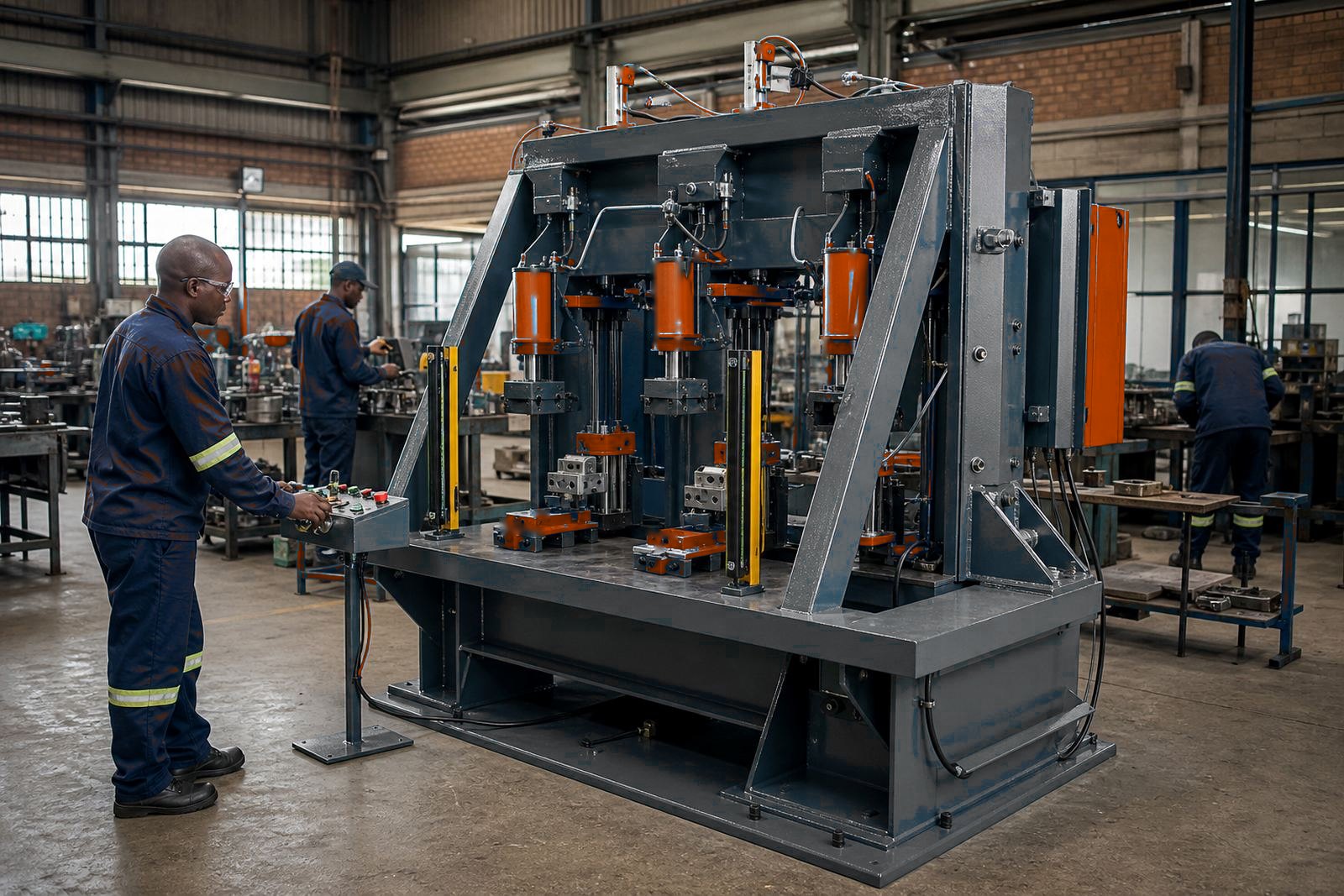
Safety features should be tested during commissioning and treated as working machine checks. Two-hand controls must require a proper operator action, and light curtains should stop movement when the beam is interrupted. Guarding has to suit the station layout, the reach zone and the way material enters and leaves the press. If someone can reach into the point of operation, the setup is wrong.
In a busy Johannesburg or Pretoria plant, operators may work around the same press across more than one shift. That makes clear guarding even more important, because habits move quickly from one person to the next. A commissioning check should prove that the machine only runs when the full safety sequence is in place.
- Test the two-hand controls repeatedly while watching the ram movement.
- Break the light curtain and confirm the stop condition.
- Check that guards do not interfere with loading or unloading.
- Look for pinch points around slides, fixtures and ejector movement.
Part flow tells you whether the line is ready
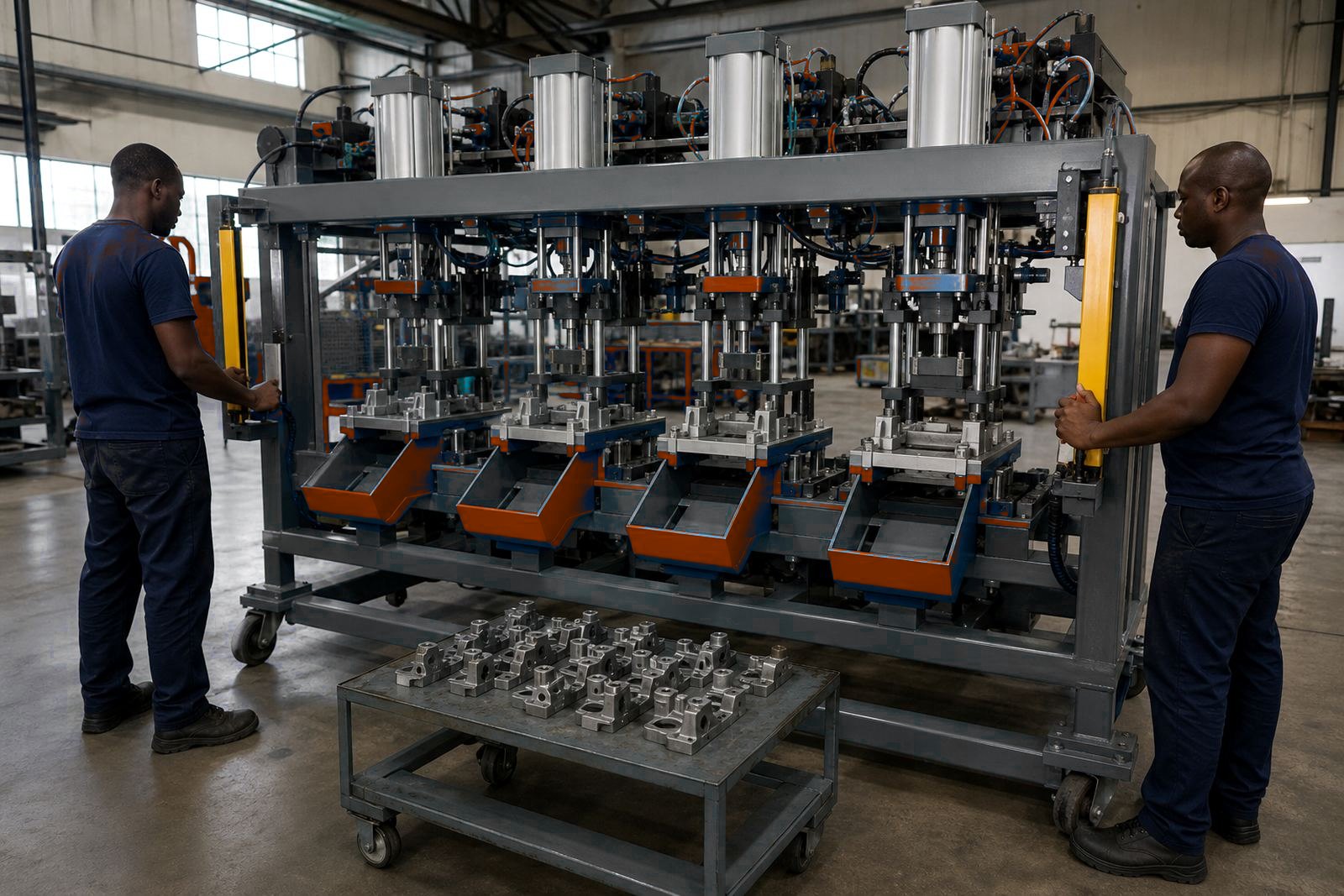
A press can cycle perfectly and still be awkward to use if the part flow is clumsy. During commissioning, the team should watch how raw parts enter, how finished parts leave and whether the operator can keep pace without awkward reaches or wasted motion. If the line feeds badly, the machine will be blamed even when the real problem sits in the transfer path.
Pack sealing lines need particular attention here, because the pack often has to sit correctly before the seal hits. In crimping and riveting work, the part should arrive in the same orientation every time. If the flow changes from hand-fed to tray-fed or from tray-fed to conveyor-fed, the commissioning process should follow that change and not pretend it is minor.
A practical check list for part flow usually includes:
- Load the part in the same way the operator will use it.
- Watch for snagging, tipping or rotation during transfer.
- Confirm that eject and release paths are clear.
- Make sure the completed part can be removed without touching hot or sharp areas.
Operator training is included in the handover
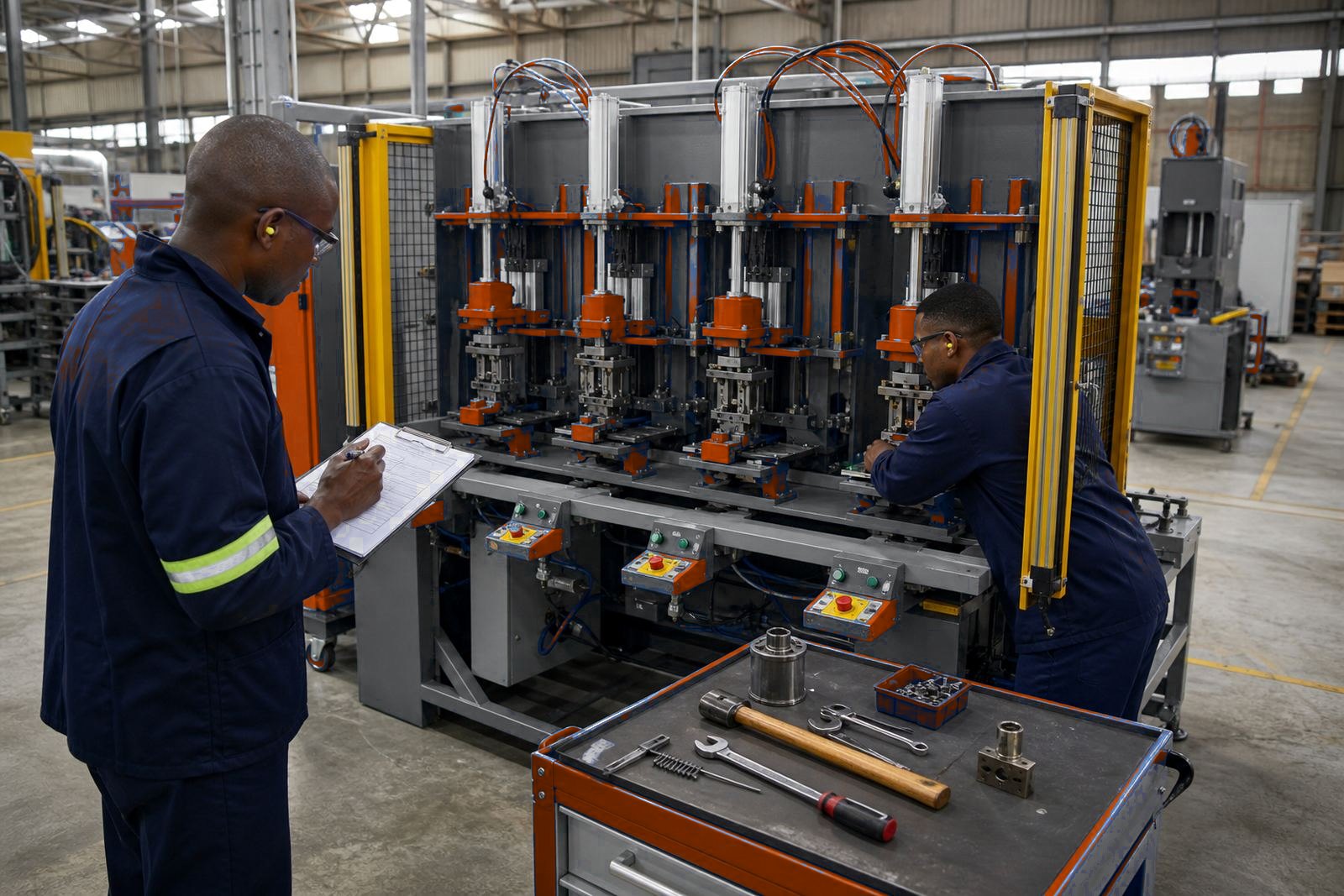
The machine should never leave commissioning as a mystery to the people who must run it. Operator training covers the normal cycle, start-up checks, safe loading, tool change steps and what to inspect when the part does not look right. It also covers the small things that save a shift, such as where to stand, how to read the gauge and how to recognise when the tooling needs attention.
In a plant in Gqeberha or East London, the most useful training is usually plain and practical. People want to know how to keep the press steady, how to spot wear early and how to avoid forcing a part into position. That is the point where a commissioning technician and an operator training lead earn their place on the floor.
Before production handover, the team should leave with:
- Confirmed stroke settings for the job at hand.
- Clear notes on pressure settings and normal cycle behaviour.
- Known tool change steps for the current part range.
- Safety checks that match the installed guarding and controls.
A commission in Kempton Park can still fail without the local check
A press may look perfect in the workshop and still need fine tuning once it reaches a plant in Kempton Park or Boksburg. Air quality, floor vibration, line position and the speed of the surrounding production line all change the way the machine behaves. That is why commissioning day should not be treated as a quick signature exercise.
The best handover is the one where the press is tested on the actual part, under the actual line conditions, with the actual operators present. When movement, pressure, tooling and part flow all line up, the machine is ready to do its work. If one of those pieces is still off, the fix belongs in commissioning before the job becomes a production headache.