When the frame flexes, the tool line moves
On a multi-station pneumatic press, frame rigidity is what keeps the punch, die, locator and clamp in the same relationship from cycle to cycle. When the frame gives under load, even a little, the tooling no longer meets in a straight line. That appears as uneven crimps, a rivet that sits off-centre, a stake that leans, or a seal that looks fine on one side and weak on the other.
Factories in Isando, Germiston and Kempton Park often ask for more station capacity before they ask about the frame. That order causes trouble. A stronger air cylinder or a wider table does not solve a press that twists under load. The structure must hold alignment first, then the tooling can do its job with repeat contact and controlled stroke.
Frame stiffness also protects guards, two-hand controls and light curtains from being treated as afterthoughts. If the press body shifts, the operator starts adjusting by feel. That is when small errors turn into scrap, noisy running and tool wear that should not be there.
What stiffness does for crimping, riveting and staking
Crimping and riveting are unforgiving jobs. The press has to bring the tool faces together squarely, then release without dragging the part. Staking asks for a controlled finish, not a hard smash. Pack sealing needs a repeatable closing line so the seal area stays even across the whole width of the pack.
A rigid frame helps in four practical ways:
- It keeps station centres fixed when the cylinder reaches full force.
- It limits side loading on tooling plates, guides and bushes.
- It helps stroke setting stay honest from first piece to last piece.
- It reduces the need for frequent rework on alignment and contact marks.
On a loose frame, one station can behave differently from the next even where the tooling matches. That becomes costly on production lines that depend on repeat contact through long runs. The more stations a press carries, the more a weak frame can show in the finished work.
Air pressure is not the same as pressing force
Many line supervisors look first at air pressure because the gauge is visible and the number is easy to read. Press pressure counts, but frame stiffness, tooling and control settings all shape the result. A well-set pneumatic system can still produce poor results if the frame spreads under load or if the tooling is mounted on a base that does not stay flat.
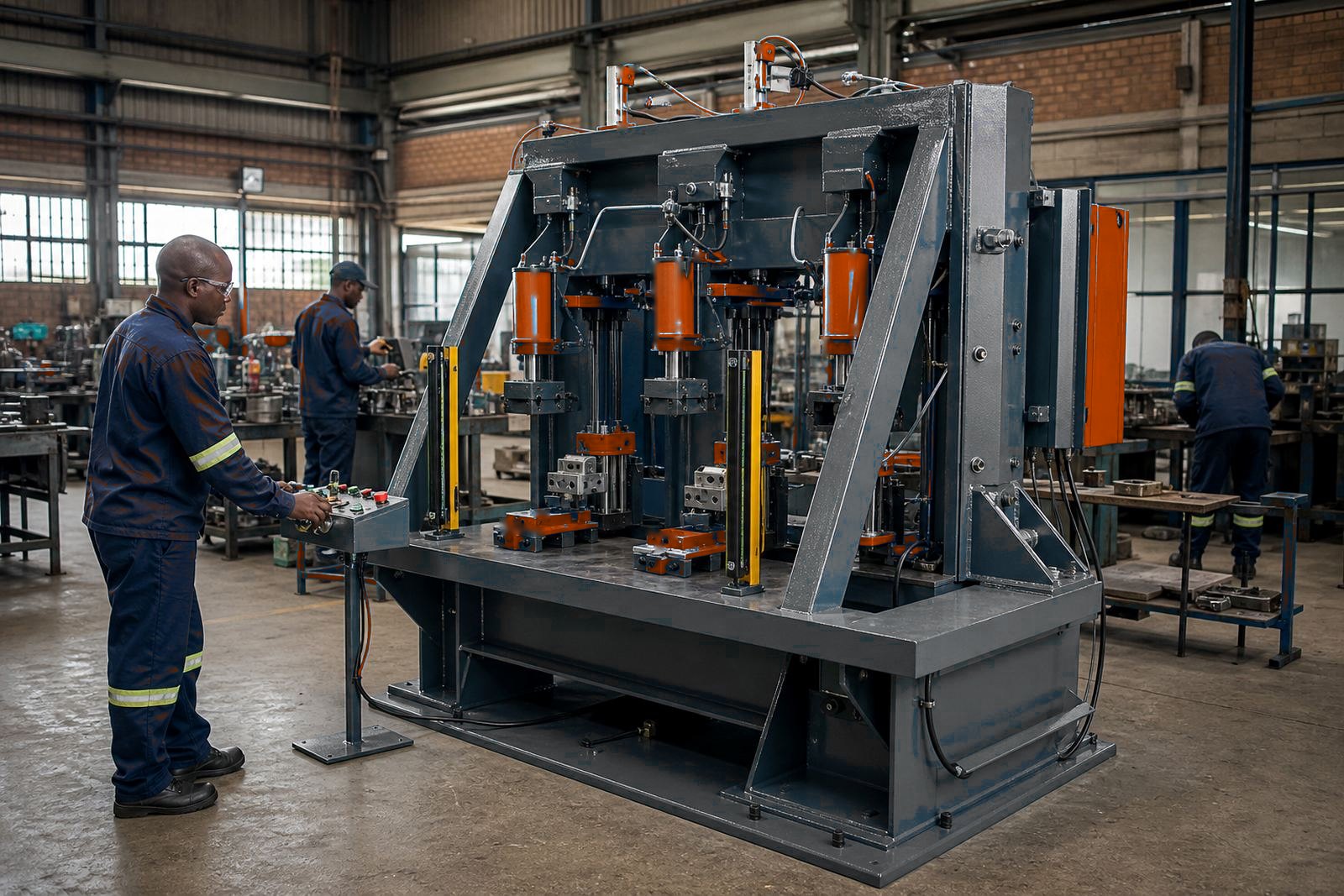
Good press design starts with the frame section, cross members and mounting surfaces. Then the cylinder size, bore, stroke and return action are matched to the job. After that, the tooling is set so the workpiece is held properly through the full cycle. If any of those parts are out, the machine will still move, but it will not press cleanly.
In coastal towns such as Durban and Gqeberha, humidity can also affect fixtures, guards and stored tooling. That does not make frame rigidity less important, it makes it more important. A frame that stays true gives maintenance staff a firm base when they recheck guides, clamps and stop positions after a period of high moisture or heavy use.
Signs a frame needs a closer look
Some problems show up on the floor long before anyone calls them a frame issue. Operators may start nudging parts into place by hand. Tool marks may appear on one side only. The press may sound different near full stroke, or the part may need a second press to pass inspection. Those are not random quirks, they often point to deflection or poor support in the structure.
- Parts that move slightly when the press closes
- Visible mismatch between upper and lower tooling
- Uneven stamp depth or crimp depth across stations
- Loose fasteners that keep working back out
- Recurrent adjustments after tooling changes
At that stage, the answer is not always a heavier cylinder. The better move is to check the frame faces, platen flatness, guarding attachment points and the way the air line setup feeds the press. A rigid machine still needs correct installation, and the installation must respect the frame rather than fight it.
A Johannesburg line that needed steadier repeat contact
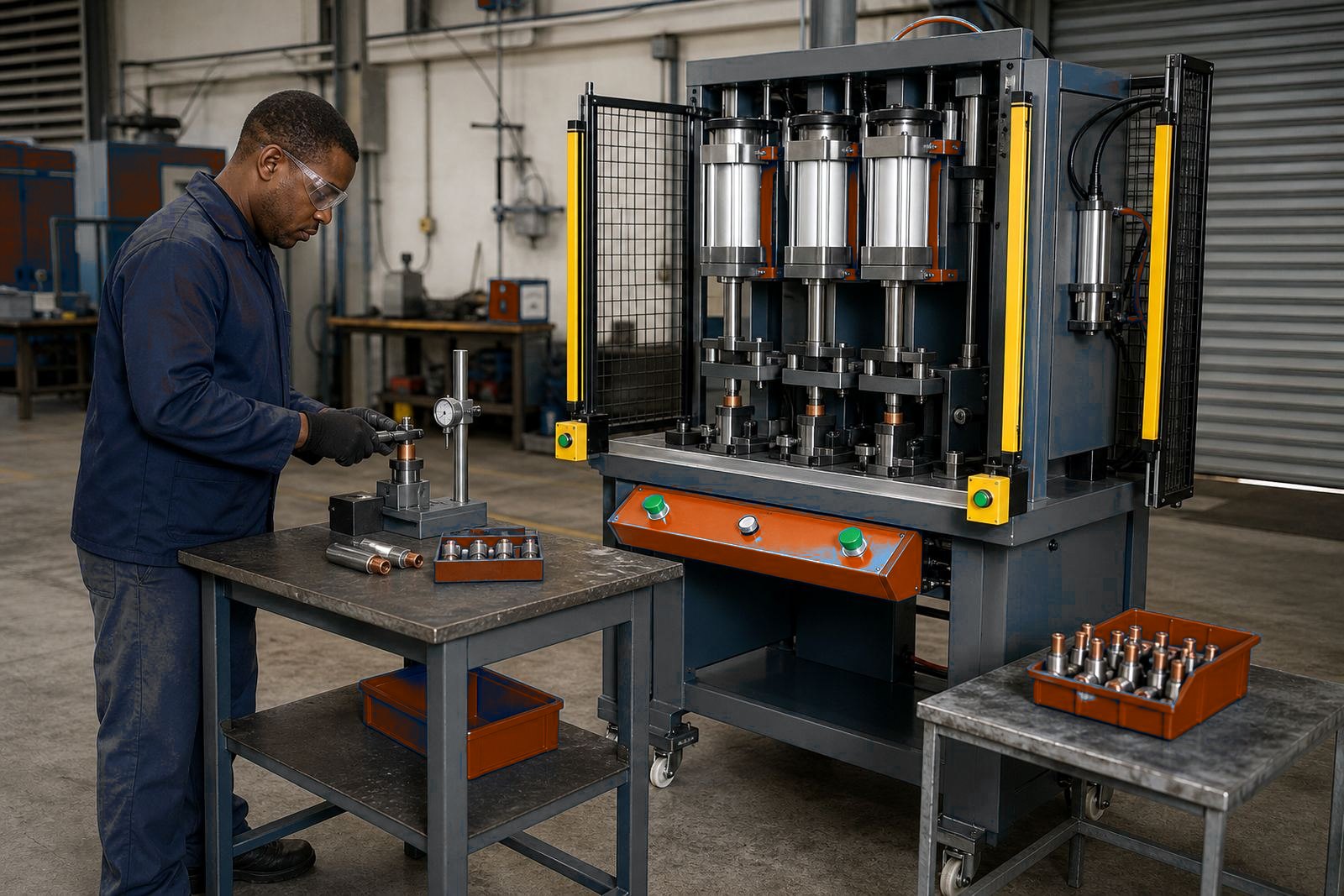
One Johannesburg assembly line asked for a multi-station press to handle crimping, riveting and pack sealing in the same workspace. The early trials showed a pattern that looked like tooling trouble, but the real issue was frame movement at full stroke. The outer stations were not meeting the same way as the centre station, so the finish changed from one end of the press to the other.
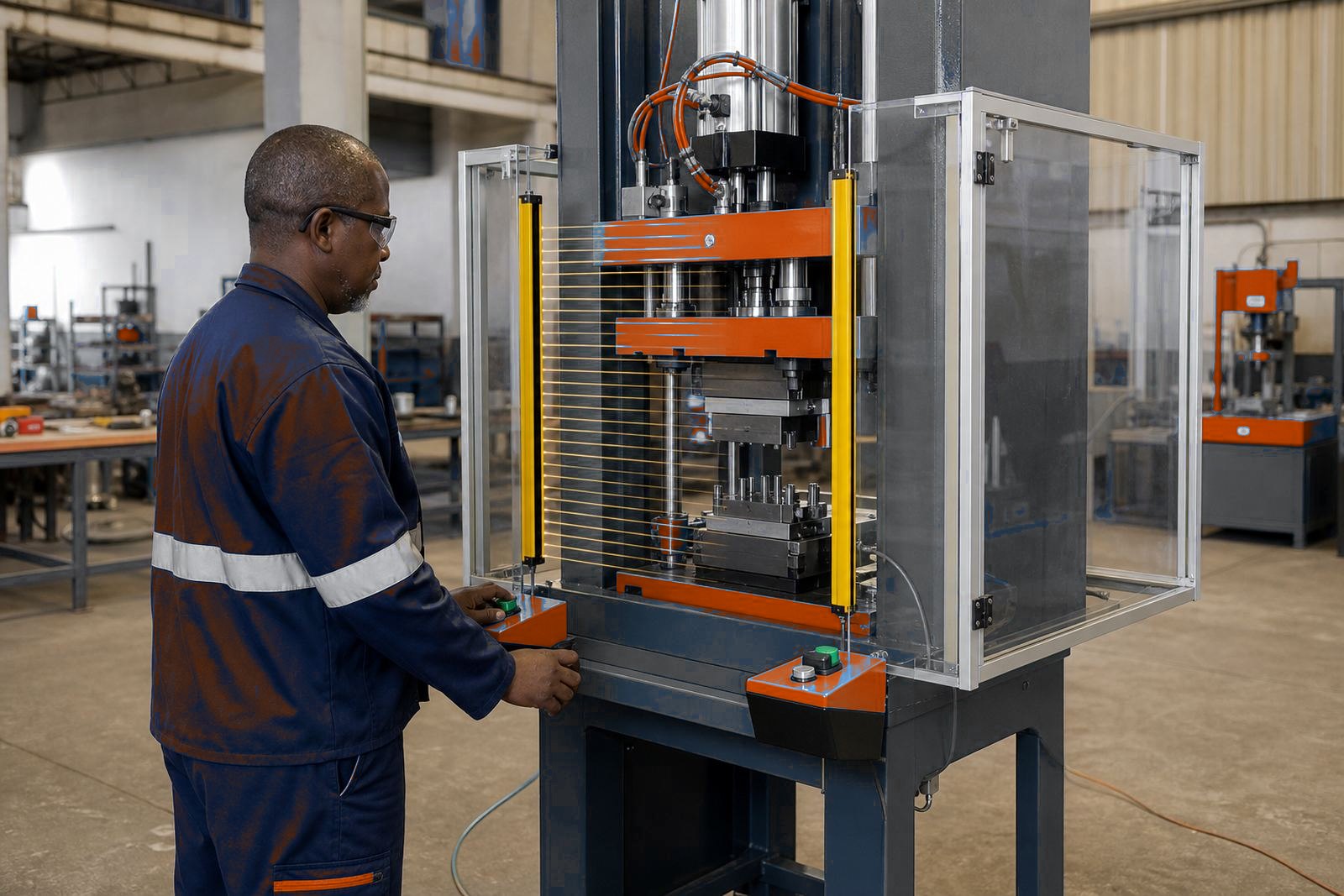
The fix was not dramatic. The frame layout was reviewed, the tooling support points were tightened, and the stroke setting was reset to suit the actual contact point rather than the guessed one. Two-hand controls and the light curtain were kept in place, but the operator was also shown how to watch for small changes in part location, not just obvious faults. Once the structure and the tooling worked together, the line became far easier to keep in control.
That kind of job is common across Gauteng and into Pretoria, Durban and East London. The workshop can build the press well, but if the frame is asked to carry too much without enough stiffness, the best tooling still has to work against the machine instead of with it.
What to ask for before the press goes to site
Before a press is commissioned, think about how the frame carries the load through every stroke. The frame, tooling and safety equipment all affect how the station behaves under load. A press that is easy to set up on the shop floor is usually one where those parts were matched early.
- Ask how the frame handles side load at full stroke.
- Check whether the tooling faces stay parallel under pressure.
- Confirm that the guarding still allows clear access for loading.
- Make sure the air line setup supports stable cycling.
- Test the station with the actual part, not a near match.
That approach is practical for factories that run more than one shift or need different tooling changes through the week. It reduces the small corrections that eat time at the machine and keeps production handover cleaner for the next operator.
Why rigidity matters more on multi-station work
A single-station press can hide a little flex for a while. A multi-station press cannot hide much at all. Once the machine starts handling assembly, crimping, riveting and sealing in separate positions, every station depends on the same frame reference. If that reference moves, the whole sequence starts to drift.
That is why frame rigidity sits near the top of the list when a plant is choosing a press. The machine must handle the load, hold the tooling line and stay safe under daily use. When those basics are right, the operator can focus on the product rather than fighting the press. In practice, that is what keeps repeat contact consistent and the line easier to run.
For South African factories, the useful question is not whether the press can move a part once. It is whether the frame will still hold true after thousands of cycles, a few tooling changes and a full week on the floor. That is where rigidity pays for itself in the finished work.