The fixture is where consistency first lives
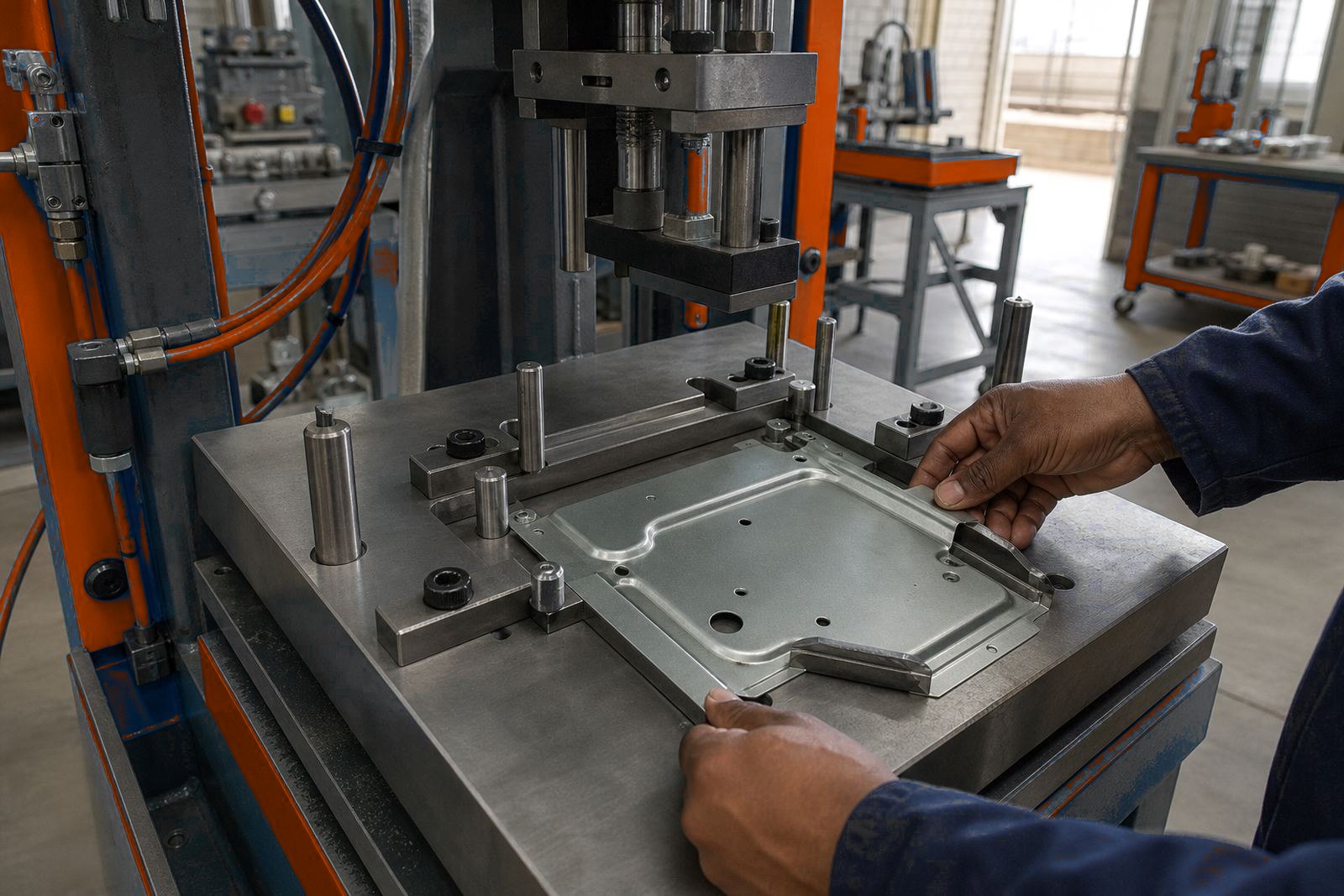
On a multi-station pneumatic press line, the fixture does more than hold a part in place. It sets the part’s height, angle and location so the cylinder, tooling and stroke meet the same point every cycle. When that presentation changes from one station to the next, the press output starts drifting and operators spend more time correcting the setup than running it.
In practice, repeatability depends on hard location points, clean contact faces and enough support under the workpiece. A fixture that suits a short aluminium component will not behave the same way with a longer steel bracket, especially where clamping force and air pressure need to stay steady across several stations.
Small location errors show up fast at the press
A few millimetres lost in the fixture can show up as crooked rivets, weak staking, uneven crimping or a seal that does not close evenly. That is why we check how the part enters the nest, where it stops, and whether the operator can load it without nudging it into place by hand.
Good repeatability comes from removing guesswork. Poka-yoke style stops, guided pins, datum faces and positive clamps help the part land in the same position every time. The tool then meets the job, instead of compensating for a moving target.
- Use fixed datum points that match the drawing, not the operator’s eye.
- Keep clamp pressure high enough to hold, but not so high that it distorts thin material.
- Allow clear access for loading without forcing fingers near the tooling zone.
- Check wear on bushes, pins and stops before the play builds into scrap.
Stroke, pressure and tooling need to work as one set
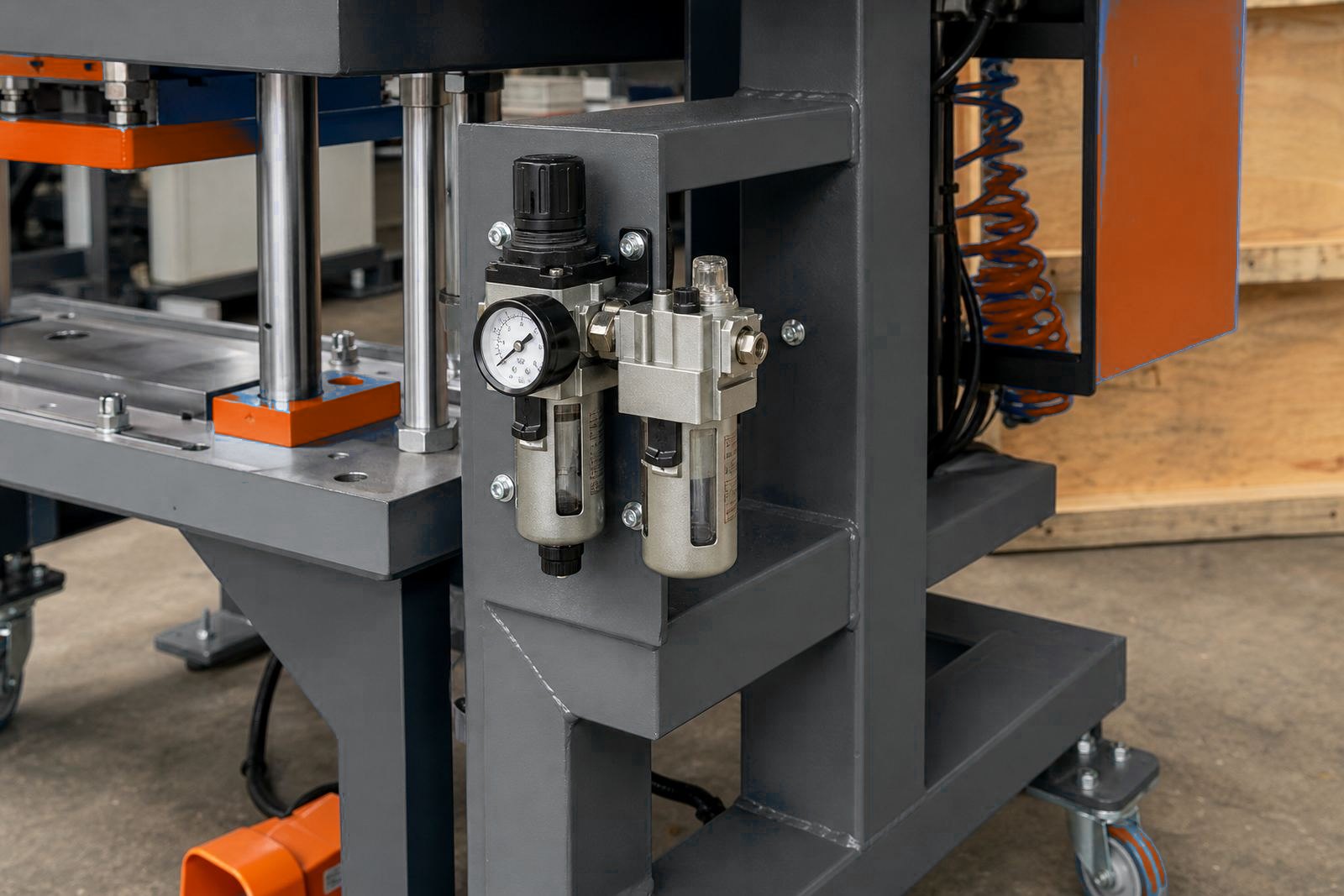
Repeatability is not only a fixture issue. The stroke setting, air pressure and tooling profile all affect how the part lands and how the finished piece comes out. If the stroke is too long, the press can bottom out or push past the useful point. If it is too short, the crimp or rivet may not fully form.
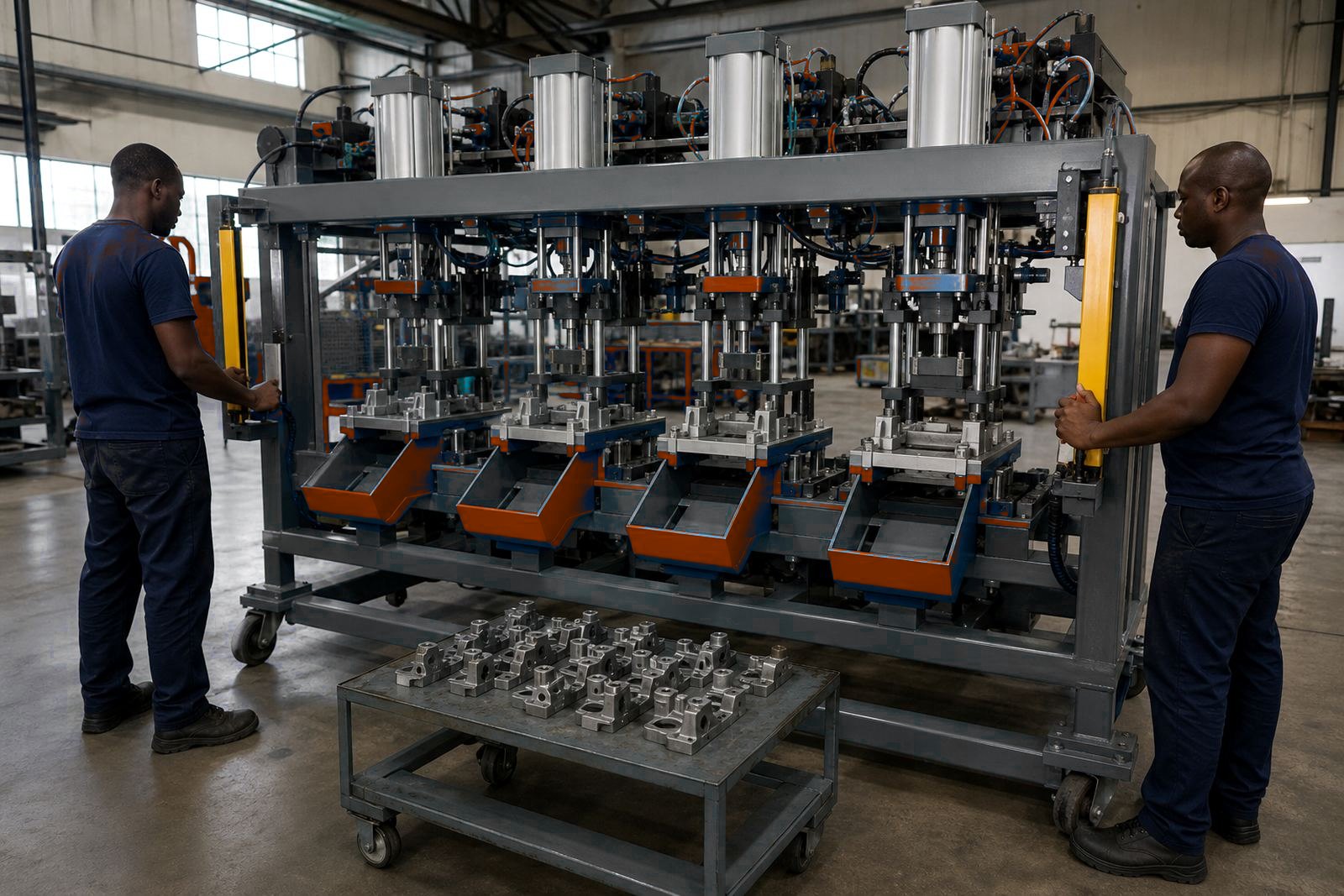
On a multi-station machine, each station can ask for a different movement or force. One station may need a light closing force for pack sealing, while the next needs a firmer stroke for staking or riveting. The fixture must carry the part through those changes without letting it twist or rebound.
- Set stroke length to suit the actual job and station force.
- Match air pressure to the component material and the tooling shape.
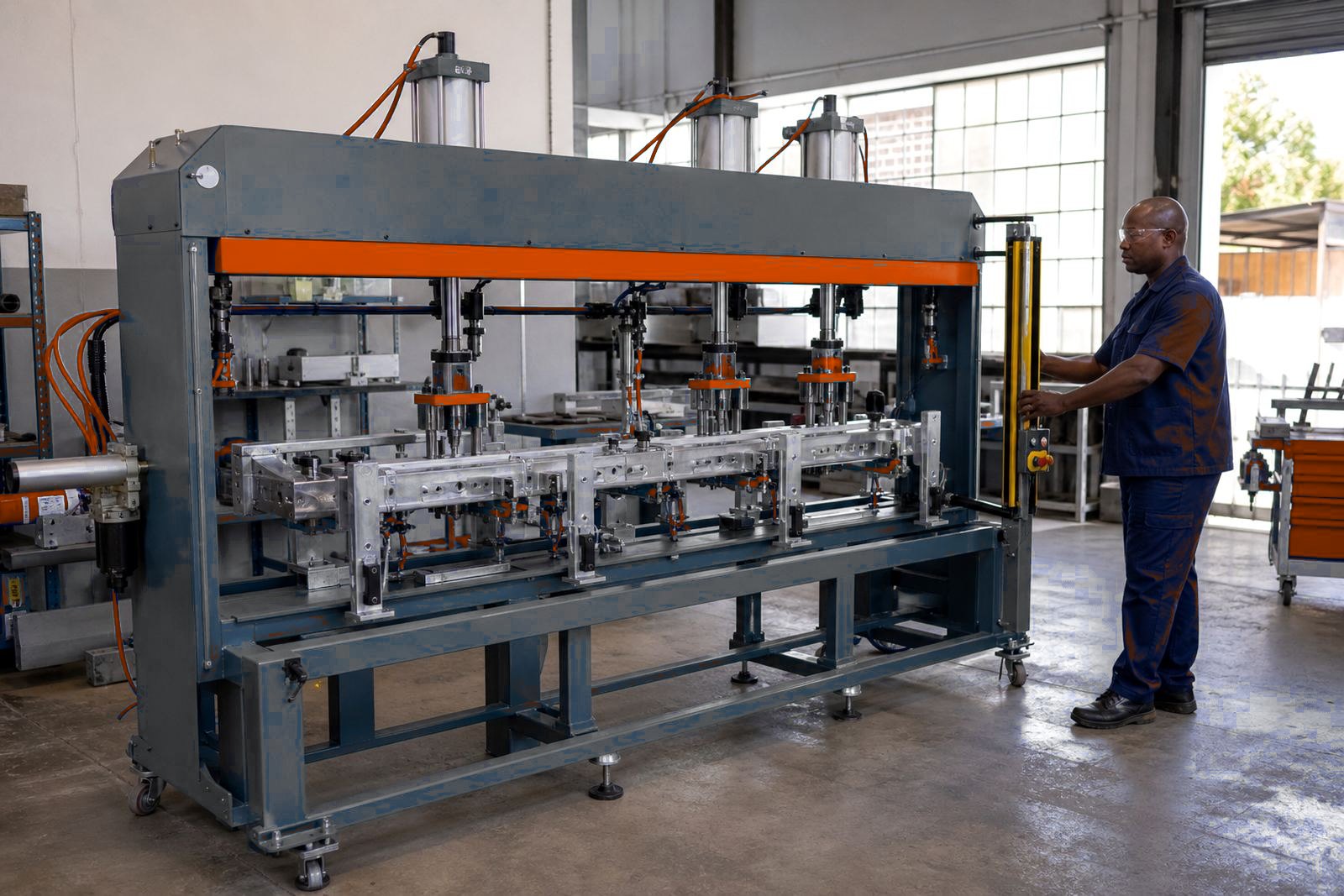
- Keep two-hand controls and light curtains aligned with the load zone.
- Watch for bounce, springback and part movement after the press opens.
Guarding and access shape how operators load the part
Guarding is part of repeatability because it shapes the way the job is loaded. If the access opening is awkward, operators will lean, twist or reach too far and the part will arrive in the fixture at an angle. That small habit can turn into a pattern across a full shift.
We see better results where the guarding, two-hand controls and light curtain layout match the actual motion of the operator. The reach should feel natural, the part should sit down cleanly, and the station should close without extra handling. In humid coastal conditions, especially around Durban and Gqeberha, fixture surfaces also need care so light corrosion does not roughen the locating points.
Isando production-floor crimping job
On a line in Isando, a fixture was carrying small pressed parts through a crimping station, then into a sealing station. The parts looked similar by eye, but the fixture let one edge lift slightly after loading. That showed up as uneven closure on a batch of units and the operator had to keep adjusting the part by hand.
We reworked the location points, added a more positive stop and reset the stroke for the actual material thickness. After that, the part sat the same way at each station, and the handover between tooling steps became steadier. The line did not need extra force, only a better path into the press.
- Use the fixture to correct the load path, not the operator’s posture.
- Check whether the part is being held on flat surfaces or on mixed scrap buildup.
- Test the full cycle with the real component, not only a sample that fits loosely.
What a more effective fixture arrangement looks like on the production floor
A sound fixture setup gives the operator clear loading points, gives the tooling clean contact and gives production a stable result across all shifts. That means the same component sits in the same nest, the same stroke closes on the same surface and the same station produces the same finish without extra trimming.
For South African factories running assembly, riveting, staking or pack sealing lines, fixture repeatability is rarely about one dramatic change. It is usually a set of careful adjustments: better location, tighter support, cleaner guarding and a stroke that suits the work. When those parts line up, the press can do its job without fighting the fixture.