Where two-hand controls earn their place
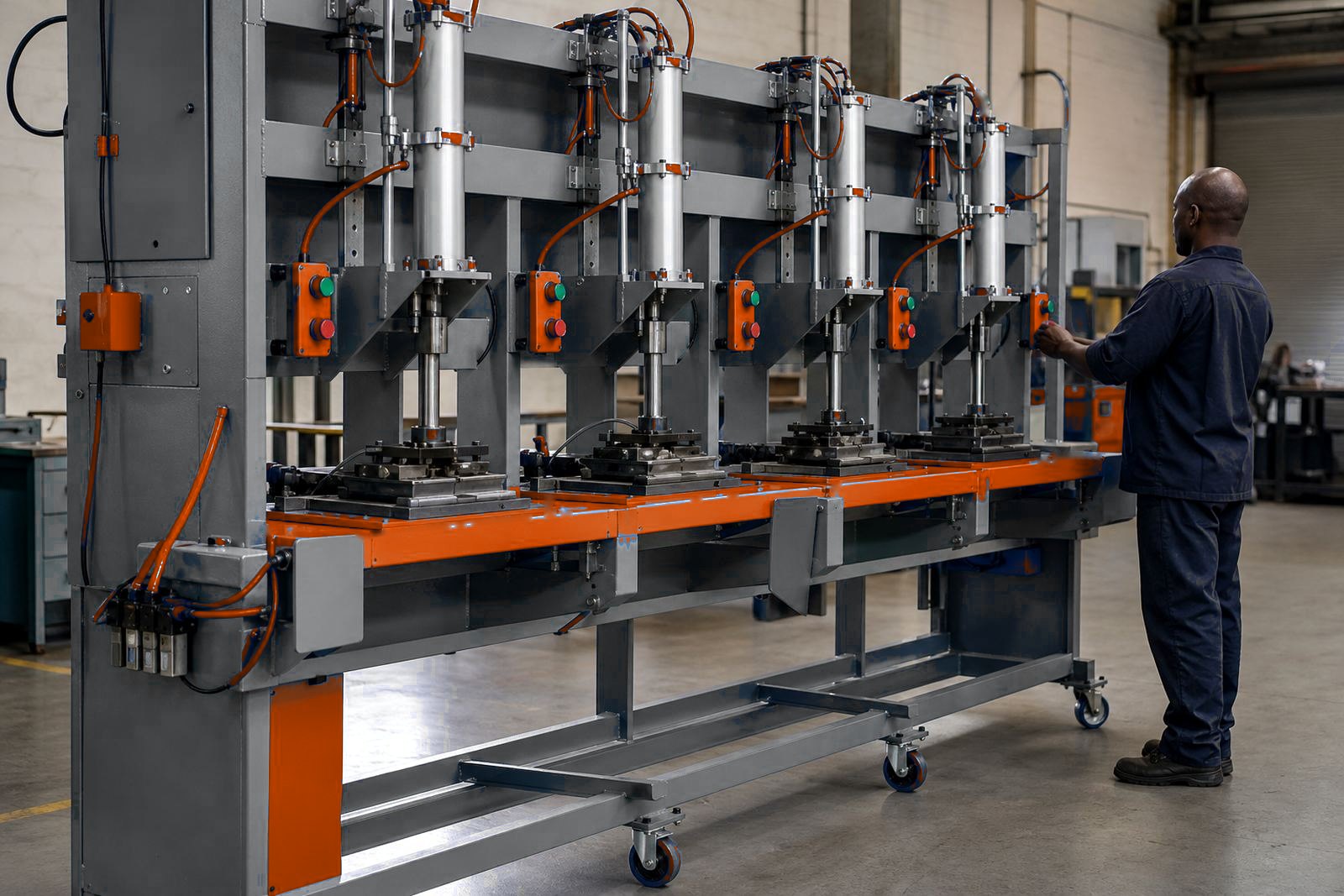
Two-hand controls suit pneumatic presses where the ram comes down in a single cycle and the operator loads, aligns, then starts the stroke from a safe position. They are common on assembly work, light crimping, riveting, staking and pack sealing, especially where the part is small enough to sit inside a fixed nest or fixture.
They are not only about safety, though that matters first. A two-hand station also gives the workshop a cleaner rhythm because the cycle starts only when the operator has both hands on the controls, not on the workpiece. That pattern suits repeat work where the same part, the same stroke and the same tooling are used through the shift.
- Best for short, repeatable cycles
- Useful where the component sits in a fixture
- Works well with guarded points of operation
- Helps keep hand placement consistent
How operators usually work the station
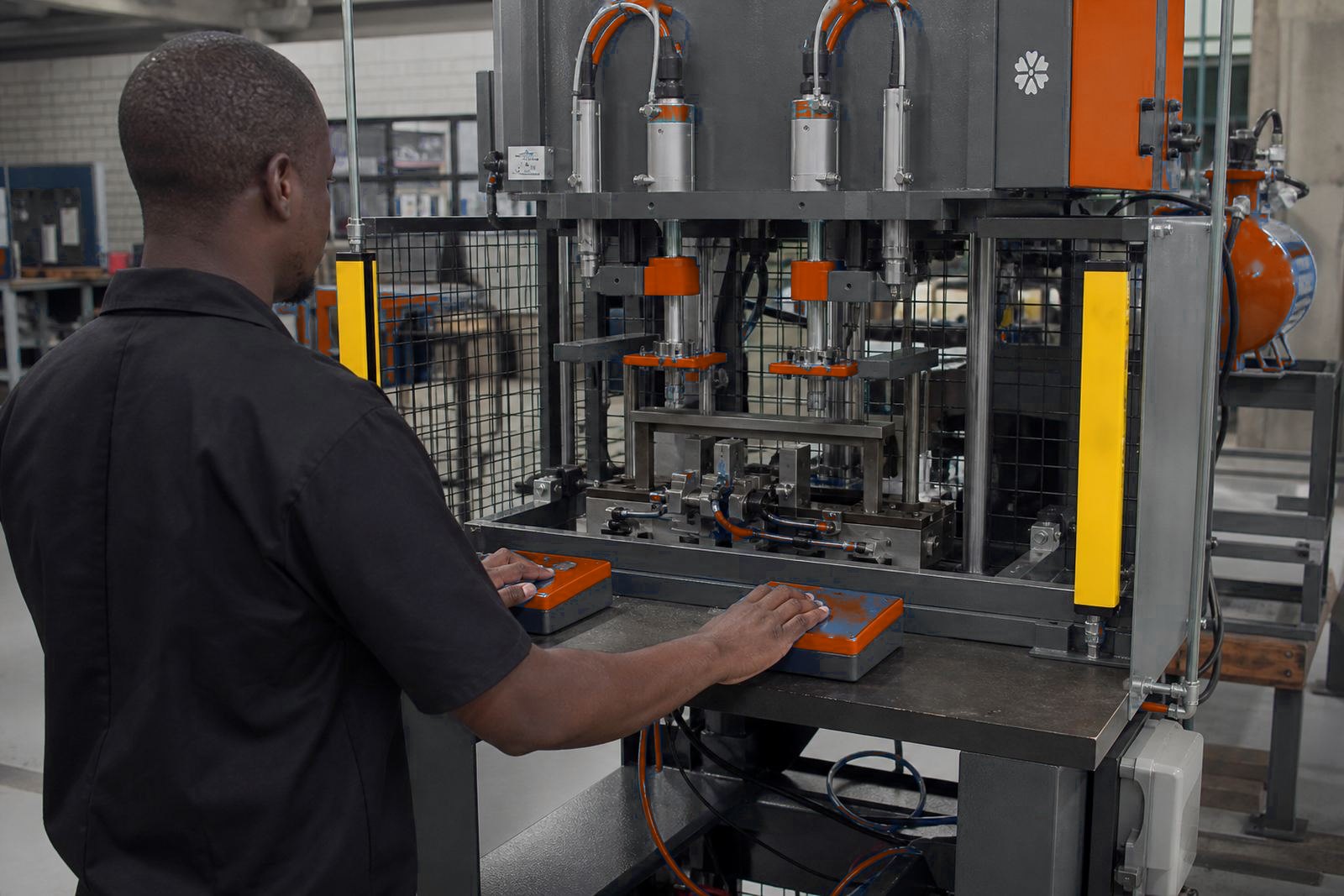
The usual routine is simple. The operator places the component into the tooling, checks the location against stops or pins, then presses both controls together. The press only runs when both hands are clear and the cycle signal is complete. On a properly set unit, that leaves no reason to reach into the closing area.
In practice, the value lies in muscle memory. When the station is set up with sensible height, clear sight lines and a short reach, operators settle into a steady pace. If the tooling needs a clamp, locator or ejector pin, that is fitted so the hands do not need to linger near the moving ram.
- Part goes into the nest first
- Both controls are pressed together
- The stroke completes before unloading
- The next part is placed only after the ram returns
Stroke length, air pressure and the feel of the cycle
Two-hand control only works properly when the press itself is set correctly. Stroke length must suit the job, because a long unused stroke makes the cycle slower and can tempt shortcuts. Air pressure must be matched to the force needed for the operation, whether that is pressing a fitting, swaging a rivet, or sealing a pack without crushing the material.
Too little pressure gives weak forming. Too much pressure can mark the part, distort a thin shell or overload the tooling. Stroke setting, ram speed and cylinder sizing belong in the setup. In humid coastal conditions such as Durban or East London, clean air prep matters too, because moisture in the line affects consistency and valve life.
- Shorter strokes suit faster cycles
- Pressure must match the forming load
- Air quality affects repeatability
- Tooling wear shows up in poor finish first
Guarding, light curtains and the hard rule around hands
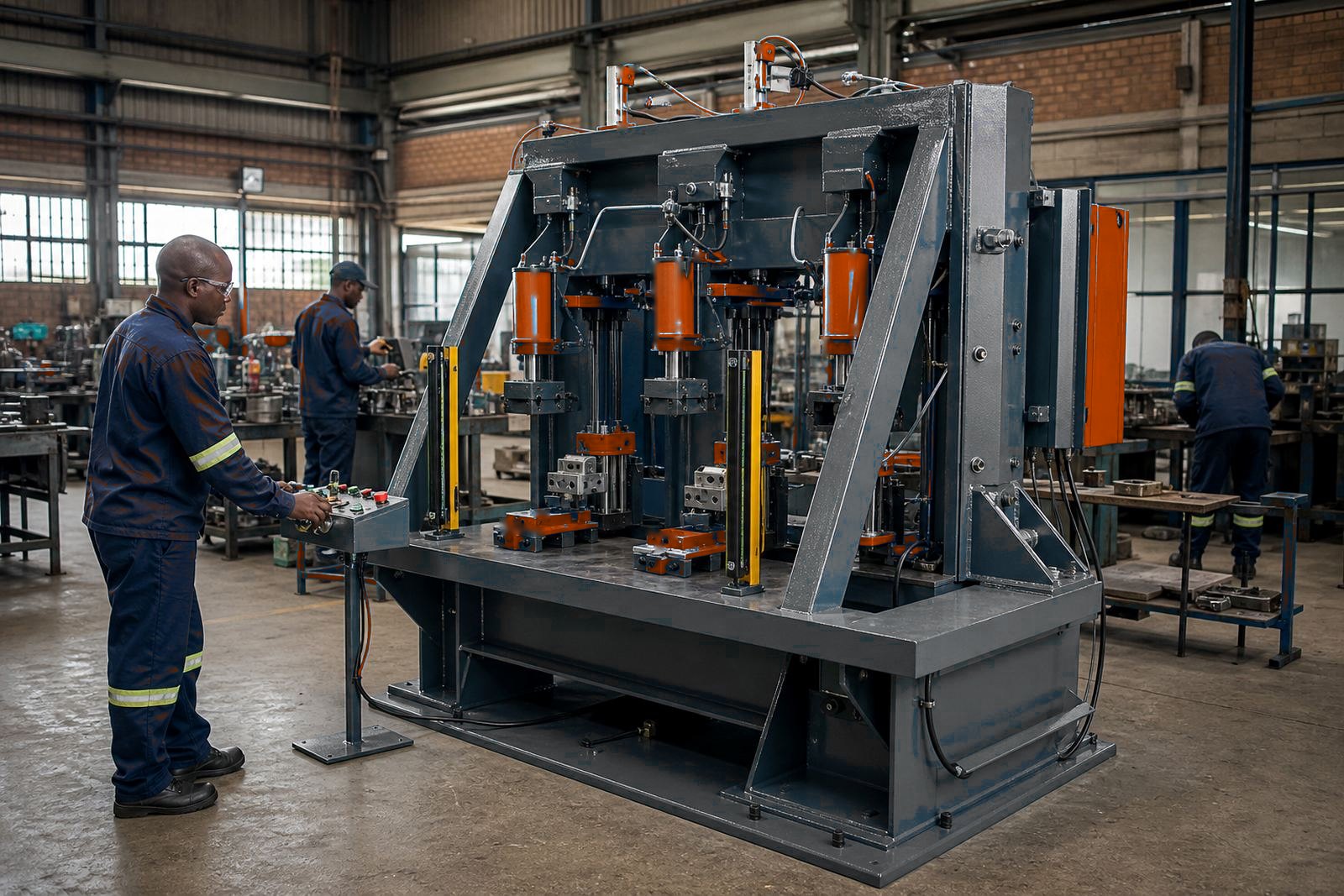
Two-hand controls are not a stand-alone safety answer. They work best with guarding that stops easy access to the nip point, and in some layouts a light curtain adds another layer where the operator needs a wider opening for loading. The point is simple: the hands should not be inside the danger zone when the ram is able to move.
For a factory in Isando doing repetitive assembly, that can mean a guarded front opening with a tray or nest feeding the work. On other lines, a fence, fixed cover or interlocked gate may suit the space better. The arrangement depends on the part, the stroke and whether the operator needs to feed from the front or side.
- Fixed guards suit many bench presses
- Light curtains suit wider access windows
- Interlocks help where access is occasional
- The layout must match the actual task
Tooling choices that make the controls worthwhile
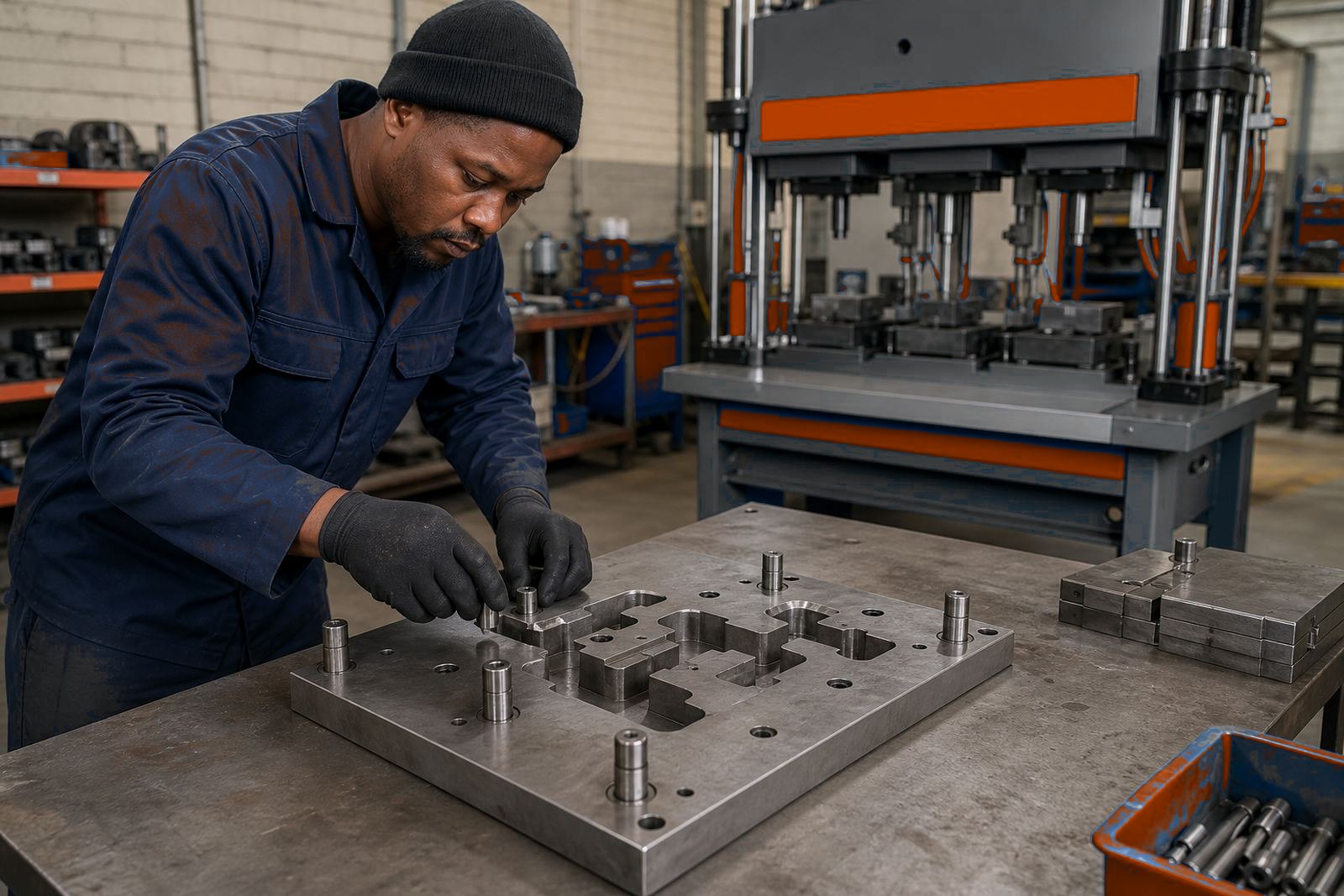
A two-hand station is only as tidy as the tooling sitting under it. Good fixtures locate the part quickly, hold it square and release cleanly after the stroke. For crimping, riveting and staking, the tooling should guide the load straight through the workpiece rather than let the part twist or bounce.
Pack sealing asks for a different approach. The tooling needs even pressure across the seal area and a clear stop so one operator does not rely on feel alone. If the tooling changes often, the press should allow quick changeover without leaving loose parts on the bench. That saves handling time and keeps the cycle consistent across shifts.
- Locators guide loading
- Release features help with clean unloading
- Square tooling protects the part finish
- Changeovers must stay orderly and labelled
A Johannesburg line where the controls made sense
On a mid-sized line in Johannesburg, the work involved small assemblies that needed a press stroke, then a clean release before the next part moved on. The operators were handling the parts by hand, and the team wanted a station that kept the hands clear without making the cycle awkward. Two-hand controls suited that job because the parts were light, the stroke was short and the fixture already held the component in one place.
What mattered most was the sequence. The loading side was kept open enough for easy placement, but the controls sat far enough apart that one hand could not trigger the cycle alone. Once the tooling and stroke were set, the station settled into a predictable pattern, with less reaching and less hesitation around the moving ram. That is where two-hand control earns its keep: not in theory, but in the daily rhythm of the line.
Setting the station up for operators, not for paperwork
When a press is commissioned properly, the control method becomes part of the station routine. Operators should know where to stand, how to place the part, what the ram travel looks like and when the next cycle may start. That suits operations where multiple shifts share one machine.
Training should cover the practical bits that get missed in a rush. The controls need checking for equal action, the guard opening must suit the tool, and the air line setup should stay clean and drained. If the press is moved between sites in Gauteng or sent to Durban, Gqeberha or East London, the same operating logic still applies, but the installation and handover must suit the local floor and the actual product flow.
- Show the loading position clearly
- Keep the controls easy to reach, not easy to bump
- Verify the guard layout during commissioning
- Train around the actual part