When one stroke should do more than one part
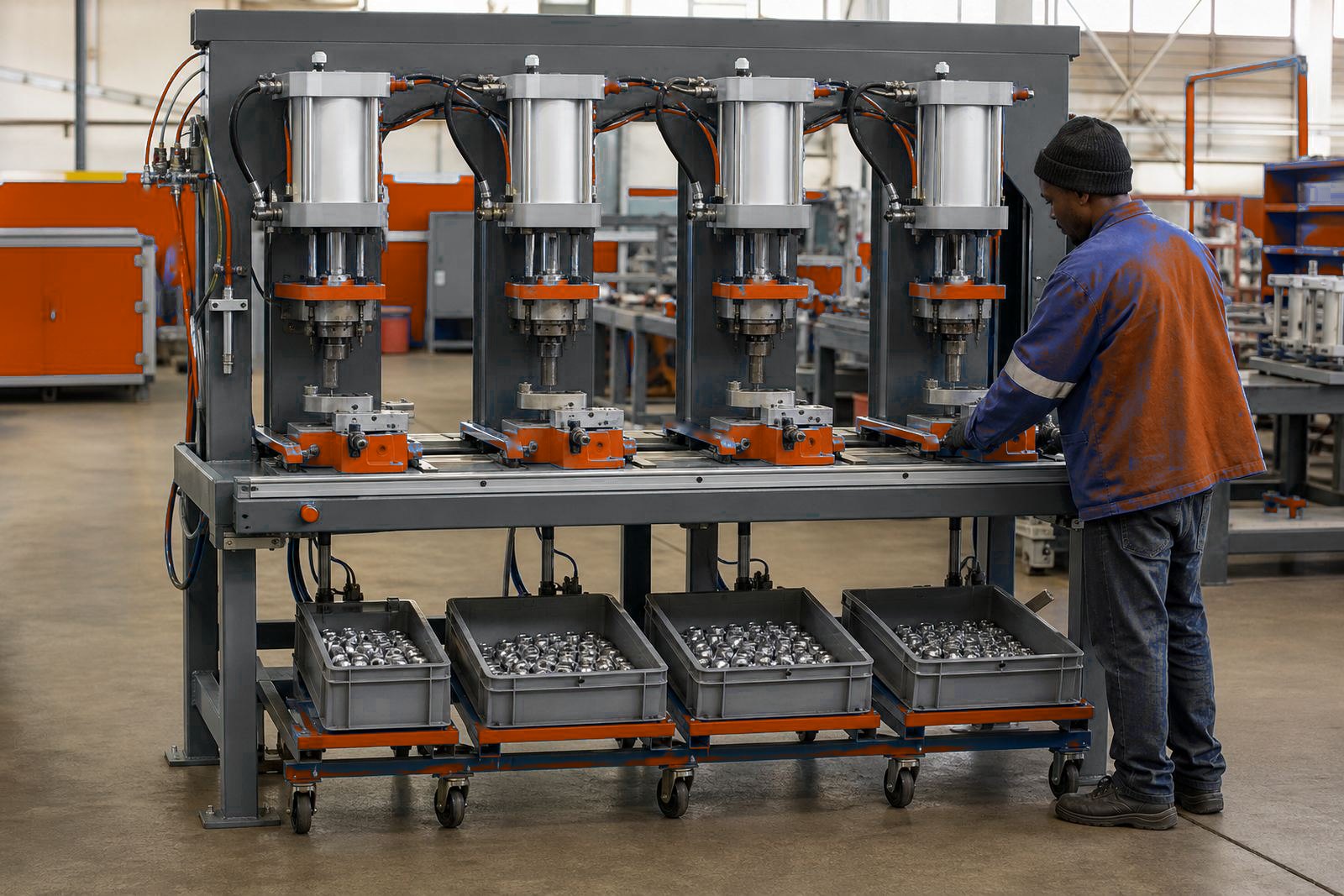
A multi-nest press table holds several identical parts in fixed pockets so one descent can work across more than one station. That only pays off when the part, the tool and the operator movement all match the same rhythm, because a press that waits on loose loading ends up wasting the extra nests.
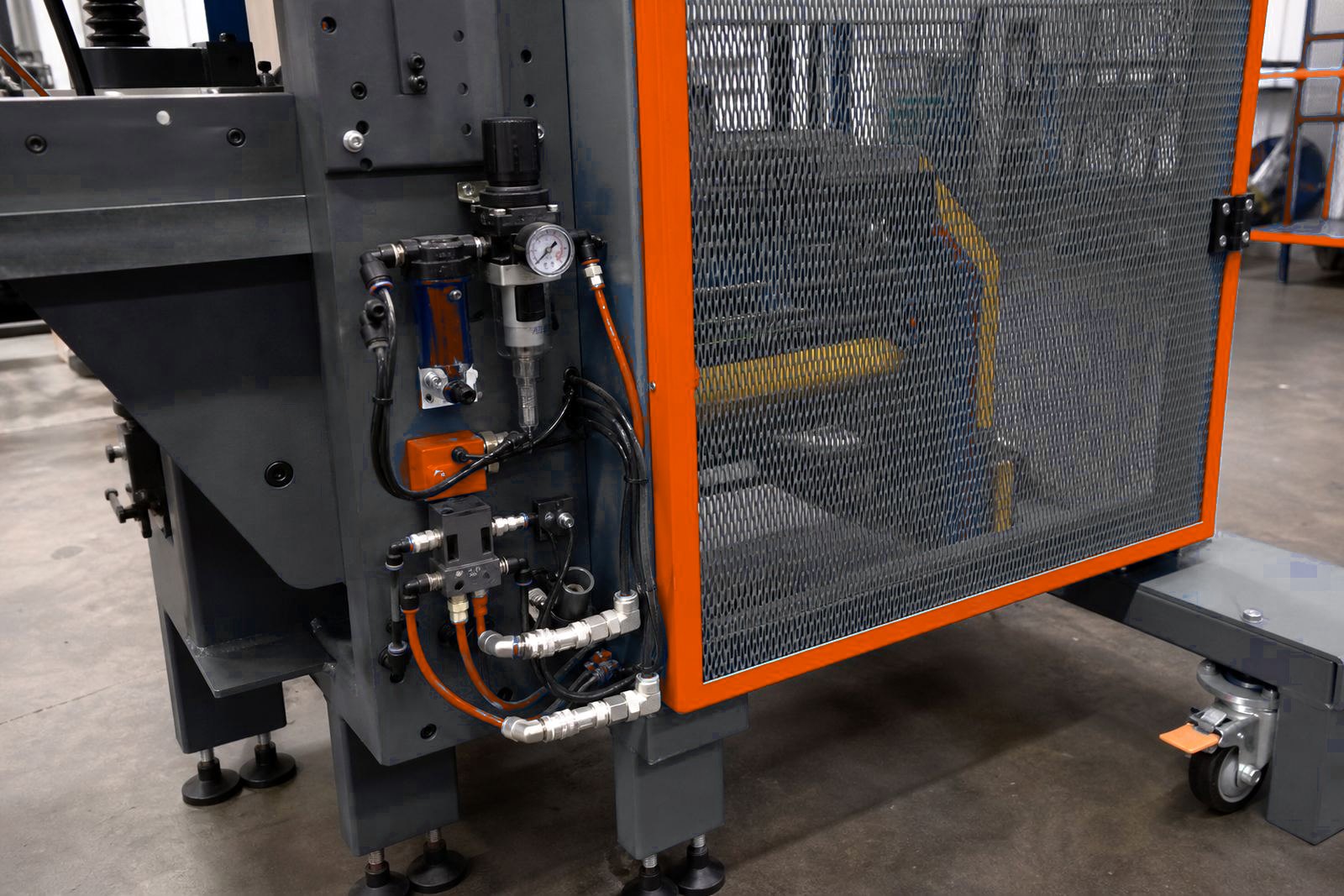
On a pneumatic press, the real controls are air pressure, stroke length and the repeatable travel of each cylinder. If the nest layout is clean, the ram lands squarely, the tooling meets the part the same way every time and the cycle stays steady instead of drifting from pocket to pocket.
Where multi-nest layouts make sense
They are useful where the same component needs repeated forming, crimping, riveting, staking or pack sealing in a batch pattern. A factory in Isando might load four small metal tags or two plastic packs at once, then use a single press movement to finish all positions under the same settings.
- Identical parts that sit flat and locate cleanly
- Short strokes where the ram does not need a long travel
- Tools that can be balanced across the nests
- Operators who can load and clear the table without crowding the guarding
If the part family varies too much, a multi-nest cycle can become a compromise. One pocket may fill well while another sits off line, and that shows up as uneven crimp depth or a poor seal on one side of the table.
The tooling has to carry the logic
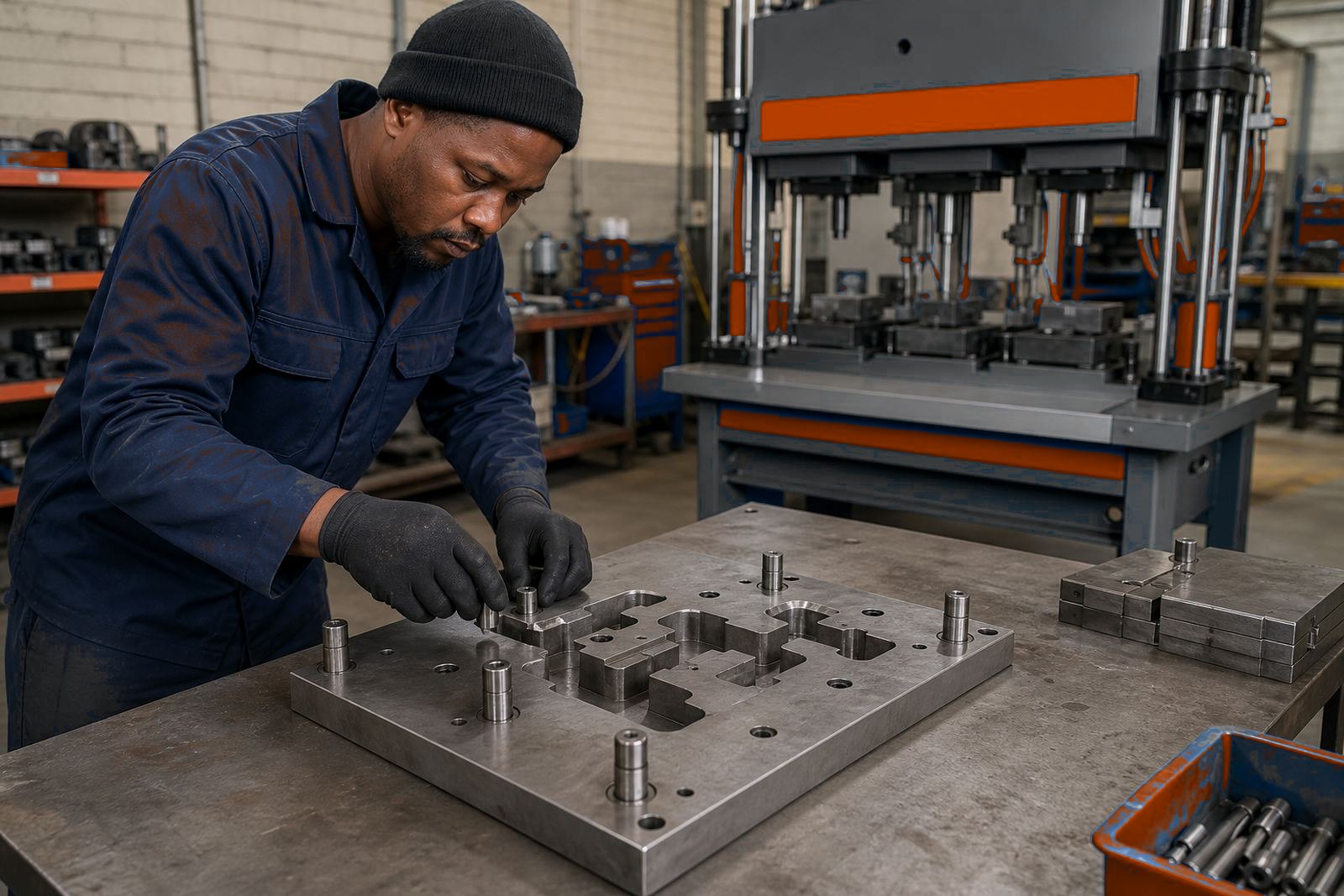
Multi-nest work lives or dies on tooling. The fixture needs to locate each part with the same stop, the same support and the same clearance under the tool face. For a crimping tool, that means even compression. For riveting or staking, it means the formed head lands where it should, not where the operator hopes it will.
Good tooling also helps on changeovers. A workshop in Ekurhuleni may run one nest count in the morning and a different layout after lunch, so the plates, pins and stop blocks must be easy to set. When the tool is awkward, people start forcing fit-ups and that is where wear begins.
- Positive location points for each nest
- Clear access for loading fingers and pick tools
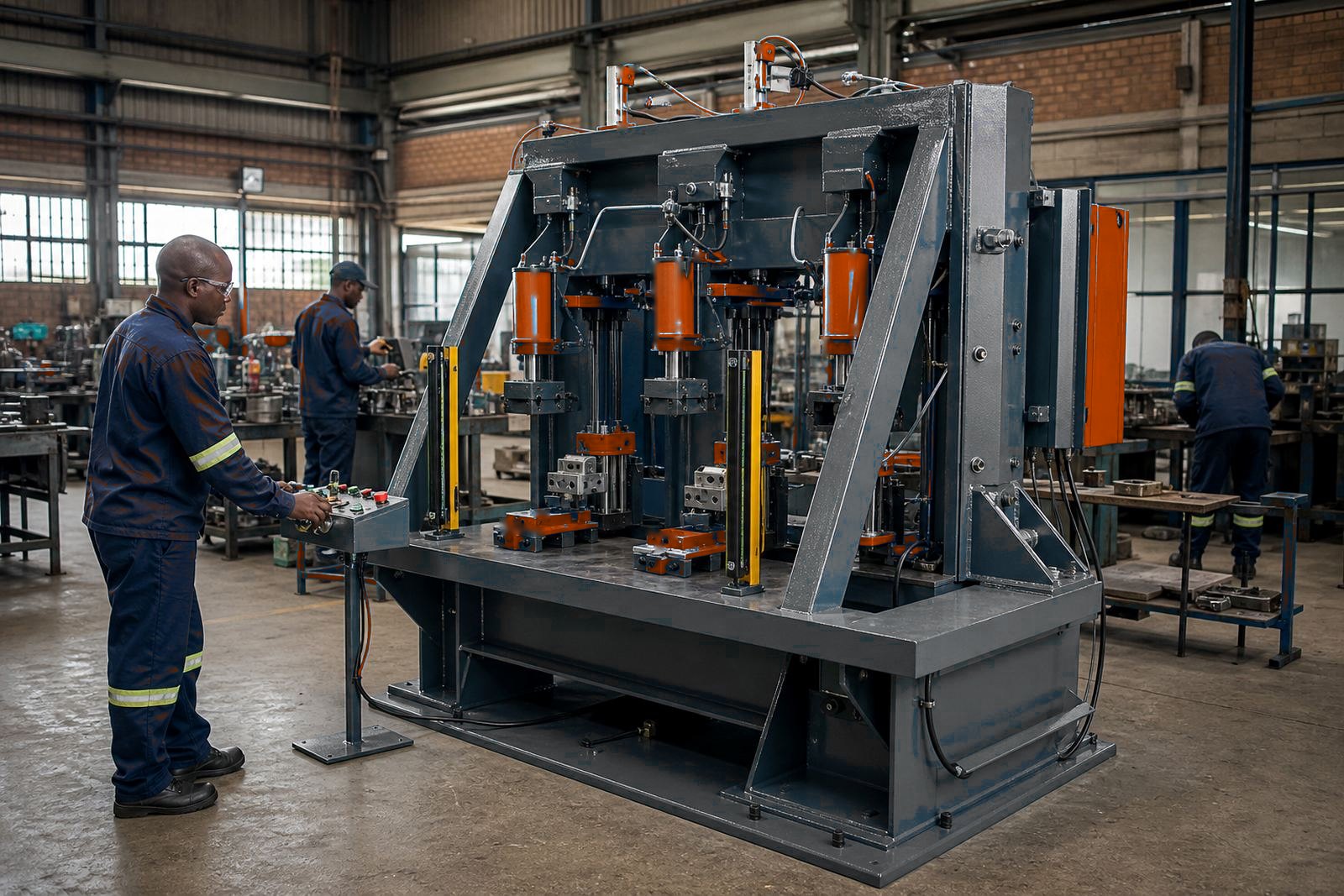
- Guarding that protects the hands without blocking the view
- Repeatable height setting for the press head
Pressure, stroke and two-hand control work together
Pneumatic presses are often judged on force, but force alone does not make a good multi-nest cycle. The pressure must suit the job, the stroke must suit the part height and the speed must leave enough time for proper positioning. Too much pressure can mark a part, while too little leaves a weak crimp or a loose seal.
Two-hand controls give the operator a clear start point and keep both hands clear as the ram moves. Where the press sits behind light curtains, the layout still needs to respect the loading path, because guards are only useful when the operator can move naturally around them without leaning in at odd angles.
A Gqeberha pack sealing line, built around repeatable loading
On a recent coastal packing job, the parts were identical and the material was sensitive to over handling. The team set up a multi-nest table so the operator could load several packs, check the locator pins, then start a controlled sealing cycle. The air line setup was kept short and tidy, because pressure drop across a messy line can spoil consistency before the ram even moves.
The valuable part was not speed on its own. It was a calmer cycle with fewer touches, less drift between operators and a better fit between the sealing tool and the pack shape. In humid coastal conditions, clean tooling and dry air supply also matter, otherwise the finish can pick up marks sooner than expected.
What to lock down before the line goes live
Before a multi-nest press enters production, the commissioning team should check the stroke setting, tool alignment, guarding access and operator movement around the table. If the nests do not all close on the same plane, the whole cycle gets harder to control and the operator starts compensating with hand pressure or awkward loading.
Our operators need the same care and skill as the metalwork on the press. People need to know how the nests are meant to load, where to watch for mis-seated parts and when to stop for a tooling change. Once that habit is in place, the press can do what it was built for, without turning the line into a guessing exercise.
- Confirm the part sits fully in each nest
- Check for even marks after the first trial runs
- Watch for air loss, chatter or uneven return
- Keep the guarding and two-hand controls in easy reach