When the ram stops meeting the stack squarely
A pneumatic press can look healthy on the outside and still carry an alignment problem inside the station. If the cylinder rod is not running true to the tooling stack, the press may land with one side of the tool making first contact. That puts load into the guide surfaces, the fixture, and the insert faces instead of spreading force evenly across the full working area.
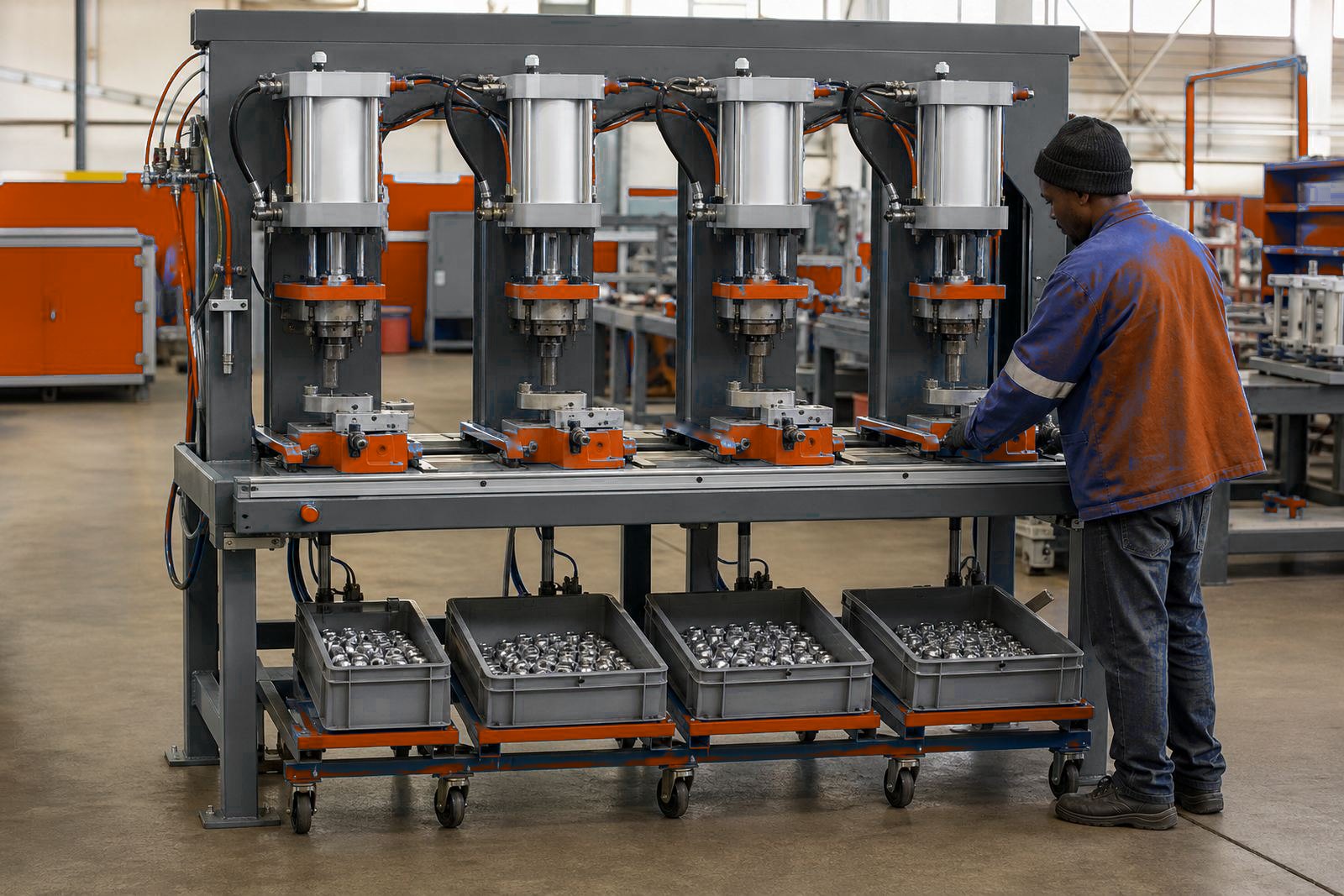
On a single-station setup the issue may show as polish on one edge or a mark that wanders across the part. On a multi-station line it gets more expensive because the same error repeats from one station to the next. A rivet that sits high, a crimp that leans, or a seal that compresses unevenly can all point back to cylinder position rather than pressure alone.
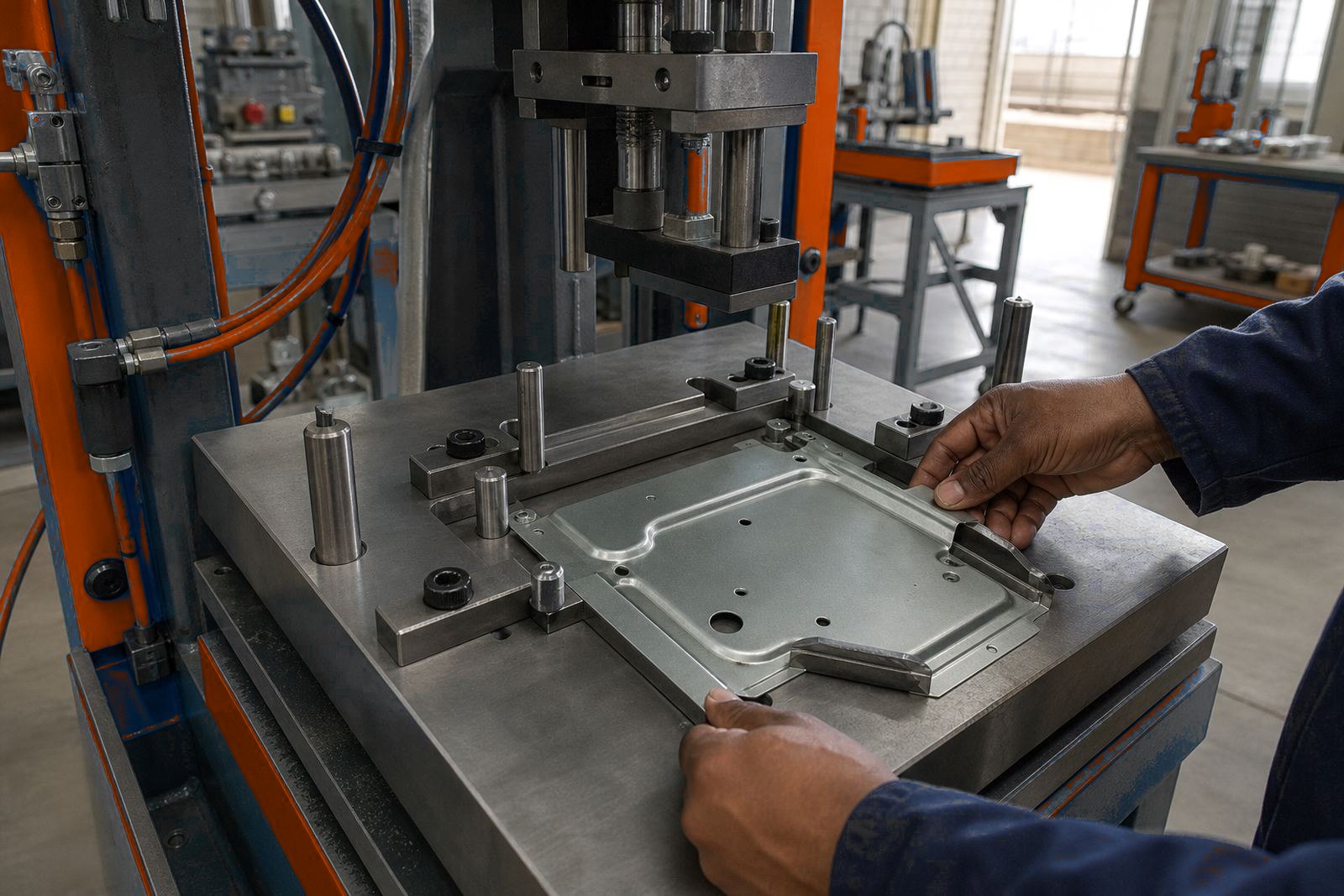
- Look for witness marks on one side of the tooling face
- Check whether the ram enters the guide path without rub marks
- Watch for changing contact when stroke length is altered
The tooling stack decides the real centreline
Alignment is not only about the cylinder mount. The tooling stack sets the working centreline, and the stack must be built to suit the job on the station. A fixture that sits proud by a few millimetres, a worn locating bush, or a clamp face that is not parallel can shift the load away from the middle of the stroke.
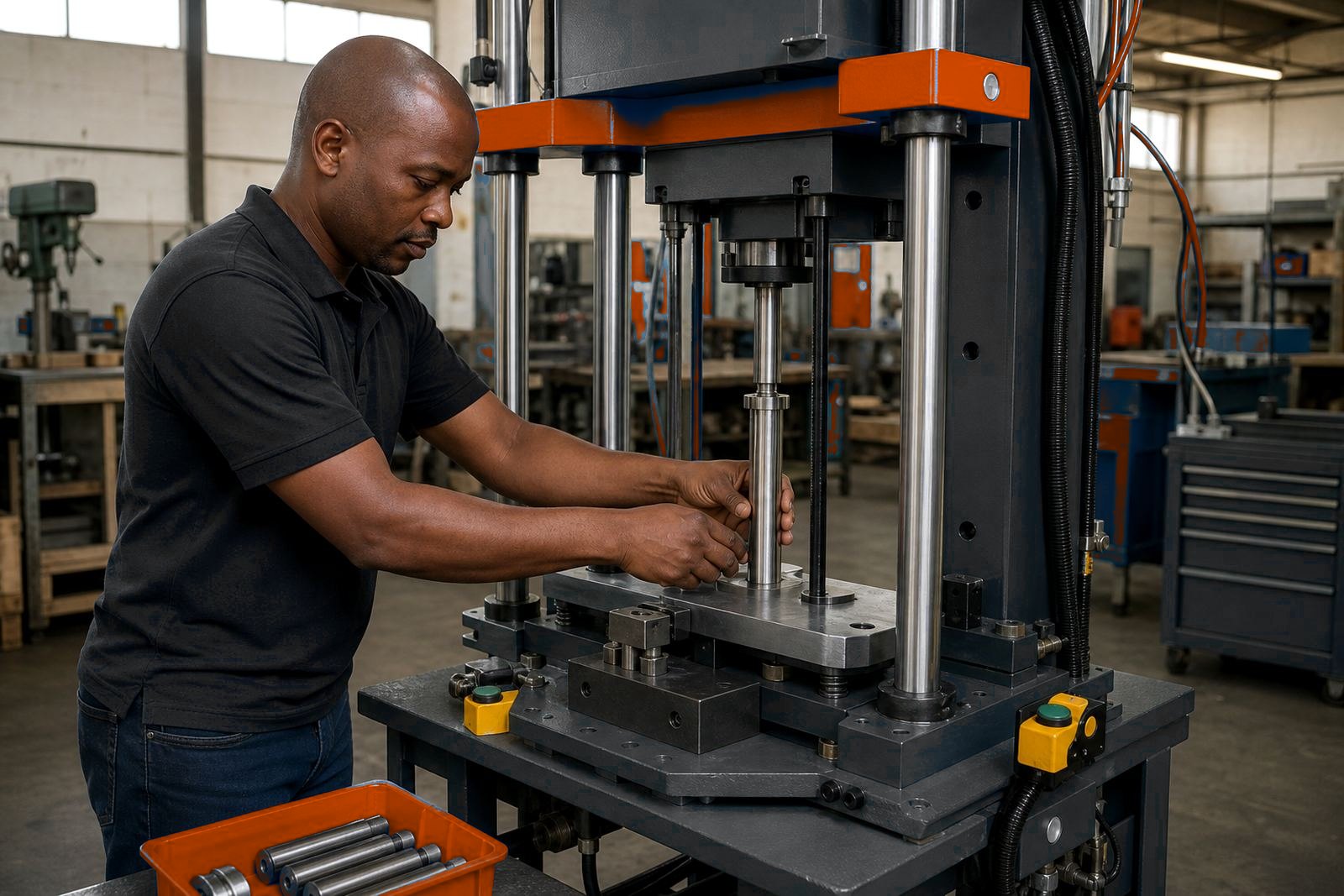
In practice, the best presses keep the tooling, guides and cylinder on the same working axis. That means the stack height, the stroke setting, and the part location all need to be checked together. If the press is built for repetitive crimping, the tool seat must stay consistent from batch to batch so the cylinder does not chase a moving target.
For longer jobs, a small change in stack height can alter the way the cylinder ends the stroke. The operator sees it as a new feel at the handles or a change in part finish. The workshop sees it as uneven wear on the tool face and the guide bushes.
Pressure does not fix a crooked run
Higher air pressure can hide a weak setup for a while, but it does not cure misalignment. A press that is pushing through a poor centreline is still pushing through a poor centreline. Extra pressure may mask the symptom by getting the part through the station, yet the side load remains in the structure and in the tooling.
That matters in factories where the same press handles assembly one shift and sealing or staking the next. Each changeover should keep the cylinder square to the stack, with the stroke set for the real job and not just for the longest tool in the drawer. If the tooling changes, the contact path must be checked again before production settles.
- Set pressure for the task, not for a vague margin
- Match stroke length to the stack height in use
- Recheck alignment after any tooling change
Guarding, two-hand control and alignment belong together
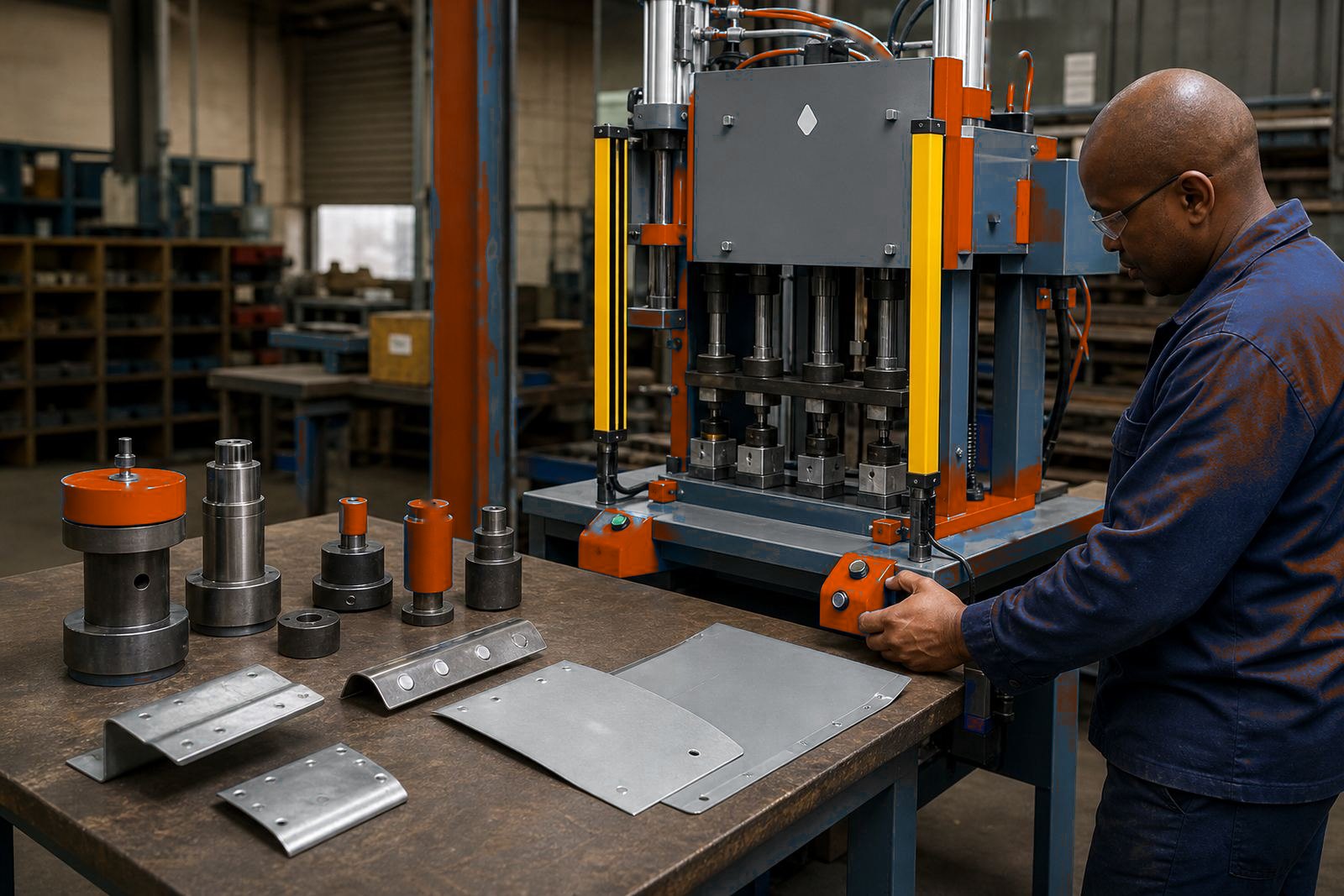
Alignment work is easier when the safety package is built around the same working envelope. Two-hand controls keep the operator out of the closing zone while the ram starts its travel, and light curtains protect access points where hands or loose material might enter. But those features only help when the press closes cleanly through the intended path.
If the cylinder leans, a guard opening that looked generous on paper can become awkward in use. The operator starts adjusting where parts are placed, and that adjustment often creates fresh inconsistency. A good setup leaves the working area clear, the tool path straight, and the control logic matched to the station layout.
In a plant near Isando, a line handling small metal components may need one station for pre-forming, another for riveting, and a final station for pack sealing. The same machine can do the job well when each station keeps its own centreline, but the setup has to respect every tool, every guide and every stop point in the sequence.
What wear tells the workshop before the fault grows
Wear patterns are often the first honest sign that alignment needs attention. When one side of a guide shows polish faster than the other, or a punch face turns dull on a single edge, the press is telling the workshop where the load is landing. Those clues matter even when output still looks acceptable.
Good maintenance teams check the feel of the movement, the condition of the tooling faces and the repeatability of the finished part. They also note if the stroke seems to settle differently after a tooling change. A station that once ran cleanly can begin to nibble at the edges of tolerance when the cylinder and stack are no longer sharing the same line.
- Uneven shine on guide faces
- Tool marks appearing on one side only
- Part finish drifting after a changeover
- Unexpected noise or vibration
Ekurhuleni line alignment check
On a production line in Ekurhuleni, a multi-station press used for assembly and crimping started leaving one corner of the component slightly flattened. The air pressure had not changed, and the operators were doing the same sequence each run. The issue sat in the relationship between the cylinder, the fixture and the tool stack at one station.
Once the stack was checked again, the team found that the tool face was meeting the part with a slight offset. The stroke setting was adjusted, the locating surfaces were corrected, and the tooling was brought to centre. The result was not dramatic on paper, but the parts stopped showing the uneven contact that had been creeping in.
That kind of fix is common in South African factories where a press must do real work in a tight footprint. The press is not the only issue on its own. The cylinder, the tooling, the guarding and the operator path all have to meet at the same point, or the load starts to drift into the wrong places.
A steadier station starts with setup discipline
Cylinder alignment is not a one-off adjustment to forget about later. It is part of the working setup of the press, just like tooling choice, guarding and operator training. When the station is square, the force lands where it should and the wear spreads in a way the workshop can manage.
For assembly, crimping, riveting, staking and pack sealing, the aim is the same: clean contact, even travel and a part that leaves the station without extra strain on the tooling. That comes from disciplined setup, careful checking and a press built to keep the cylinder on the centreline for the job in front of it.