Why bore size changes the press more than most people expect
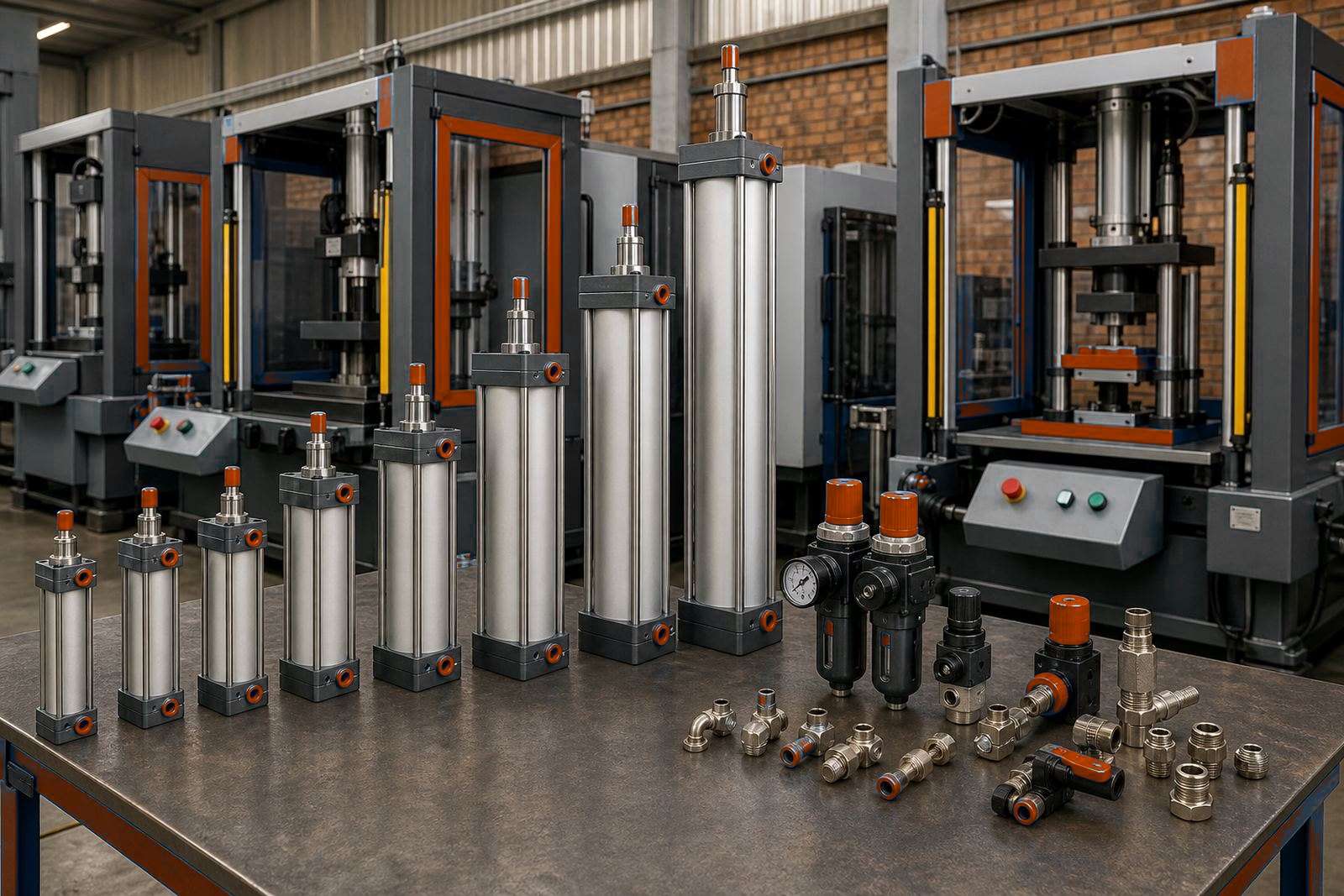
A pneumatic cylinder does the pushing, but its bore sets the working area behind that push. A larger bore gives more piston area, so the same air pressure creates a heavier press force. That is the first number to check when an assembly line moves from light seating work to crimping, riveting or staking.
In practical terms, a small bore may suit pack sealing or light component placement, while a wider bore may be needed where a part has to be formed, closed or set with a firm shoulder. The frame, tooling and guides must all suit that force too, otherwise the press starts leaning on the tooling instead of driving the job cleanly.
- Small bore: lighter force, shorter air use, suited to modest forming loads.
- Medium bore: common on assembly stations with mixed tasks.
- Large bore: better for heavier pressing, provided the structure can carry it.
- Matching bore to tool design matters more than chasing a number on paper.
Air pressure is the second half of the force story
Pressure from the airline is the other half of the equation. Raise the pressure and the same cylinder pushes harder, but only up to the point where the tooling, guard set-up and the component itself still behave properly. Workshop people often call for more pressure when what they really need is a better tool face or a more stable part nest.
On a multi-station line, the same press frame may handle different jobs during the week. One station may need a gentle controlled stroke for assembly, while another needs a harder hit for a rivet or stake. That is where regulated air, proper gauges and a clean setup matter, especially on South African factory floors where humidity, dust and long service hours can change how valves and seals behave.
- Higher pressure increases force, but can also mark parts.
- Lower pressure may protect finishes yet leave incomplete forming.
- Stable airline supply helps the press repeat the same result.
- Air preparation should suit the plant and its working conditions.
Stroke length decides how the force lands on the part
Force is not the only issue. Stroke length decides where that force lands and how long the cylinder stays in contact with the workpiece. A long stroke may be useful where the tool must clear a high component, but too much travel can slow the cycle and waste air. A short stroke can be efficient, yet it must still give enough movement for full formation and safe release.
In a crimping station, the useful part of the stroke is often near the end, where the tool closes with control. In a riveting or staking station, the last few millimetres may matter most because that is where the material flows. A pack sealing job can need a shorter, cleaner stroke if the goal is a neat seal without crushing the pack.
Getting the stroke wrong is one of the fastest ways to create uneven parts. The cylinder may be strong enough, but if the travel is not set correctly, the tool arrives too early, too late or with the wrong dwell at the bottom of the press.
Two-hand control, guards and light curtains are part of force control
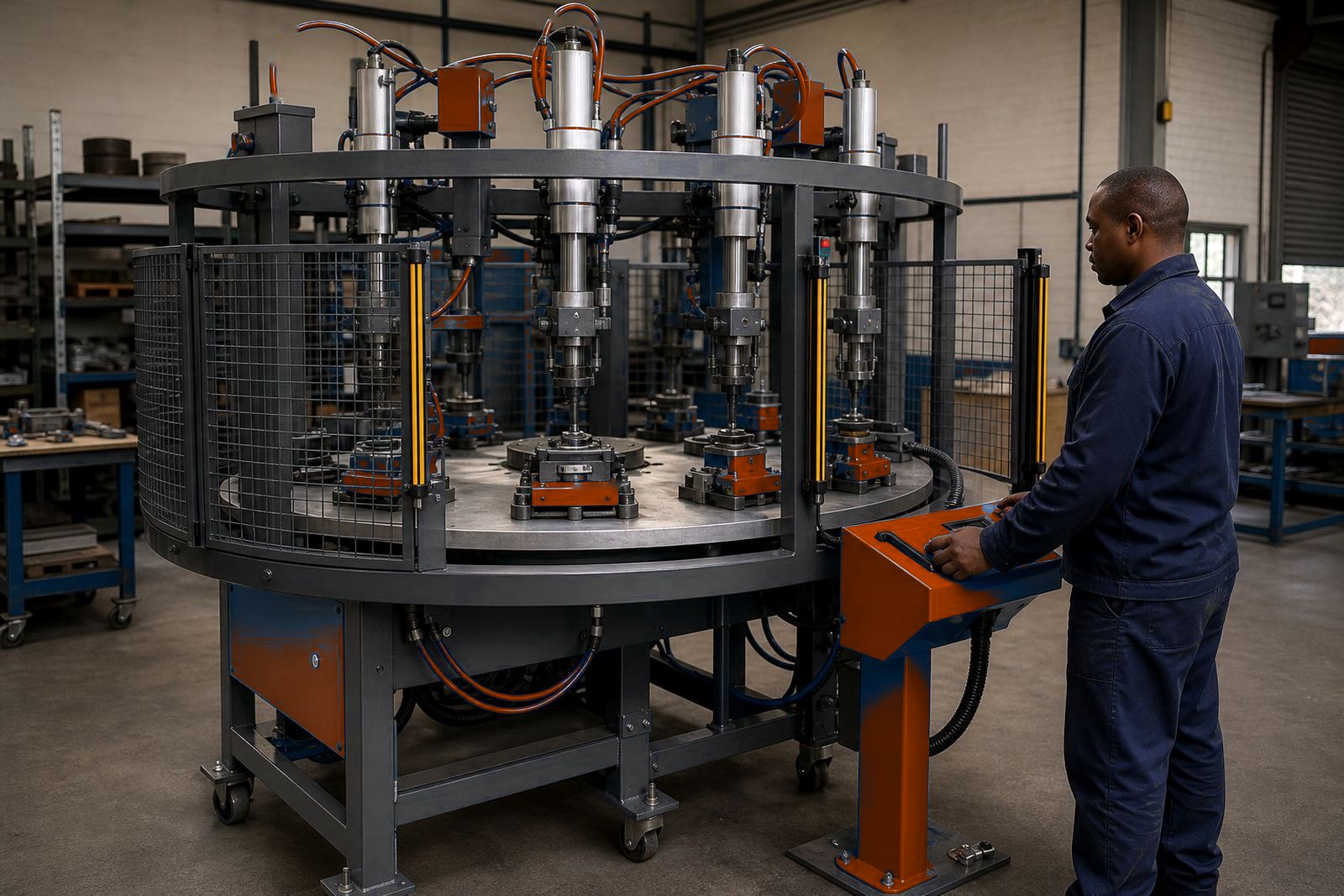
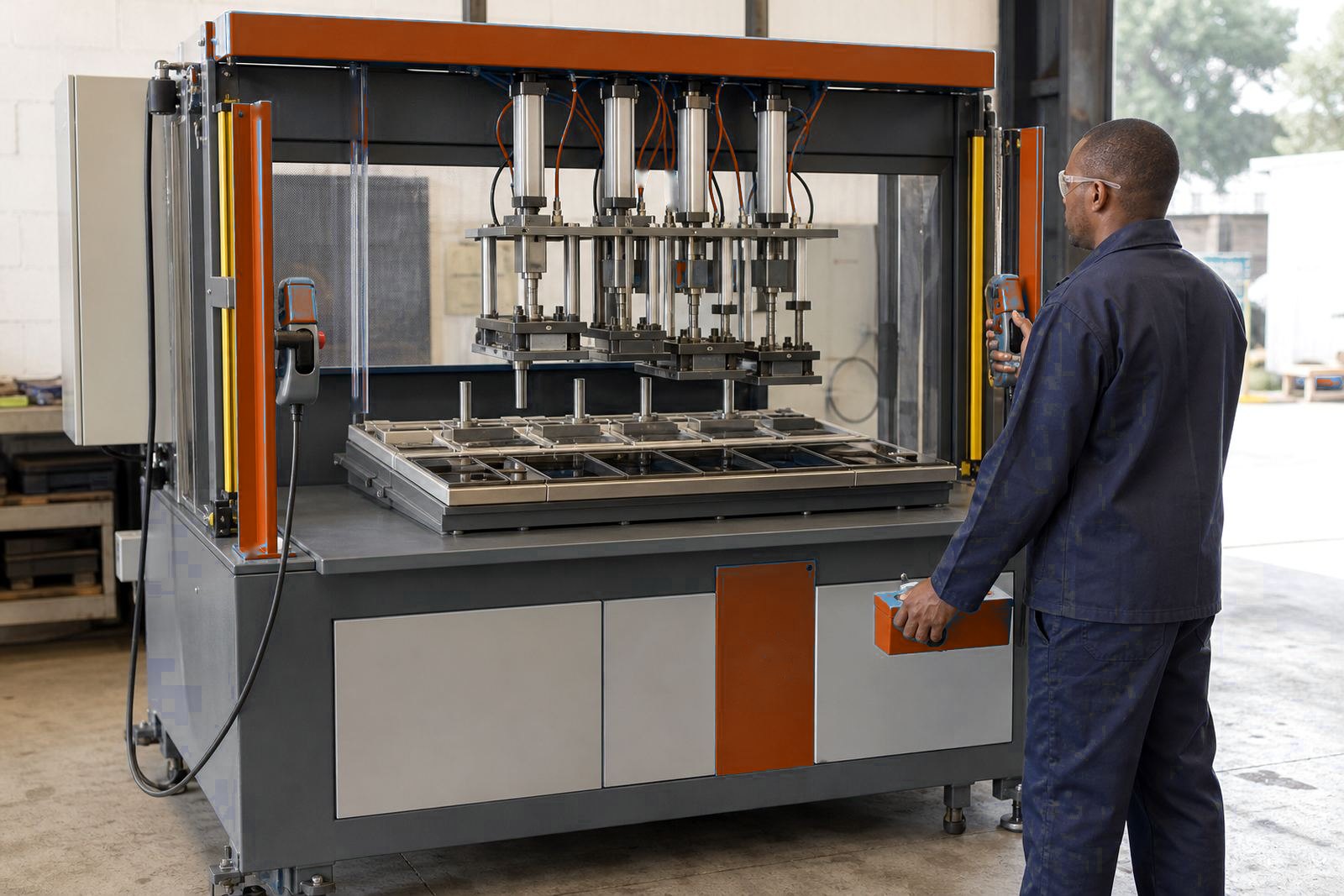
Press force must be matched with safe operation. Two-hand controls keep the operator away from the working point during the cycle, while guarding and light curtains help separate the hands from the tooling zone. These parts are not just safety extras, they also support consistency because the operator works from a defined position every time.
When a station is laid out properly, the tooling closes square and the part sits still under the cylinder. That reduces side loading on rods and guides, which means the force goes into the job rather than into wear on the press. For a factory in Isando or Kempton Park, where a press might run through several shifts, that kind of discipline pays off in fewer adjustments and better repeatability.
- Two-hand controls help keep the cycle deliberate.
- Light curtains suit access points where the layout allows them.
- Fixed guards protect pinch points around multi-station frames.
- Well placed controls make the operator’s movement cleaner.
Tooling decides whether the cylinder force is useful or wasted
Even a strong cylinder can disappoint if the tooling is poor. A shaped tool face, a solid nest and the right locating pins do more for part quality than another burst of pressure. If the part rocks, twists or sits off-centre, the cylinder loads one side first and the result can be a bent pin, a poor crimp or a shallow stake.
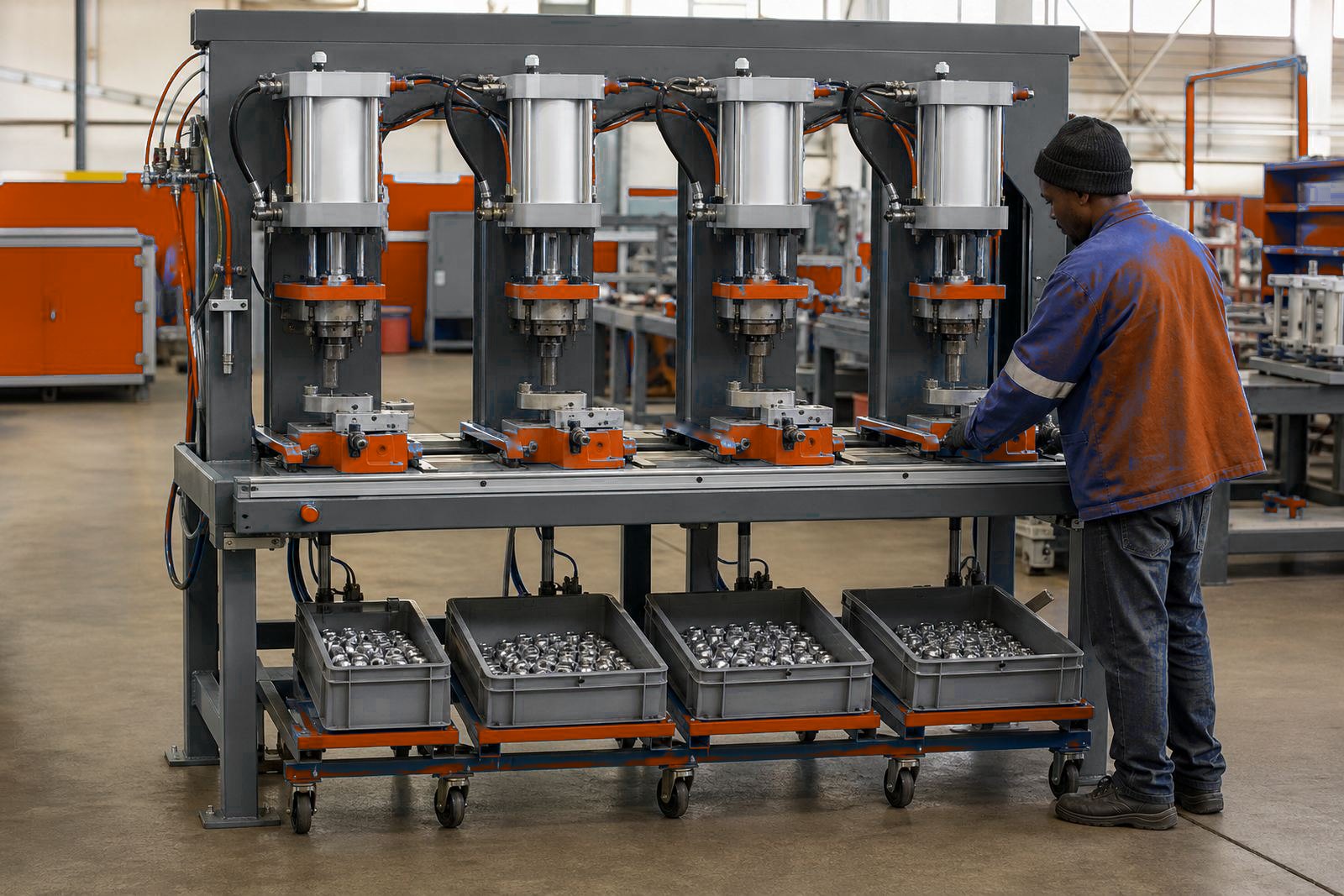
Tooling design must follow the product and the force path. On a multi-station machine, one tool may guide, another may form and another may hold while the final action completes. That is how assembly lines move from rough motion to clean part control. Musa Hartnick designs for that sequence while Johan Ramokgopa keeps the workshop side practical, because the nicest drawing is useless if the tool cannot be set and maintained in the real shop.
- Good tooling centres the force.
- Bad tooling spreads force into the frame and rods.
- Fixtures stop the part from floating under pressure.
- Changeover settings should be marked on the tooling.
A Durban pack sealing line needs different force logic to a Pretoria rivet station
The same cylinder principle behaves differently on different products. A pack sealing line in Durban may face warmth and coastal humidity, so the tooling and air prep need to stay consistent through the day. A rivet station in Pretoria may ask for firmer force and a stricter bottom stop. A production manager cannot assume one setting will suit both.
That is where commissioning matters. Lerato Moagi checks stroke, pressure, guarding and cycle movement as one system, not as separate boxes. Anele Engelbrecht then works the operator training so the people on shift understand what the machine is doing, where the safe points are and how to spot a bad set-up before it turns into scrap.
A simple example from an Ekurhuleni plant: a station was closing a small metal assembly with uneven results. The cylinder was not the real problem. The tool sat off-centre, the stroke went a touch too far, and the pressure was higher than the part needed. Once the nest was corrected and the stroke was set properly, the press settled into a cleaner cycle with less marking and a better part finish.
What to carry into your next press brief
When a factory asks for a new station or a change to an existing one, the useful brief is plain and specific. Share the part material, the action needed, the space available and the quality target. Add the target cycle rate, the air supply details and whether the station needs two-hand controls, a light curtain or a guarded enclosure. That gives a proper base for the force calculation and the tooling layout.
MultiPress builds multi-station pneumatic presses from Isando, Ekurhuleni for assembly, crimping, riveting, staking and pack sealing work across Johannesburg, Pretoria, Durban, Gqeberha and East London. Pieter Sauls leads the team with Thandiwe Matlala on projects, Musa on tooling, Johan in the workshop and the commissioning and training staff around the line. When the force calculation, stroke setting and guarding all line up, the press does the job without drama.
- Part material and thickness
- Required action at each station
- Space, access and guard limits
- Air supply details and airline route