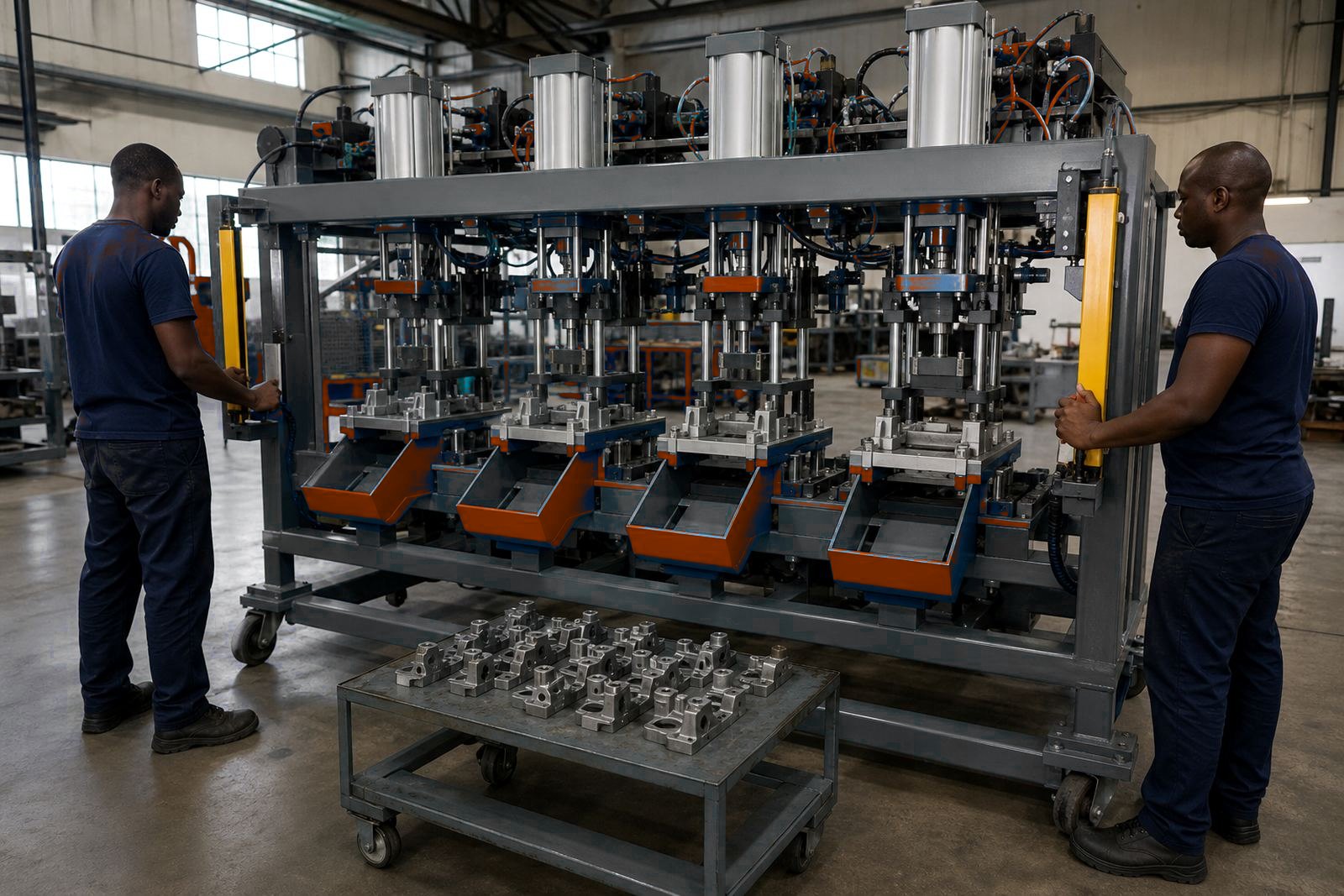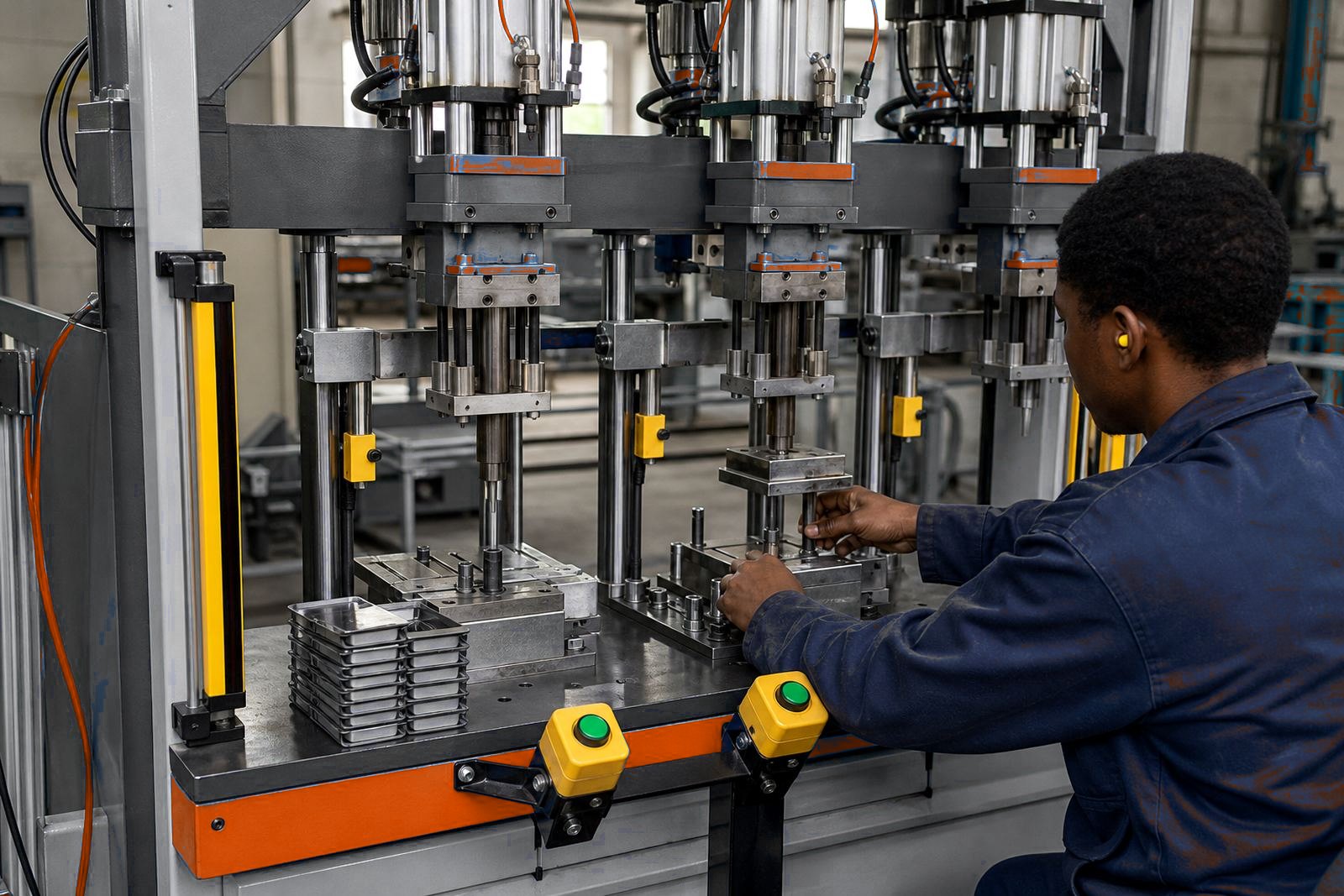
A round table that does more than one job
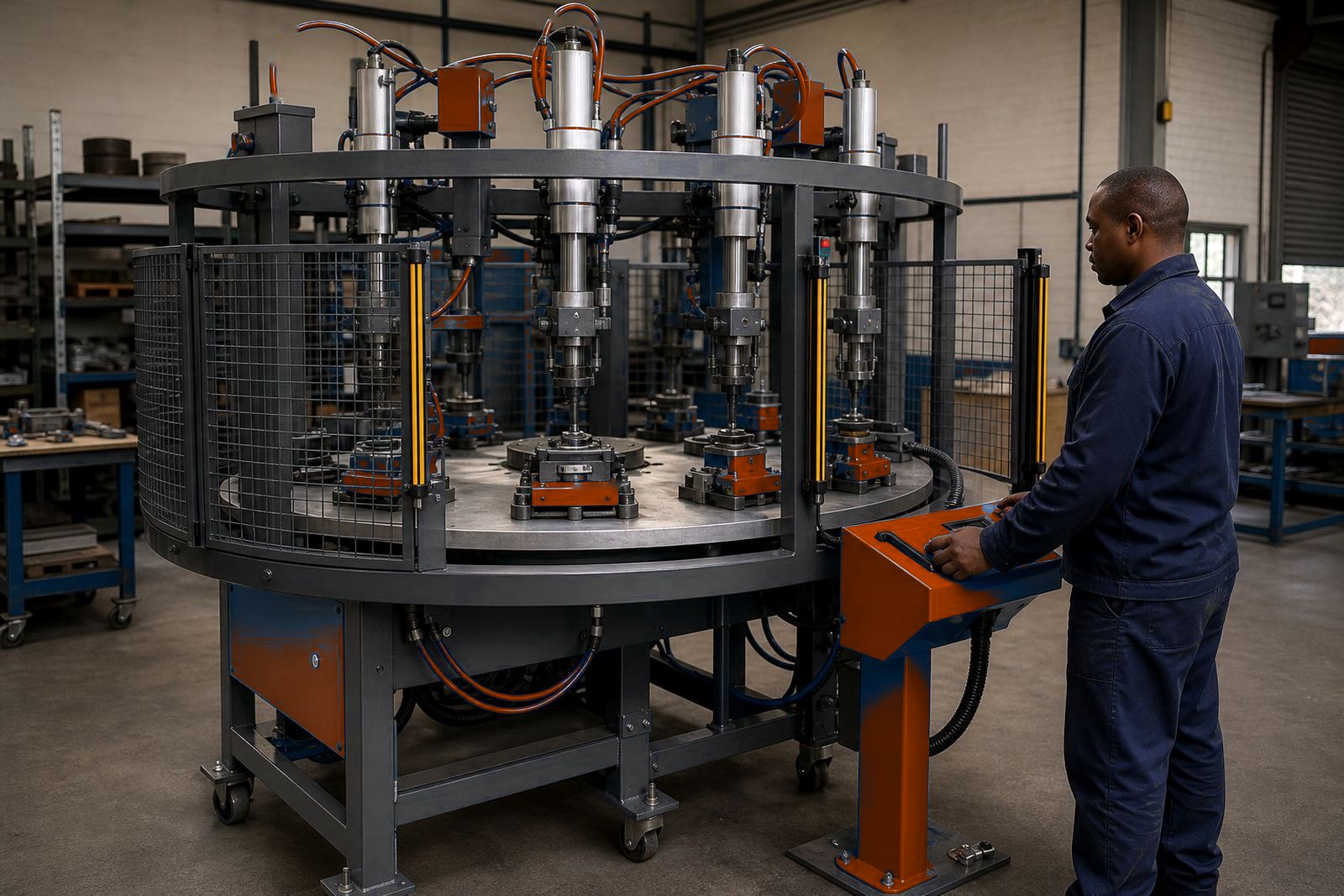
A rotary index concept places several stations around a central table or carrier, so one part can move from loading to pressing, checking and unloading without long hand transfers. In a pneumatic setup, each station may use its own cylinder, tool set or nest, with air pressure matched to the force needed for the operation. For assembly lines in Isando or Kempton Park, that can mean a neater flow than moving loose parts between separate benches.
The important part is not the rotating table by itself, but the way each stop is planned. Stroke length, clamp position, part orientation and operator reach all have to match the actual workpiece. A light curtain or two-hand control may suit one station, while another station needs guarded access and a longer dwell for crimping or staking.
Where the concept fits and where it does not
Rotary indexing works best when the part shape is stable and every operation follows the same order. It suits medium volumes, parts with repeatable orientation, and jobs where a single fixture path can replace several separate presses. It is not a fit for products that change shape every week or need loose manual handling between steps.
- Assembly where each station adds one component or check
- Crimping runs that need controlled closure and repeatable depth
- Riveting where alignment and clamp pressure matter
- Staking of plastic or soft metal features in a fixed sequence
- Pack sealing where heat or pressure tools need steady positioning
When the process is too varied, a fixed multi-station frame may be easier to manage. When the part is consistent and the sequence is clear, the rotary route can be worth a closer look.
Tooling carries the accuracy, not the table alone
The table only gives the movement. The tooling gives the result. Good rotary index ideas depend on nests that hold the part in the same spot at every stop, with guides that resist wear and surfaces that stay clean in factory use. In coastal areas like Gqeberha, that means paying attention to corrosion, moisture and dirt build-up around fixtures and air fittings.
Tooling design should start with the part, not the machine frame. If the component flexes, the nest must support it. If the crimp edge is small, the punch face has to match it. If the operator must load with gloves, the opening and lead-in need enough clearance without losing location.
- Fixture design for repeatable part location
- Tooling changes that can be done without disturbing the full line
- Stroke setting that protects the part and the tool
- Guarding builds around pinch points and moving arms
Pressure, stroke and control have to work together
A pneumatic press only behaves well when air supply, stroke and control logic are set as one system. Too little pressure and the crimp may be weak. Too much and the tool can mark the part or overload the fixture. Stroke setting is just as important, because a rotary station must stop exactly where the work needs it, no deeper and no shallower.
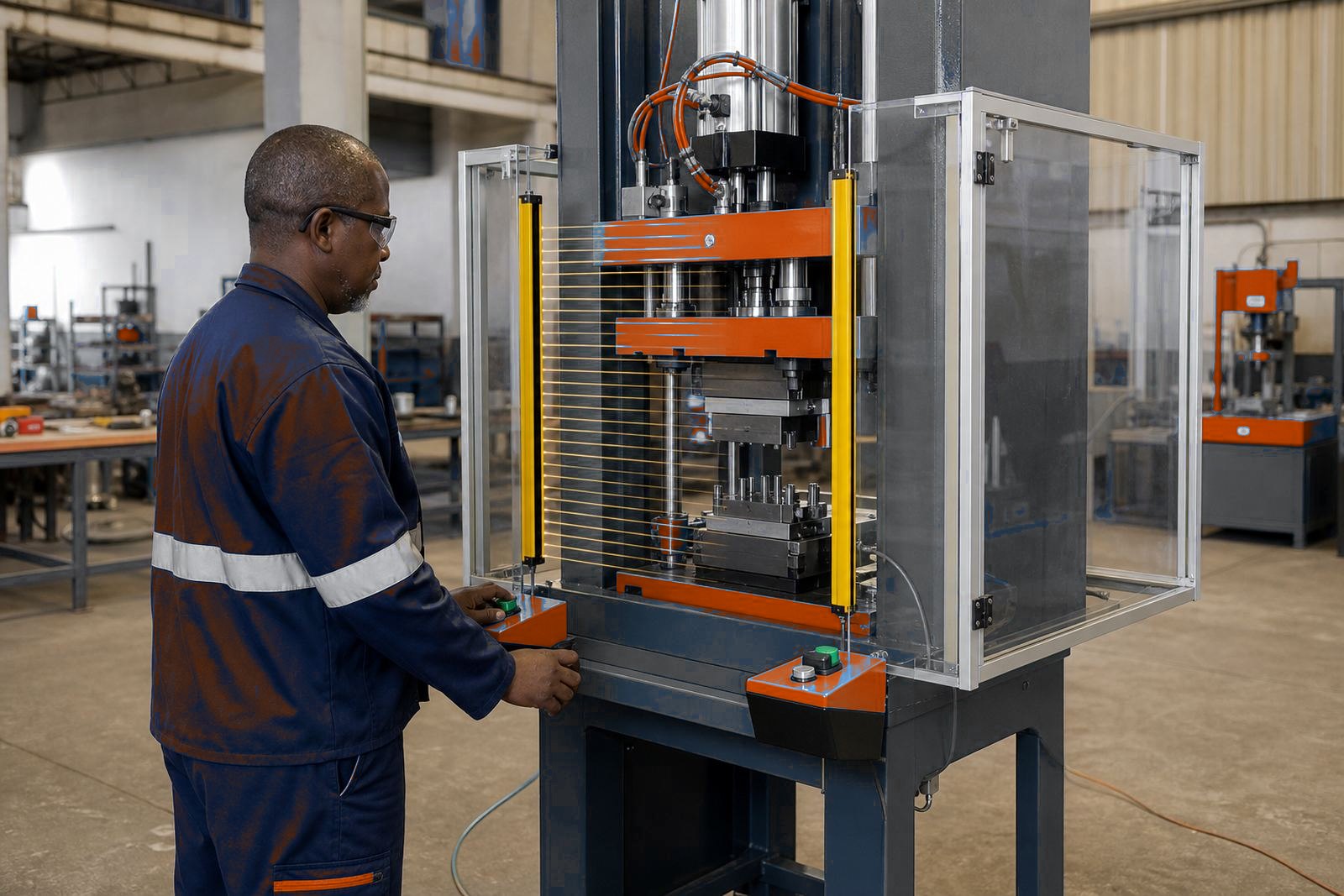
Two-hand controls are often used where an operator loads and starts a cycle at the same point. Light curtains suit stations where access is wider, or where a hand must enter for removal. The choice should follow the hazard, not the habit. A safe machine that is awkward to run will slow the line more than a well planned one.
On a shop floor in Johannesburg or Pretoria, the practical questions are usually plain: is the air line stable, does the cylinder return cleanly, and can the operator see the tooling edge without leaning in too far? Those details decide whether the concept works on a shift, not just on paper.
Durban pack sealing and crimping
Picture a Durban factory sealing a packed product and then adding a metal clip on the same path. Humidity is high, cartons may vary slightly, and the operators work close to a busy line. A rotary index press can bring sealing, checking and crimping into a single guarded cycle, but only if the tooling stays clean and the loading side is easy to reach.
In that setting, the line might use a centre-loaded table with three stations: load and locate, press and seal, unload and inspect. A two-hand start may suit the seal station, while the unload side uses a guarded exit. If the pack edge shifts often, the nest needs adjustable stops so the same machine can still hold location without fighting the product.
That is the kind of work where commissioning carries equal weight to the press setup itself. The machine has to be set on site, the air lines checked, the stroke verified and the operator trained on the actual sequence, not a paper version of it.
What to settle before the first build
Before anyone cuts steel, the process should be pinned down in practical terms. The machine can then be built around the part, the cycle and the factory floor rather than around guesswork.
- How many stations are needed, and in what order
- What air pressure is available on site and how steady it is
- Whether the stroke must be fixed or adjustable
- What guarding method suits the operator movement
- Which tooling changes will happen during normal production
Once those points are clear, the rest becomes a matter of fit. A rotary index concept is only useful when the movement, tooling and safety controls all hold their place during real production hours.
From concept to handover on a South African floor
MultiPress works on multi-station pneumatic presses for assembly, crimping, riveting, staking and pack sealing, with custom tooling, guarding builds, light curtain integration, two hand controls, site installation, air line setup, press commissioning and operator training. The team in Isando handles the detail that turns a concept into a working machine, from tooling design through to production handover.
Pieter Sauls leads the business, with Thandiwe Matlala coordinating projects, Musa Hartnick on tooling design, Johan Ramokgopa in the workshop, Lerato Moagi on commissioning and Anele Engelbrecht leading operator training. Jobs move through Johannesburg, Pretoria, Durban, Gqeberha, East London, Kempton Park and Boksburg as needed, with the same focus on fit, safety and repeatable output.
For factories looking at rotary index ideas, the useful question is not whether the table turns. It is whether every station does its job cleanly, safely and in the same place every cycle.