When the extra travel earns its place
A deep stroke is not there for show. It helps when a component must clear a tall fixture, when the operator needs space to load a sub-assembly, or when a punch, rivet set or crimp tool must travel farther before contact. On a pneumatic press, that added movement gives the tooling room to meet the part in a controlled way.
In Isando and nearby plant areas, we see this most often on assembly lines that handle brackets, housings, connector packs and light metal sub-assemblies. The part may sit awkwardly high, or the operator may need to place inserts by hand before the cycle starts. A longer stroke creates clearance without forcing the team to work around a cramped setup.
Stroke length and the job the station must do
Stroke is only one factor in how our pneumatic presses handle assembly and packaging work. Air pressure, cylinder size, ram guidance and tool height all shape how the press behaves. A long stroke with poor control can feel slow and untidy, while a shorter stroke with the right tooling can do a cleaner job. The aim is to match the travel to the part, not push the part into the machine.
- Tall parts need entry space before the tool closes.
- Deep nests can need more approach travel for accuracy.
- Riveting and staking often need a firmer end-of-stroke feel.
- Pack sealing stations may need room for guides and clamps.
- Two hand controls help keep hands out of the stroke zone.
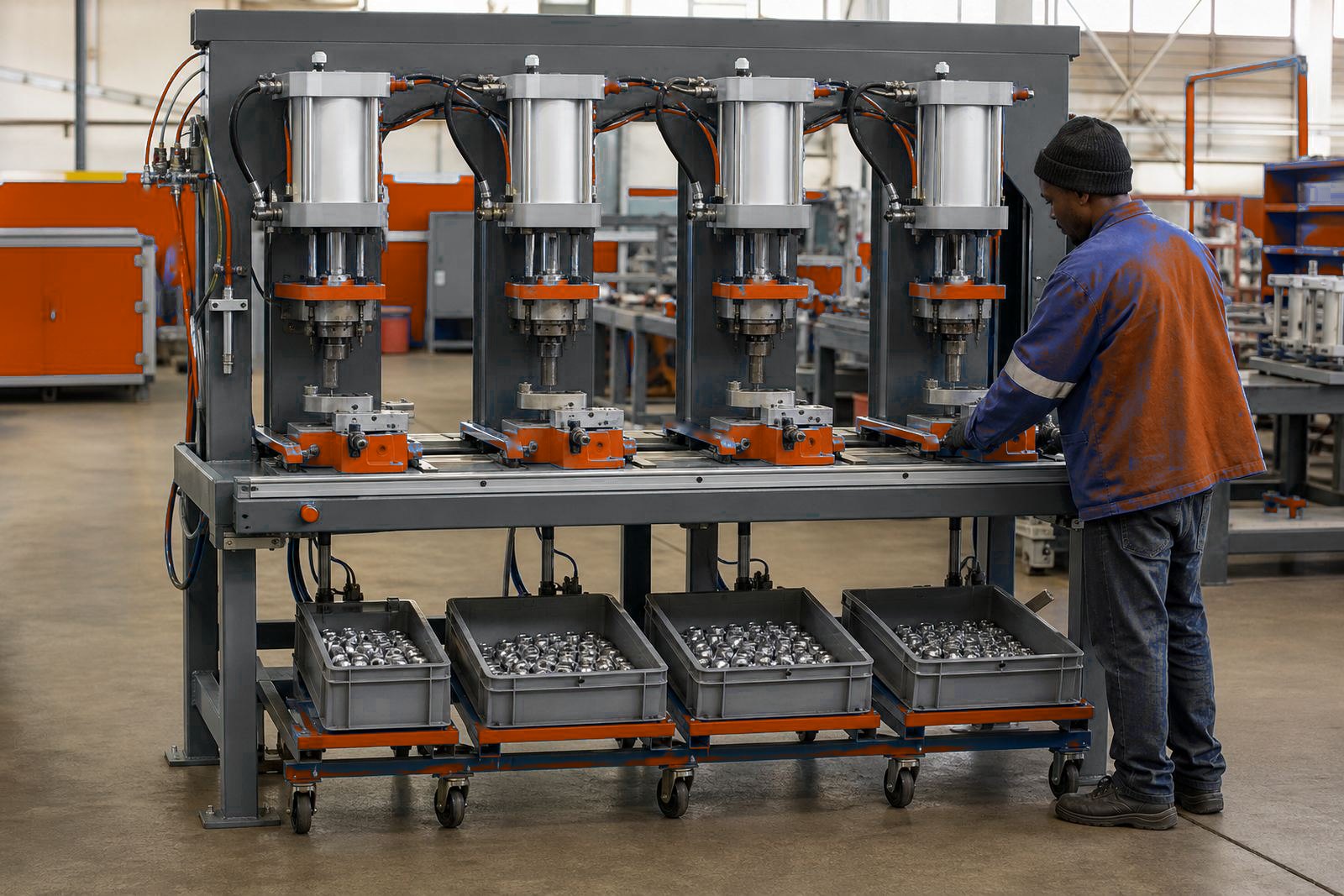
For presses with several stations, the stroke can differ from one head to the next. One station may suit a shallow action for crimping, while another needs deeper movement for fixture loading or a taller tool stack.
What changes in a multi-station frame
Multi-station presses are useful where the same line carries more than one operation. One station can assemble, the next can rivet, and the final station can seal or check fit. When stroke length is too short, operators start forcing the sequence. That is where jams, uneven crimps and tired hands begin to show.
Longer stroke lengths can also help when the tooling on one station is bulkier than the rest. A taller die set or locator block may need extra opening height to let the part in cleanly. In those cases, the frame, cylinders and guards need to be planned together so the press stays practical on the floor.
Guarding, light curtains and hand clearance
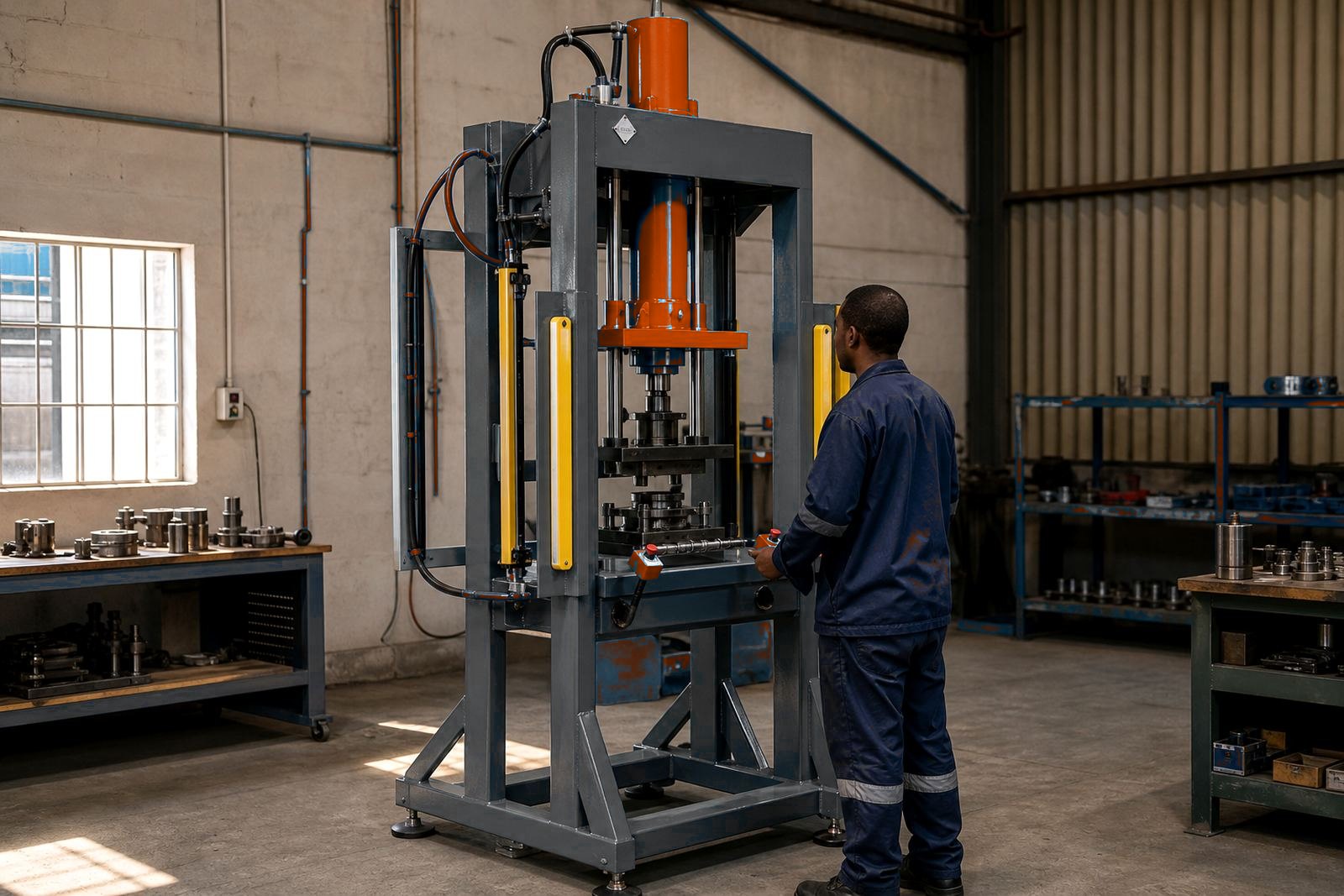
Deep stroke only works properly when the safety layout is sensible. A longer moving section can create more exposed space around the tooling, so guarding has to suit the actual machine movement. Light curtains, fixed guards and two hand controls belong in that planning from the start.
- Light curtains suit stations where access must stay open but controlled.
- Fixed guarding works well where the loading path never changes.
- Two hand controls help on cycle-start presses with repeat work.
- Tooling should leave clear sightlines to the part and the stop points.
In humid coastal conditions like Gqeberha or East London, guards and brackets also need practical material choices and clean mounting. Rust at a guide point or a loose sensor plate can make a well-built press awkward to run.
Isando line loading and crimping job
On a typical Isando line, a team may need to load a taller part into a fixture, clamp it, then crimp terminals or stake small features before pack sealing. The first challenge is usually loading clearance. If the press opens too little, the operator has to tilt the part and lose time finding the seat. If it opens too far without control, the load position becomes less consistent.
That is where a set of deep-stroke stations helps. The press can open wide enough for safe loading, then close in a steady way to the correct working point. With proper stroke setting and tested tooling, the team gets a repeatable cycle that matches the size of the part rather than fighting it.
Tooling design decides whether the stroke helps
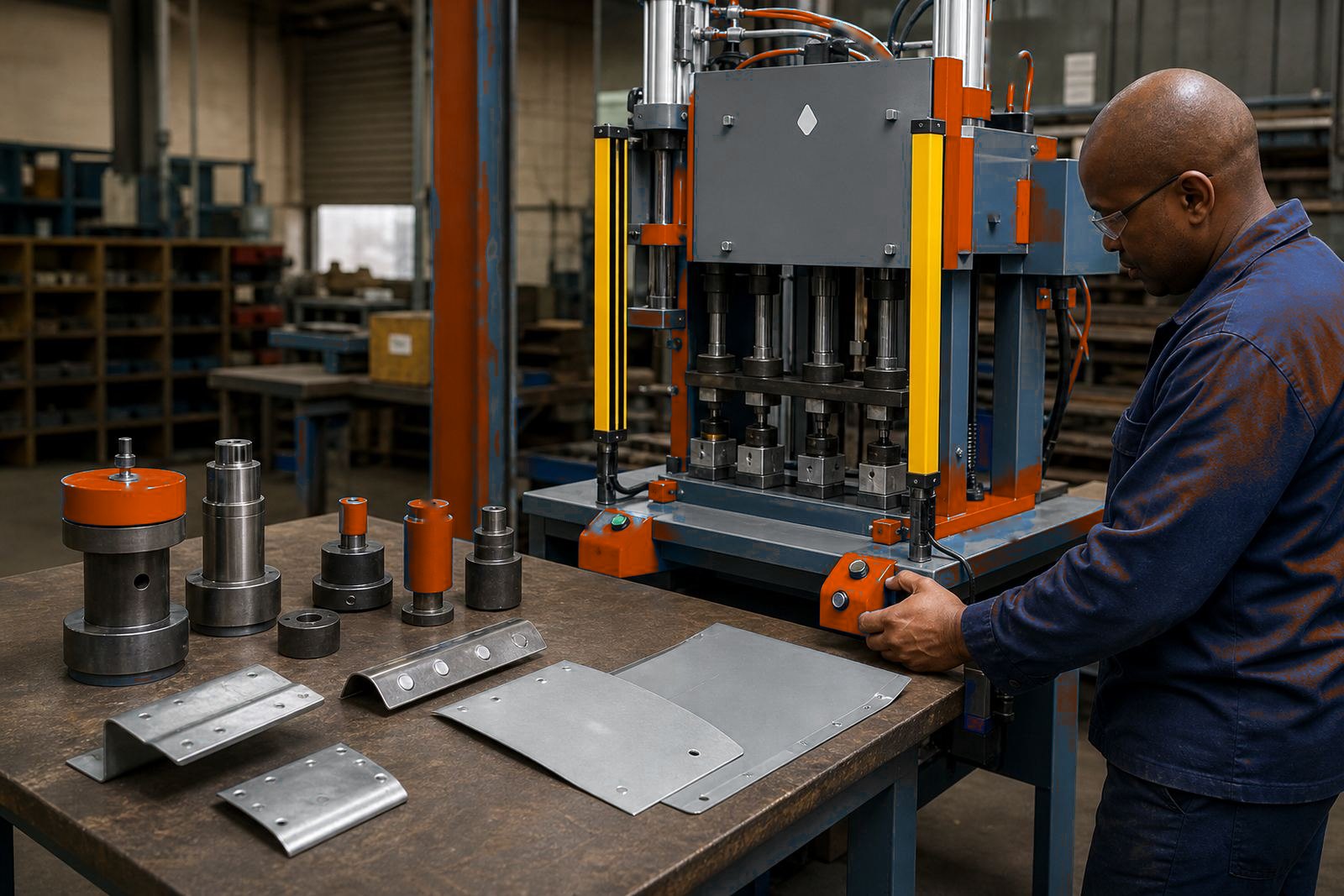
Long travel does not fix a poorly shaped tool. A proper fixture guides the part into the same position every time, while the tooling face reaches the job without excess movement. For crimping and riveting, the tool profile must line up squarely with the contact point. For staking, the nose shape and stop height matter just as much as the cylinder force.
Custom tooling is often the difference between a press that merely moves and a press that produces usable output. On a deep stroke machine, the tooling has to suit the full travel path, not only the closing point. That is why fixture design, tool changes and production handover are usually handled together.
- Set the working height around the part, not around the cylinder alone.
- Keep the contact point square to avoid side load on the tooling.
- Allow enough open height for loading, cleaning and part removal.
- Check the seal, crimp or stake depth with real production parts.
Commissioning a long-stroke press for daily use
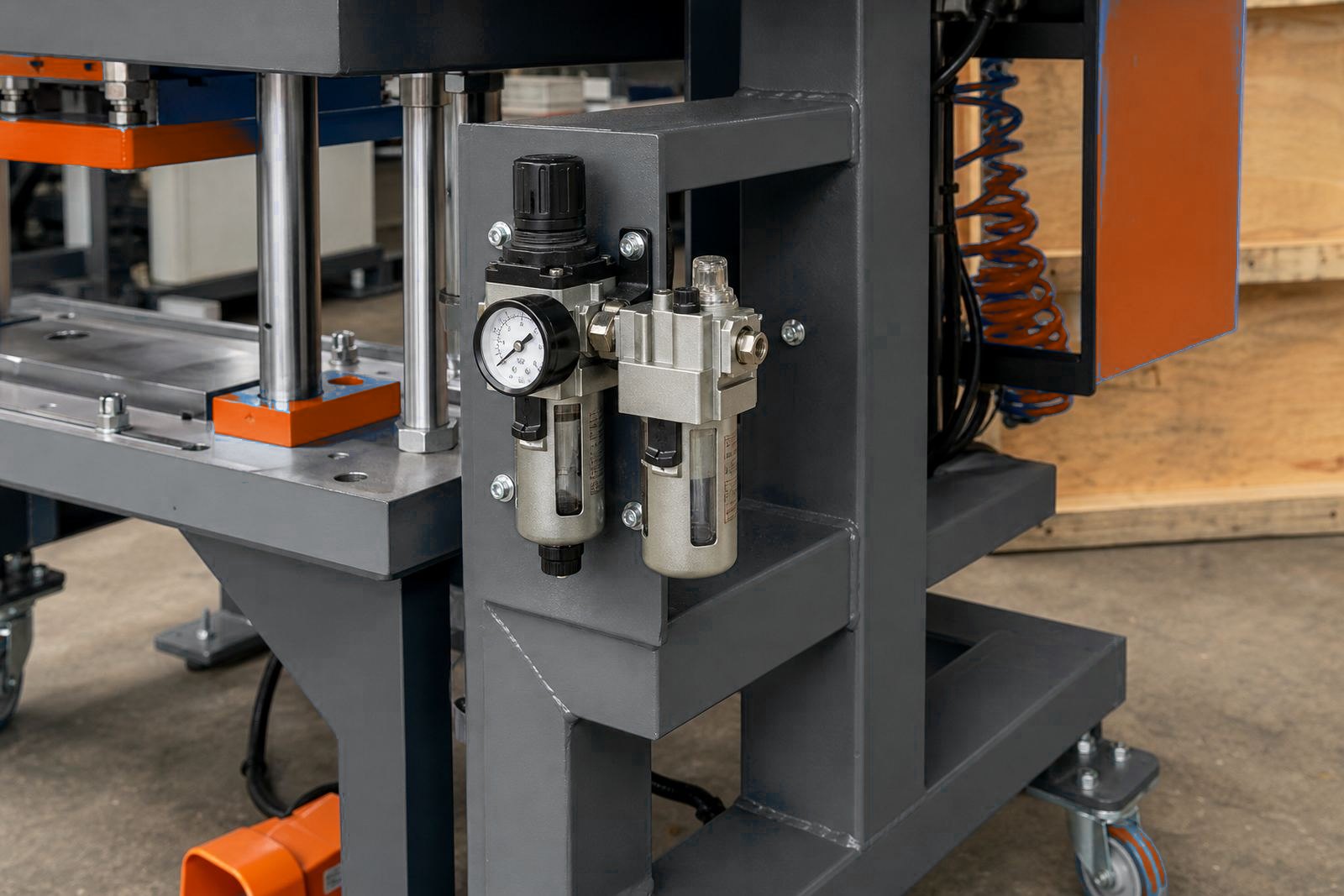
Commissioning is where the machine proves itself. Air line setup, pressure settings, stroke setting and guard checks all need to be done against the actual part. The press may run nicely on a test bench, then behave differently when the full fixture and operator workflow are in place.
For plants in Johannesburg, Pretoria, Durban, Port Elizabeth and East London, the same rule holds. A deep-stroke machine should be trained into the line, not dropped into it. Operator training matters because the team has to know how far the slide should travel, when the two hand controls must be used and what a normal cycle feels like.
When the stroke is correct, the machine gives the operator room without wasting movement. That means less forcing, cleaner loading and a better fit for assembly, crimping, riveting or pack sealing jobs that call for extra clearance.