When left-to-right flow makes sense
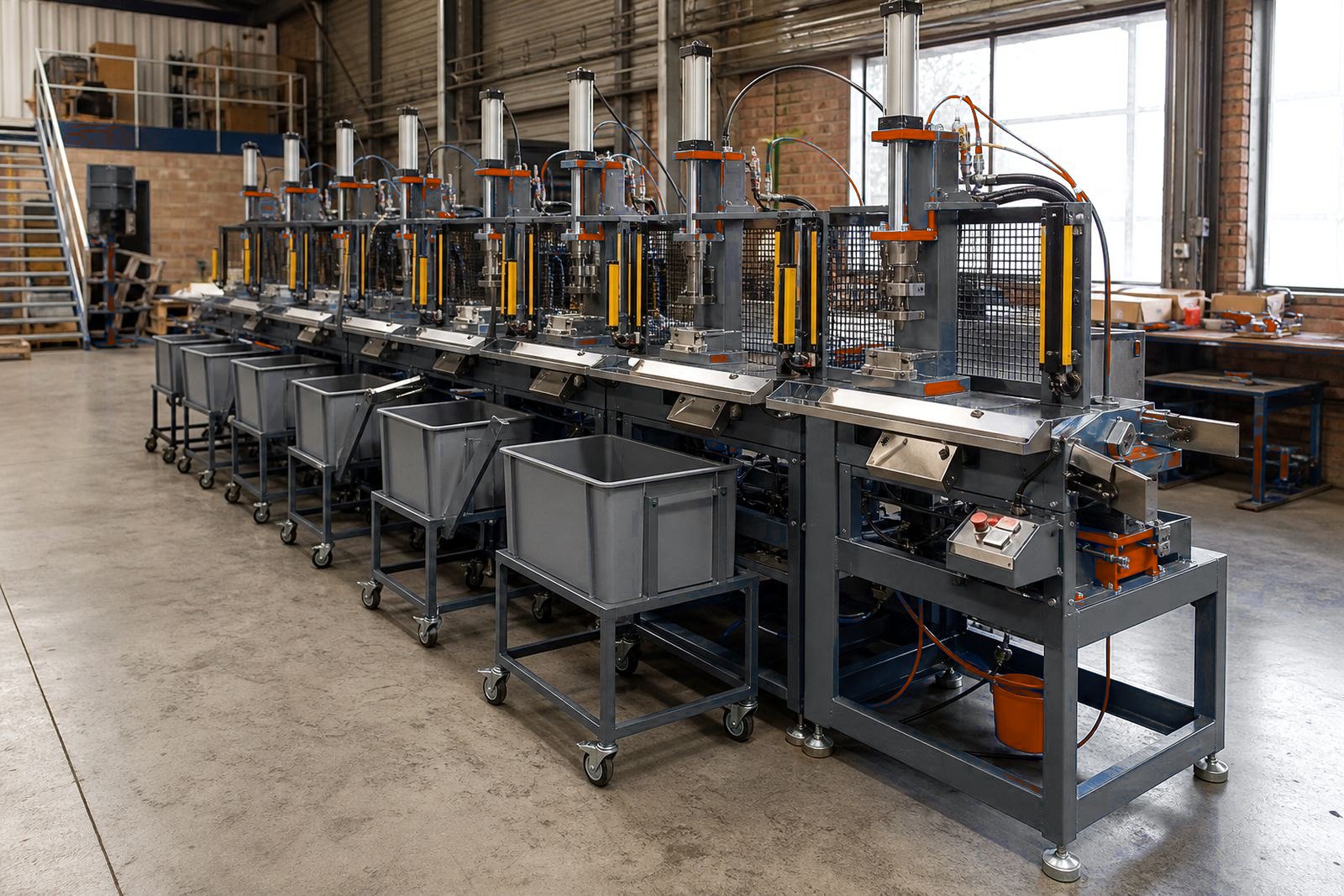
An inline layout works best when the part can travel in one direction from load point to finish point. That pattern suits pressed components that need a first operation, then a second set of stations, then a final check or seal before packing.
Factories in Isando, Boksburg and Kempton Park often favour this format where floor space is tight and operators need a clear handoff from one station to the next. It keeps the job legible, and it helps when the same line must handle more than one part family with tooling changes.
Station spacing that keeps hands and parts under control
Station layout starts with the part pitch, the stroke needed at each position, and the transfer method between stations. A small part can move on a carrier plate, while a larger assembly may need side guides, stops and locating pins to hold position at each press point.
Good spacing lets the operator load cleanly at one end, then watch the part travel without reaching across moving tools. That matters on lines using two-hand controls or light curtains, because the access zone must stay open and the tool area must stay protected.
- Keep the load point easy to reach without twisting the body.
- Set each station around the real stroke.
- Leave enough room for tooling access during changeovers.
- Allow clear exit space for finished parts and trays.
Air pressure, cylinders and stroke setting
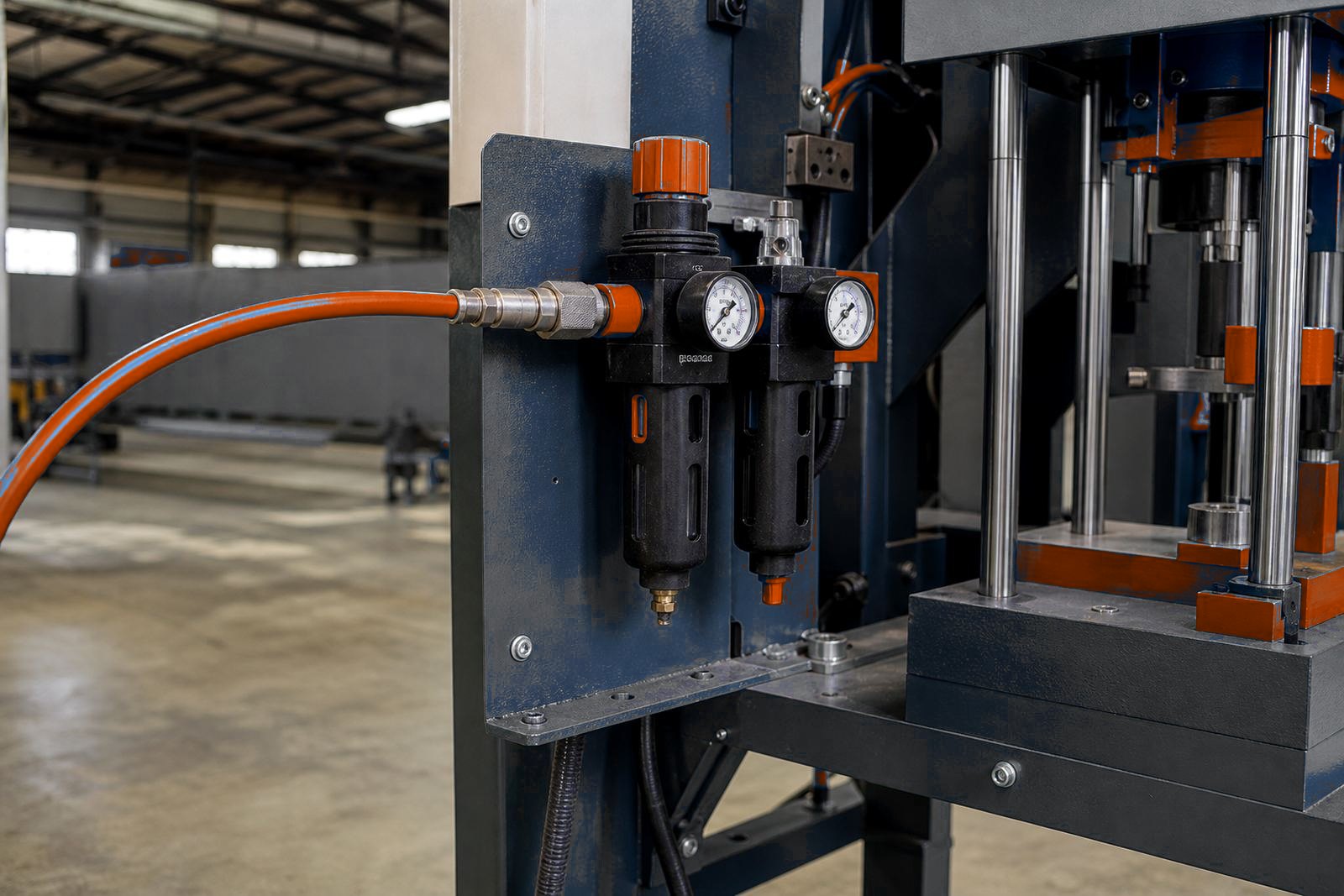
Pneumatic presses rely on clean air delivery, matched cylinder size and a stroke that suits the force requirement at each station. If the stroke runs too long, the tool spends time moving where no work is done. If it is too short, the press may not complete the crimp, rivet or stake properly.
Air line setup must support stable pressure at the machine, with drains, filters and sensible routing so the line does not lose consistency during a shift. On a multi-station press, one station may need a lighter touch while another needs a firmer punch, so stroke setting and tool depth have to be checked together.
Tooling that keeps each operation repeatable
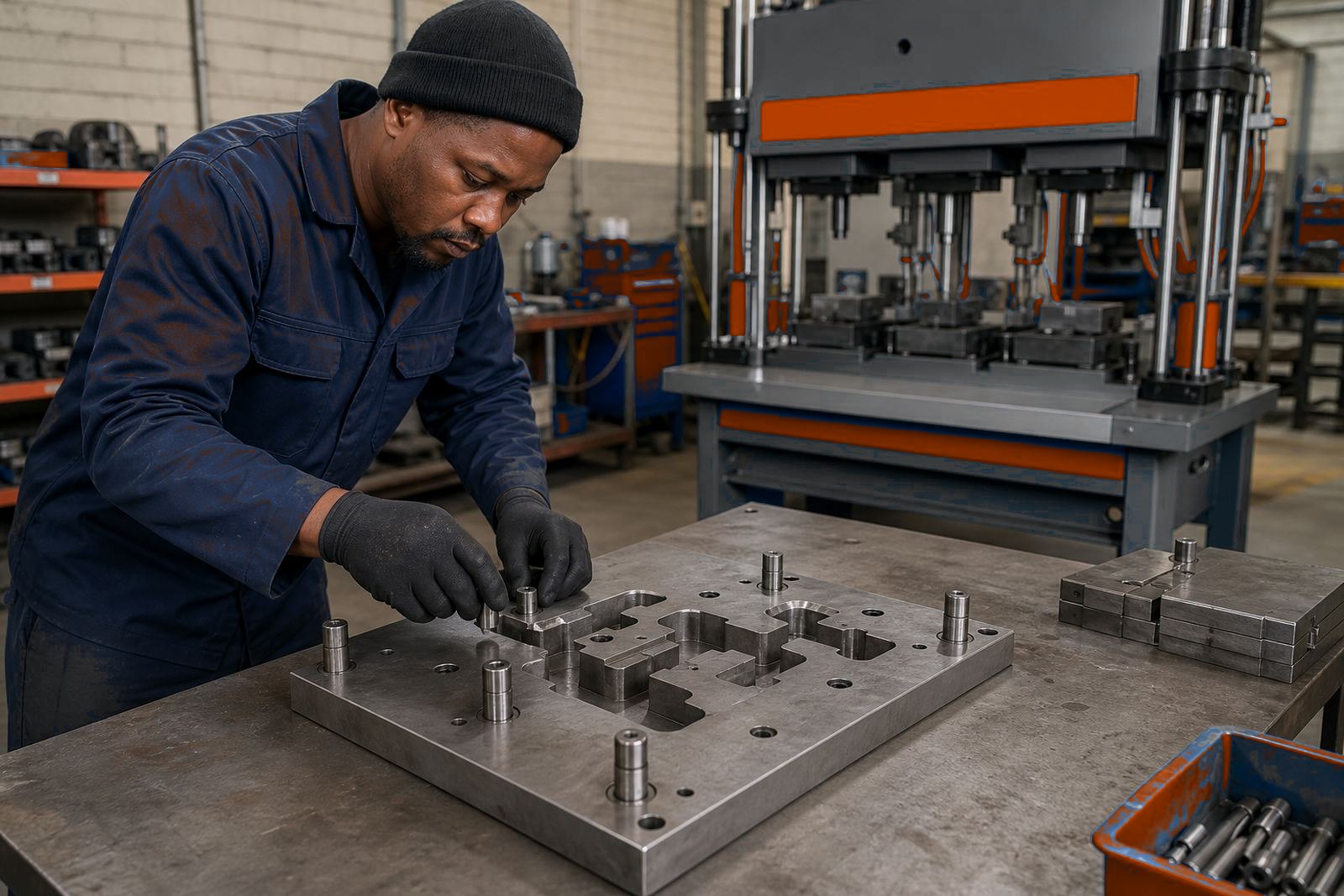
Inline systems are only as steady as the tooling in each station. Form tools, nests, anvils and clamp faces must locate the part in the same position every cycle, otherwise the next station starts from poor alignment.
For crimping and riveting, the tool face must meet the joint squarely. For staking, the energy path needs to stay centred so the formed head does not tilt. For pack sealing, the tooling has to present the pack edge evenly and keep heat-sensitive or pressure-sensitive areas aligned where needed.
- Use fixtures that stop movement at the point of contact.
- Match each tool face to the material thickness in play.
- Check wear on locating pins before the line drifts.
- Allow for quick tooling changes where product sizes vary.
Guarding and operator controls on an active line
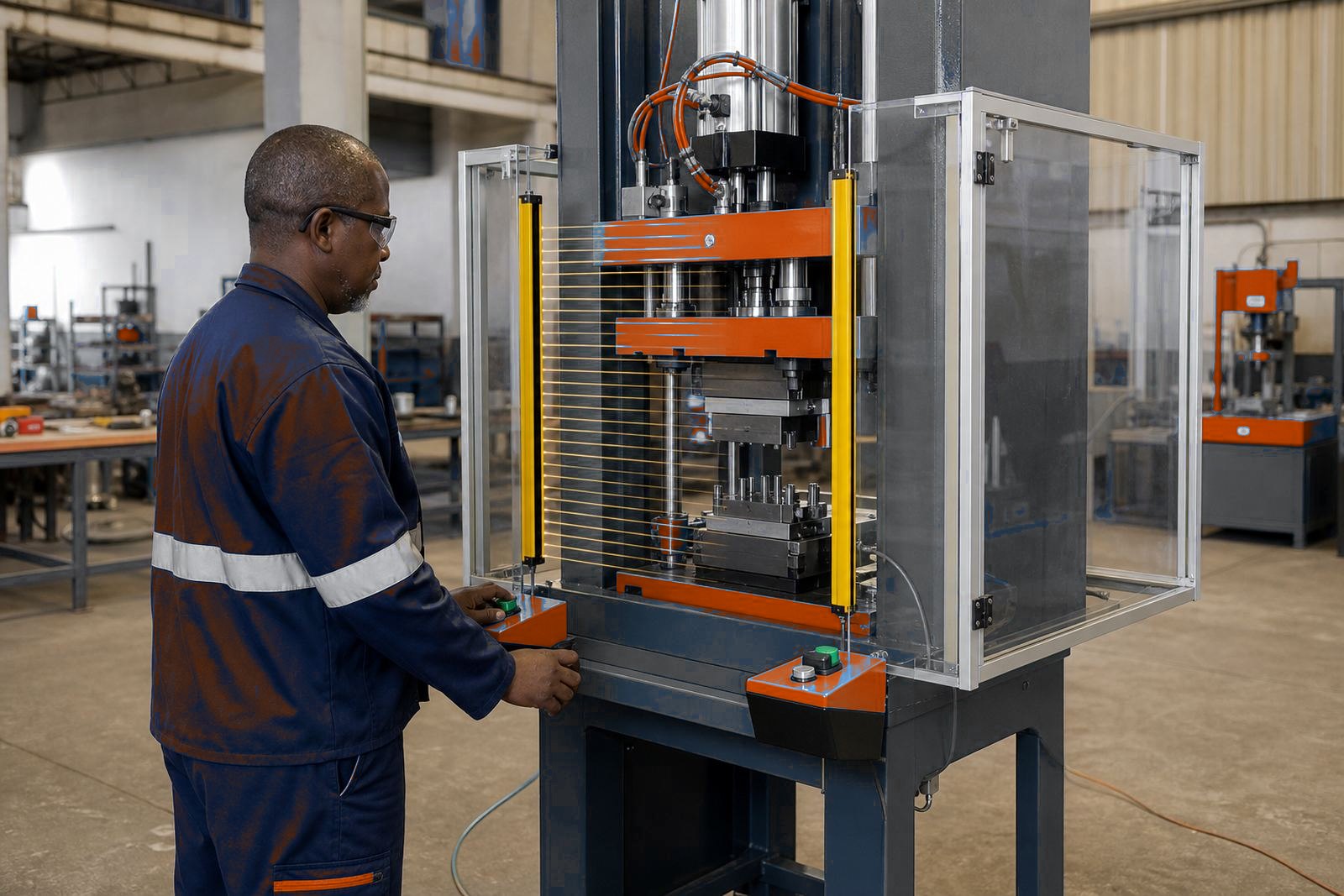
A safe inline press line needs guarding that suits the station’s movement and sits close to the work. Fixed guards, interlocked doors, light curtains and two-hand controls all have their place, but the choice depends on how the operator loads and clears the part.
When stations sit close together, one open gap can become a hand path into the wrong zone. That is why the guarding plan has to be drawn with the tooling, the transfer method and the maintenance access in mind. A neat layout helps, but a safe layout keeps the body out of the pinch point.
A Durban line with a plain moving path
On a recent Durban project, the part entered from the left, moved through a crimping station, then a riveting station, and finished at a sealing point before packing. The factory needed a line that could sit against one wall, with the feed side open and the discharge side clear for trays and inspection.
The layout used separate tooling sets for each station, a defined stroke for every operation, and light curtain protection where the operator reached near the load zone. Once the line was commissioned, the team could follow the flow of parts, which made training easier for the shift crew.
What our team checks before a line is handed over
Before production handover, the station layout gets checked as a working route, not only as a drawing. Our commissioning and training team looks at the sequence, the air supply, the guard positions, the control method and the part transfer path from first load to final unload.
- Tooling Designer: checks fixture fit, station spacing and tool access.
- Workshop Foreman: checks build quality, alignment and frame finish.
- Commissioning Technician: checks stroke, pressure, control logic and protection devices.
- Operator Training Lead: shows the crew how to load, clear and reset the line.
That practical check matters on South African factory floors where the same machine may serve different shifts, different material batches and different part sizes. An inline layout has to be clear enough for daily work, not only neat on paper.