
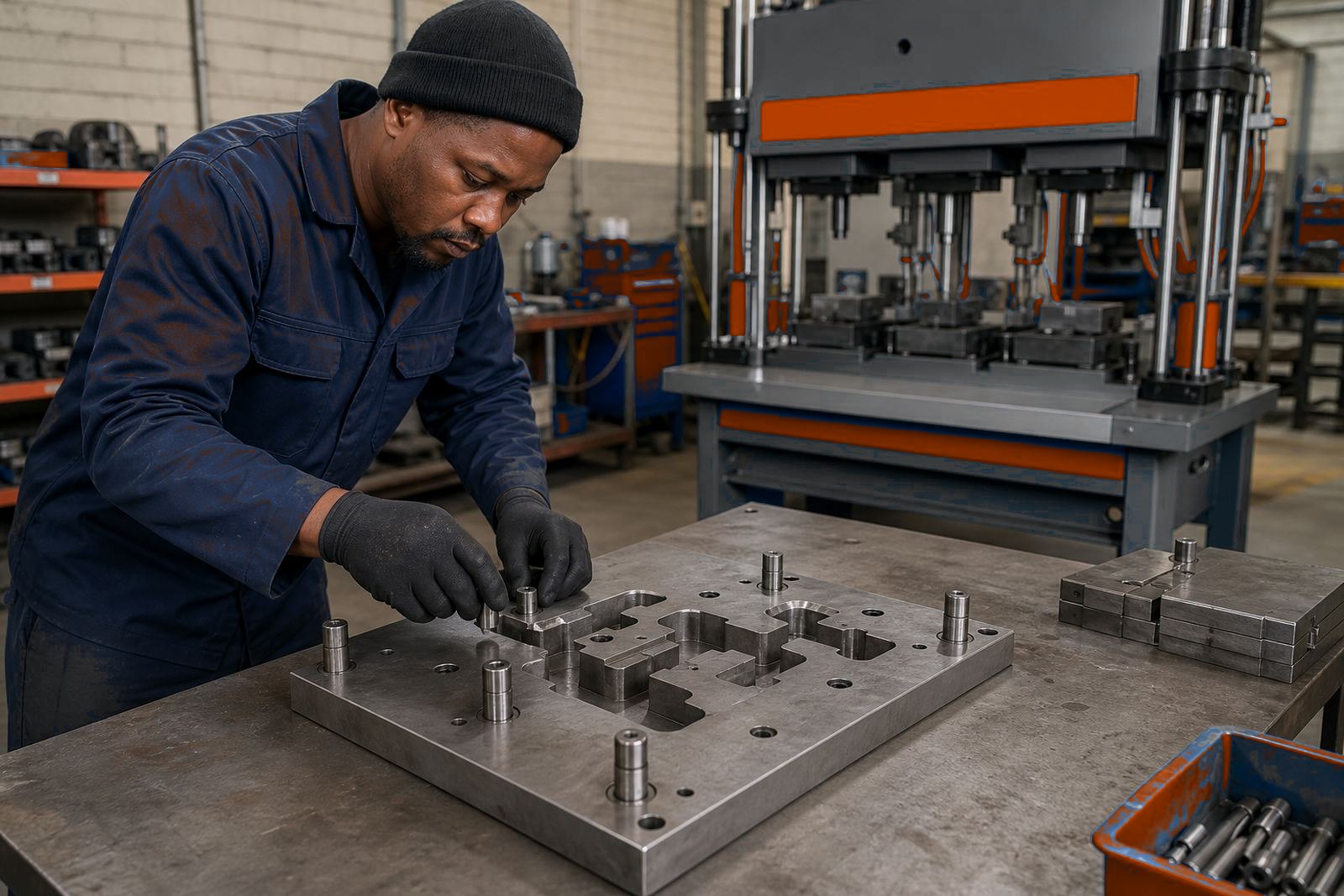
We design a nest that fits the part, not the drawing alone
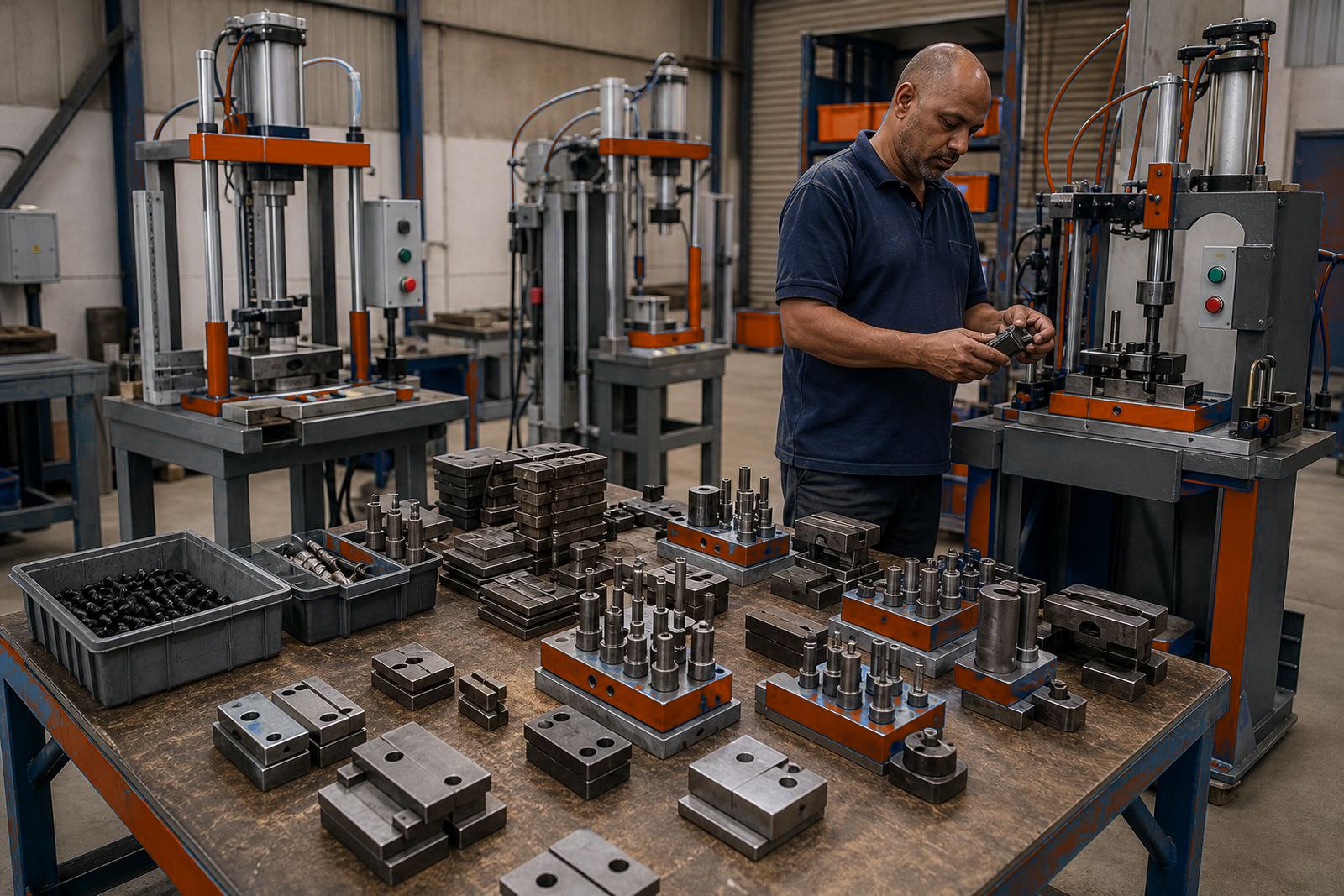
The best nests reduce the chance of misalignment before the cycle starts. That saves wear on punches, crimp heads and riveting tools, and it also keeps the finish cleaner on visible parts. In a press line, the operator should feel that the part only fits one way and that the location is obvious at a glance.
We often see the difference in jobs where a small change in the nest face removes a lot of handling. A slight chamfer, a sprung locator or a better lead-in on the first contact point can cut the loading effort without loosening the part. For pack sealing work, the nest has to hold the pack flat and steady while the tooling applies pressure evenly across the seal area.
Alignment starts before the cylinder moves
A nest is only useful if it matches the stroke, the air pressure and the closing movement of the press. If the tooling closes too early or too late, the operator feels the mismatch straight away. Stroke setting, guide position and tool height must work together so the part settles into place before the full force is applied.
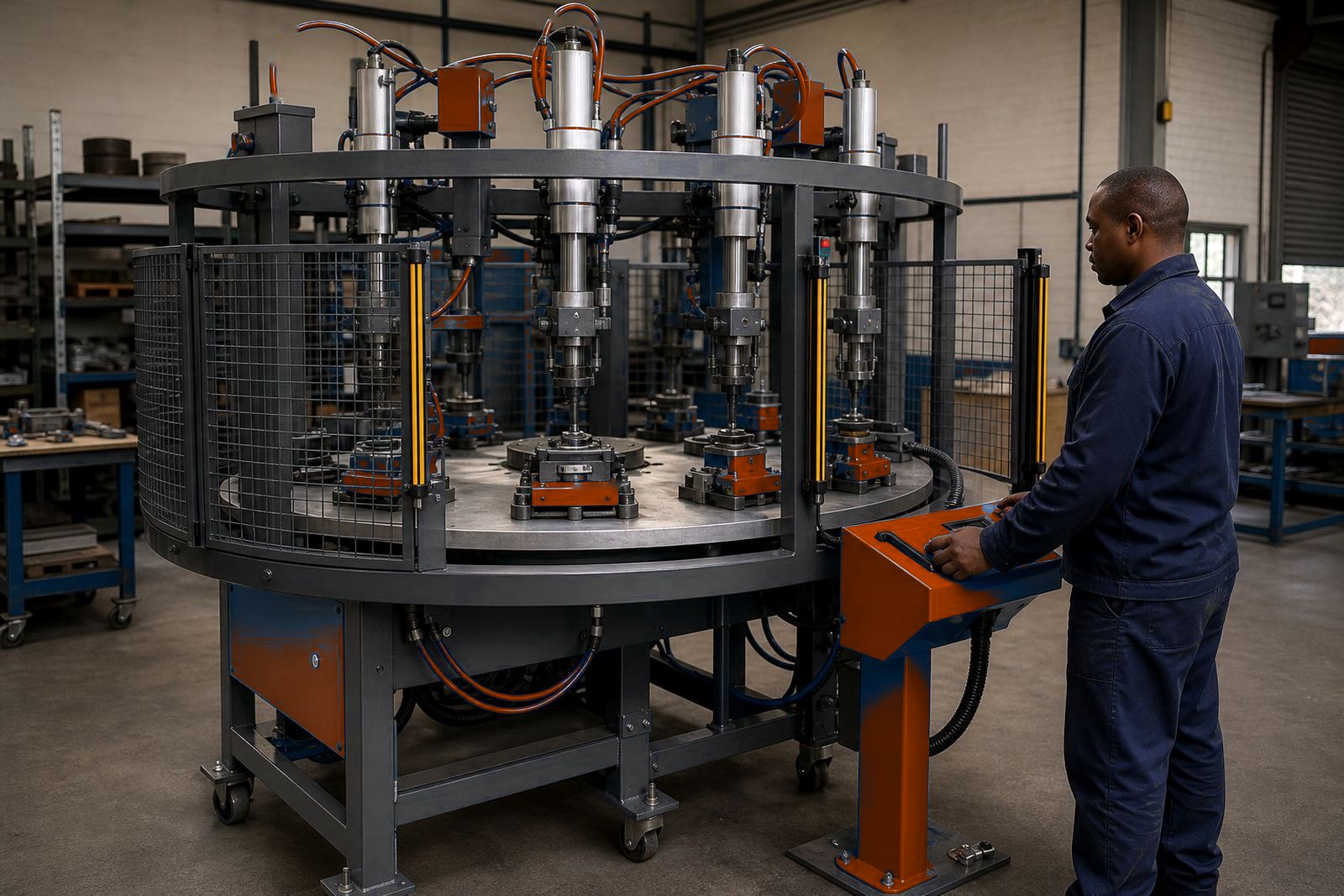
In a multi-station machine, one station may be set up for crimping while another handles riveting or staking. Each station needs its own nesting logic because the part behaves differently under load. A shallow nest may suit one operation, while another needs deeper side support to stop the component lifting or skewing during compression.
- Check stroke length against the tallest point of the part and tooling.
- Keep the load path straight so force enters the component cleanly.
- Use a lead-in shape that helps the operator seat the part quickly.
Design features that help operators load faster
Operator loading speed is not just about rushing. It is about removing hesitation. A well built nest gives the hand somewhere obvious to place the part, shows the correct orientation, and avoids small corrections that cost time through a shift. When the part drops into its seat naturally, the operator can move with confidence and the line keeps its rhythm.
Useful nest details are usually simple. A tapered entry can guide the component into position. A relief cut can make room for a flange or welded edge. A stop face can set the depth without guesswork. On parts with close tolerances, the nest may also need hardened wear surfaces or replaceable inserts so that maintenance remains manageable over time.
- Use visible locating points, not hidden ones that slow loading.
- Build in clearance where the hand needs space, not where the tool needs support.
- Choose replaceable inserts for areas that wear faster than the rest.
Guarding, two-hand controls and nest access must work together
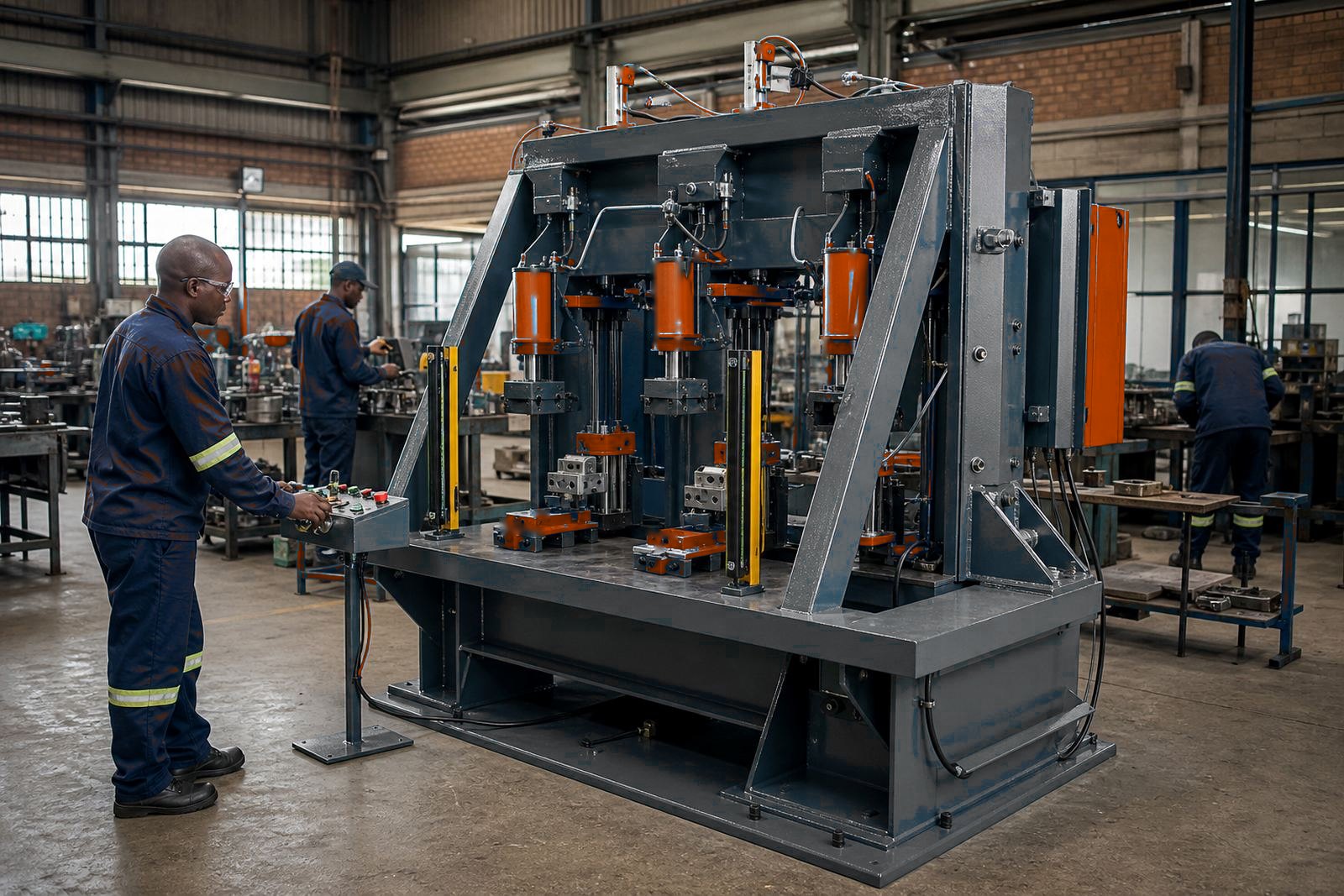
Good nest design cannot ignore safety. On a pneumatic press, the nest must be accessible without making the operator reach into the danger area. Guarding, light curtains and two-hand controls need to suit the way the part is loaded, not sit beside the process as separate pieces of hardware. If access is awkward, people start working around the system and the nest loses its purpose.
Two-hand controls suit jobs where the operator must clear both hands before the stroke begins. Light curtains are useful where the loading motion is more open, but the nest still needs to support the part in a predictable spot so the curtain line remains practical. A proper layout keeps the load position, the tool entry and the protection points aligned.
On factories in Isando and surrounding Ekurhuleni, that balance matters where short production runs and frequent tooling changes are common. A nest that is easy to reach, but still properly contained, helps the line stay disciplined without making the work clumsy.
What local production work asks of a nest
South African factories often run mixed batches. A line may handle assembly in the morning, then switch to riveting or staking later the same day. In that kind of environment, the nest must hold its shape through repeated tool changes and still be easy to clean, inspect and reset. Coastal humidity in Durban can also affect unprotected metal surfaces, so material choice and finish matter more than people sometimes expect.
For pack sealing, the nest has to control flatness and support the material without leaving marks. For crimping, it must keep the fold or curl in the right place so the finished section closes evenly. For staking, the locator needs to hold the insert or component still while the press forms the joint. Each operation asks something slightly different from the nest, and the design must answer that difference plainly.
- Allow for quick changeover when production shifts from one part to another.
- Use finishes that suit local wear, cleaning and moisture exposure.
- Keep the nest easy to inspect so setting errors show up early.
A job in Isando, then out to the rest of the country
A recent style of project in Isando involved a multi-station pneumatic press used for assembly and pack sealing on a small parts line. The original nest allowed movement at one locating edge, which made the operator spend too much time settling the part before each cycle. After the nest was reworked with firmer datum points and a cleaner lead-in, the part seated more naturally and the loading pattern became more consistent across the stations.
That kind of improvement does not depend on a dramatic redesign. Often it comes from a better shoulder, a new insert, or a small change to the way the part is supported during the stroke. Once the nest is right, the rest of the press setup becomes easier to live with on the floor, whether the line is in Johannesburg, Pretoria, Gqeberha or East London.
MultiPress handles custom tooling, guarding builds, light curtain integration, site installation, air line setup, press commissioning, operator training and production handover from our Isando, Ekurhuleni team. Clients send their details through our enquiry form, and we handle requests for farms across the Free State and beyond.