Where the beam belongs on a press cell
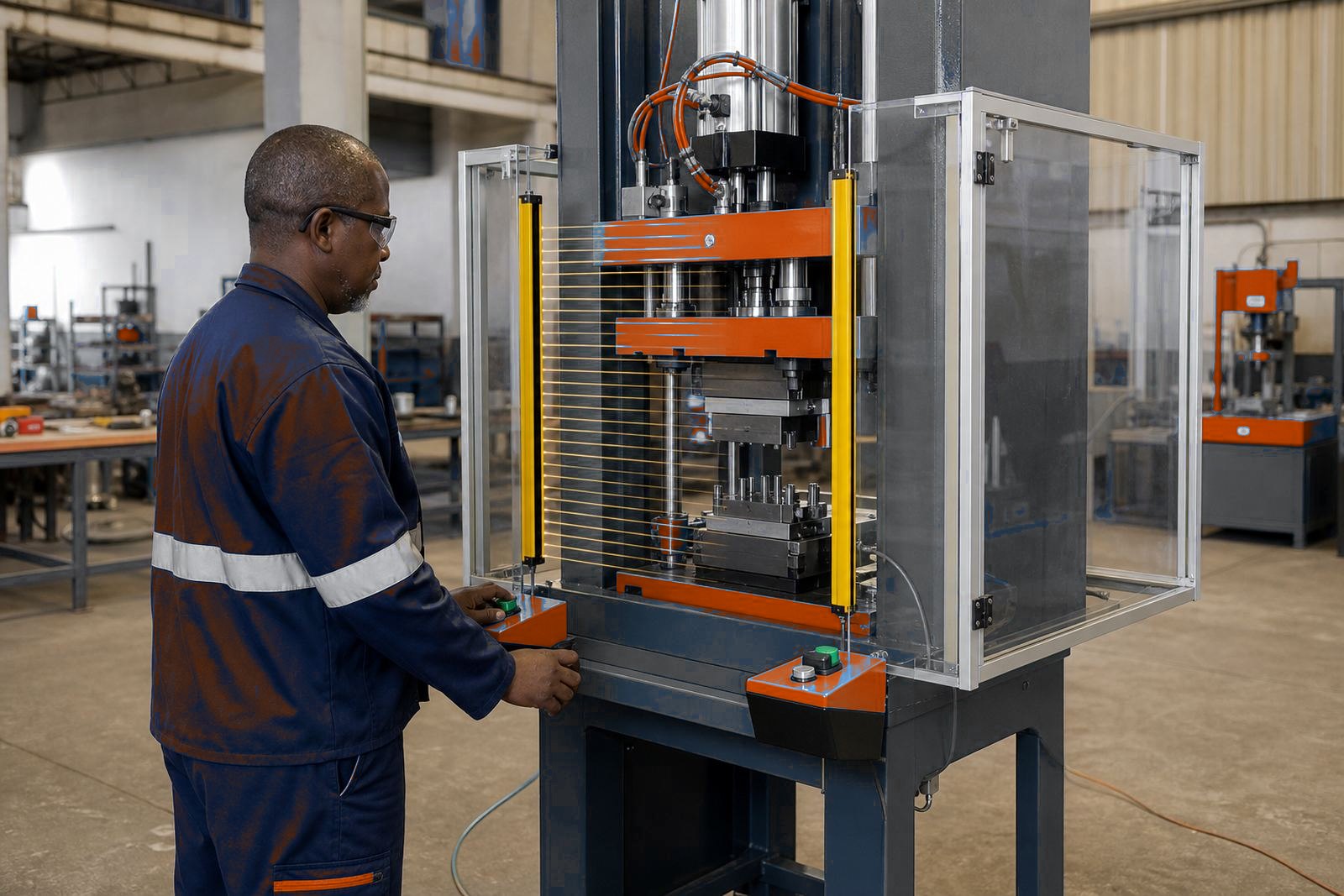
A light curtain is not fitted at random beside a press. It belongs at the point where someone can reach into the danger area while the ram is moving, especially on multi-station presses with fixed tooling, transfer trays or hand load positions. The beam array should cover the opening from one side of the cell to the other, with the height set so a hand or forearm breaks the field before it reaches the tooling.
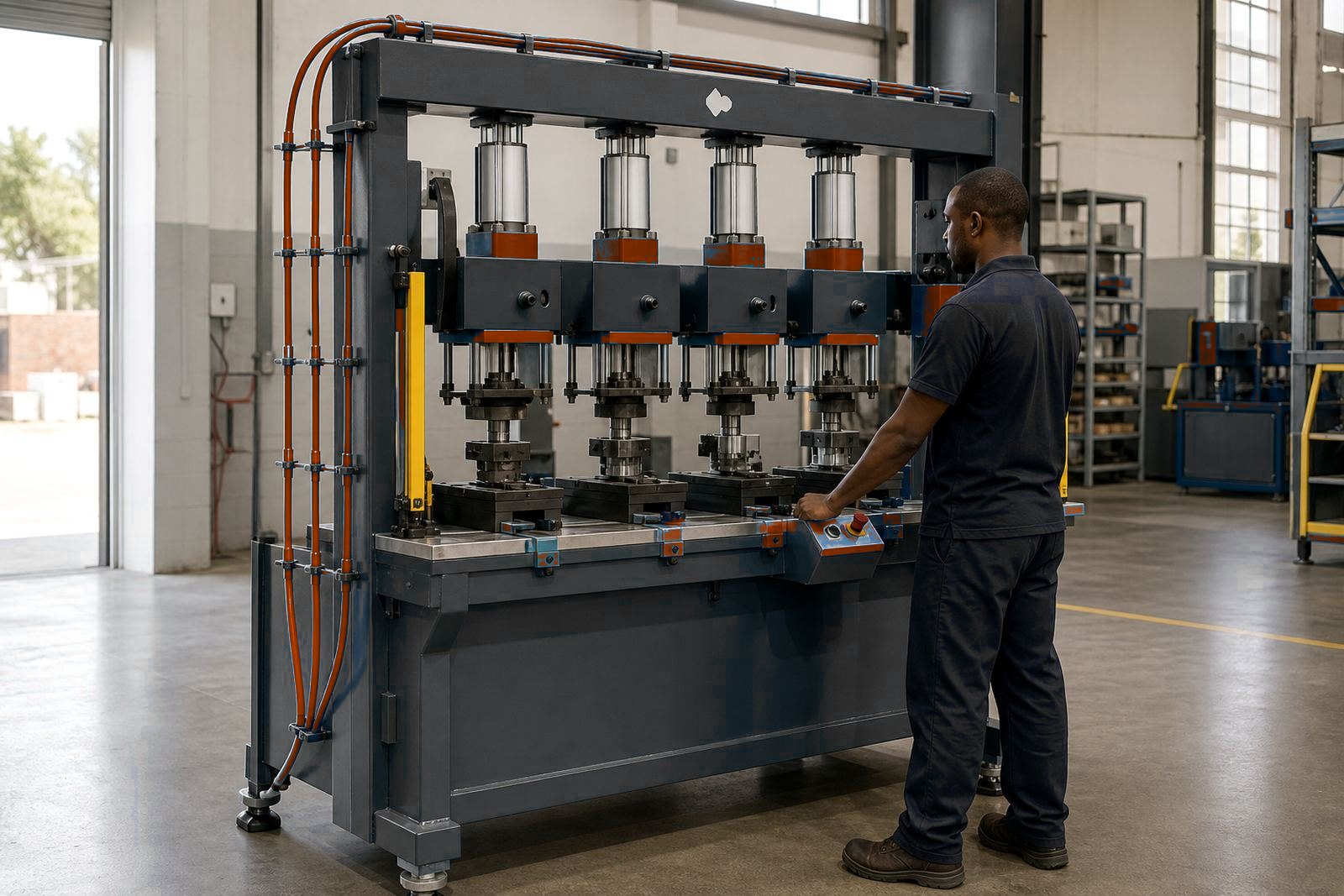
On a two-handed press the curtain often works with the control circuit, not instead of it. The operator still starts the cycle with both hands on the controls, and the curtain protects the loading point once parts are being placed or removed. That matters on lines where one station is crimping and the next is riveting or staking, because each position can create its own access risk.
In practice, the curtain must suit the press frame, the tool stack and the stroke. If the stroke is short and the ram works close to the loading point, the safety field needs tighter placement. If the press has deeper reach or a shuttle fixture, the beam position has to match the true access path, not only the open front of the machine.
What changes when the cell is multi-station
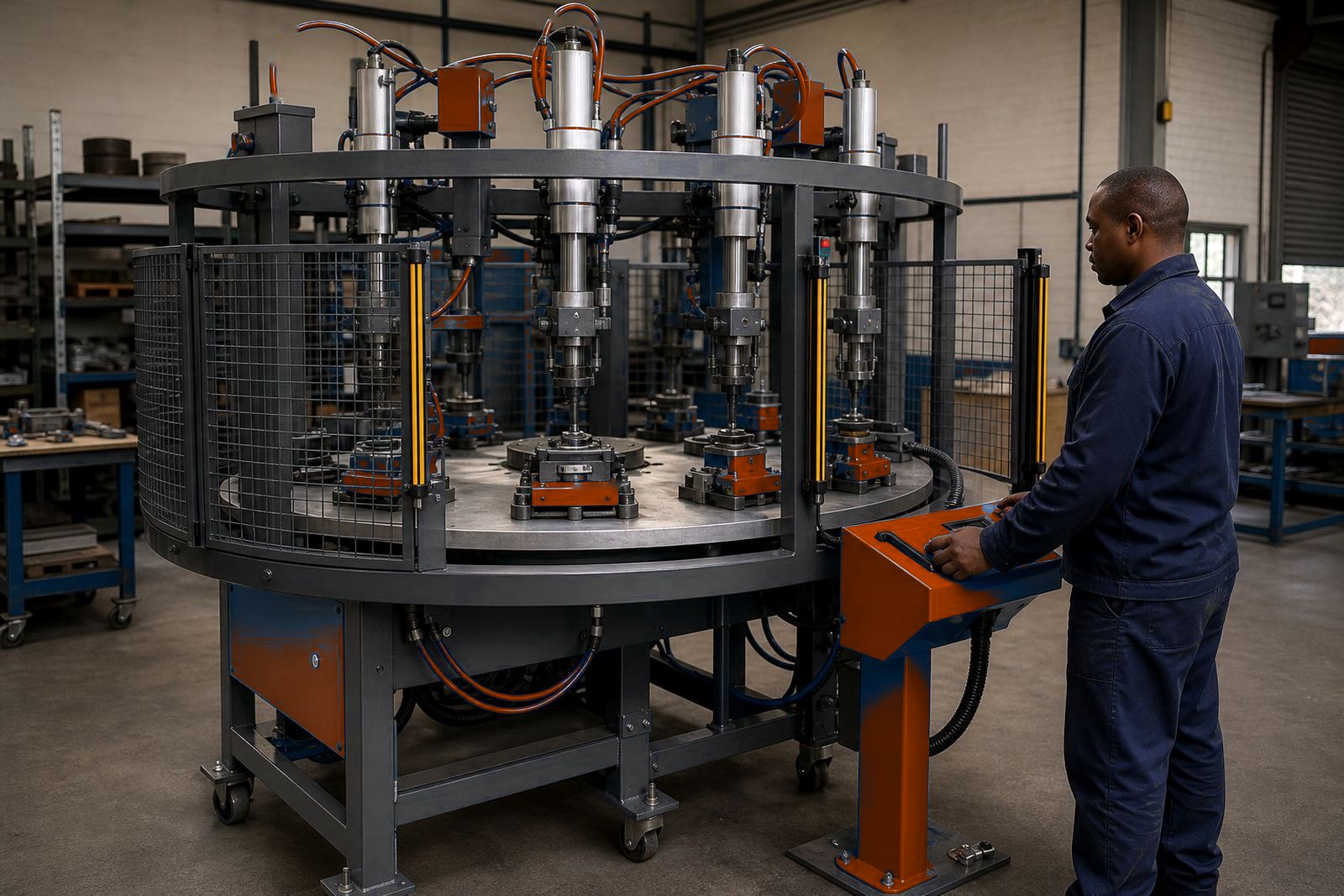
Multi-station pneumatic presses behave differently from single-station units. A press line can hold several parts at once, and operators may move between stations to load, inspect or clear finished pieces. That creates more than one point of contact with the moving area, so the guarding plan has to look at the full cycle not only the first station.
- Each station needs a clear loading zone with defined reach limits
- Tooling changes should not leave gaps where fingers can enter
- Transfer paths must stay visible so the operator does not lean in too far
- Reset and fault-clearing points need the same protection as normal running
On a press used for pack sealing, the loading point may look less aggressive than a metal forming job, but the risk is still there. Fingers can be caught at the seal line, trapped by the closing motion or struck by a descending plate. A curtain gives a visible line that tells the operator where the safe working edge begins.
The real value is stopping access before contact
The purpose of the light curtain is not to make the press feel softer. It is there to prevent the operator from reaching into the danger area while the ram is active. That is why the sensing field, stopping distance and machine speed must be checked together. If the beam is too close to the tool face, the stop may come too late. If it is too far out, the operator loses useful working space and starts working around the protection.
Good installation starts with the actual cycle. Air pressure, stroke length and ram speed all affect the stopping distance on a pneumatic press. A longer stroke or a faster descent changes how far the press moves after the beam is interrupted. The curtain has to be paired with the control logic so that a beam break sends the machine to a safe stop, and does not allow a restart while the area is still open.
This is where guarding and controls meet. Two-hand controls reduce the chance of a hand being inside the tool at start-up, while the curtain protects the loading and unloading phase. Used together, they give a tighter process around assembly work, crimping heads, riveting dies and staking tools.
Tooling, fixtures and the opening around the job
Light curtains only work properly when the tooling layout is thought through at the same time. A fixture that forces a worker to twist or stretch across the press invites shortcuts. A better setup brings the part to the natural loading position, with guides, stops and locators that keep hands away from the closing area.
Our workshop usually looks at these points together:
- Tool height relative to the operator’s hands
- Part presentation and hold-down method
- Stroke setting and end-of-travel position
- Whether the press needs fixed guarding or interlocked access panels
- How tool changes are done without defeating the safety field
Where a job needs frequent tooling changes, the curtain must still cover the exposed opening during setup and production. A loose handover between the tool room and the line is where mistakes often show up. That is why the guarding plan should match the actual daily work, not only the drawing on paper.
A Johannesburg loading point after a few hot weeks
At a plant in Isando or nearby Boksburg, the air around a press cell can be warm, dusty and busy with movement. Operators wear gloves for handling sharp or oily parts, and the line may carry steady production through the day. In that setting, a light curtain is useful because it gives a clean visual boundary without forcing people to fight with solid barriers for every load.
On one local style of job, a pneumatic press was being used for small assembly parts that had to be seated, then crimped in sequence. The team had two stations close together, with a hand load point on the front side and a secondary check position on the return side. The curtain was placed so the operator could feed parts safely, yet any entry into the ram zone would stop the cycle before the tooling closed.
That kind of arrangement is common in South African factories where floor space is tight and production cannot waste metres on oversized cages. A well-set curtain does not take up much room, but it does need proper commissioning, straight alignment and a clean cable run so the beam stays reliable in day-to-day work.
Commissioning and operator habits that keep the curtain useful
Even a well-set light curtain can be put at risk by poor installation or setup. Alignment has to be checked, the mounting brackets need to stay firm and the sensing field must remain clear of brackets, swarf, packing wrap or stray tooling. If the machine vibrates or the fixture shifts, the beam can be disturbed and the line starts behaving unpredictably.
Operator training should cover the small things that matter:
- Where to stand while loading and unloading
- How to clear a stopped cycle without reaching into the die area
- When a curtain block means a genuine hazard, not a nuisance
- Why bypassing protection is never part of normal running
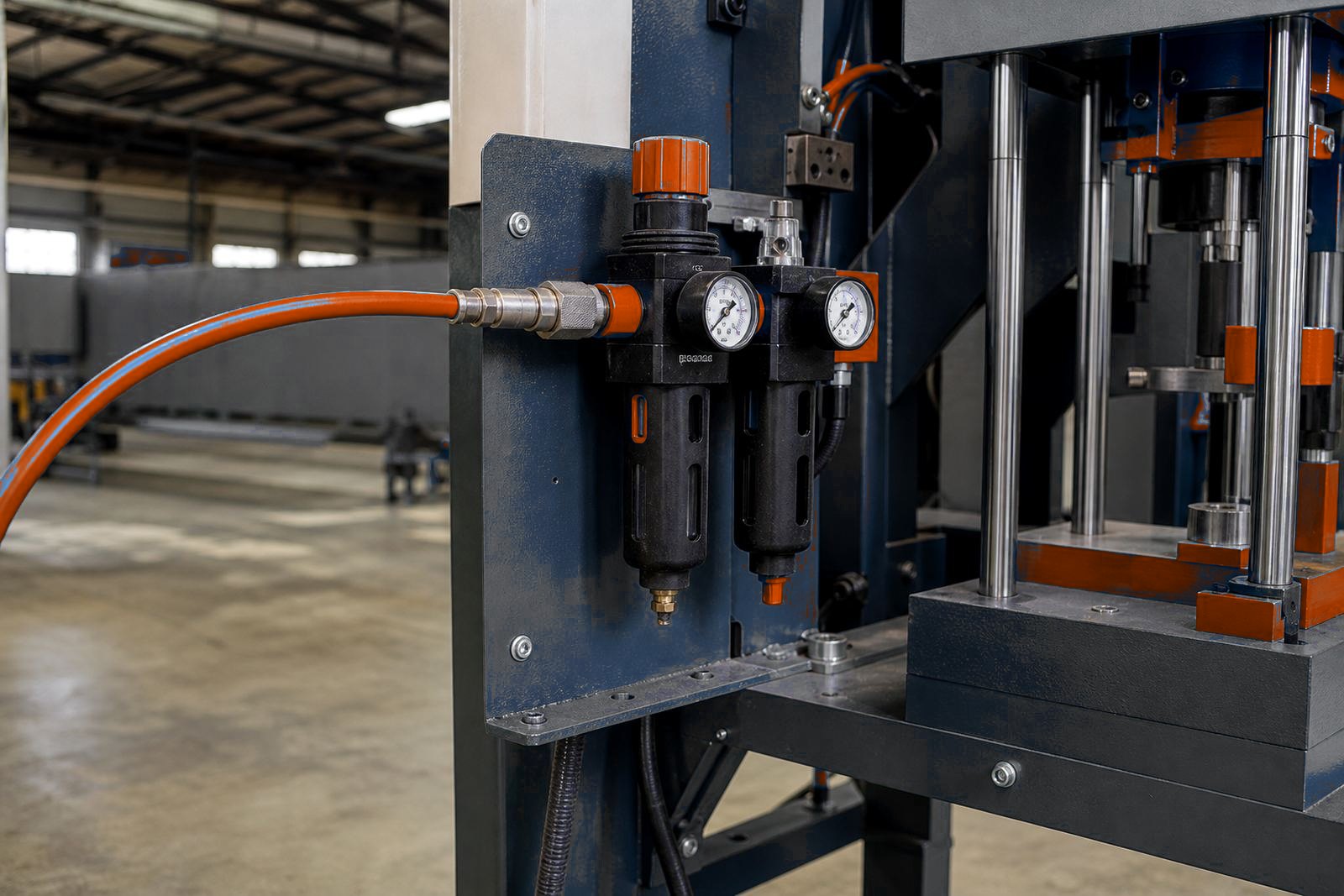
In practice, a light curtain is most useful when people treat it as part of the machine. A clear rule for loading, a proper air line setup and a stable stroke setting all help the safety system work the way it should. That is the difference between a cell that merely looks guarded and one that actually protects the hands doing the job.