Exhaust noise starts at the cylinder, not the floor
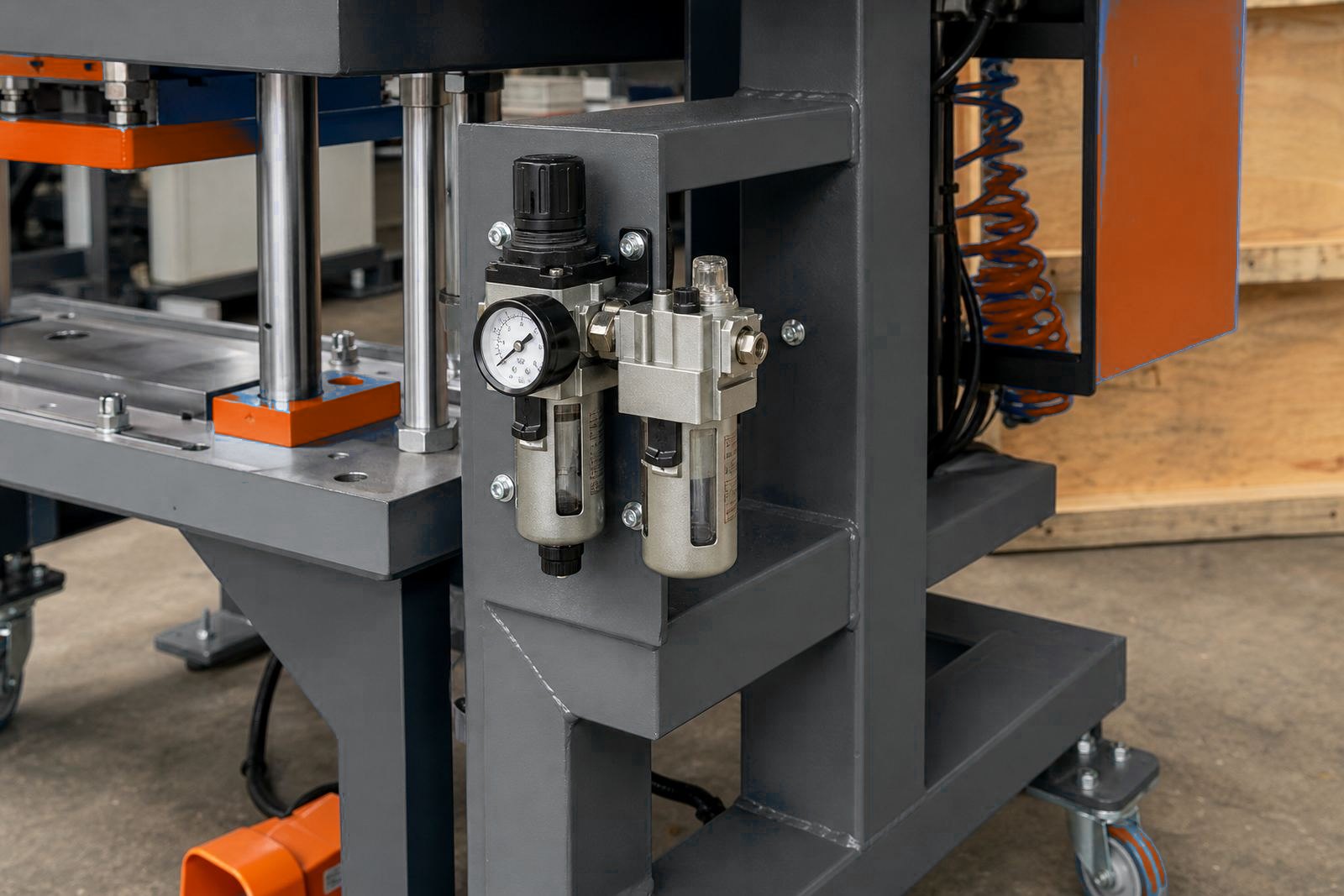
A pneumatic press makes its noise in short bursts, and the air release at the end of stroke is often the sharpest part. A hiss alone does not explain what is happening. If the exhaust vents straight into open air, the noise can bounce off walls, steel guards and nearby benches. In a workshop with several stations running close together, that reflection matters.
Stroke speed also changes the sound. A fast return on a short stroke can sound harsher than a slower press cycle, even when the force is the same. Where the press is used for crimping, riveting or staking, the movement is usually repetitive and the sound pattern becomes familiar to the team. That is useful, because any change in the exhaust note can flag a valve issue, a seal problem or a restriction in the air line.
Where the air goes after the press opens
Release air should be planned with the same care as the tooling path. A direct exhaust can blow loose dust, paper scraps or light offcuts across the station. In pack sealing work, that blast can shift sleeves, labels or small packs that are waiting on the table. In assembly work, it can disturb jigs or stacked components.
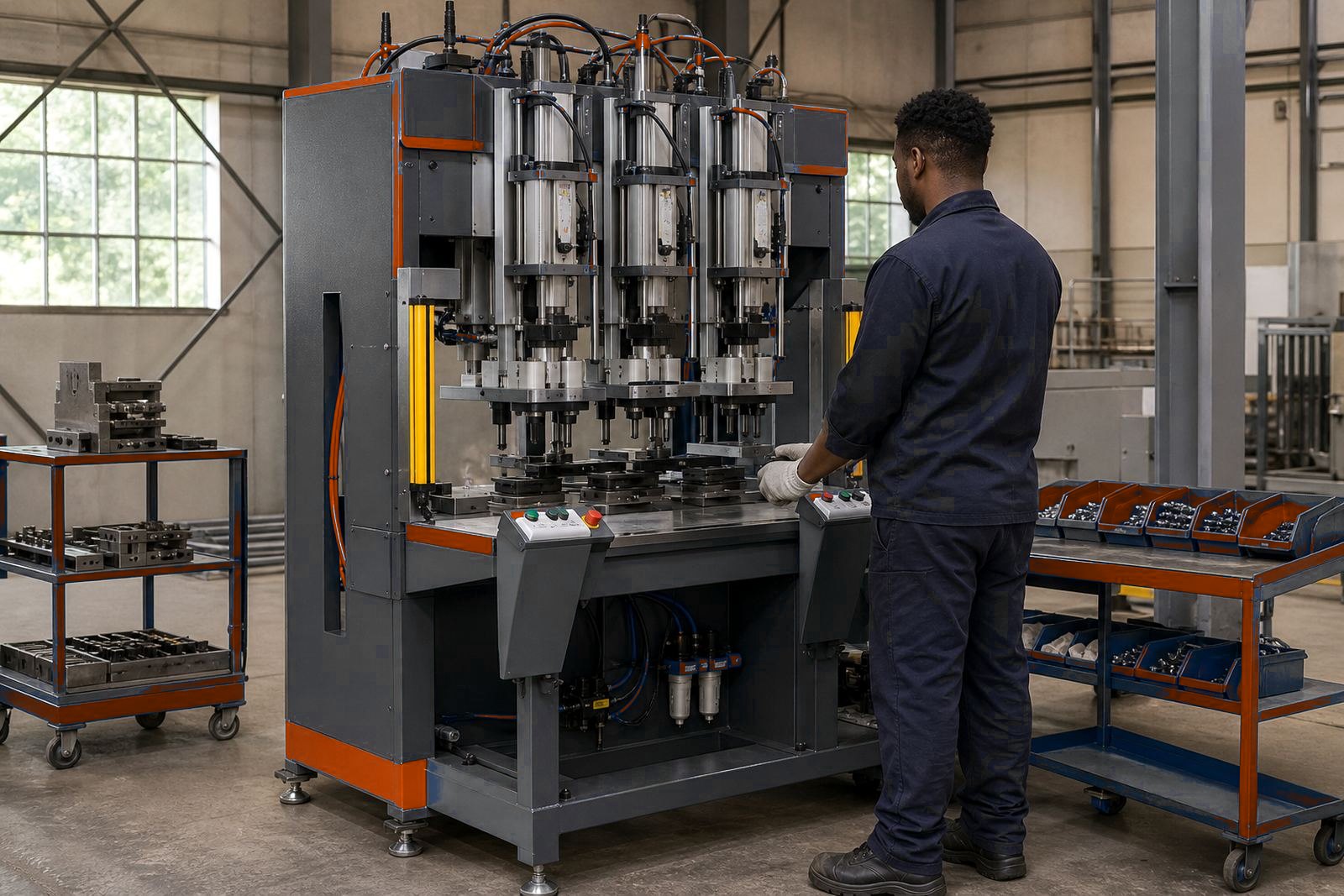
Good layout keeps exhaust away from the operator face, the two-hand control area and the point where hands return to load the next part. On some stations a simple muffled exhaust path is enough. On others, the better answer is to route the release so the air dissipates beside the frame instead of into the work zone. That small change helps with noise, debris and operator comfort.
- Keep exhaust away from the loading side of the press
- Do not aim the release toward loose components or paper packs
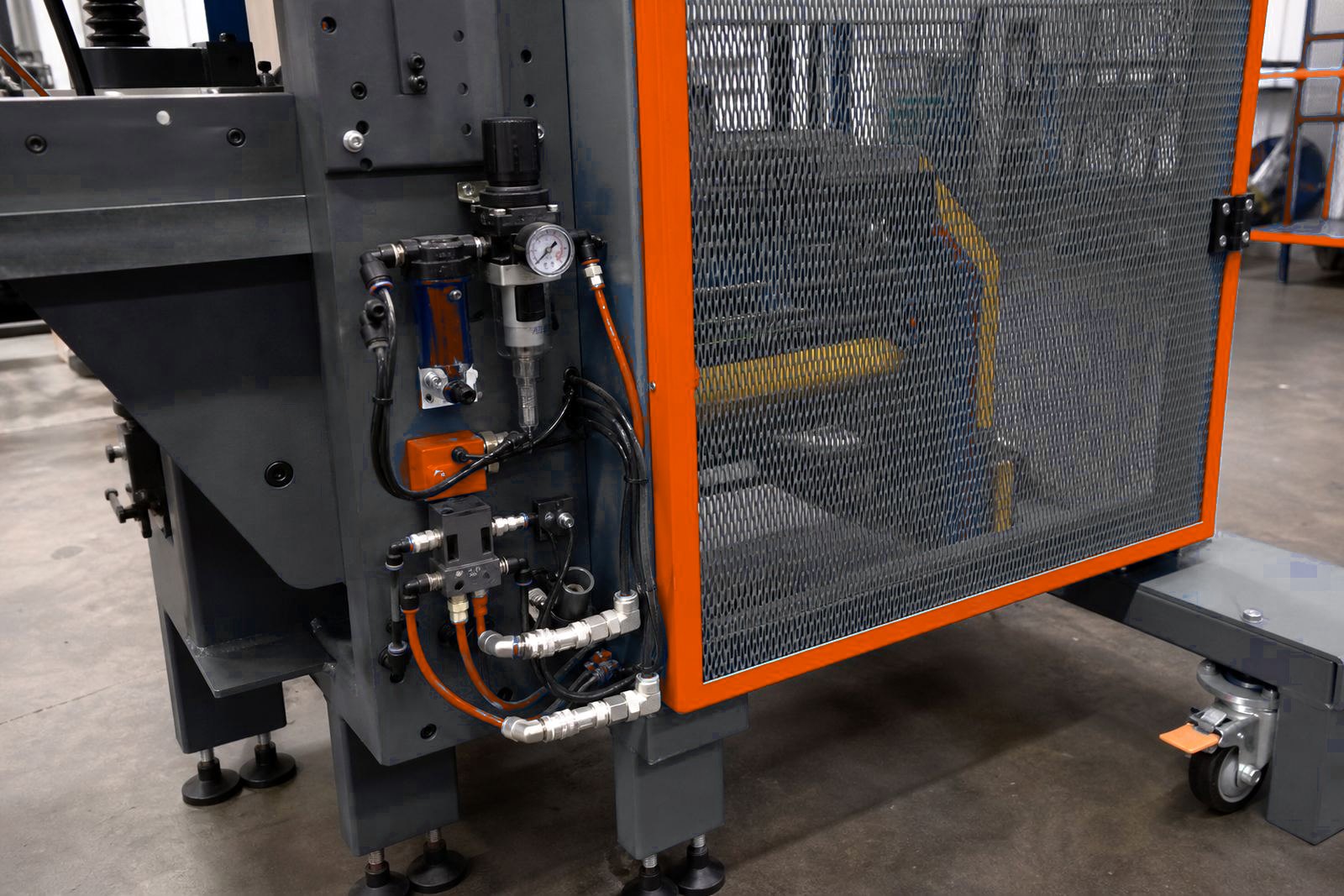
- Check that the exhaust path does not interfere with light curtains
- Keep service access open so valves and mufflers can be inspected
Two-hand controls and release timing must agree
A press station is safer when the control method, stroke timing and exhaust behaviour work together. Two-hand controls are common on manual loading stations because they keep both hands clear during the cycle start. The operator should not be fighting a sudden air blast at the same moment. If the release is too abrupt, it can startle the operator and break rhythm on a busy line.
Light curtains add another layer, but they only do their job when the surrounding air movement is sensible. Strong exhaust close to the sensing area can carry fine dust or mist through the beam path. That does not mean our press guard is faulty. It means the press layout needs cleaner airflow, a better vent position and careful setting of the stroke end point.
- Match control placement to the loading posture
- Keep the release away from the operator’s face and hands
- Test the stop position before production handover
- Check that exhaust does not disturb beam stability on guarded stations
A Isando line with pack sealing and crimping stations
In Isando, a factory running mixed pack sealing and crimping stations may have a very ordinary looking problem that keeps returning. The press works, the tooling is sound and the air pressure is correct, yet the team still complains about the station noise. In many cases, the fault lies elsewhere, not in the cylinder alone. It is the way the exhaust empties into the room.
On one line, a sealing station may sit beside a crimping press and a small inspection table. If all three stations vent in the same direction, the noise becomes layered and the air movement is messy. A better layout separates the release paths and keeps each station readable by feel and sound. In our workshop and on site work, that sort of detail can shape the final setup more than a bigger cylinder or a heavier frame.
For Gauteng factories, this matters where teams are working close together and the line changes from one product to the next. The best result is not silence. It is a station that sounds controlled, moves predictably and leaves the operator with enough room to work without extra strain.
Tooling changes alter the sound of the whole station
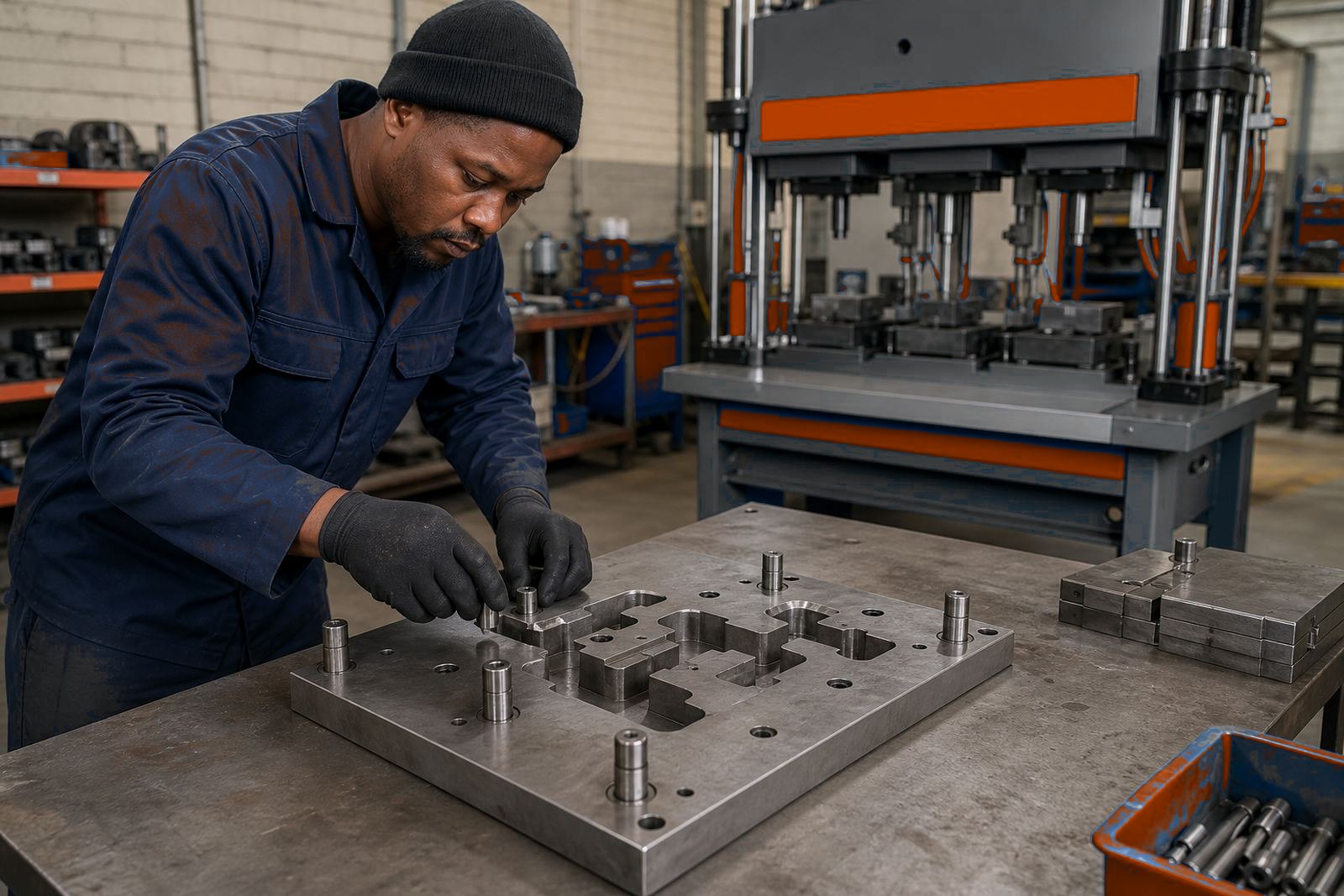
Tooling is often treated as a separate topic, but it changes the air release pattern more than people expect. A deeper die, a heavier fixture or a longer stroke may shift the point where pressure drops and the exhaust opens. That can make the station louder or softer, sharper or flatter. When the tooling changes, the press should be checked again for stroke setting, clamp position and release behaviour.
Presses used for riveting and staking are especially sensitive because the load rises and falls quickly. If the job changes from one material thickness to another, the air release may need a fresh setting to keep the cycle neat. Where a line handles more than one job, keeping notes on those settings saves time during production handover.
What our commissioning team looks at on a live station
On site, a commissioning pass is not only about making the press cycle. It is about how the station feels under use. That includes the exhaust direction, the sound at the end of stroke, the position of guards and the way the operator stands in front of the tool. A station can be technically correct and still be tiring to use if the air release is badly placed.
We also look at the small habits that build up on the floor. Operators may lean in too far if the exhaust is blowing across the load area. They may pause too long between cycles if the noise is uneven. Those are layout clues, not just operator habits. With the right set-up, the same press can feel calmer, cleaner and easier to run during a full shift.
- Check air pressure at the press station, not only at the compressor
- Check the exhaust path during full stroke and return
- Review guard clearances after tooling changes
- Train operators on the feel of a normal cycle
Clean exhaust planning helps the line hold its rhythm
Air release is one of those details that becomes obvious only after a line has been running for a while. By then the noise pattern, dust movement and hand position habits have already taken shape. Plan for them from the outset, before the press layout is locked in. That means matching the press frame, cylinder size, stroke setting, guard layout and exhaust path as one working station rather than separate parts.
For South African factories handling assembly, riveting, crimping or pack sealing, that approach keeps the work area more predictable. It also helps when several stations are clustered in one room, because the exhaust from one press should not make the next station harder to use. The goal is a line that feels controlled, with air release that does its job without creating extra noise around the operator.