Where hesitation starts at the press
Hesitation usually begins before the ram moves. An operator can be waiting on the next part, turning a bracket the wrong way, or reaching too far across a guard opening. In a multi-station pneumatic press, those small pauses add up across assembly, crimping, riveting, staking and pack sealing work.
The loading flow should match the part and the cycle, not the other way around. If the operator has to twist, step sideways or look away from the tooling window to line up a component, the station is asking for delay. On a press with two-hand controls, the person should be ready to feed, place and withdraw with very little thought between movements.
Part presentation makes the first difference
Good loading starts with how the parts arrive at the station. Trays, bins, magazines and simple pick points all change how much handling is needed. A part that lands flat, in the same orientation every time, is easier to load than one that must be turned by hand before it even reaches the tooling.
- Keep the load point at elbow height where possible.
- Present the part in the same direction every cycle.
- Use a short reach, not a deep lean.
- Leave enough finger room for gloved hands if the job requires them.
- Separate good parts, scrap and rework so the station does not get crowded.
In coastal plants around Durban or East London, humidity can make light oils and fine dust cling to packs and small metal parts, so the feed path must stay clean and easy to wipe down. That matters when the press is used for pack sealing or light assembly where a dirty surface can upset the fit.
Tooling that guides the hands instead of fighting them
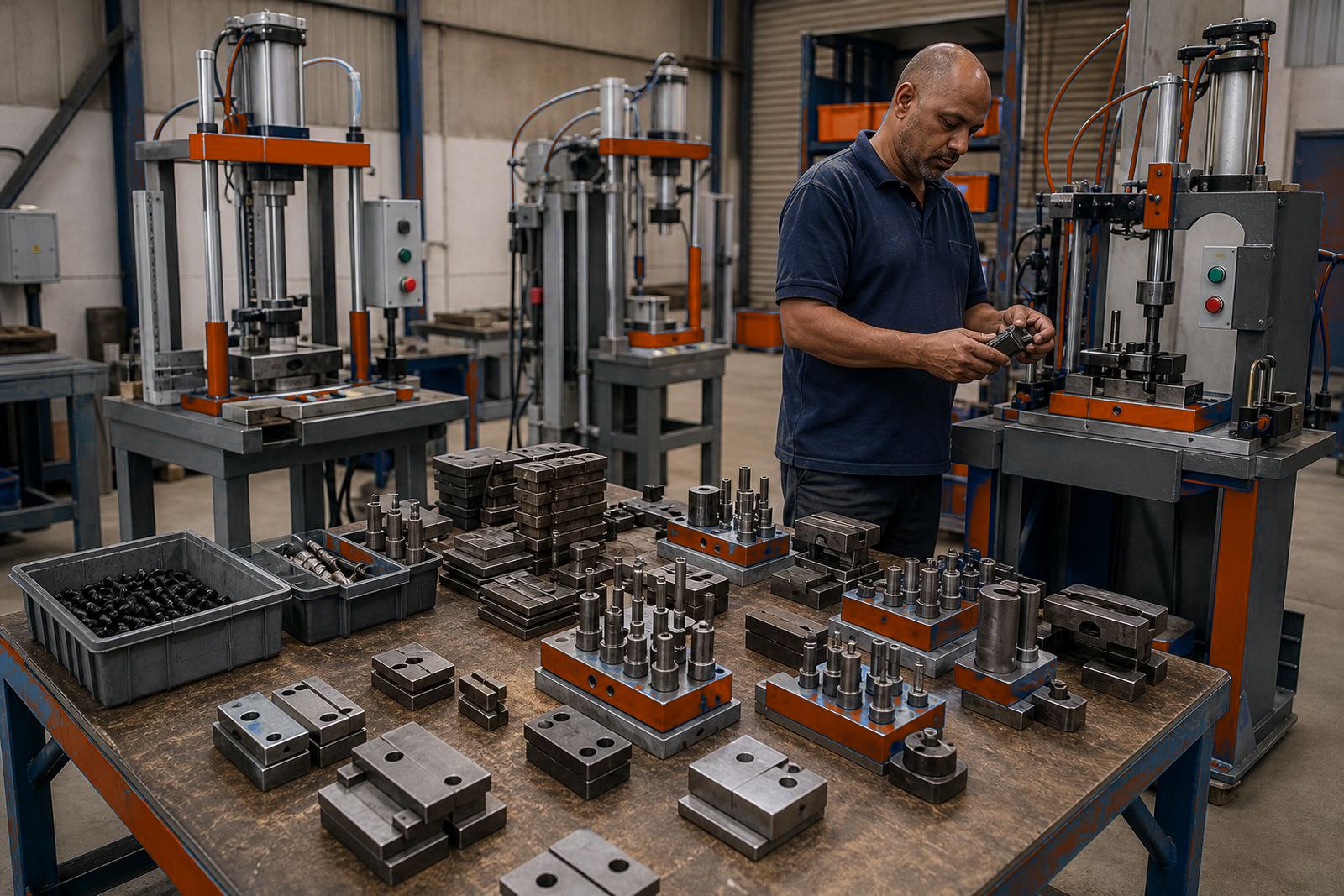
Custom tooling is not only about force. It also shapes the way the operator moves. A well-made nest, locating pin or support plate helps the part settle into position without extra searching. On crimping and riveting stations, the tooling should guide the component into a repeatable position before air pressure comes in.
Stroke setting also affects loading flow. If the ram travel is longer than the job needs, operators wait for motion that does no useful work. If the stroke is too short, they end up forcing parts into place. The best setting gives enough clearance for loading, then a controlled press action that matches the tool and the material.
For multi-station lines, each station should feel like part of one path. A load at one point, a transfer at the next and a clean exit at the end keeps the operator moving in a steady rhythm rather than starting over at each cycle.
Safety devices should fit the motion, not slow it down
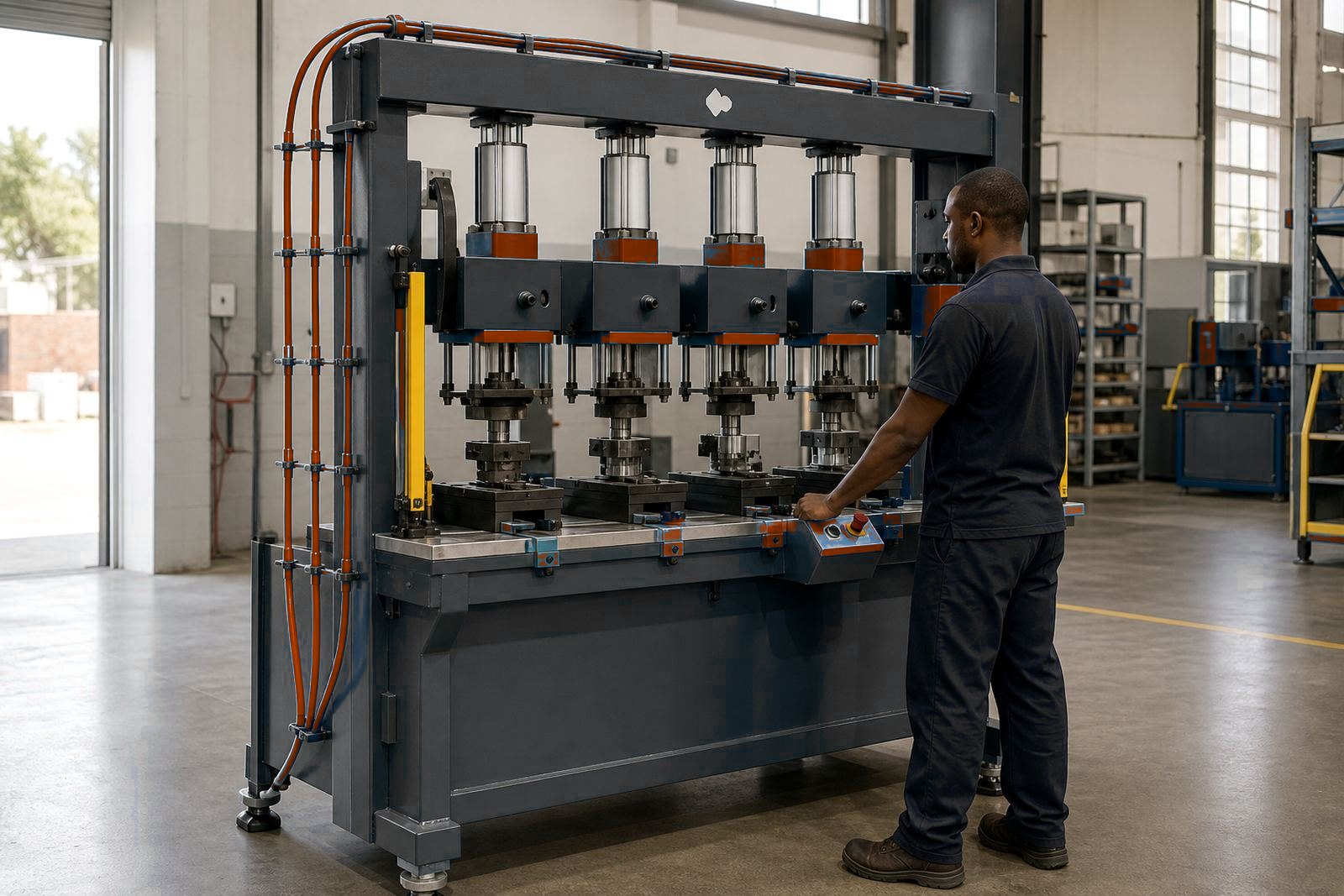
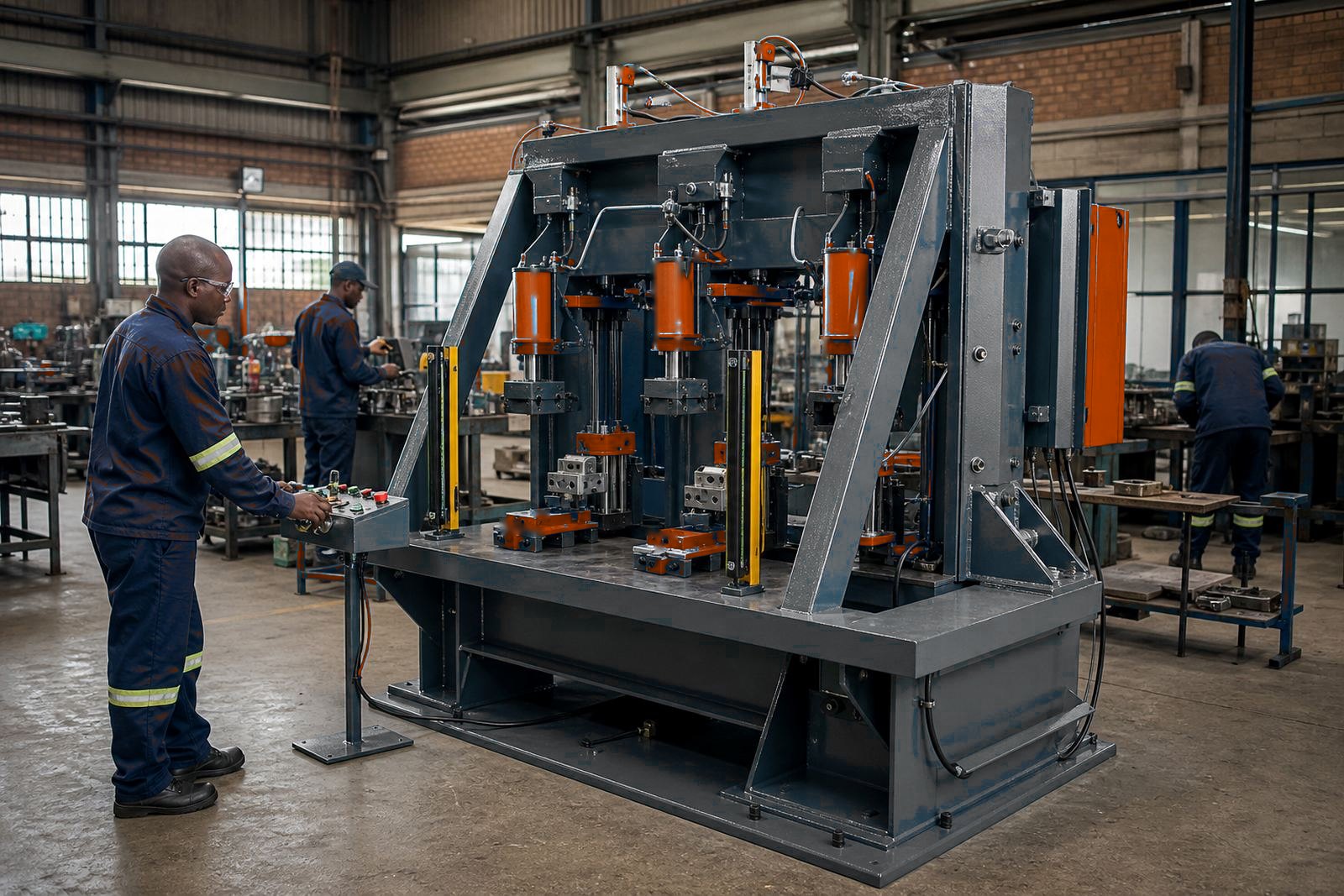
Two-hand controls, light curtains and guarding all matter, but they must suit the loading motion. A control set that is too far apart encourages stretching. A light curtain placed badly can force awkward reaches or repeated stops. The aim is to protect fingers and hands while keeping the load path open and sensible.
- Set the two-hand buttons so both hands stay in a natural working arc.
- Place the light curtain where it protects the danger zone, not the loading habit.
- Make sure guarding leaves enough room for part entry and exit.
- Test the stop and reset routine with real operators, not only the installer.
In a factory floor in Isando, a guard door that opens the wrong way or a beam that blocks the wrist angle can create more delay than the cycle itself. That is why guarding needs to be designed with the loading flow in mind from the start.
What a clean unloading path looks like
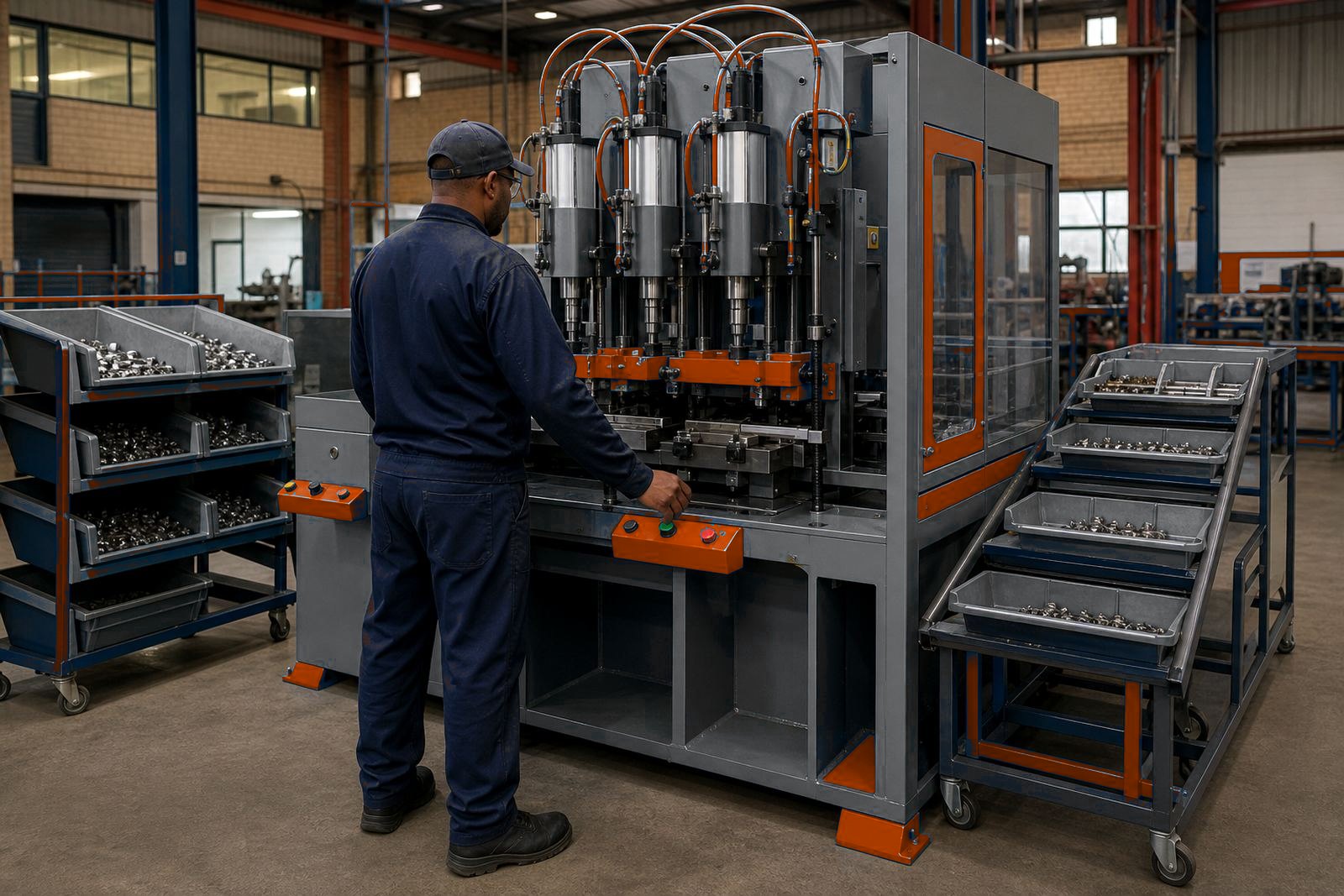
Unloading often gets less attention than loading, but it can make or break the station. If the finished part lands in a crowded tray or has to be lifted over the next feed point, the operator slows down. The removal path should be short, obvious and safe to repeat all day.
Where parts are hot, sharp or delicate, the unload position may need a simple slide, chute or support shelf. That reduces handling strain and keeps the next blank clear. For pack sealing jobs, the finished pack should leave the tooling in one motion, with no need to tug at the seal edge or hold the pack in place longer than needed.
When a line is set up well, the operator finishes one motion and starts the next without hunting for where the part should go. That is the difference between a press that feels crowded and a press that feels organised.
Kempton Park operator loading flow
A small production line in Kempton Park had a common problem. The press was doing the job, but operators were pausing to turn each part before loading, then stepping left to clear finished pieces from the same side. The tooling was sound, the air supply was adequate and the stroke was correct, yet the station still felt slow.
By changing the tray position, adjusting the nest angle and moving the finished-part drop point, the loading flow became easier to repeat. No major machine change was needed. The work simply matched the way hands move across the press face. That sort of adjustment is useful on assembly lines that handle several part sizes in one shift.
For plants in Johannesburg, Pretoria, Boksburg and further afield, this kind of layout review can make a large difference without changing the production target. The same press, with a cleaner path for the hands, is often enough to reduce the hesitation that builds up during a run.
Commissioning should prove the human side of the cycle
Press commissioning is not only about pressure, stroke and guarding. It should also test the human side of the cycle. The operator has to load, clear, start and remove parts in a rhythm that feels natural on the floor. If training and handover ignore that, the line may work on paper and stumble in production.
- Watch the first loading movements with the final tooling fitted.
- Adjust the station height if the operator reaches too high or too low.
- Check whether the next part is easy to grab without crossing hands.
- Confirm that the load and unload direction matches the line layout.
- Train the team on tool changes, hand position and safe reset steps.
At MultiPress, that forms part of the work from initial setup right through to production handover. A press should suit the operator, the part and the factory floor, not just the drawing.