What a regulator is doing on a press line
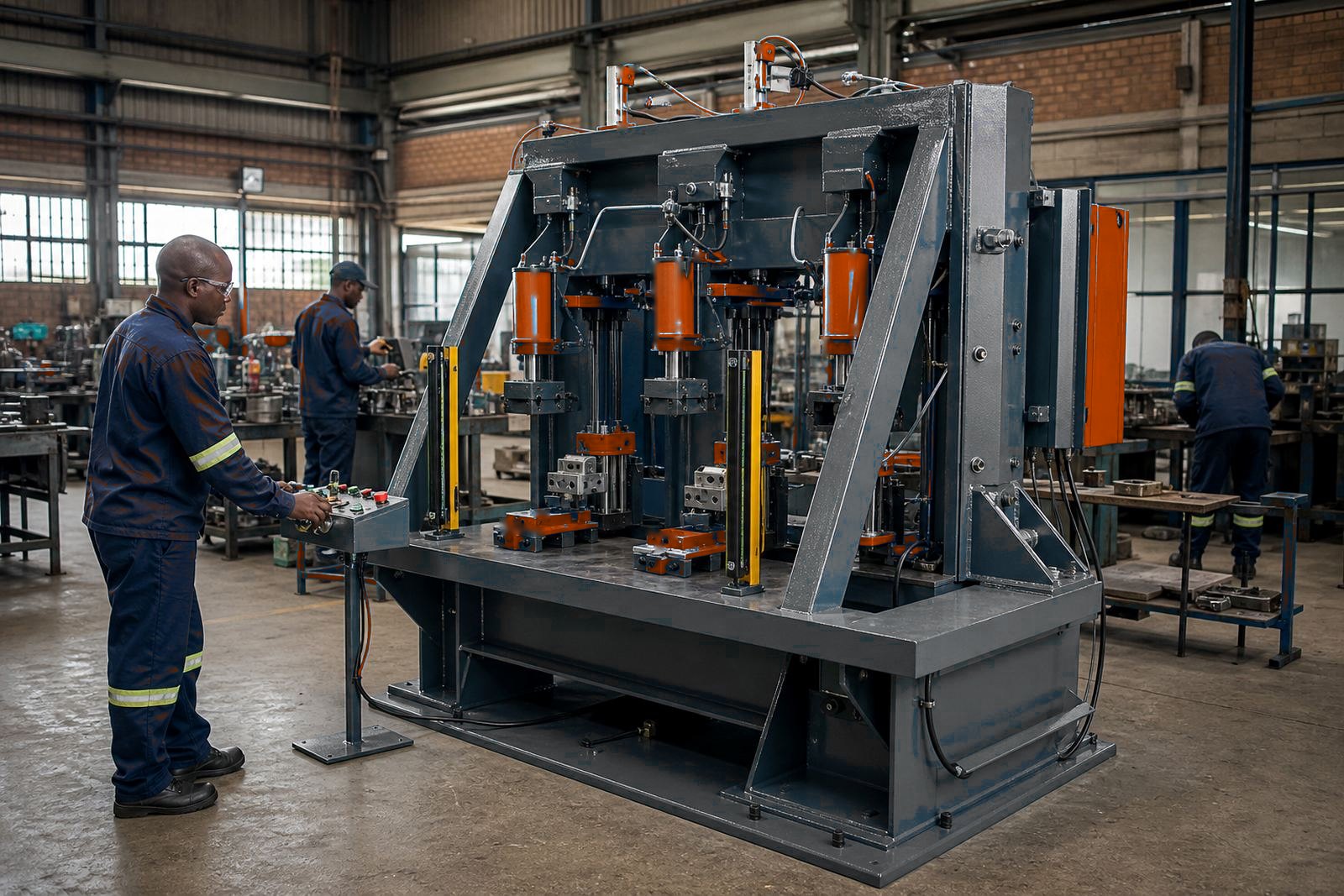
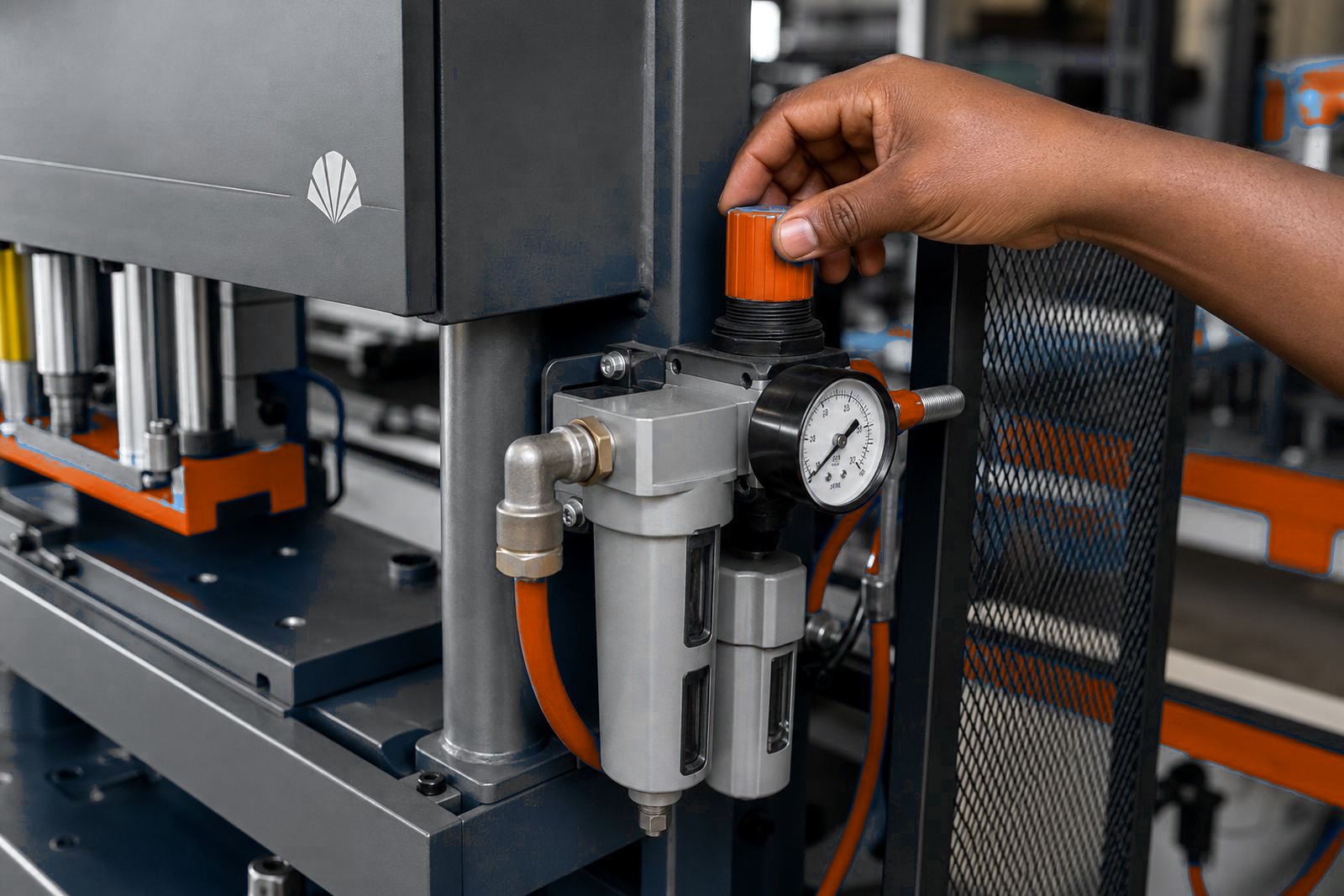
A regulator sits in the air line and keeps the press at the pressure the job calls for. On a multi-station machine that may mean one setting for crimping, another for staking, and a lighter setting for pack sealing or fixture work. When the regulator drifts, the stroke feels different and the tooling starts to do uneven work.
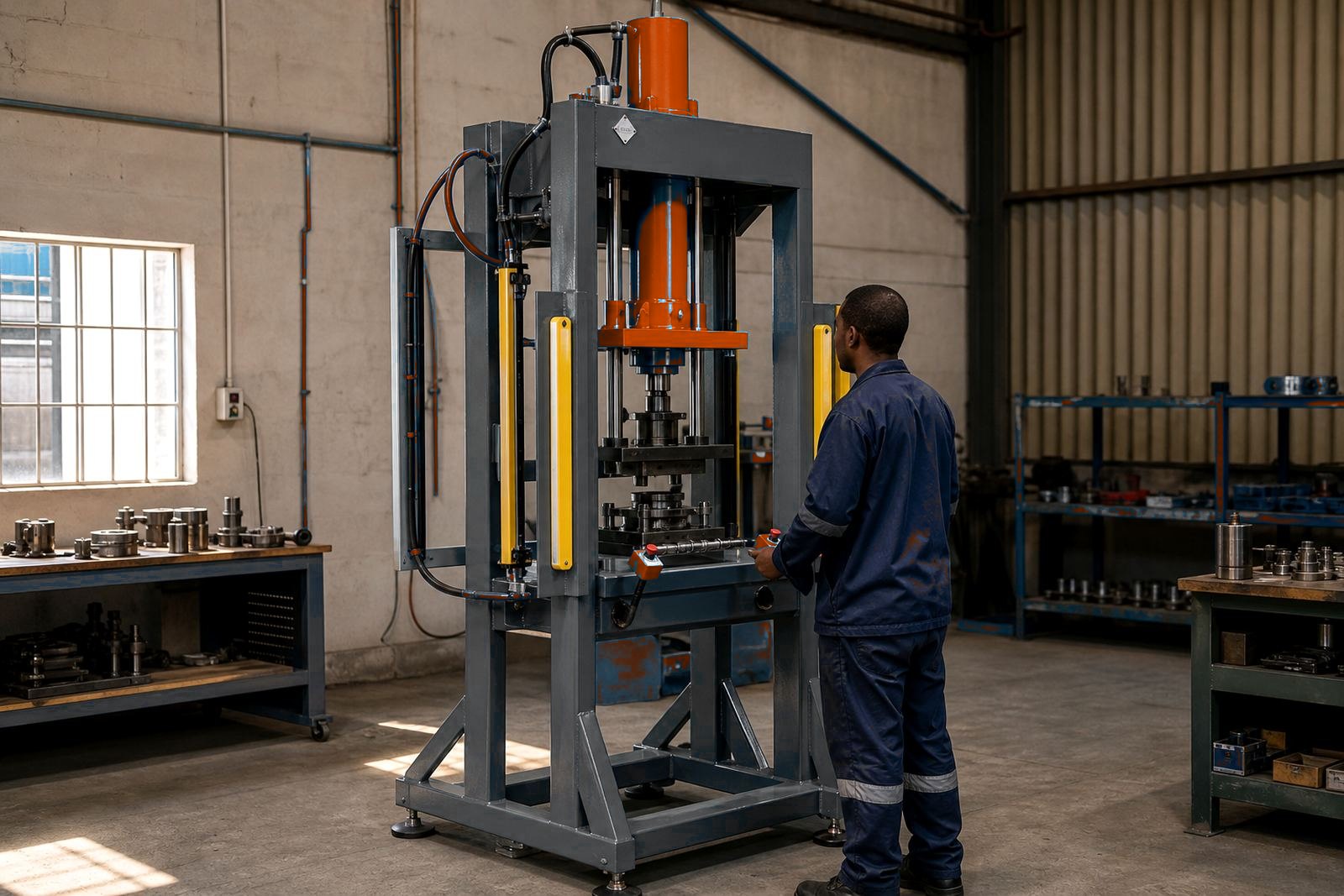
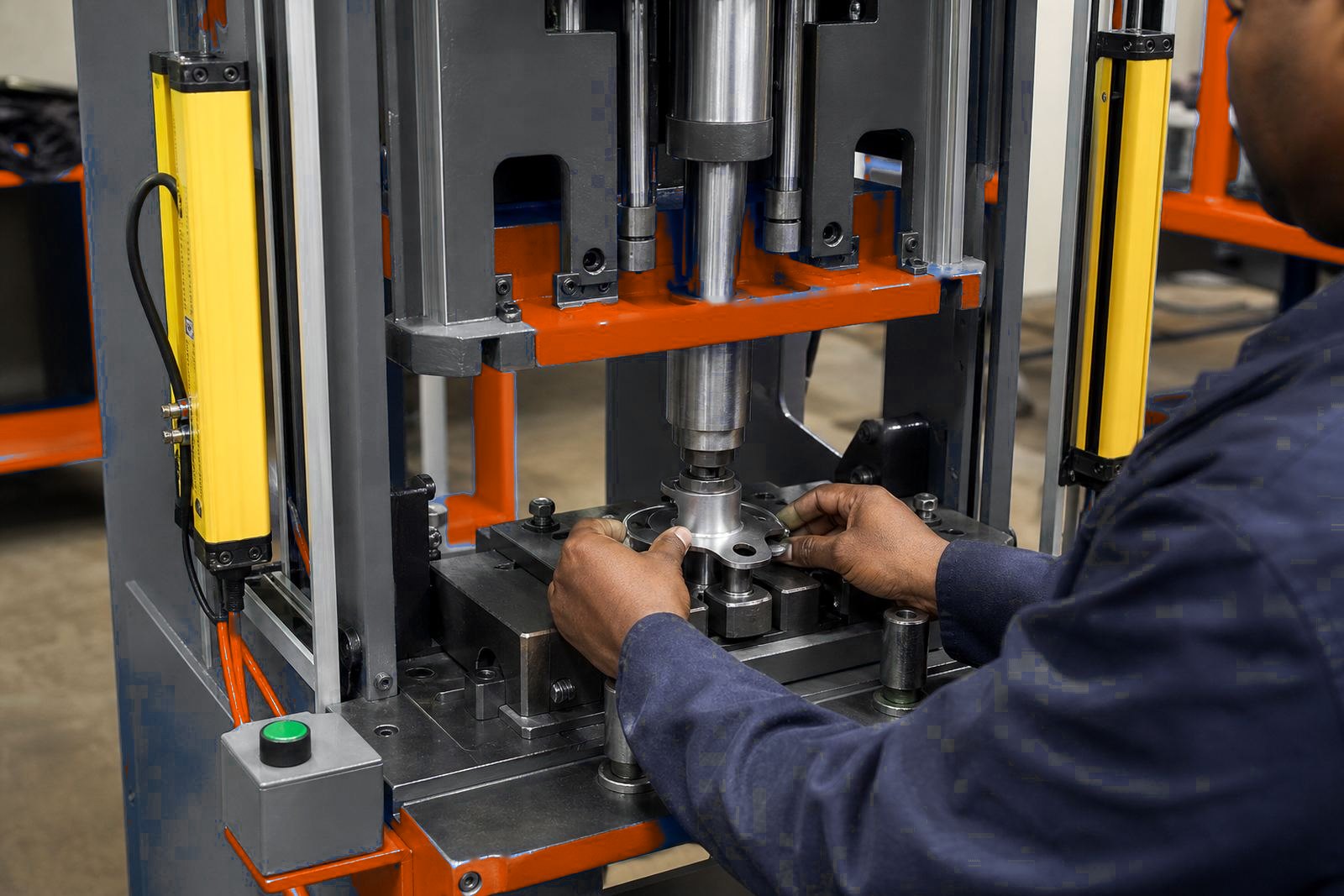
In a factory, that drift is not always dramatic. Sometimes the gauge looks close enough, yet the press closes a little harder on one station and a little softer on the next. That is where parts start showing shallow crimps, loose rivets or marks on the component face. On a line with two-hand controls and light curtains, a stable regulator still matters because the operator expects each cycle to behave the same way.
The signs that the regulator needs attention
Most regulator issues show up in the press room before they become a full stoppage. The gauge may bounce, the pressure may creep after setup, or the machine may sound different when the cylinder comes down. In humid coastal conditions, moisture in the air line can make the regulator behave badly too, especially where filter bowls are not drained often enough.
- The pressure needle moves around during a cycle.
- Stations on the same press give different results.
- The cylinder feels slow on the downstroke or return.
- Tool marks appear where the setting used to be clean.
- Operators keep touching the control knob to chase the right force.
Those are not glamorous faults, but they affect output. A good regulator should hold a repeatable setting while the line runs, even when several operators use the same machine over a shift change.
How our team checks the pressure path
A proper check starts with the air supply and works forward to the station. We look at the regulator body, gauge, fittings, filter condition and the line feeding the cylinder. If the machine has custom tooling, we also check whether the force setting suits the tool face and the material thickness. A tight tool with the wrong pressure can be just as troublesome as a loose one.
The press must be isolated safely before any adjustment. After that, the regulator can be assessed for drift, leakage and repeatability. Where needed, the stroke setting is checked too, because a regulator that is technically correct may still leave the ram stopping short of a proper crimp or closing too hard on a delicate assembly.
- Confirm the air line pressure at the entry point.
- Check the regulator gauge against the machine behaviour.
- Inspect for leaks at fittings, seals and bowls.
- Test the setting across a full press cycle.
- Make sure the final pressure matches the tooling load.
Why stable pressure matters for tool life
Tooling wears differently when pressure swings. On a riveting station the force may peen the head too hard one hour and too soft the next. On a staking job the formed feature can wander, which leads to scrap and extra inspection. Even pack sealing stations are affected, because inconsistent air pressure can leave one seal neat and the next weak.
Stable pressure also protects guarding and control equipment from unnecessary strain. A press that hits harder than expected can stress pins, bushes and guides. It can also make operators overcompensate, which leads to slow setup habits and repeated adjustments. The point is not only to protect the cylinder, but to keep the whole line predictable enough for production handover and shift change work.
Isando mixed line regulator check
On a mixed assembly line in Isando, one station was crimping a metal fitting while the next station handled light riveting. The operators kept noticing that the first station looked fine at the start of the shift, then the crimp depth varied by mid-morning. The regulator was not failed, but it was drifting enough to upset the tooling setting. A filter bowl with moisture and a loose connection on the line made the gauge lie just enough to confuse the setup.
Once the regulator, line fittings and stroke setting were brought into line, the press settled down again. The same tooling produced a cleaner result and the operators stopped chasing the knob. That sort of fault is common in a busy factory near Kempton Park or Boksburg, where a machine may sit in service for long stretches and only get a proper check when parts start looking wrong.
What to keep on a simple check sheet
Regulator checks work best when they are written down in the same way every time. A short check sheet is enough if it is used properly and not left in a drawer. The sheet should suit the press, the station count and the kind of work being done, whether that is assembly, rivetting, crimping or sealing.
- Working pressure setpoint for each station.
- Gauge reading at the start of the shift.
- Any drift seen after warm-up.
- Condition of filter, bowl and drain.
- Notes on air line leaks or loose fittings.
- Tooling change made during the shift.
- Operator initials and handover note.
File the job record with the press so the next operator can see what was changed on the machine. It also gives the workshop a proper trail when the machine starts acting differently from one day to the next.
When a regulator check becomes a full press service
If the same fault keeps returning, the regulator may be only part of the problem. The air line may have a hidden leak, the cylinder may need attention, or the control set-up may be off. On multi-station machines, one weak station can hide behind another station that still seems fine. That is why regulator work should sit alongside guarding checks, two hand controls, tooling changes and commissioning notes.
For factories in Johannesburg, Pretoria, Durban, Gqeberha and East London, a pressure issue often shows up as a production issue long before anyone calls it a regulator fault. That is normal. What matters is tracing the fault in order, from air supply to tool face, instead of adjusting the knob and hoping for the best. When the pressure is stable, the press is easier to run and the finished parts stay more consistent from shift to shift.