When the job stretches past a narrow frame
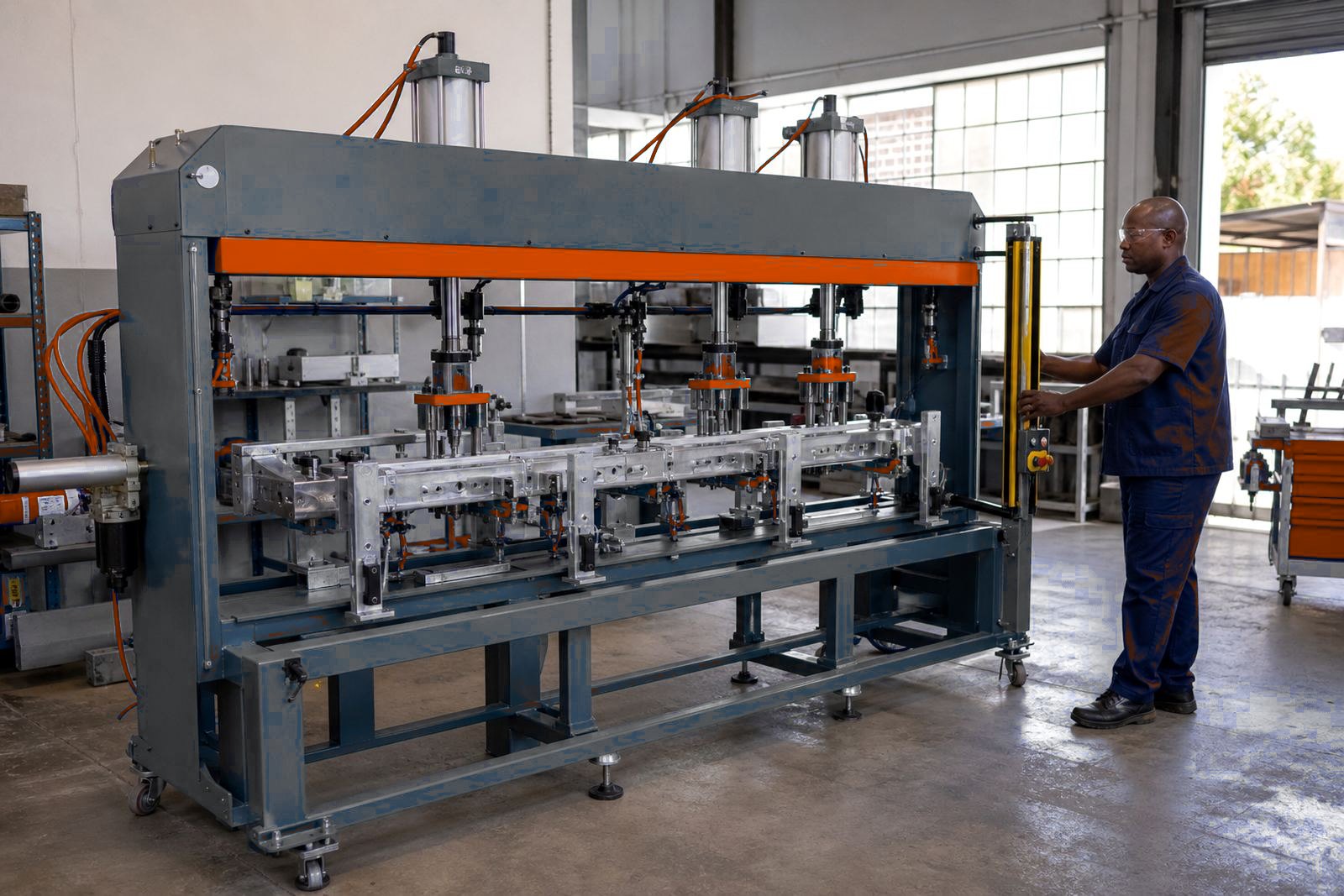
A narrow press frame can force a long part to hang over the sides, which makes loading awkward and can upset the tool alignment. A wide bed gives the operator more working room across the front face and lets the tooling sit where the job actually needs it, not where the frame happens to end.
That matters on parts with offset holes, wider pack formats, long brackets or assemblies that need support at more than one point. A well planned bed width also leaves room for guides, backstops and part locators, so the job enters square and stays square through the stroke.
Where a wide bed helps most in production
Wide bed machines are not only for bigger parts. They also help when the process needs extra clearance for jigs, multi-point fixtures or side loading from a conveyor or trolley. On a pack sealing line, for example, the seal area may be narrow but the handling frame around it can still need room for the pack, the guide rails and the operator's hands.
In assembly work the benefit is often less about size and more about access. A wide opening can make it easier to place clips, inserts, sleeves or crimps without crowding the work area. It also helps when one station must share space with a second process, such as riveting on one side and a lightly restrained hold on the other.
- Long brackets and rails that need full support
- Multi-station fixtures with side-by-side tools
- Pack sealing and trim jobs with wider handling frames
- Assembly lines where the part must sit flat before the stroke
How the tooling changes on a wider bed
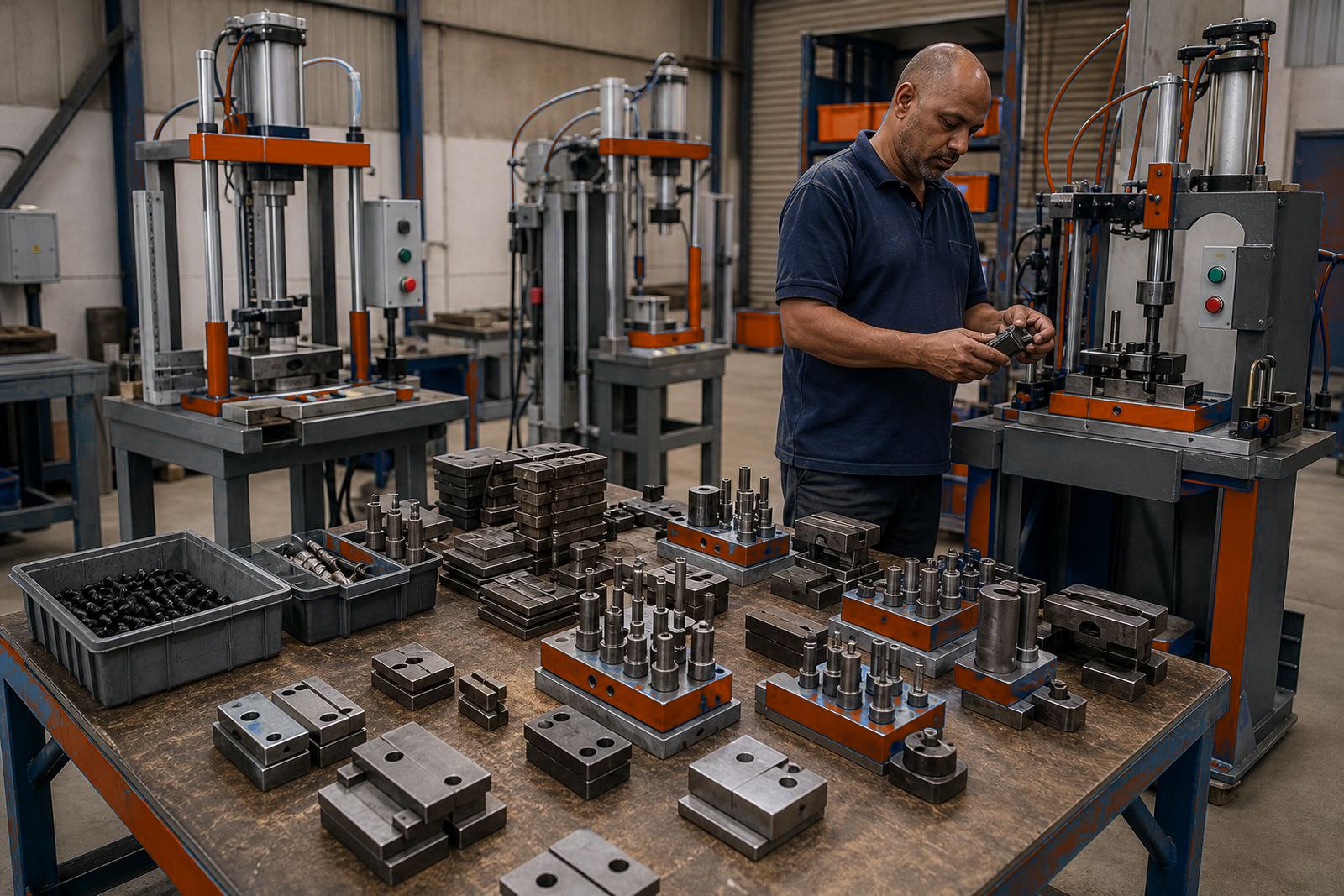
Once the bed gets wider, the tooling design has to do more of the work. The press cylinder must still come down true, but the lower fixture may need extra ribs, closer dowel support or a heavier baseplate so the load does not twist under pressure. That is where custom tooling earns its keep.
For crimping and staking, the tool faces need to meet the part at the correct angle and with the right depth. If the bed is too narrow for the component, the operator starts compensating by lifting, shifting or pressing off centre and that is where inconsistency creeps in. A proper wide bed layout lets the tool designer place stops, guides and clamps where they support the process instead of getting in the way.
- Tool faces must sit dead square to the stroke
- Fixtures often need extra side support
- Locators should allow quick loading without forcing the part
- Clamping points must not block visual checks
Air pressure, stroke and control checks that matter
With a pneumatic press, the wider frame does not change the basics of the cylinder, but it does change how carefully the stroke is set. A long stroke can be useful for tall fixtures, yet too much travel invites wasted movement and slower handling. Too little stroke and the tool never reaches full engagement.
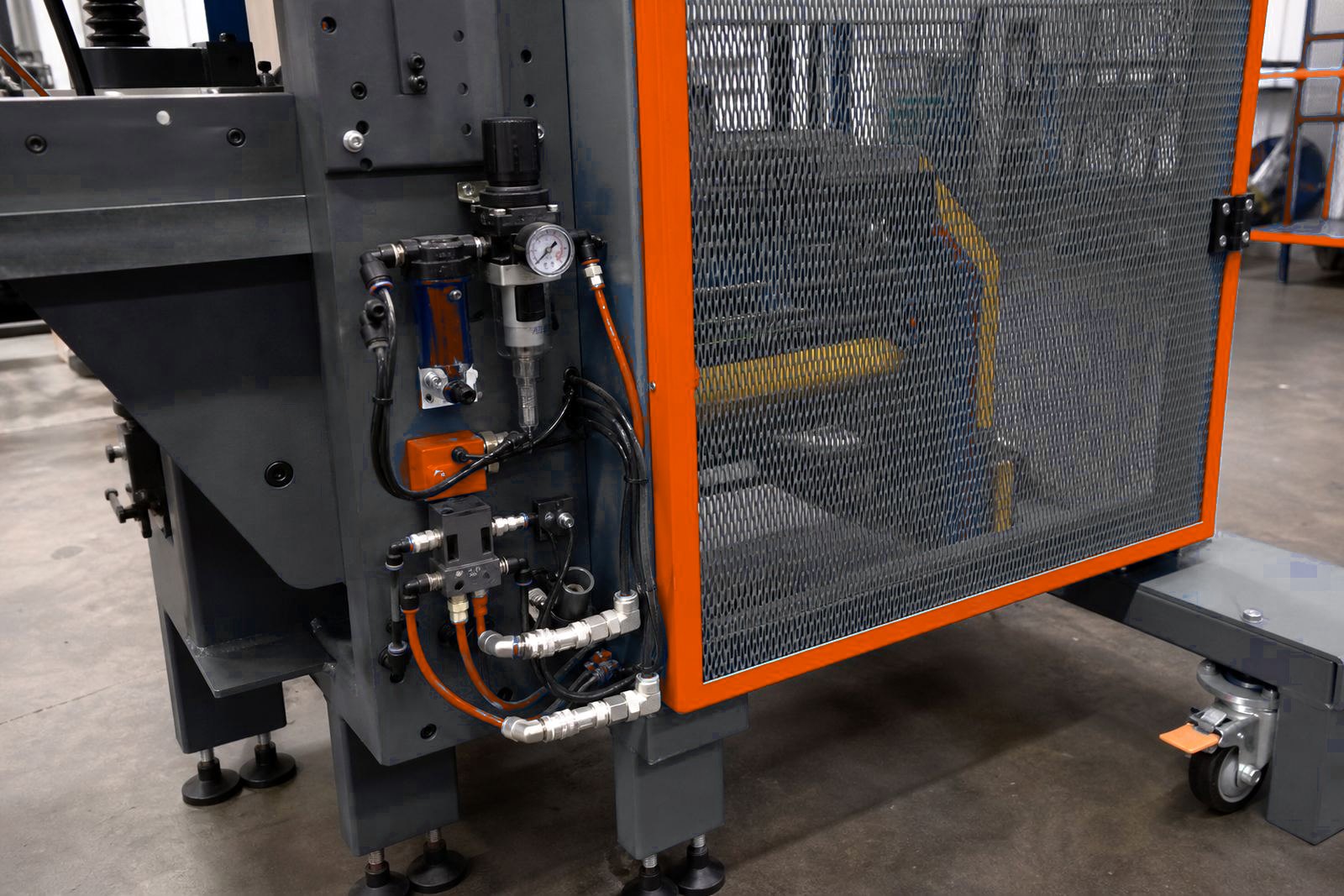
Air pressure must also match the process. Riveting and staking usually need stable pressure, while some pack sealing and light assembly jobs need a softer approach so the part is not crushed or marked. Two-hand controls remain important on wide bed machines because the operator can be tempted to reach across a larger work zone. Light curtains can add another layer of protection where the layout allows it, especially on lines with frequent loading and unloading.
The point is not to crowd the machine with features. It is to choose the controls that suit the cycle, the part size and the plant's way of working.
A Johannesburg line with extra room for the fixture
A local example is a factory in the Johannesburg belt handling a long assembled component that needed crimping and a later rivet step. The part was too wide for a compact frame, so the fixture had to sit further out with clear access at both ends. A wide bed let the tooling designer create a longer support base with a cleaner loading path and a better view of the contact points.
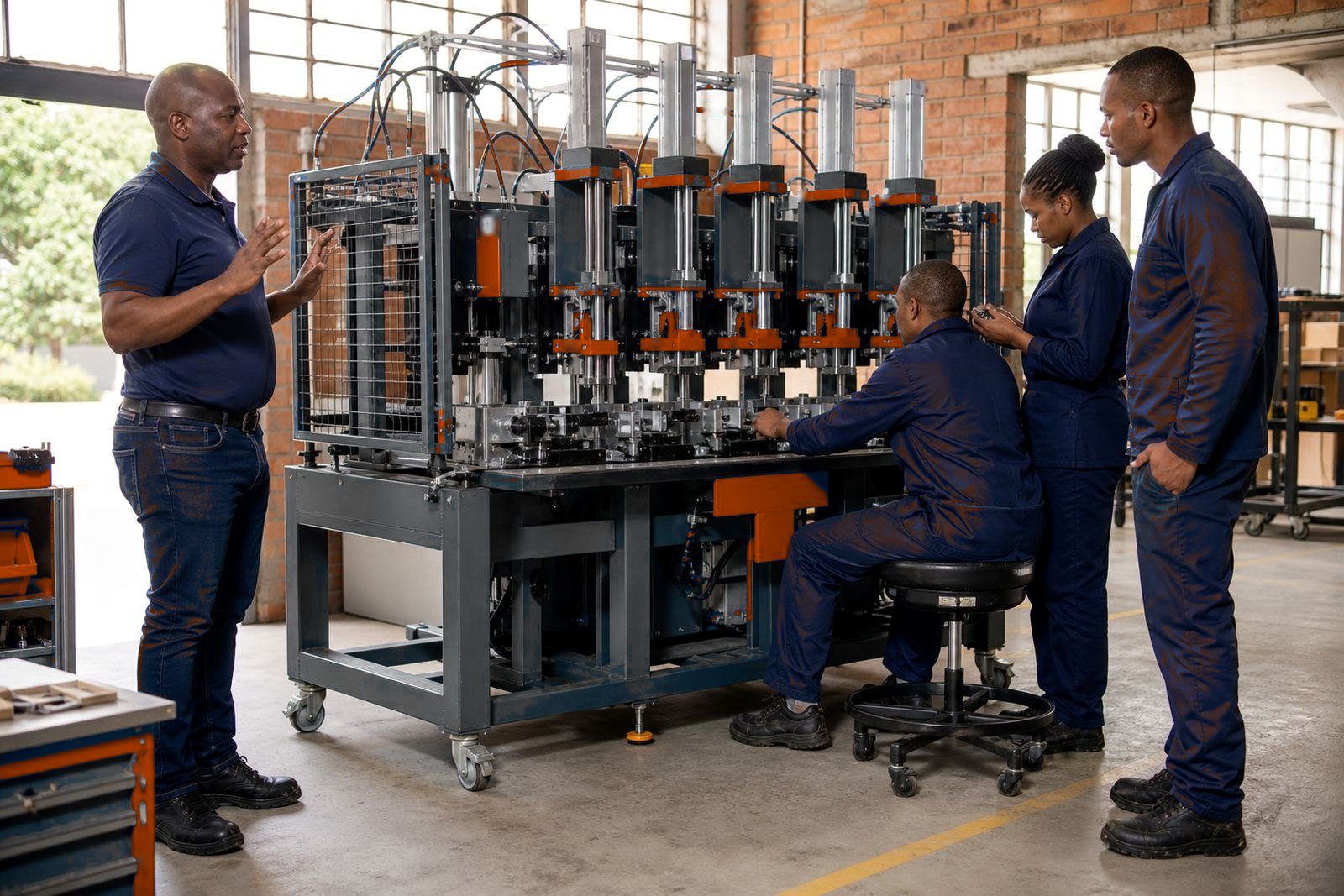
Once the press was commissioned, the operator training focused on loading position, hand clearance and stroke setting. The change was not just about size. It was about getting a repeatable press cycle without asking the operator to fight the machine. That kind of layout work is common in Isando, Kempton Park and Boksburg, where production lines often need practical equipment that fits into existing floor space.
What to inspect before wide bed work goes live
Before a wide bed press is released to production, the team should inspect the frame, the tooling, the guarding and the air line setup as one system. A strong machine can still give poor results if the fixture rocks, the guard gates are awkward, or the air supply drops under load.
- Check that the bed supports the full fixture footprint
- Confirm that the stroke reaches the working face cleanly
- Test the two-hand controls from the normal operator stance
- Verify that light curtain paths are not blocked by brackets or clamps
- Watch for twisting, bounce or uneven contact during the first cycles
After that, production handover should include the basic changeover steps, tool care and the points where wear will first show up. On wider machines, those checks matter more because small alignment faults can hide at one end of the bed and only show once the line has been running for a while.
From Isando into the plant, not around the problem
Wide bed applications need more than a bigger frame. They need a sensible build, correct guarding, proper commissioning and training that matches the actual task. That is the same whether the press is going into a Gauteng assembly cell, a coastal pack sealing line in Durban, or a production area in Gqeberha where humidity and handling wear can both affect the tooling surfaces.
Multi-station pneumatic presses can handle assembly, crimping, riveting, staking and pack sealing when the bed width is chosen for the part. The best result usually comes from the machine, the tooling and the floor layout being planned together, then set up with care before production starts.