Stroke length starts with the part, not the cylinder
On a pneumatic press, stroke length is the distance the ram travels from its top position to full down travel. That number needs to match the part height, the tool stack, and the clearance needed for loading. If the stroke is too short, the operator fights the setup. If it is too long, the press spends extra time moving through air before it reaches the work.
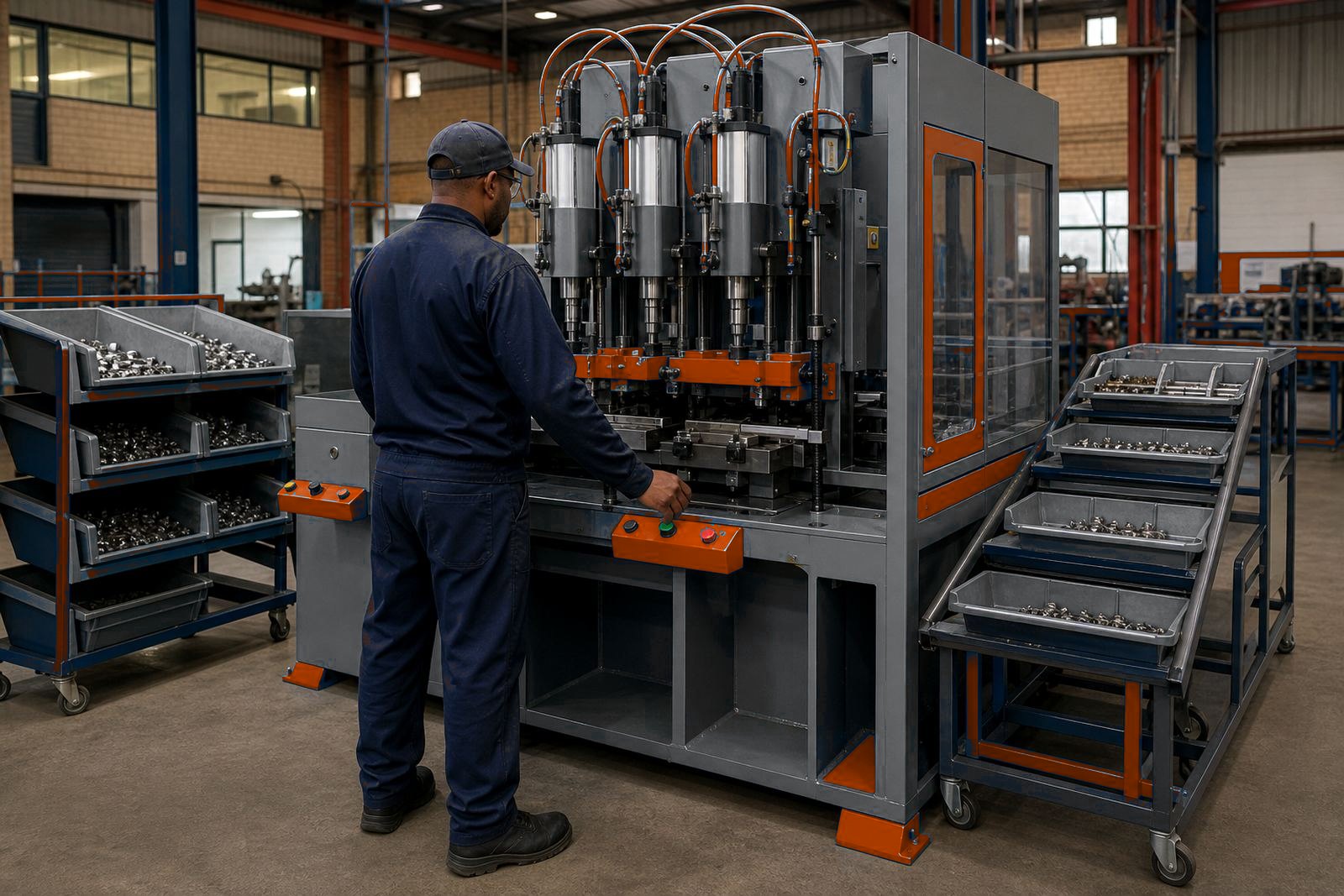
In multi-station lines, every station can ask for something different. A crimping station may need a short, firm travel. A staking station may need a little more room for part loading and tool entry. Pack sealing may need a steady lower stroke with clean contact, not extra travel that serves no purpose.
Loading clearance is where many setups go wrong
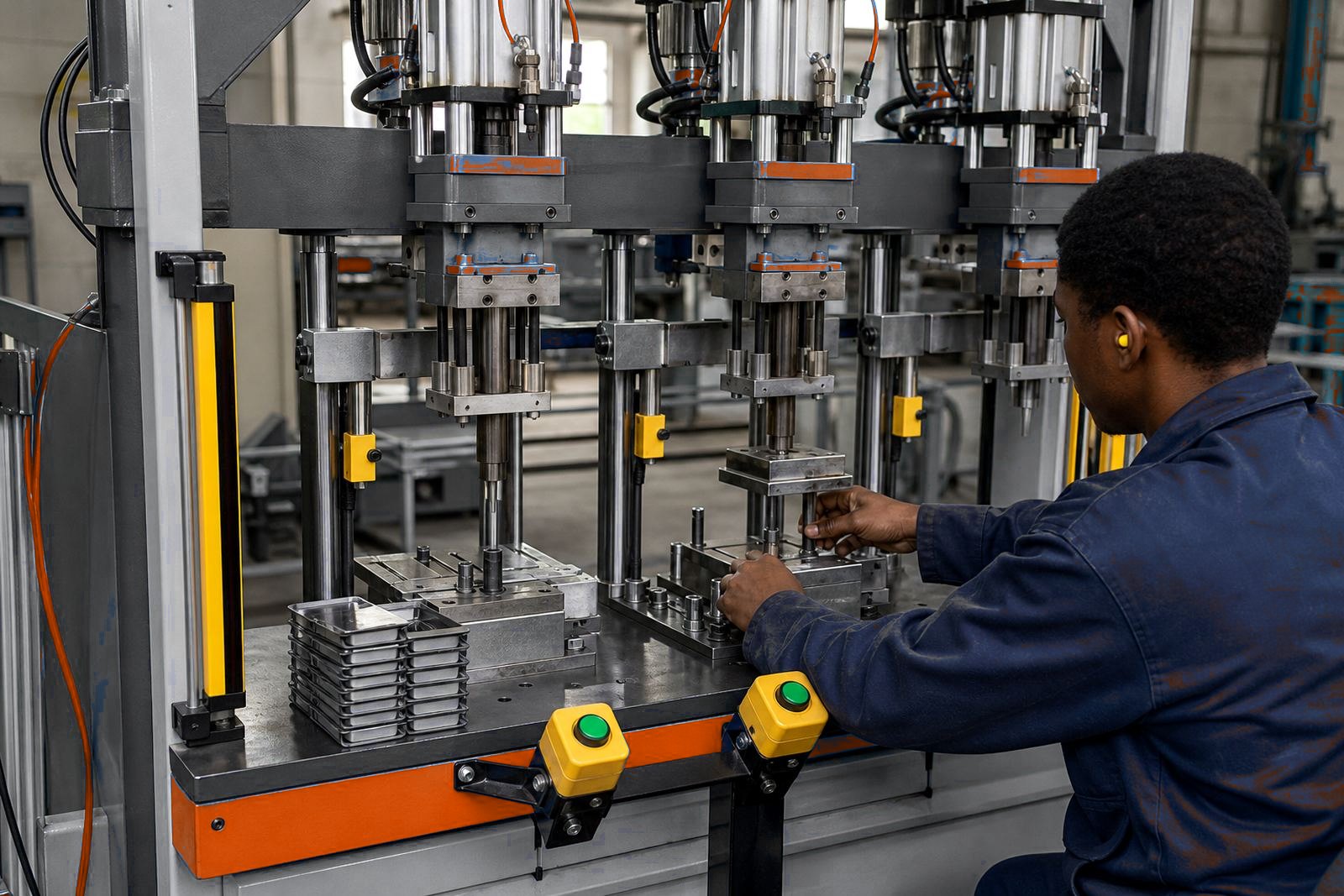
The open height must let the operator place the component safely and squarely. It also has to leave enough room for fixtures, nests and fingers without forcing anyone to work too close to the tool. A good stroke gives the top position you need, then comes in cleanly without wasting movement.
- Check the loaded part height with the fixture in place.
- Allow space for hands, guides and locating pins.
- Keep enough room for uneven parts or slight warp.
- Make sure the tool does not scrape on entry.
In Isando, we often see factory teams trying to solve a loading problem by turning up air pressure. That does not fix bad clearance. Stroke length and open height do that work, and the setup stays easier to run through a full shift.
Tool approach needs a clean path into the work
The way the tool enters the part matters as much as the force it makes at the bottom. A longer stroke can help when the tool has to pass over guides, collars or a tall fixture before reaching the working face. A shorter stroke can improve control when the tool only needs a small travel and a quicker cycle.
Tooling designer work often starts with the approach angle, guide length and ram alignment. If the ram comes in off line, the station can mark parts or wear bushes early. If the stroke is excessive, the tool may close from too far away and lose that steady feel operators rely on.
- Match the stroke to the tool stack height.
- Keep guide support long enough for stability.
- Set the approach so the tool meets the part squarely.
- Use stroke setting to avoid bottoming out the tooling.
Stable pressing contact is about the last few millimetres
Most of the useful work happens near the end of the stroke. That is where the press must hold line, meet the part evenly, and complete the crimp, rivet or stake without bounce. When stroke length is badly chosen, the last movement can feel abrupt and the contact is less consistent from part to part.
Air pressure, cylinder sizing and stroke setting all work together. A press running with the right stroke does not need to hunt for contact. It comes down, touches the job, then finishes the action with the force needed for the task. That is especially important on packs that need a neat seal line without crushing the edges.
Kempton Park to Gqeberha line job
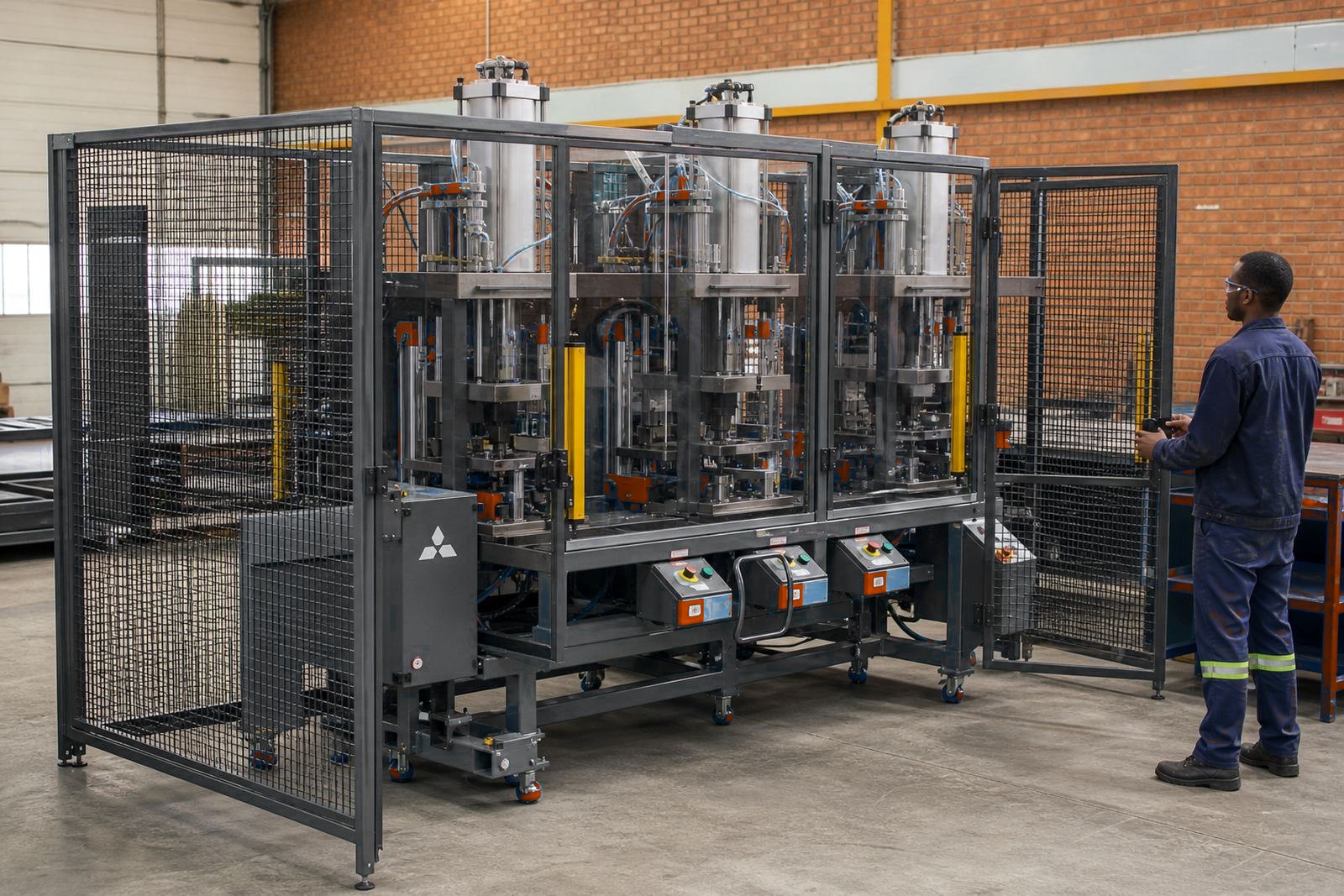
A small assembly line in Kempton Park may run one station for insert loading, one for crimping and a third for pack sealing. If the first station has a generous stroke and the second is short, the line can move cleanly from loading to pressing without operator strain. But if every station is given the same travel by habit, the line starts to feel clumsy.
On a Gqeberha job, coastal humidity can also influence how tooling slides and how tidy the loading feel becomes through the day. The stroke still does the main work, but the setup needs enough clearance and proper guide movement so the press stays predictable when the workshop air changes.
What our team checks before final stroke setting
It is part of the machine design, the tooling layout and the production method. During commissioning, our team checks the full movement, the guarding, the two hand controls and the light curtain positions where fitted. Then the station is tested at working speed, not just by cycling the ram in the air.
- Part height and fixture stack.
- Required approach clearance for each station.
- Bottom contact needed for crimping, riveting or staking.
- Operator access and safe hand position.
- Tool wear points and guide alignment.
That process helps the press feel natural to run. The operator sees the part clearly, the tool enters straight, and the final contact lands where it should. For South African factories, that matters on lines that must keep moving through long production runs and mixed part batches.