Less travel, less wasted motion
A pneumatic press does its job in compressed-air movement, so every extra millimetre of stroke adds time, air use and mechanical motion that may not be needed for the task. When the tool only has to close over a small working gap, a shorter stroke keeps the platen or ram closer to the job and reduces the amount of empty movement between the open and working positions.
That matters on lines where the same action repeats for hundreds of parts. Assembly nests, cable lug crimping, light riveting and staking jobs often need a controlled approach, not a long sweep. If the stroke is trimmed to match the actual tool depth, the press can feel more settled in use and the operator sees less unnecessary movement in front of the fixture.
- Less air spent on motion the job does not need
- Shorter open-to-close travel for repeated cycles
- Cleaner alignment at the point where tooling meets the work
- Less chance of the ram moving further than the process requires
Cycle feel on the line
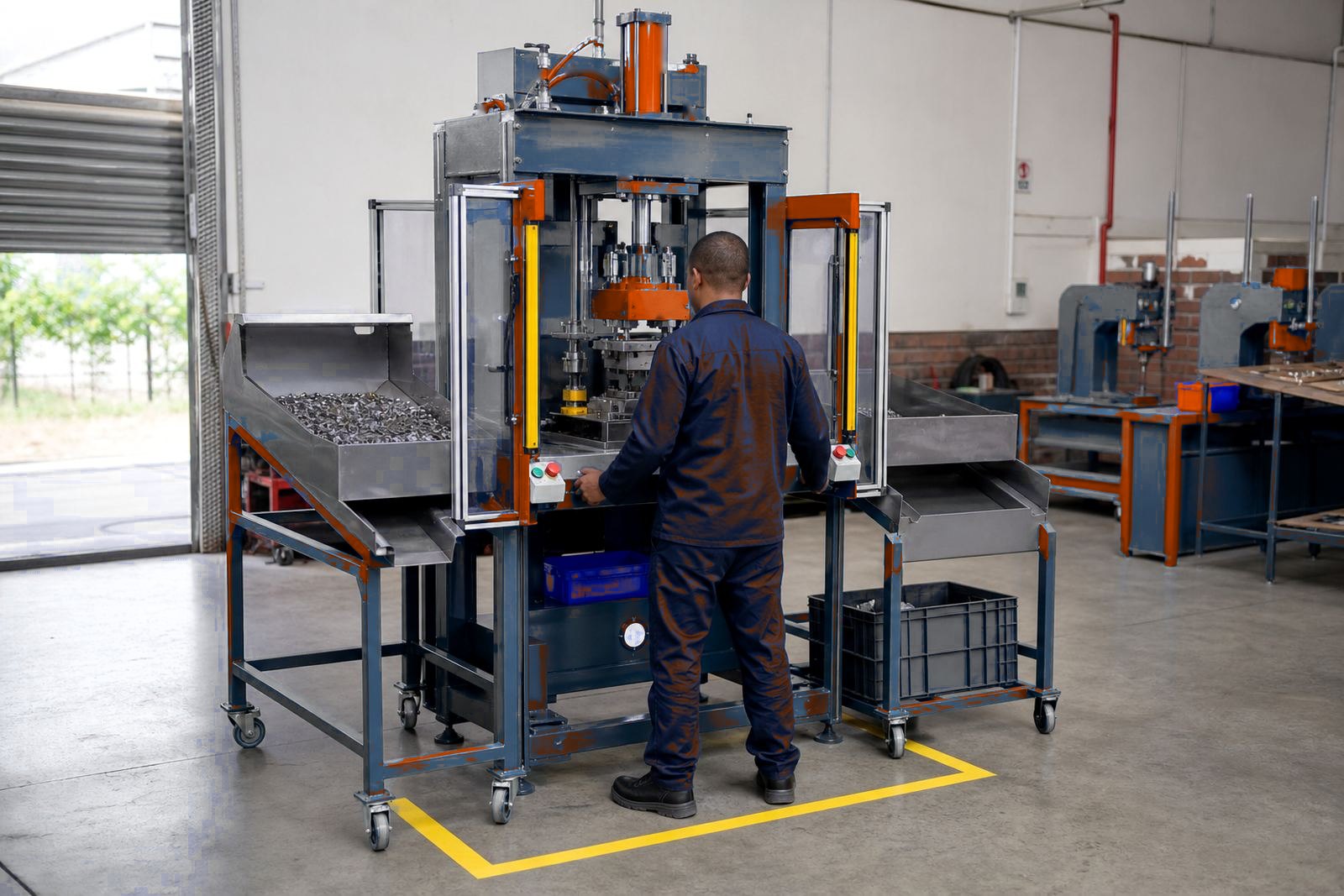
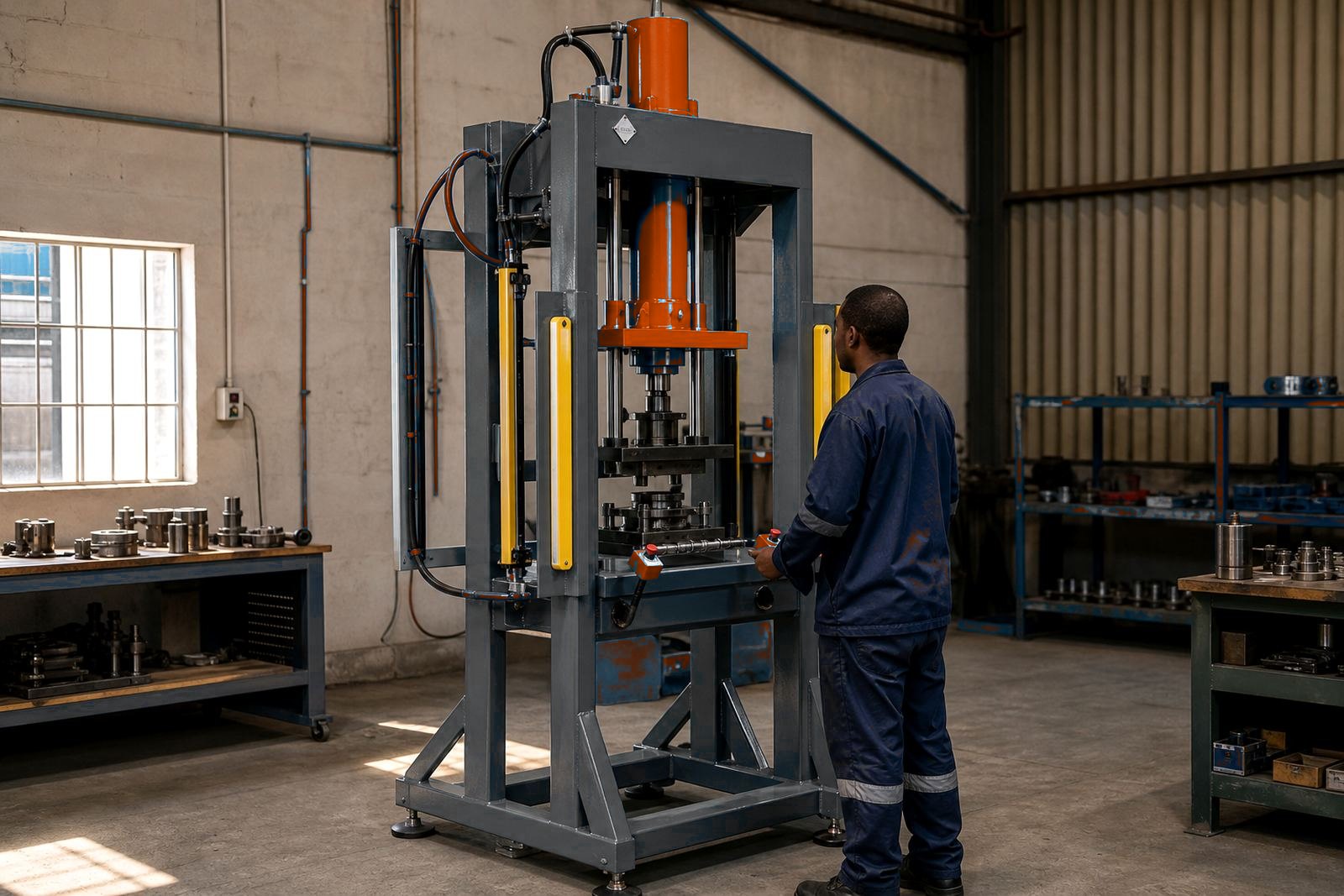
Short stroke settings can improve the way a press behaves during the cycle, especially where two-hand controls or light curtains are already part of the guarding layout. The press moves into the job area, does the work, then returns without carrying extra distance that adds nothing to the operation. That can make the action feel more immediate and easier to read from shift to shift.
On a pack sealing setup, for example, the tooling may only need enough travel to close the seal interface and hold pressure briefly before release. On a crimping station, the useful part of the stroke is often a narrow band around the tooling contact point. If the machine is set for that narrow band, the operator is not waiting on extra travel before the tool does its work.
- Better timing between operator input and tool contact
- Less waiting on the press to reach the work zone
- More predictable motion across repeated cycles
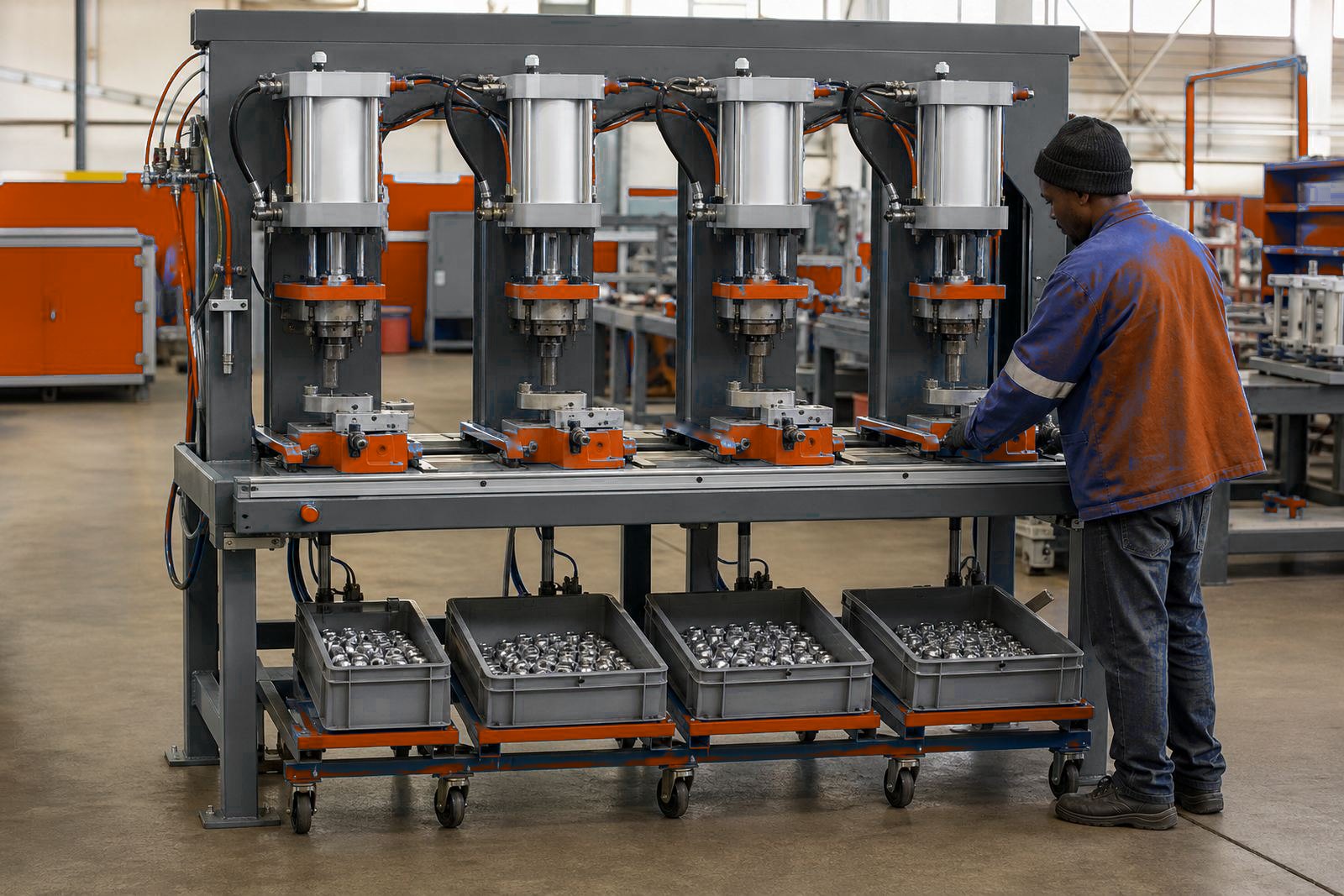
- Easier supervision on multi-station fixtures
Tool life and fixture control
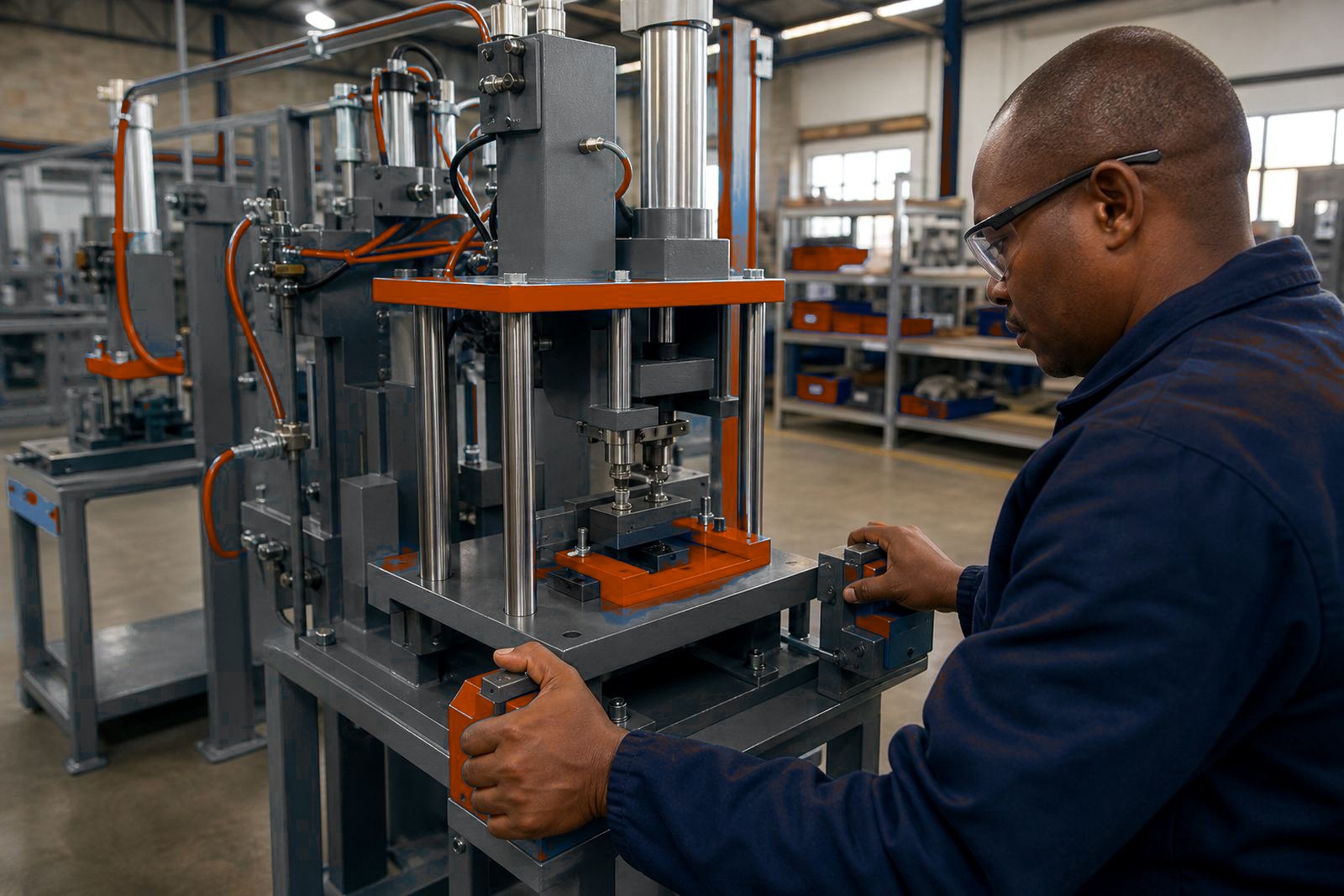
Tooling lasts longer when it is not being dragged through unnecessary movement. A shorter stroke can reduce the impact at the end of travel, and that helps protect pins, dies, bushes and guided tool parts from avoidable wear. It also keeps fixtures under less strain, which is useful where the same press supports different tools during a production handover.
In South African factories, humidity near Durban or corrosion around coastal sites can already work against metal parts, so keeping the tool movement tight is worth attention. Less excess travel can also help with stroke setting on jobs that need a precise shut height. The press does not need to over-extend to prove it can do the job, it only needs enough travel for the part and the tool stack in front of it.
- Reduced shock at the end of movement
- Better control of shut height and working depth
- Less unnecessary loading on guides and tooling faces
- Useful for tooling changes between short production runs
When short stroke pays off most
Short stroke benefits show up most clearly when the process is compact and repetitive. Staking of small metal components, terminal crimping, light riveting and assembly presses with a fixed nest often work best with as little travel as the process allows. If the job needs only a few millimetres of working motion, giving it a long stroke may add time and variability without improving the result.
It also helps on multi-station presses where several operations sit close together and each station has its own timing. A shorter stroke can make it easier to keep the stations in step. In a workshop or factory around Isando or Kempton Park, that may mean one press body serves more than one function during the week, provided the tooling and guarding are matched properly to each task.
- Small-part assembly with fixed nests
- Cable, terminal and lug crimping
- Light riveting and staking jobs
- Pack sealing where the seal depth is shallow
Setup details that matter before trimming stroke
Short stroke only works well when the rest of the setup is right. The air pressure has to suit the cylinder and the task, the tooling must meet squarely, and the guarding has to protect the operator without interfering with the useful travel. A shortened stroke is not a shortcut around poor setup, it is a way of matching the machine to the real job.
Commissioning should check how the ram lands, how the material behaves under pressure, and whether the tool release is clean when the stroke ends. On a line with two-hand controls, the operator should not have to wait for the machine to travel further than the job needs. If the process is using a light curtain instead, the sensing field still has to suit the motion zone and the station layout.
- Match cylinder force to the part and tooling
- Set stroke to the true working depth
- Check guard clearance around the motion path
- Test the return movement as carefully as the downstroke
Ekurhuleni assembly line with crimping and staking
On a packaging and assembly line in Ekurhuleni, a short stroke setting can be the difference between a press that feels tidy and one that wastes motion on every cycle. A station used for sealing small packs may only need a brief, controlled closure, while a neighbouring riveting station might need a slightly different shut height and dwell. If both are set with the same long travel, the press spends time moving when it could be working.
That is where commissioning, tooling design and operator training need to sit together. The team must know where the stroke starts, where the useful work begins and how the controls protect the hands during production. On jobs running between Johannesburg, Pretoria, Durban, Gqeberha and East London, short stroke settings are often part of keeping the line practical for the actual part being handled, not the other way round.
When the travel is trimmed to the task, the press can support assembly, crimping, riveting or sealing with less movement and a clearer cycle. That is a small change on paper, yet on the floor it can shape how the station feels through an entire shift.