How one frame can carry several jobs
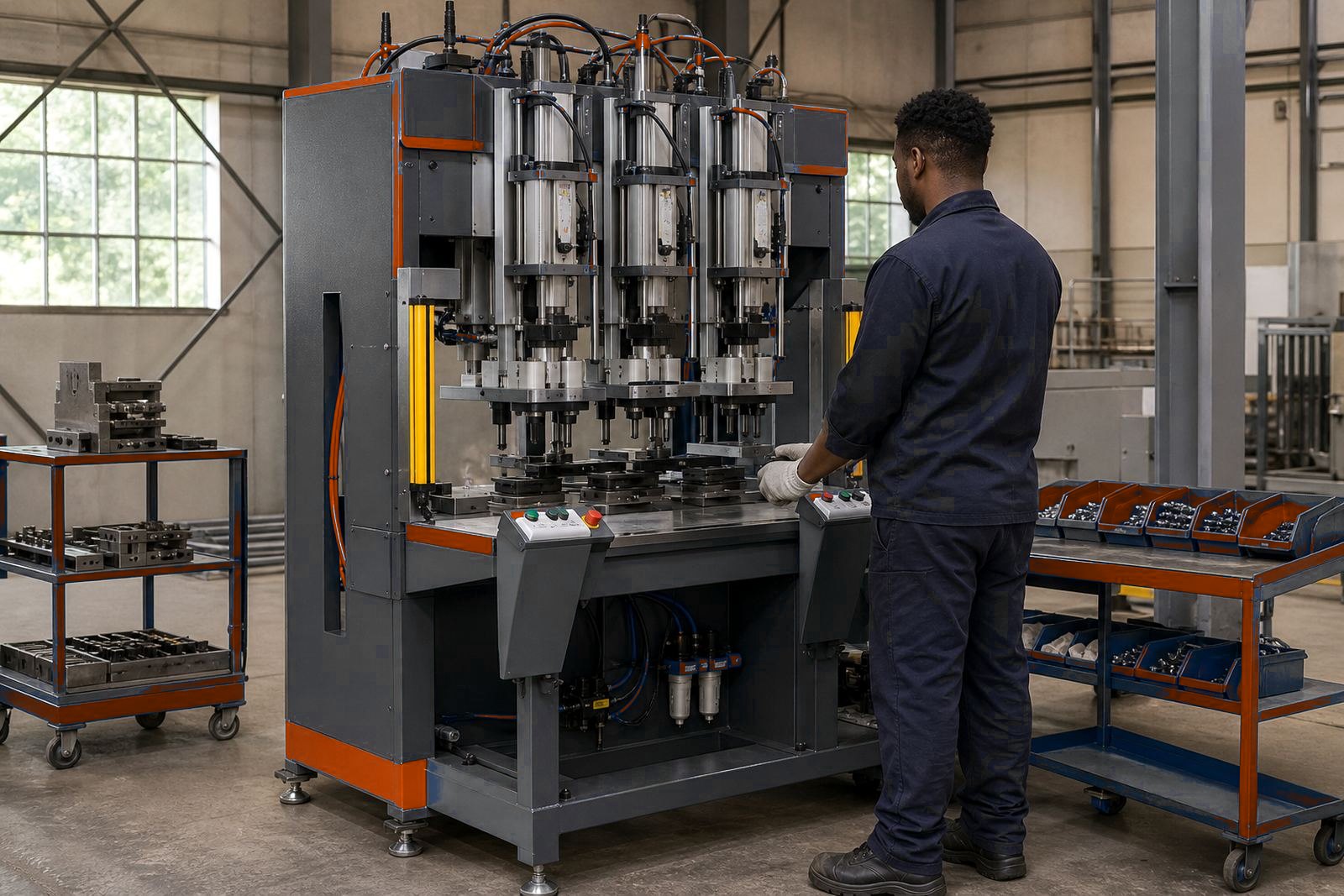
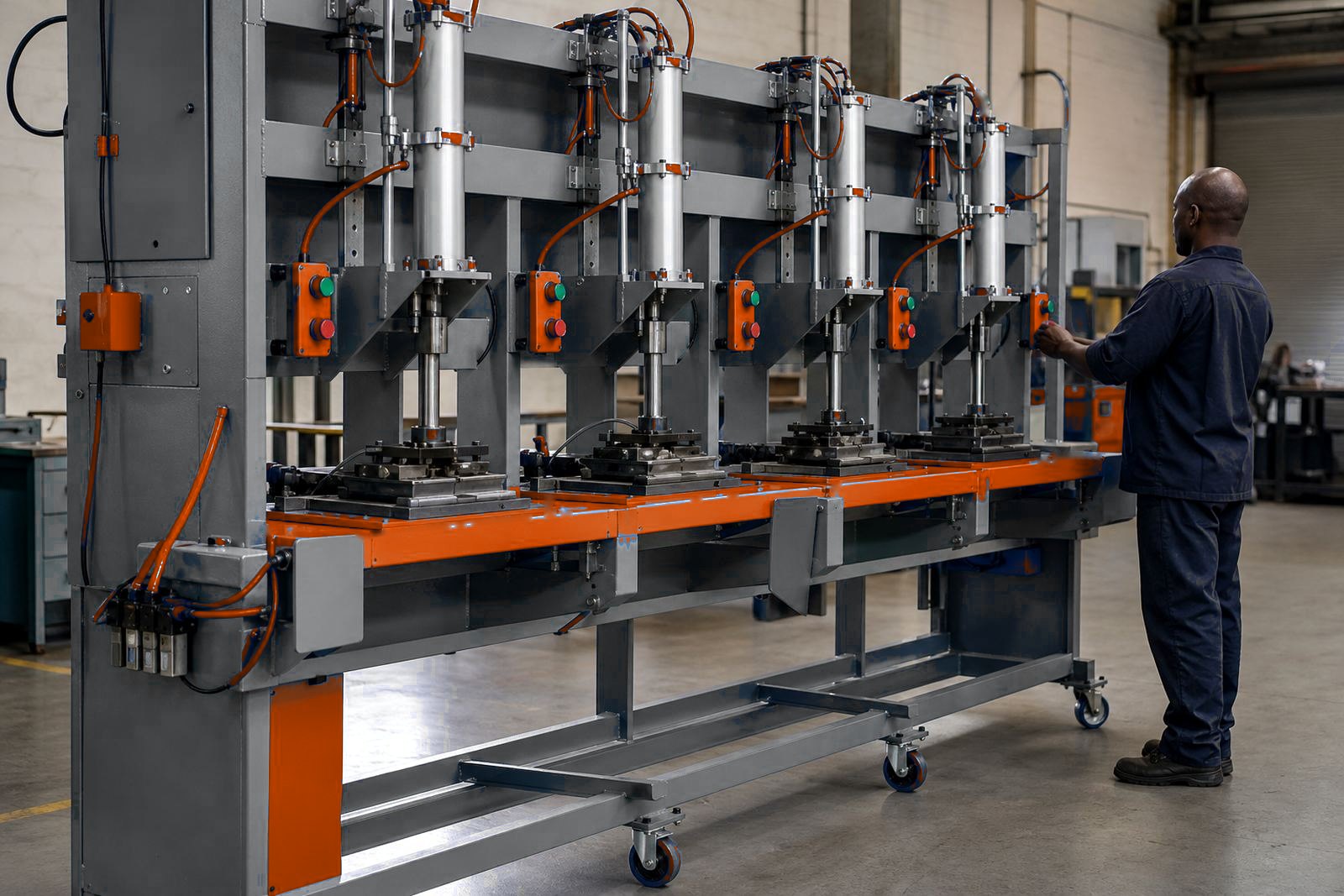
In a multi-station press, each station does a defined part of the job. One station may locate the component, the next may crimp a terminal, a third may rivet a bracket, and the last may seal a pack or verify the press stroke. The machine frame holds those stations in line or in a rotary pattern, depending on the part and the production flow.
Pneumatic cylinders drive the movement with air pressure that is matched to the load, the tooling and the stroke length. That is where the detail matters. A short stroke suits light assembly work, while a longer stroke gives room for deeper forming or a taller workpiece. If the tooling is not matched to the part, you get uneven force or a cycle that feels cramped and hard to control.
What operators feel at the controls
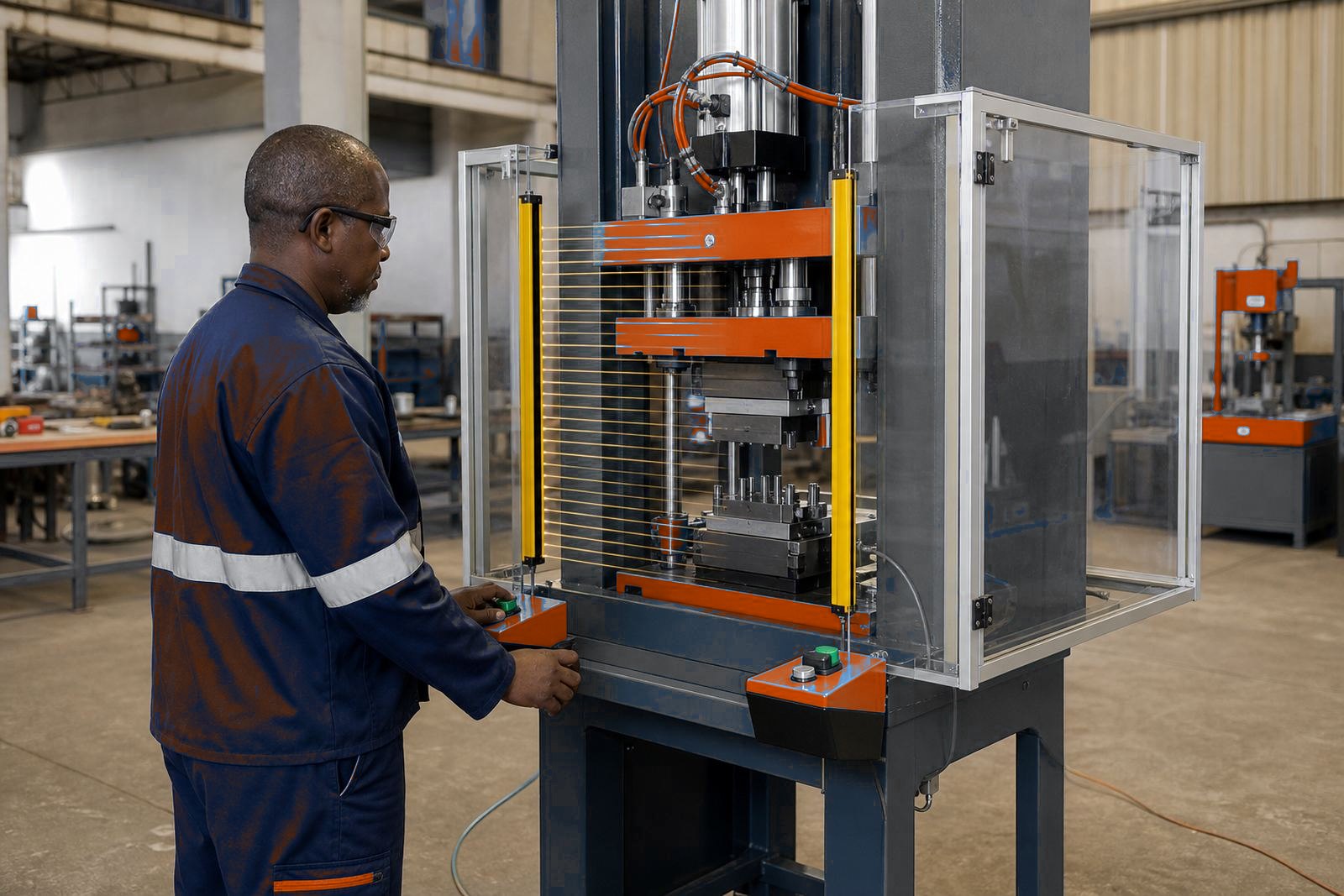
Most factory teams want the same thing from a press line: repeatable movement and clear control. Two-hand controls keep the operator clear of the tooling area during the downstroke, and light curtains add another layer where the opening is wider or the layout needs more access. Guarding should suit the task, not block the operator from loading parts or checking alignment.
- Two-hand controls are useful where the operator must stay outside the danger zone.
- Light curtains suit stations that need frequent loading, checking or hand access.
- Guard panels help on heavier jobs where offcuts, clips or small parts can move unexpectedly.
- Stroke setting must suit the tallest part in the sequence, not only the first station.
On the shop floor, the practical test is simple: can the operator load the part cleanly, see the tooling, and keep the cycle steady without reaching into the working area. If the answer is no, the station usually needs a better fixture, a clearer guarding arrangement, or a revised tool height.
Tooling is where the process is won or lost
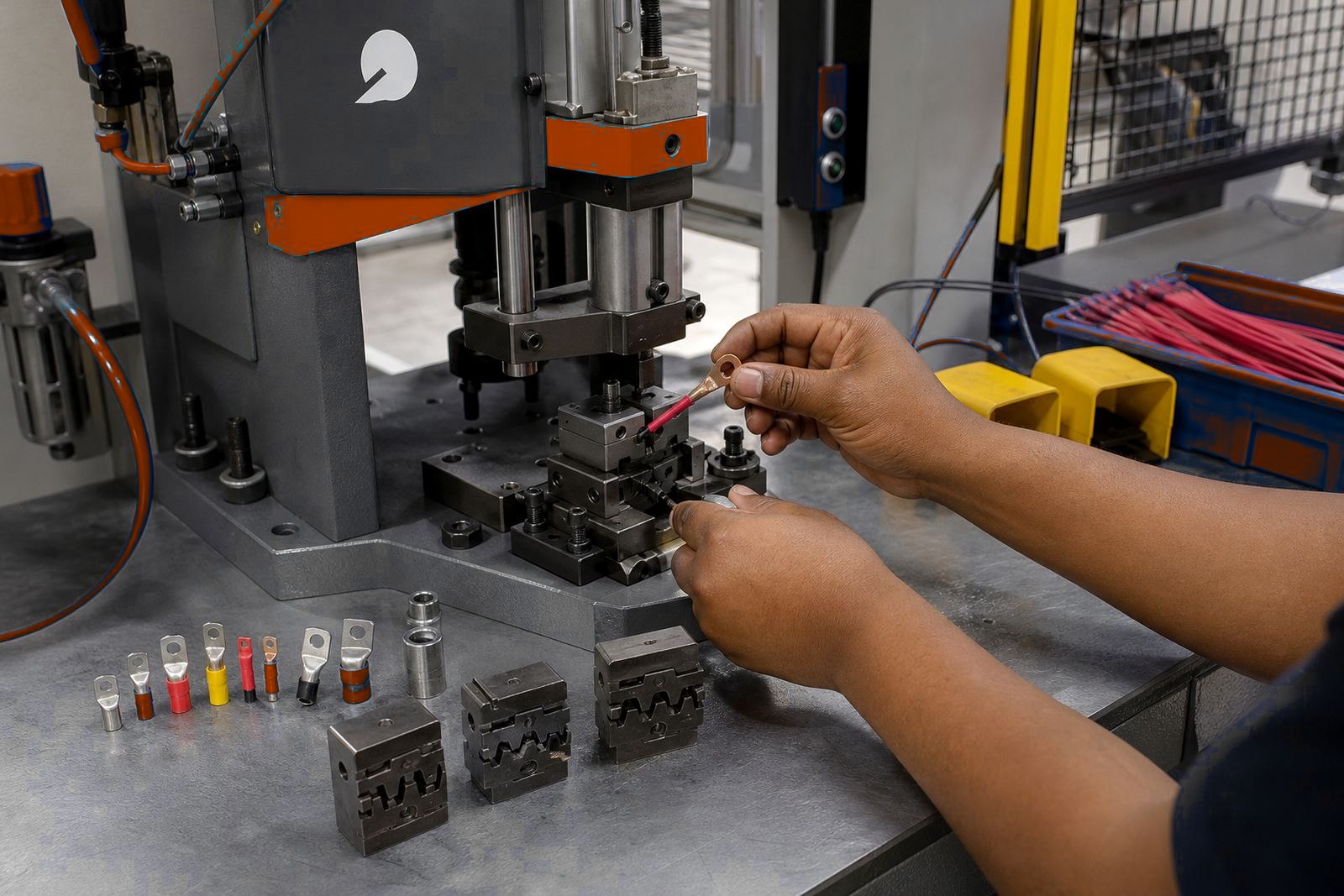
The press is only one piece of the full MultiPress setup. The tooling decides how the part locates, where the force lands, and whether the finished piece holds its shape. Custom tooling can include nests, guides, punches, anvils and press plates built for the actual component, not a general pattern. For crimping and riveting, the tool face must match the material thickness and the finish required at the joint.
Good fixture design also helps with pack sealing and staking, where alignment matters as much as force. If a component sits a few millimetres off centre, the press can still cycle, but the result may be uneven or unusable. That is why tooling changes are part of normal production work, especially when a factory runs several part numbers through the same machine.
- Crimping tools need clean entry points and controlled closing force.
- Riveting stations need consistent support beneath the joint.
- Staking tools need a stable form so the material flows evenly.
- Pack sealing stations need repeatable pressure and a flat contact face.
Air supply, stroke and cycle control
Air line setup is easy to overlook, yet it has a direct effect on press performance. If the supply is poorly sized or pressure drops during a busy shift, the cylinder action can feel inconsistent. That may show up as a slower cycle, a softer crimp or a joint that looks correct on one part and weak on the next. Clean air, suitable regulators and proper line routing all help the machine do what the tooling expects.
Stroke setting is just as important. Too much stroke wastes time and can increase wear, while too little stroke may leave the tool short of full contact. In a multi-station layout, each station should be checked against the whole sequence so one position does not force the others into awkward settings. The machine must work as a line, not as separate jobs bolted together.
A Durban line and a Gauteng line never feel the same
A factory near the coast may face humid conditions that affect air quality, stored tooling and the way operators handle components during a shift. Inland, the same press may run in a tighter production bay where changeovers need a cleaner layout and shorter walking distance between stations. The machine concept stays the same, but the installation details shift with the building and the production rhythm.
In Isando, we often see presses built for assembly lines that must serve more than one task without taking up another full machine footprint. A common example is a pack sealing line that also needs a crimp or rivet station earlier in the sequence. In that case, the layout has to suit the part flow from loading through to handover, with guarding and operator training tied to the actual station order.
Commissioning, training and handover on the factory floor
Commissioning brings the machine, tooling and operators into the same working routine. The final checks cover station alignment, air pressure, stroke setting, guard movement, two-hand control function and the handover notes that production staff will use every day. If one station behaves differently from the rest, the whole line slows down.
Operator training matters because a press line is only as steady as the people running it. The team needs to know how to load the part, spot a misaligned tool, handle a tooling change and keep clear of the working area. A proper handover also covers what happens when a part drifts out of spec, or when a station needs adjustment after a tooling swap. That practical discipline saves a lot of scrap and confusion later on.
- Check the station sequence against the part route through the machine.
- Match guarding and light curtains to the access points that operators use.
- Set the stroke for the tallest point in the process chain.
- Keep the air line setup clean and easy to inspect.
What a local press line usually needs before it runs well
For South African factories, the real test is whether the machine fits the space, the labour pattern and the part itself. Multi-station pneumatic presses are useful where assembly, crimping, riveting and pack sealing need to happen in a fixed order, with less handling between steps. They are not complicated in principle, but they do demand careful tooling and a proper setup.
MultiPress works from Isando, Ekurhuleni with commissioning and training support across Johannesburg, Pretoria, Durban, Gqeberha and East London. Most multi-station jobs start with the part drawing, the station sequence and the guarding you need, sent to us through our contact form. From there the machine is planned around the job, not the other way round.