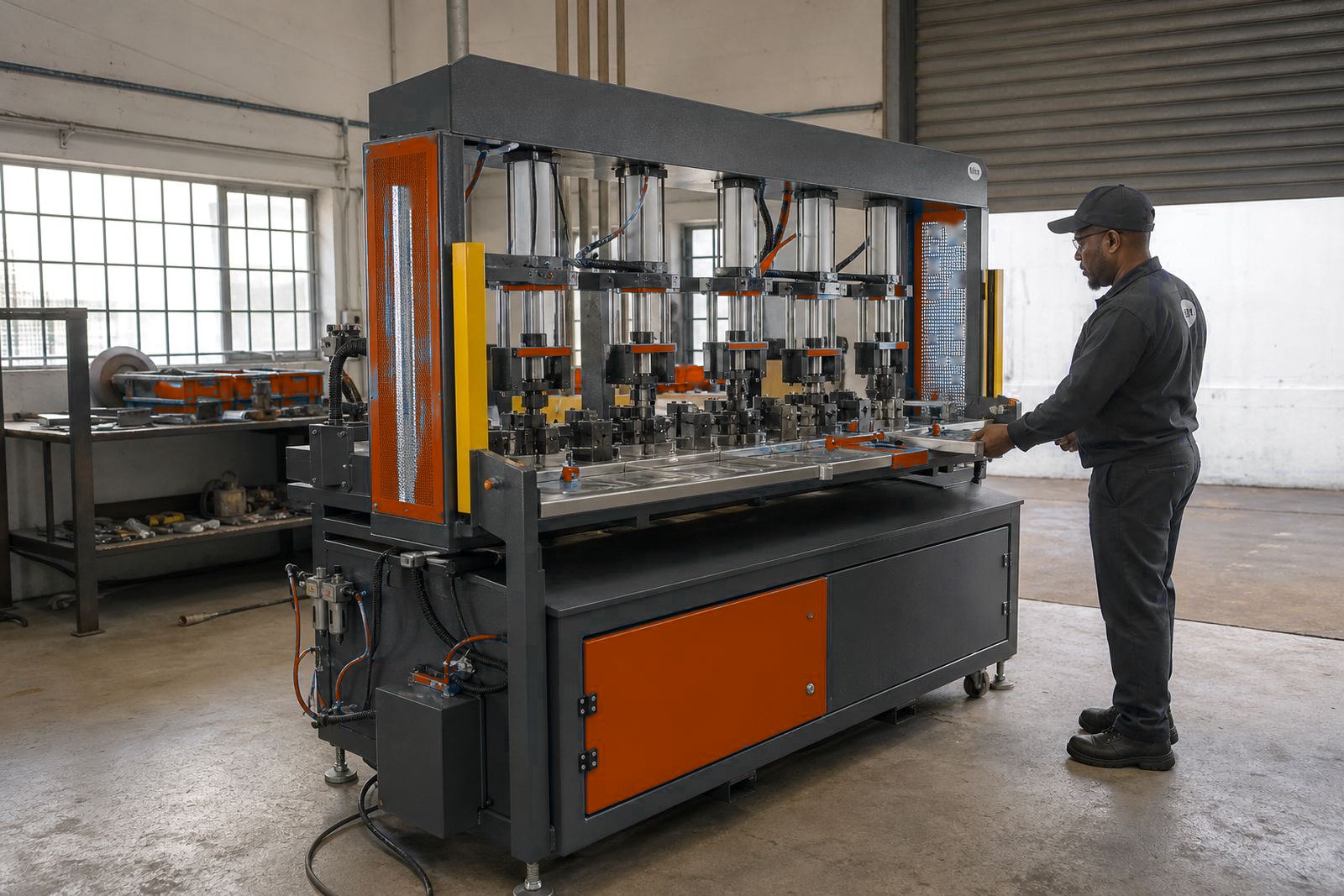
Start with the air line at the press
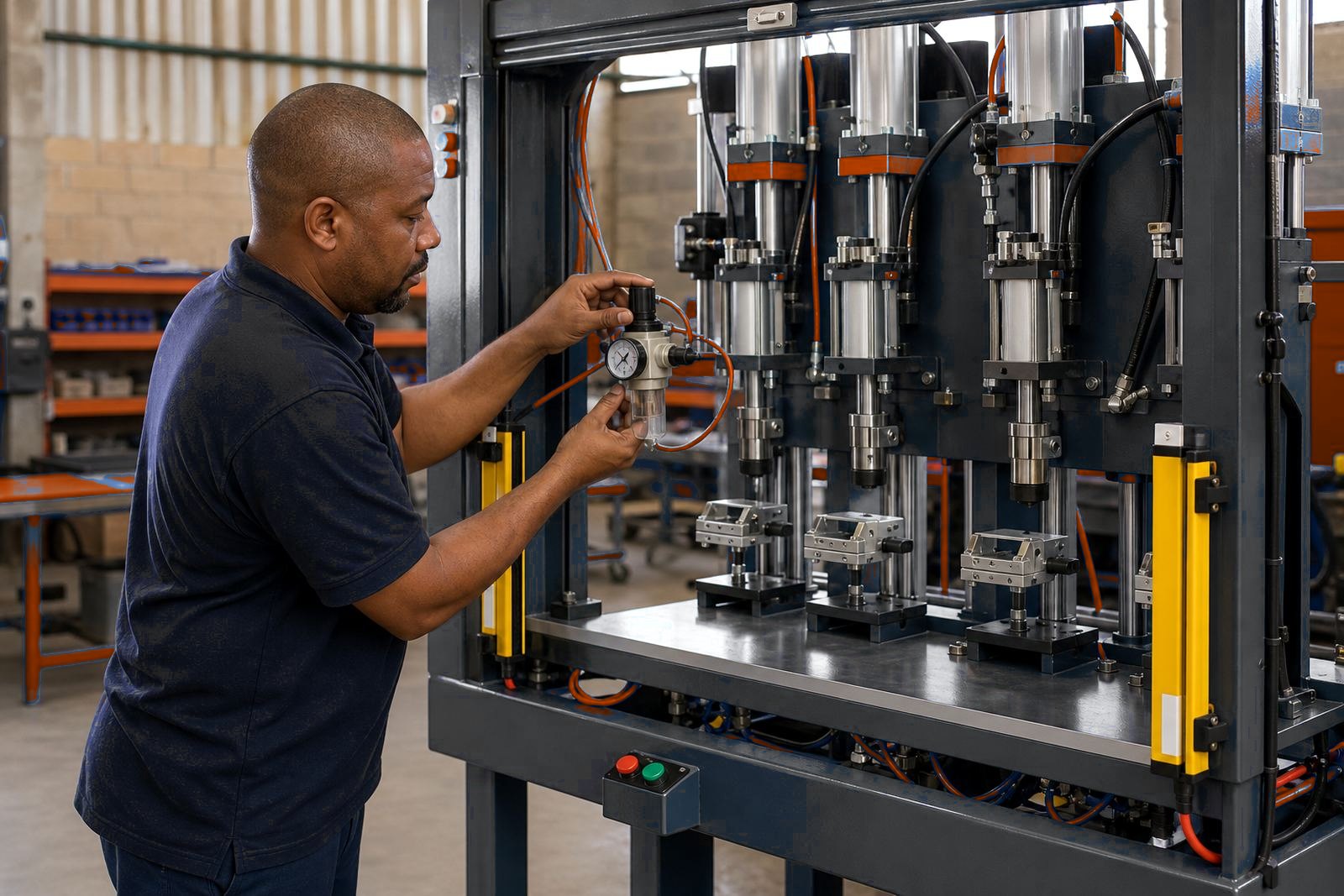
Look at the line feeding the press before the first cycle. Check that the isolating valve is open, the filter bowl is clear, and the regulator shows the pressure set for that station. A multi-station press may run different tooling heads, so one station can need a firmer setting than another.
If the gauge drifts, or the needle sits low while the compressor is running, the issue may be in the line, the regulator or a small leak at a fitting. Even a loose connector can change how a cylinder moves under load, and that affects crimp depth, rivet formation and staking consistency.
Match pressure to the job on each station
Not every operation wants the same air pressure. Assembly presses often need a controlled stroke with enough force to seat parts fully, while crimping and riveting usually need a more exact force window. Pack sealing stations may need gentler pressure to avoid crushing film, cartons or closures.
- Check the target pressure for each station, not only the main line gauge.
- Set the regulator slowly and watch how the cylinder travels.
- Test the tooling on sample parts before full production starts on our presses.
- Listen for harsh exhaust or jerky motion, which can point to poor air supply.
Watch the cylinder travel, not only the gauge
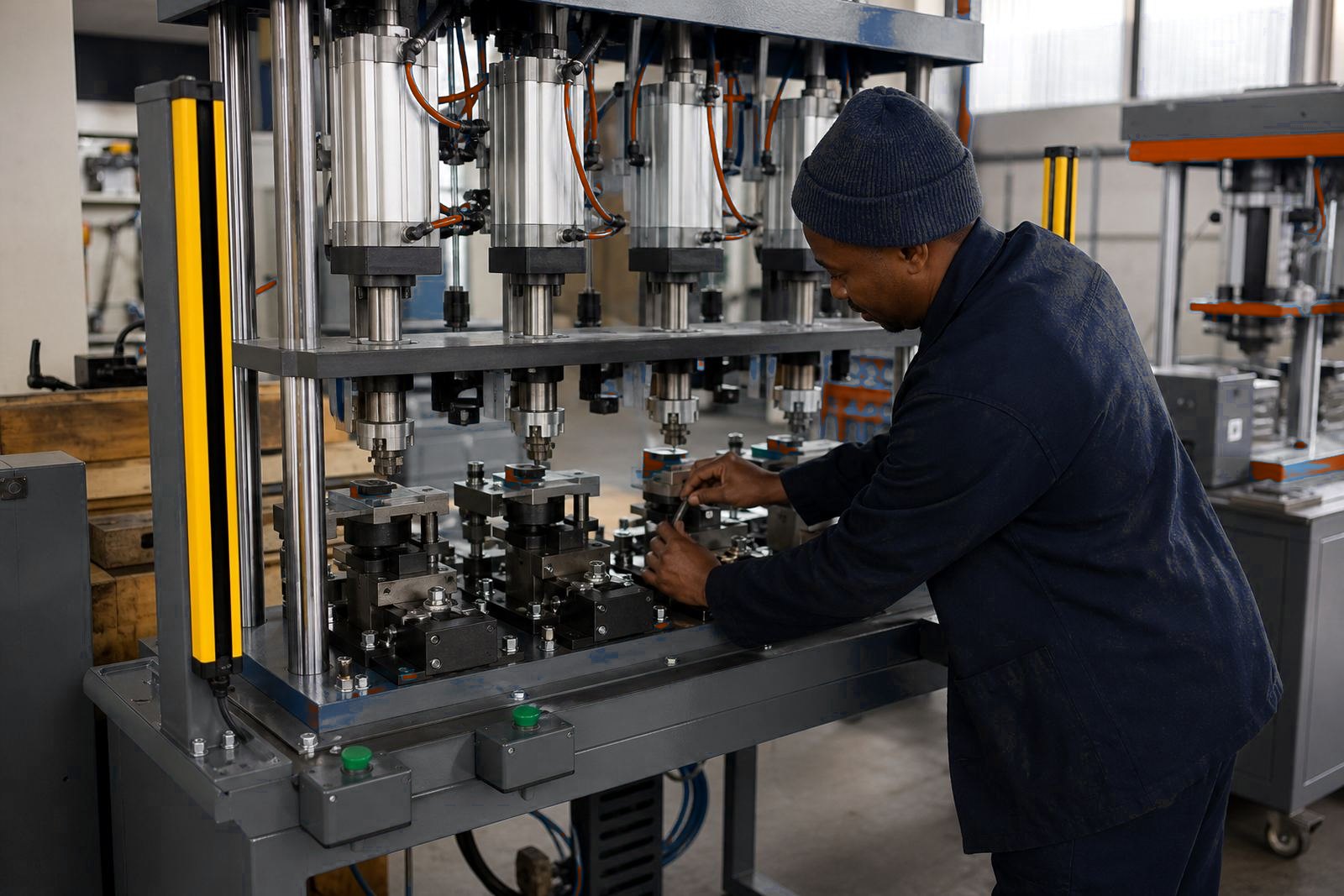
A good pressure reading means little if the cylinder stroke is uneven. Watch the ram as it moves down and returns. It should travel smoothly, stop where expected and reset cleanly for the next cycle. If the downstroke slows near the workpiece, the station may need a pressure check or a stroke adjustment.
On taller tooling, a press can look fine at idle but fall short under load. That is common on fixtures with multiple locating points, because the air demand rises once the tooling closes on the part. The real test is the full cycle under working load, not the free stroke alone.
Keep two-hand controls and guards part of the check
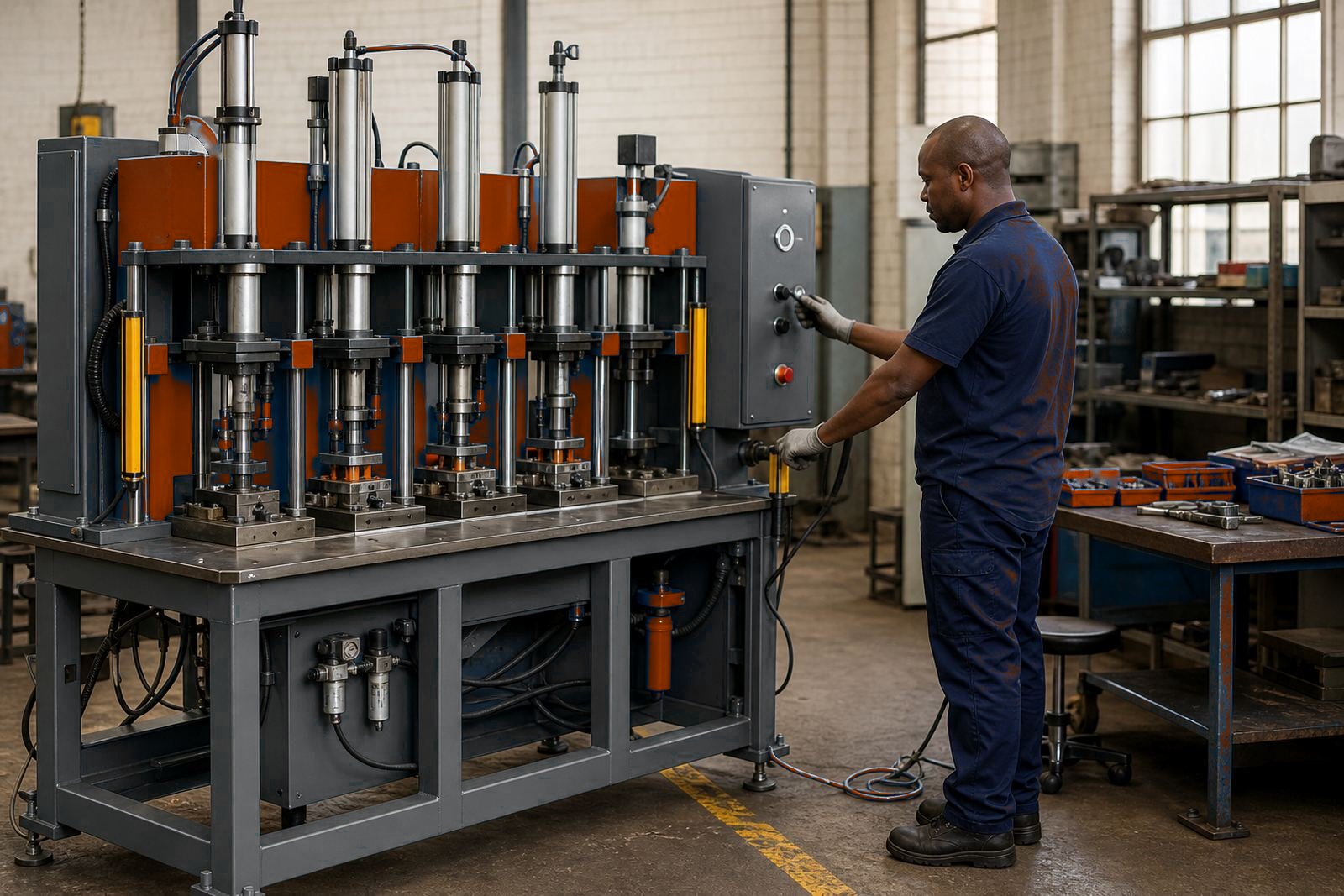
Air pressure checks should sit next to the safety check, not after it. Two-hand controls need to start the cycle only when both buttons are pressed together, and light curtains must stop motion if the beam is broken. If a guard is open, the press should not cycle.
- Test the two-hand controls before any parts are loaded.
- Confirm that guarding and interlocks are in place.
- Make sure the stop functions work before pressure is raised.
- Keep hands clear while the first dry cycles are running.
Pressure and safety work together on a pneumatic press. If the air setting is too high, a station can strike harder than planned and put extra wear on tooling, guide parts and fixtures.
Handle leaks, moisture and dirty air early
Leaks are common around couplers, regulators and moving hoses. A hiss, a slow pressure drop or a cylinder that does not hold position can point to a weak seal. On coastal routes and humid plant rooms, moisture in the air line can also affect valves and create sticky movement inside the pneumatic circuit.
Drain moisture traps where fitted and keep the air path clean. Dirt in the line can score seals and make a press feel inconsistent from one shift to the next. If the press is in a busy factory with frequent tooling changes, the line work takes more strain and needs a closer look during start-up.
When the pressure reading looks right but the part fails
Sometimes the gauge is steady and the part is still wrong. That usually means the issue sits in tooling, stroke setting or part location. A crimp may be shallow because the die is out of line. A rivet may flare unevenly because the part was not seated square. A pack seal may close off-centre because the product was not presented cleanly.
Use the pressure check as one part of the wider start-up. Confirm the fixture, check the stroke, then run a short sample batch. If the station behaves differently between cycles, note whether the problem happens on the downstroke, at bottom dead centre or on the return.
What to record before production begins
A short written record helps the next operator keep the same settings. Mark the gauge reading, the station number, the tooling fitted and any small changes made at start-up. That helps in Johannesburg, Pretoria, Durban, Gqeberha and East London where a line may be handed over between shifts or after tooling changeovers.
- Main air pressure at the press
- Station pressure where separate regulators are fitted
- Stroke setting and any stop position changes
- Tooling change notes and guard checks
- Any leak, drag or moisture issue spotted at start-up
Good notes make the next shift steadier. They also help a commissioning technician see whether the issue lies in the air supply, the tooling or the way the press is being used.