How station count changes the press layout
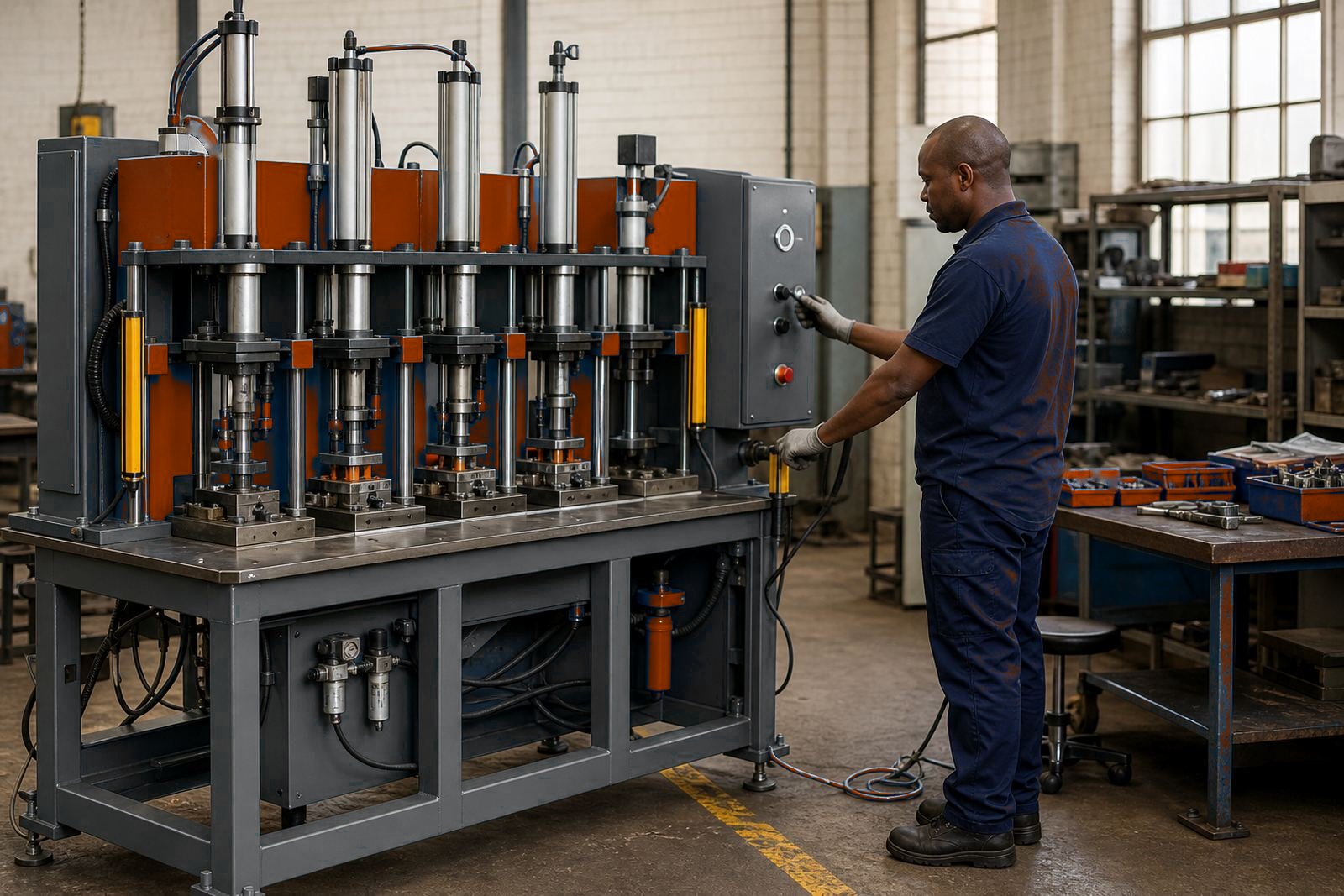
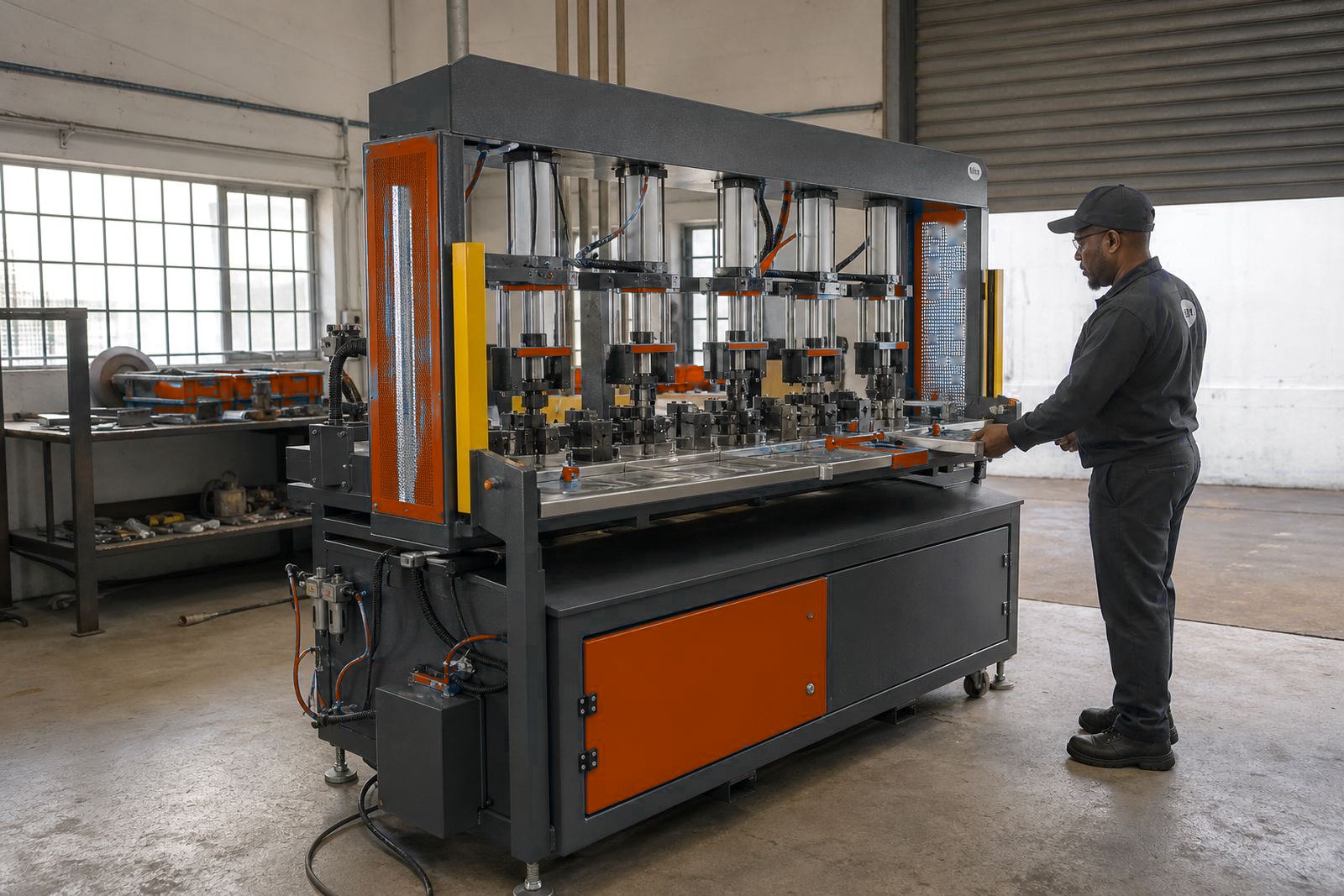
Station count shapes the whole machine. A single-station press suits a focused operation, while two, three or more stations allow different tasks to run in one cycle, with each station set for its own tooling and stroke. On a busy line, that can mean one station for locating, another for crimping, and a final station for inspection or pack sealing.
The frame, platen size and operator reach must match the workpiece. If a part is long or awkward, the stations need space for safe loading and for the tooling to close squarely. We look at the part path first, then the cycle, then the guarding, because that order keeps the machine practical on the floor.
- One station for a single forming or joining step
- Multiple stations for staged assembly and control
- Station spacing set around the part, not the other way round
- Tool access planned for loading, maintenance and cleaning
Tooling questions that affect the finished part
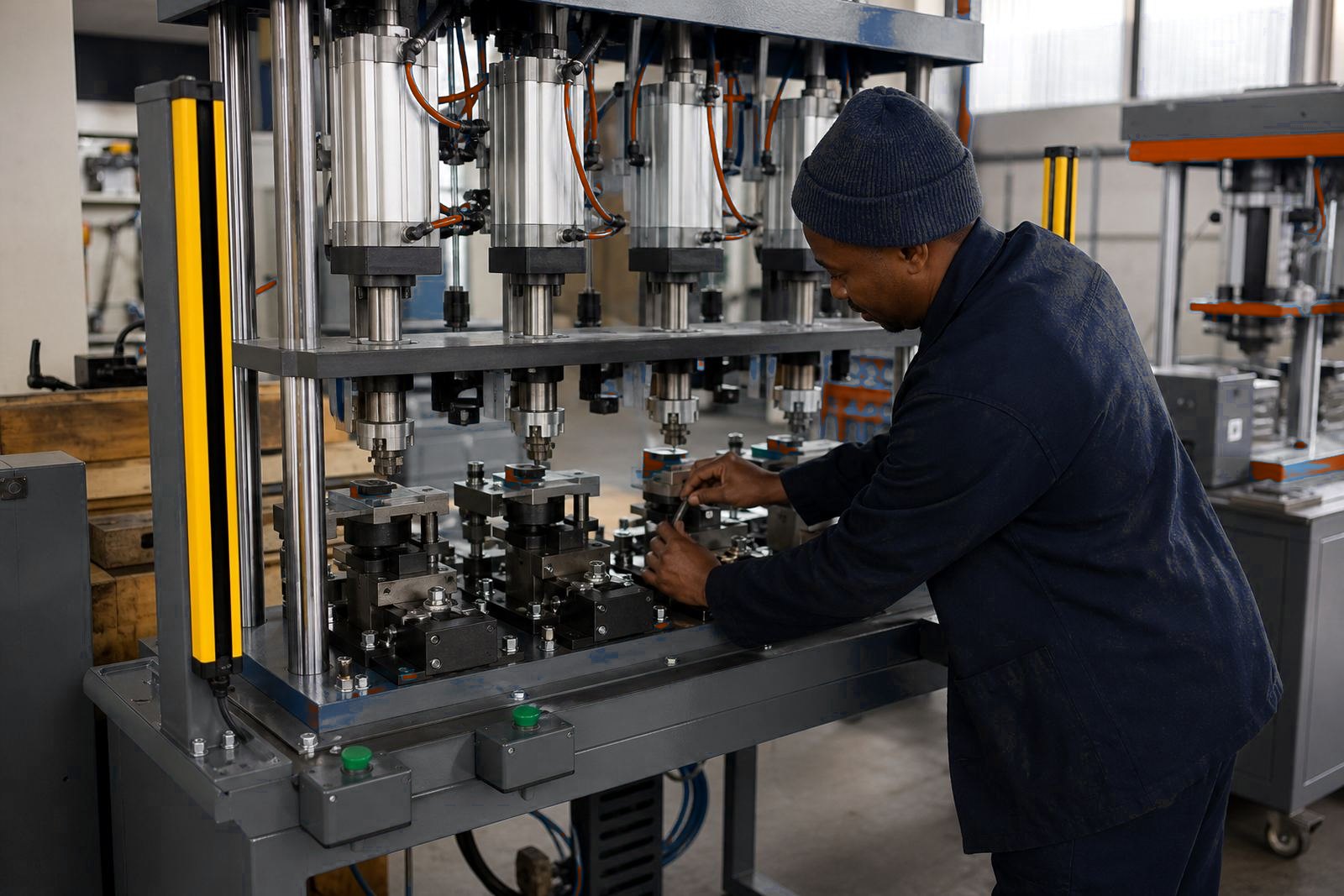
Tooling does the real work, so it needs to suit the part material, hole positions, rivet type, crimp profile or seal layout. A press may have the same frame as another job, but the tooling can differ completely. That is normal. A clean tool path, proper guidance and correct alignment reduce burrs, skewed crimps and uneven closure.
For repeat work, we set the tooling to hold the part the same way every cycle. For mixed parts, changeover points need to be clear and accessible. Tooling changes should keep part location and stroke position consistent. When the tool is built around the workpiece, output becomes far easier to control.
- Crimping tools need even pressure across the fold or terminal
- Riveting tools need controlled setting depth and clean support
- Staking tools need accurate travel and firm part location
- Pack sealing tools need consistent closure and stable heat-free contact where relevant
Guarding, two-hand controls and light curtains
Press safety starts with a proper guard plan. For many jobs, that means fixed guarding, interlocked access, two-hand controls or light curtains, depending on how the operator loads the part. The safest arrangement is the one that still allows normal work without reaching into the danger zone.
Two-hand controls are useful where the operator must stay clear during the cycle. Light curtains suit some open loading areas, provided the stop distance and machine response are checked properly. Guarding should not feel like an afterthought bolted on at the end. It needs to match the station layout, the stroke and the way the line is actually used in the shop.
- Guard openings sized for the part and the hands that load it
- Two-hand controls placed for natural operator stance
- Light curtains set around the actual reach point
- Access doors arranged for tooling checks and cleaning
Air pressure, stroke setting and press control
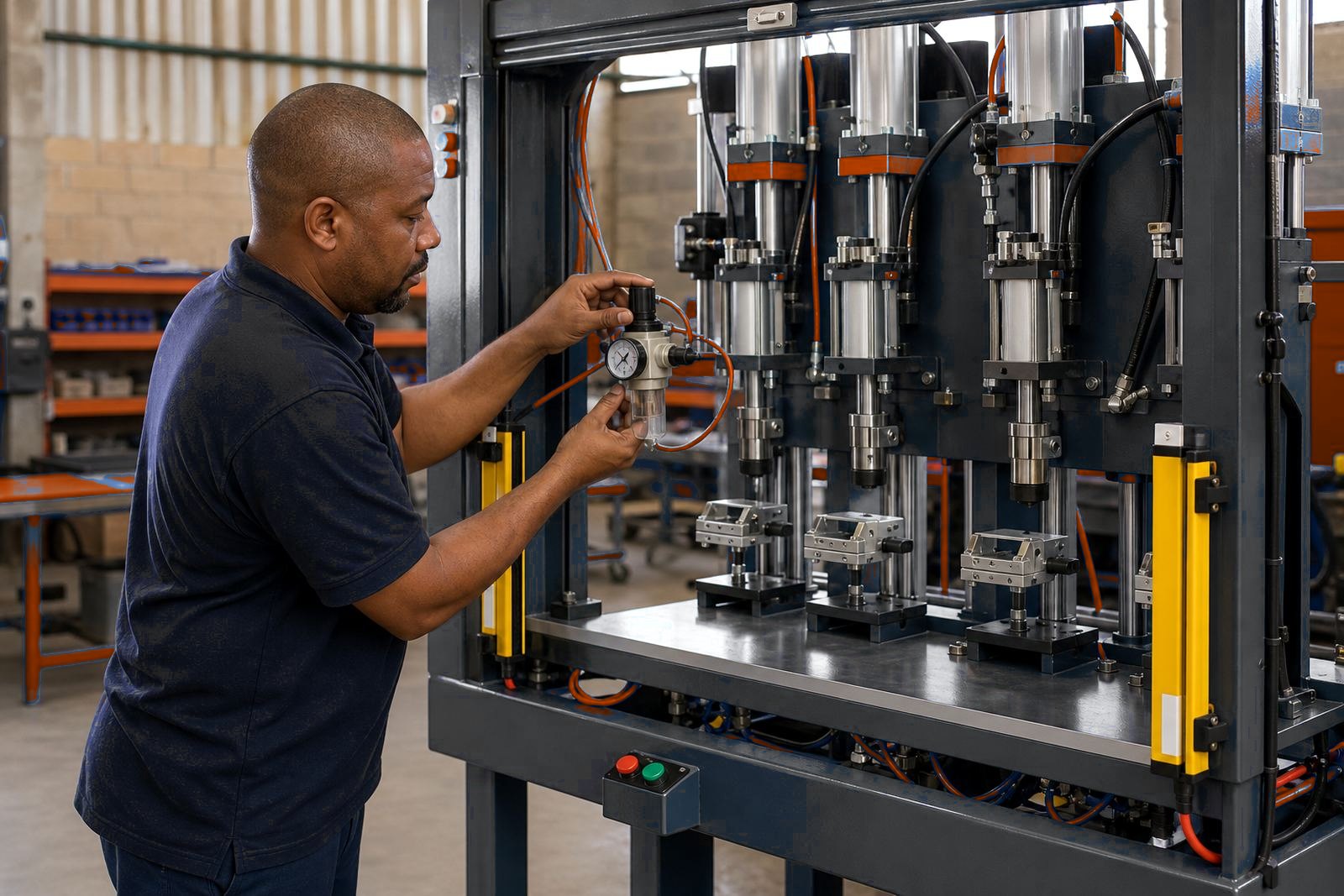
Pneumatic presses depend on stable air supply, correct pressure and a stroke set to the job. Too little pressure can leave an incomplete crimp or weak stake. Too much force can damage the part, bruise surfaces or shorten tool life. Stroke setting is just as important, because the tool must close to the right depth and stop there, every cycle.
We also look at air line layout, filter condition, condensate control and regulator placement. In coastal towns the air system can pick up extra moisture, so line care matters. A press that runs clean air and steady pressure is easier to keep consistent through a shift, especially when the line is doing close tolerance work.
During commissioning, we test the cycle at load and at full production pace, then set the controls so operators can repeat the same result without chasing adjustments through the day.
What commissioning covers on a factory floor
Commissioning is the stage where the machine meets the real line. It covers placement, levelling, air line setup, stroke setting, safety checks and trial runs with actual parts. We also check the loading side, the discharge side and the operator position, because a press that works in isolation may still be awkward on the floor.
Production handover follows only after the machine is stable enough for the team to use with confidence. That handover includes the control sequence, the station order, the tool change method and the basic fault checks that belong on the floor, not in a binder on a shelf.
- Site installation and position checks
- Air line setup and pressure verification
- Stroke setting and cycle testing
- Tooling changes and handover of operating steps
Training questions operators usually ask first
Operator training is most effective when it follows the real MultiPress machine, not a general script. People want to know where to stand, how the two-hand controls behave, what the light curtain does, and how to tell when the tool is not seating correctly. They also need to know which checks belong at the start of a shift and which signs mean the press should be stopped.
We keep training tied to the job being run, whether that is assembly, riveting, staking or pack sealing. The aim is steady use, fewer errors and fewer surprises during changeover. Training is also useful for supervisors who need to spot drift in stroke, pressure or part location before scrap starts creeping in.
- Safe loading and unloading positions
- Recognising poor alignment or uneven closure
- Tool change steps and basic upkeep checks
- What to do when the cycle does not settle properly
How to send the right details for a press brief
For a useful enquiry, send the part description, station count if known, material type, target cycle and the task the press must carry out. Photos of the current setup, a rough sketch with measurements and any guarding concerns help a lot. If the line already exists, note the available space, air supply and where the operator stands.
our contact form is where to send those details. It helps us work from the actual job rather than a vague description, and it keeps the brief together for tooling, guarding and commissioning planning.
- Part size, thickness and material
- Required operation: assembly, crimping, riveting, staking or sealing
- Available floor space and station layout
- Safety controls already in place or still needed