What this commissioning support covers
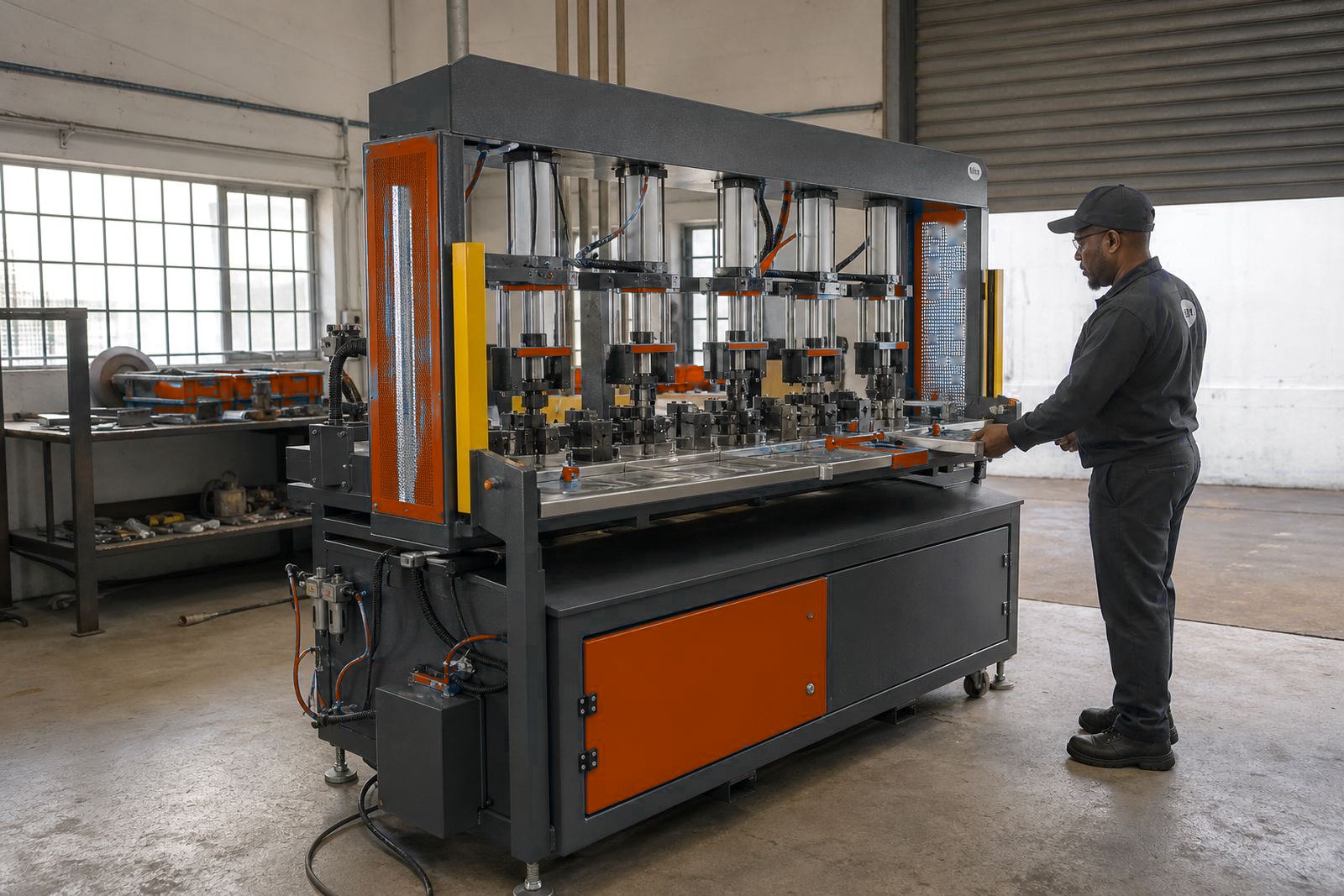
Our commissioning work suits multi-station pneumatic presses used for assembly, crimping, riveting, staking and pack sealing. The visit is planned around the press frame, cylinders, tooling stack, air supply, guarding and the way operators move through the line. We look at the full run from first clamp to final part release so the machine can be set for the job in front of it.
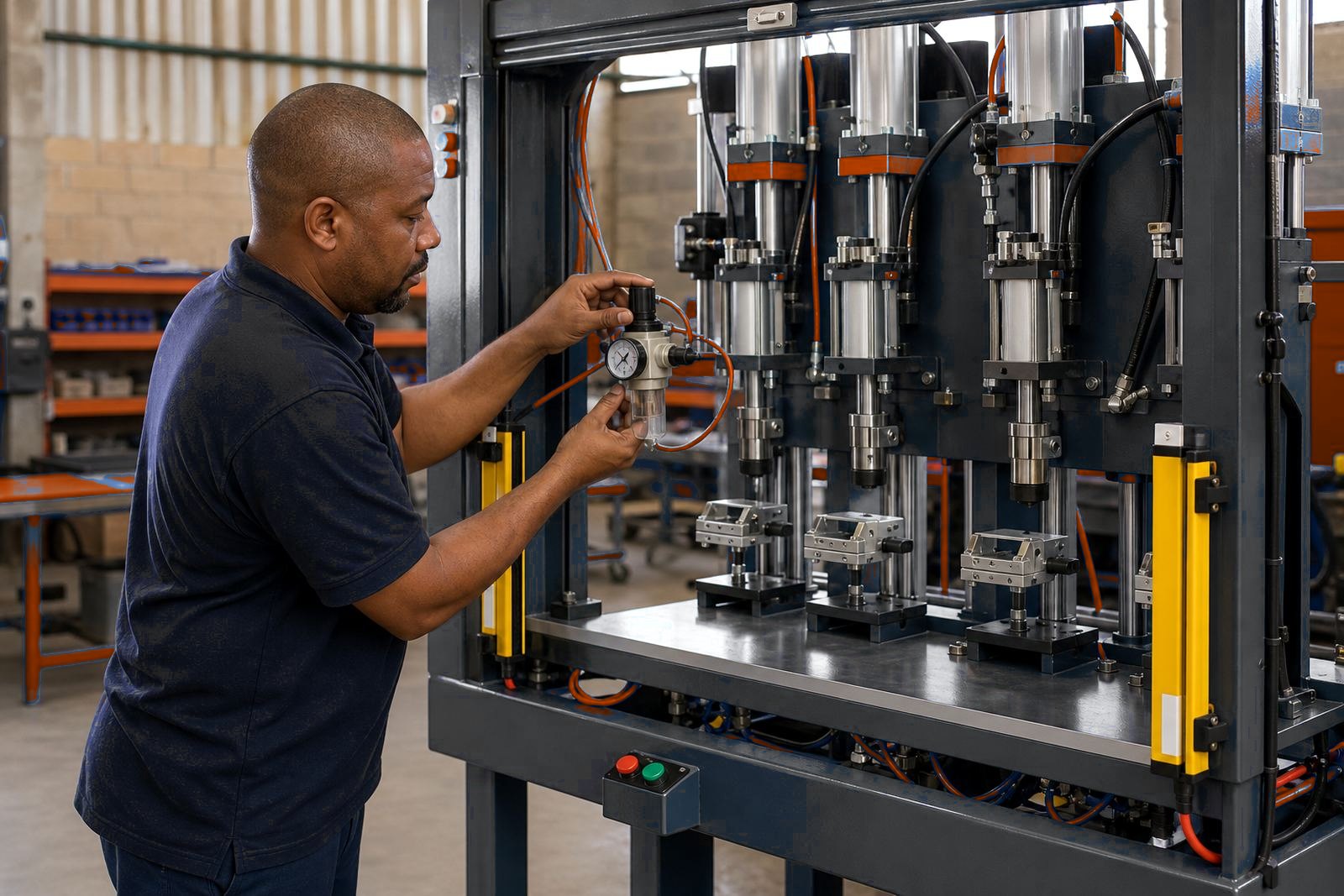
That can include stroke setting, pressure adjustment, two-hand control checks, light curtain alignment and a tidy air line layout. If the press is being moved into a new bay, we also review the site layout, anchor points and access around the machine.
Before the team arrives on site
A solid start makes the handover smoother and keeps the press setup close to the real production need. The more exact the job details are, the simpler it is to pair the tooling and controls with the part.
- Press type and station count
- Part drawing or sample parts
- Target operation, such as crimping or riveting
- Available air pressure and line condition
- Guarding already in place, if any
- Operator count and shift pattern
- Site location in South Africa
For pack sealing lines, we also need to know the pack size, material type and where the seal point sits on the cycle. Small details matter, especially where the tooling has to hold position repeatably.
Site installation and line positioning
Installation work starts with the physical position of the press and the way the station feeds the part. A multi-station unit needs enough room for loading, ejection and safe access to the controls. We check that the frame sits square and that the working face is easy to reach without awkward movement.
Air line setup is part of the same visit where required. Clean air, proper connections and the right pressure range help the cylinders behave consistently, especially on repeat runs with tight crimp or stake dimensions. If the line includes multiple stations, each station must be identified and set in the correct sequence.
Tooling, guarding and control checks
Custom tooling is often the difference between a press that runs neatly and one that needs constant adjustment. Tool faces, nests, locators and guides are checked against the part shape and the stroke length. Where the tooling changes between jobs, we make sure the changeover steps are practical for the floor team.
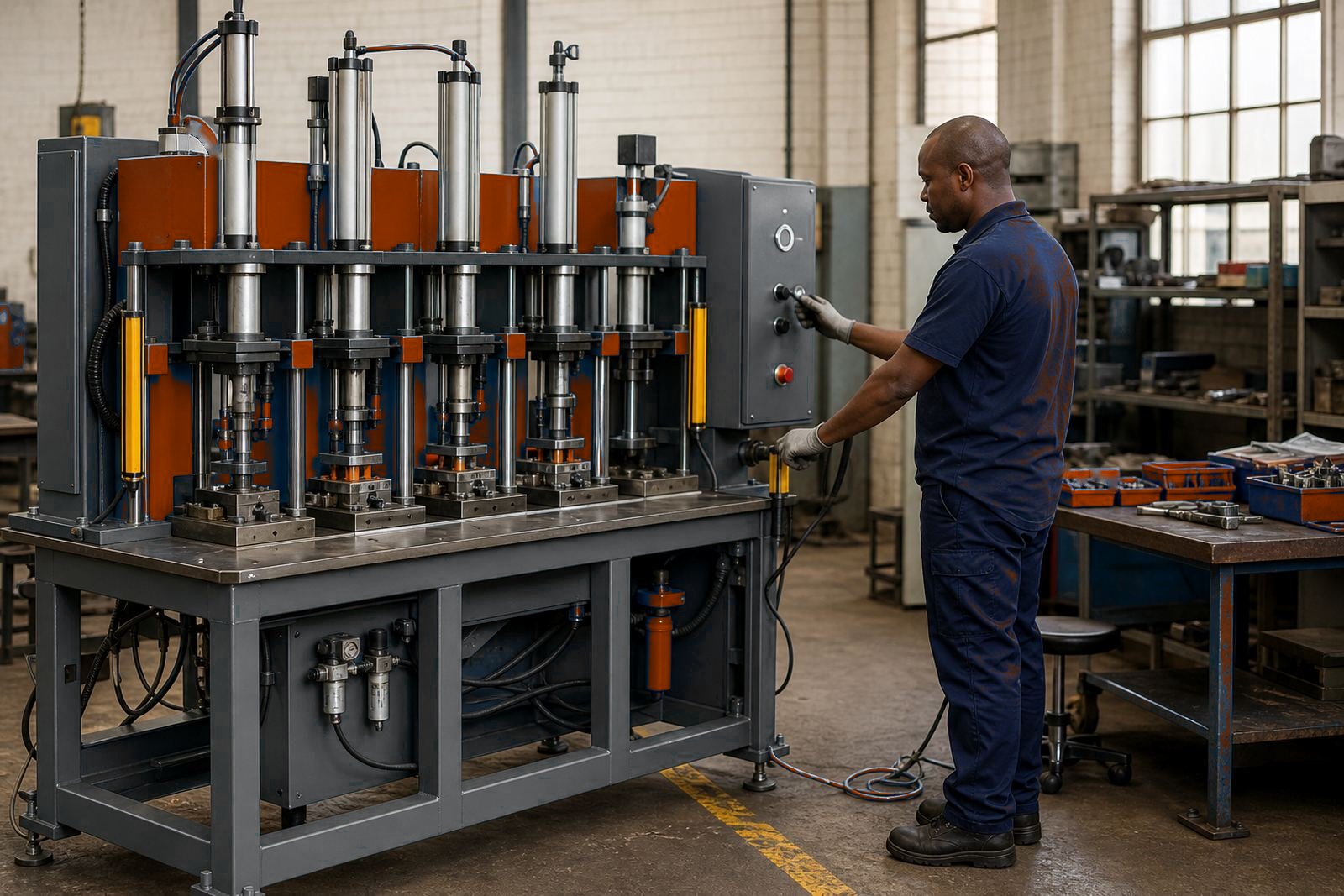
Guarding and control checks are handled with the same care. Two-hand controls need to be comfortable to use without forcing the operator into an awkward stance, and light curtains must protect the work area without interrupting normal motion. For presses working near open feed points, the guarding layout is included in commissioning from the start.
- Tool fit and alignment
- Stroke and dwell setting
- Two-hand control test
- Light curtain position check
- Guard access and closing points
- Part release and ejection path
Running the first parts through the press
Once the machine is installed and the controls are checked, the first parts are run through at a careful pace. This is where stroke depth, air pressure and tool contact can be read together, because one setting affects the next. A pressing cycle that looks fine on paper can still need fine tuning when the material is in front of the tool.
We watch for marking, off-centre movement, incomplete crimping, loose rivets or a stake that is sitting too shallow. Small corrections at this stage save waste later. On pack sealing jobs, the test run also checks seal pressure, repeat contact and the final pack appearance.
Operator handover and training on the floor
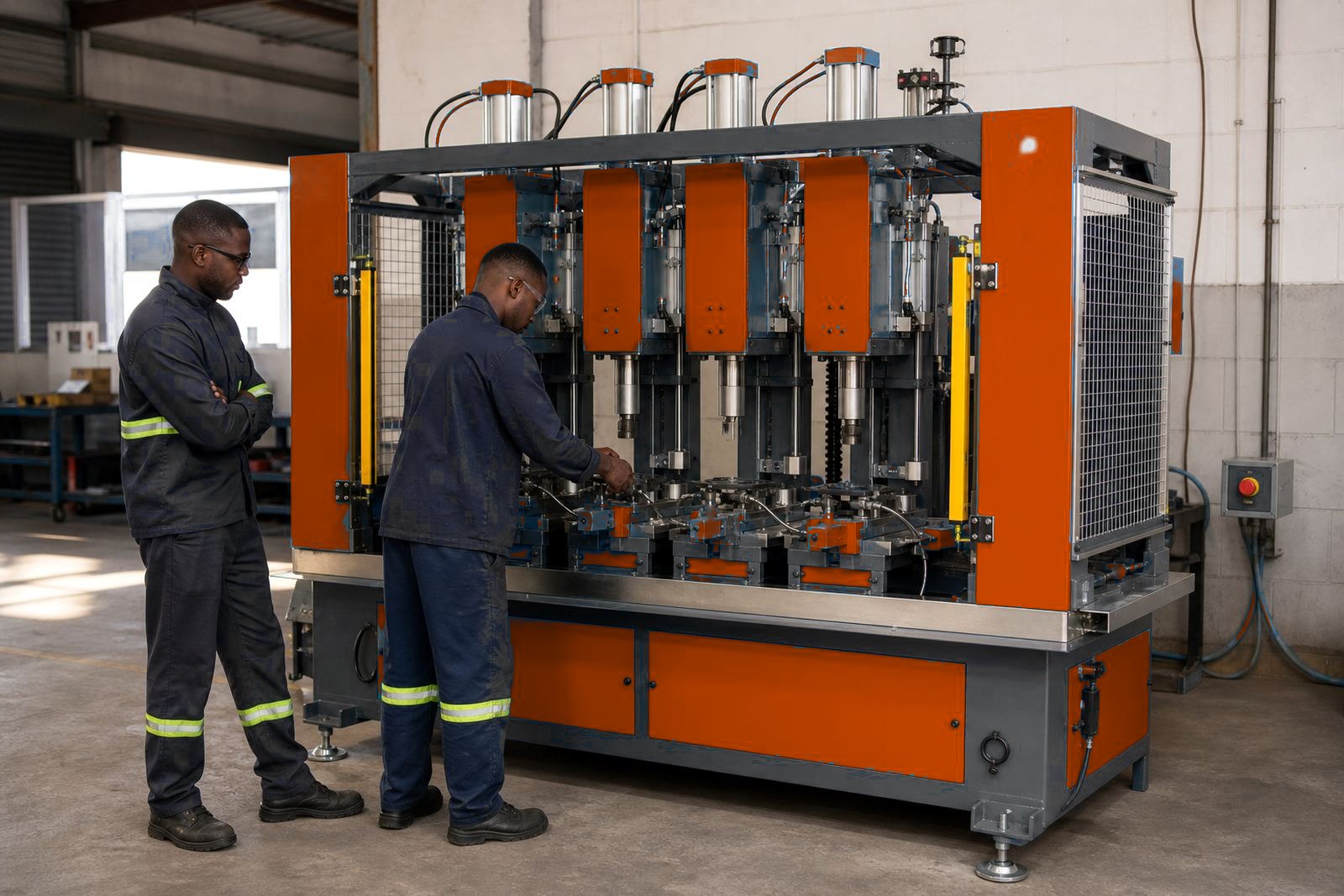
Operator training sits inside the commissioning job, not beside it. The team needs to understand the controls, the safe loading method, the fault signs and the steps for routine checks before a shift starts. We keep the handover close to the actual machine so the instructions match the real station.
The training covers the work that operators meet every day, including tool change points, guarding checks, two-hand control use and what to look for when a press sound changes. A short written handover note can also be left for the line supervisor, with the settings that were used during the final run.
Where commissioning support is requested
MultiPress handles commissioning enquiries for factories in Isando, Johannesburg, Pretoria, Durban, Gqeberha, East London, Kempton Park and Boksburg. We also support lines going into new bays, relocated presses and production changes where the station count or tooling needs to be reset.
Use our contact form on our contact page and add the site suburb, the press type, the job being run and whether you need installation, setup or operator handover support. If the line has a guarding change or a new tooling set, mention that as well so the job scope is clear from the start.