Start with the cell, not just the machine
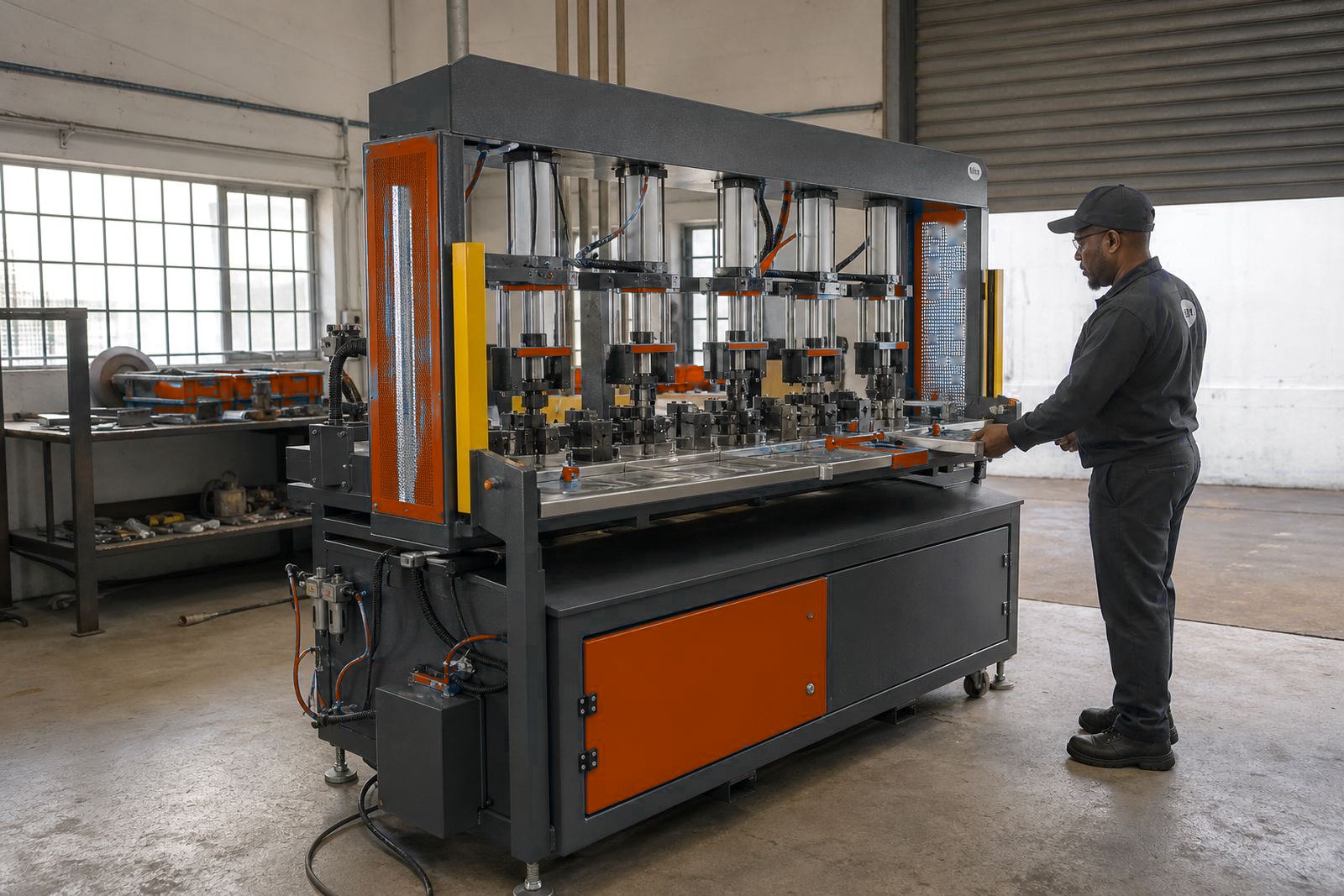
Training makes more sense when it starts with the full press cell. A multi-station pneumatic press can have one station for loading, another for forming or crimping, then a final station for inspection or pack sealing. The operator needs to understand how air pressure, stroke length, tooling position and guarding work together before any production run begins.
On site in Isando, Johannesburg, Pretoria, Durban, Gqeberha or East London, we look at the actual station layout and the way parts move through the cell. That includes whether the press is set up for single part handling, multi-part placement, or repeated cycles with tooling changes between batches. The training then follows the real sequence, not a theory sheet that does not match the floor.
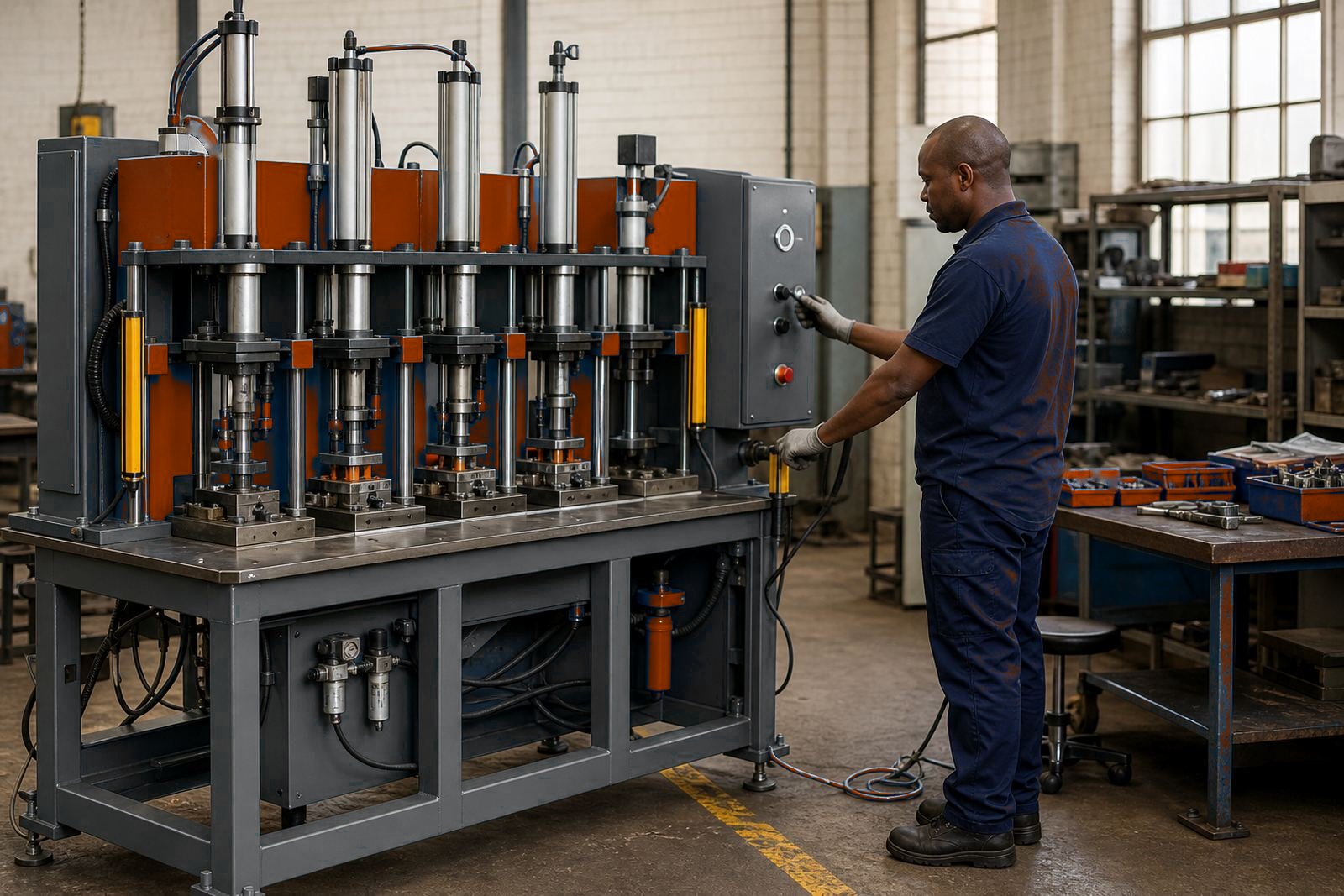
For new cells, the first session usually covers safe loading, two-hand controls, light curtain behaviour, and how to read the machine state before a cycle starts. For existing cells, we often find the operator team needs a reset on stroke setting, part positioning and the point where a press stop must be called before a bad part becomes a bigger problem.
What we cover during operator training
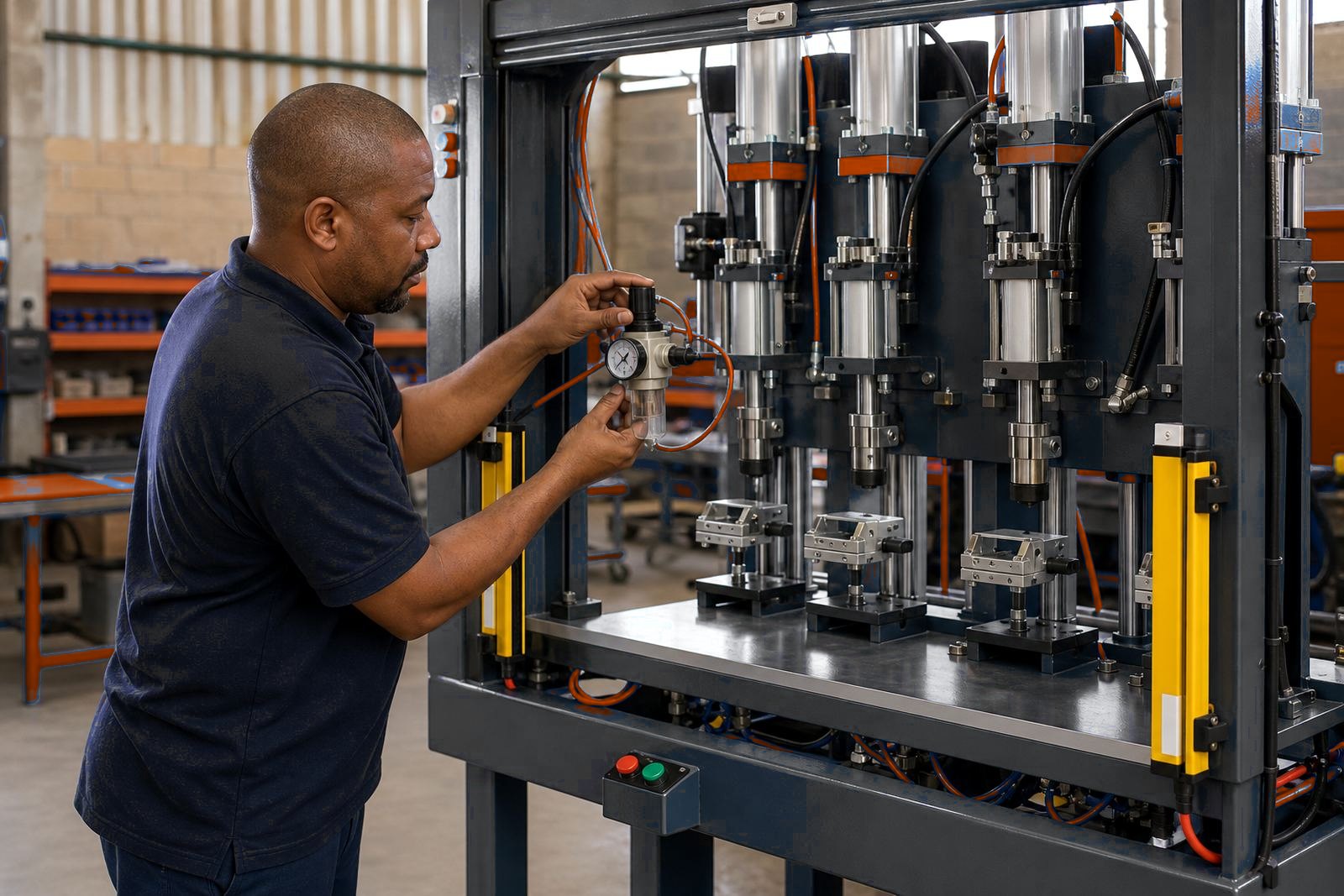
The training content depends on the tooling and the job, but the basics stay practical. Operators need to know how the cylinders move, what the press should sound and feel like under normal pressure, and where to check for drift in stroke or alignment. If the line has guarding, light curtains or two-hand controls, those are tested as part of the session rather than treated as extra items at the end.
- Loading and unloading parts without forcing the station
- Using two-hand controls correctly for each cycle
- Reading stroke setting and part depth by station
- Checking tooling location before crimping, riveting or staking
- Spotting unsafe movement, air leaks or guard faults
- Cleaning the work area and keeping press faces clear
- Handling short changeovers where tooling or fixtures move
Where pack sealing is involved, we also cover how heat, pressure and dwell settings affect the seal area, even when the press itself is pneumatic and the seal line is only one part of the station. That matters on production lines where a small setting change can alter the finish or the hold on the pack.
How a training request is prepared
When you send a training request through our contact form, give the model of work in plain terms, not a long narrative. Say what the press does, which stations are in use, and whether the team needs first-time training, refresher training, or support after a tooling change. If the line is in a factory in Kempton Park, Boksburg or elsewhere in Gauteng, include the site access note too, because that helps us plan the visit properly.
A clear request usually includes the part type, the press cycle, the guarding fitted, and any trouble spots the team has noticed. If the issue is high scrap, missed strokes, or operators who are unsure about safe start-up, say that directly. A short note is enough. The detail we need is the detail that changes the training plan.
- Press type and number of stations
- Main process: assembly, crimping, riveting, staking or pack sealing
- Guarding in place, including light curtain use
- Training level needed for the operator group
- Any recent tooling or fixture change
- Site town and access notes
Training for new cells and existing lines
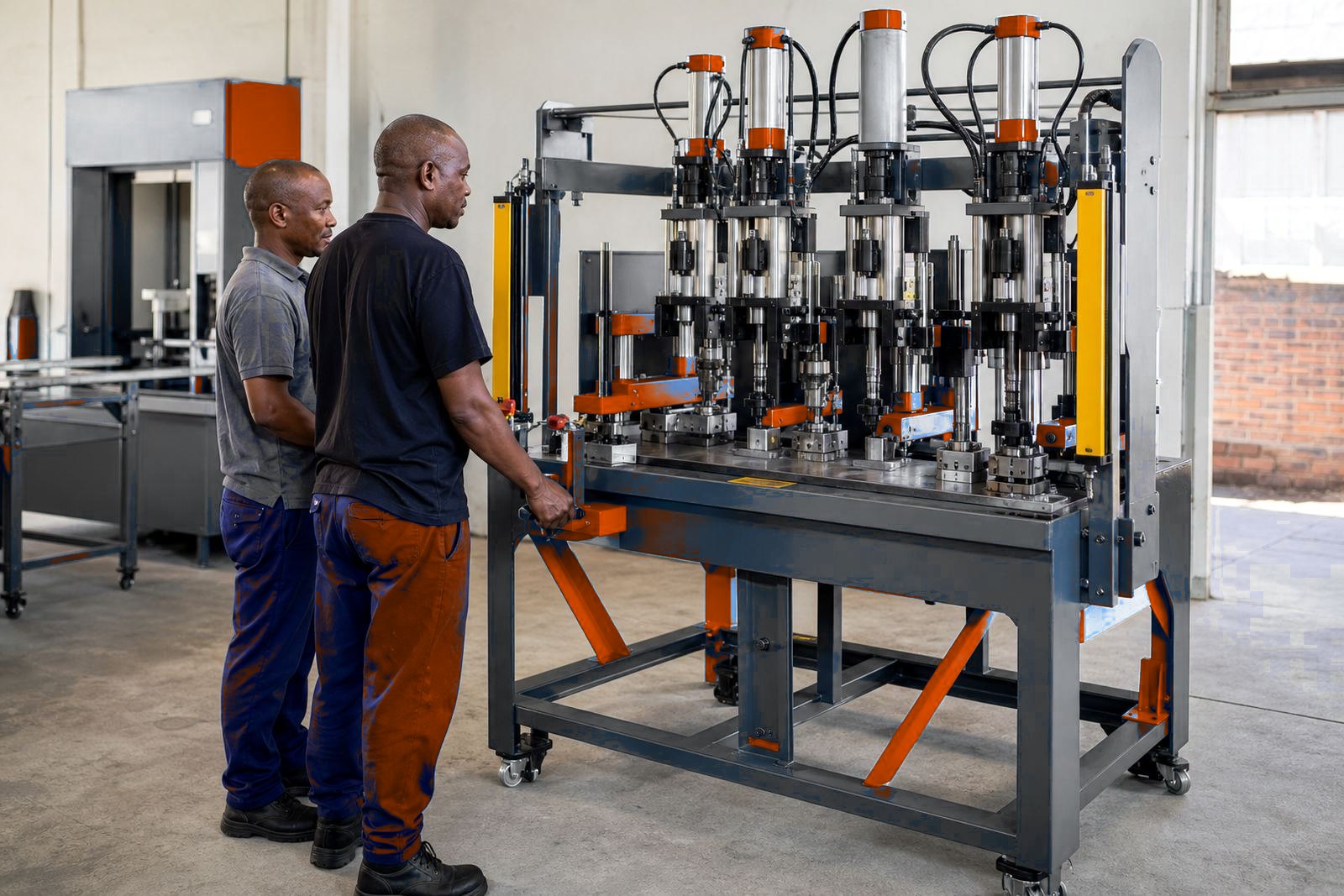
New cells usually need a fuller start-up session. We walk through the tool face, the part flow, the control sequence and the safe stop points, then show the operators how to keep the station steady from shift to shift. Existing lines often need shorter but sharper support, especially where the line has drifted after a tooling change or a new part revision.
If the press is set up for crimping or riveting, the team must know what a proper finish looks like and where a weak cycle begins. Staking work needs the same care because the part can look seated while the form is still wrong. On pack sealing stations, the operator must understand dwell and pressure consistency, not just cycle speed. These are the points that stop waste spreading across the shift.
Where needed, we also support the handover between project work and production use. That can include a short run-through for supervisors, a note on daily checks, and a practical explanation of what must be logged when the press stops behaving as expected.
What the trainer checks on the floor
Before a training session is signed off, the floor checks matter. The operator team needs to see the station running correctly, not only hear about it. We check the part feed, the tool condition, the guard function, and whether the stroke lands where it should. If the press is working with compressed air over long runs, the air line setup and pressure stability also need attention.
Typical checks include the following:
- Tool alignment on the press face
- Two-hand control timing and reset behaviour
- Light curtain coverage at the working zone
- Stroke depth at each station
- Part seating before the cycle closes
- Clean changeover points for tooling changes
The floor check is built into the training as a hands-on step. Operators learn faster when they can see the effect of a setting change and watch the same station behave differently with the correct adjustment.
Across South African sites and shift patterns
MultiPress works from Isando, Ekurhuleni and supports press training at factories across South Africa. Johannesburg, Pretoria, Durban, Gqeberha and East London all have different floor routines, but the training goals stay the same: safe operation, steady output, and fewer avoidable stoppages. A busy line in a coastal plant may need extra attention to tooling condition and guard cleanliness where moisture and dust build up on working faces.
Shift pattern matters too. A morning team may need a different handover note from a night team, especially where the cell runs assembly in one part of the shift and pack sealing later on. We keep the instruction tied to the actual working pattern, so the people using the press can apply it without guessing what the previous crew meant.
Our team includes Pieter Sauls, Thandiwe Matlala, Musa Hartnick, Johan Ramokgopa, Lerato Moagi and Anele Engelbrecht, and each role feeds into the training handover in a practical way. That makes it easier to match the press setup, the tooling and the operator’s task without turning the session into theory.
Send the training brief
Use our contact form and set out the job in a few straight lines. Tell us whether the request is for a new cell, an existing press line, or a line that has changed after new tooling. If there is a guarding concern, a stroke issue, or a problem with cycle consistency, mention that up front so the training plan fits the cell that is actually on the floor.
We handle training requests for individual stations, full press cells and production teams that need a proper reset after tooling or layout changes. The result should be a crew that understands the machine, the press points and the sequence they must follow each shift.