Air supply that suits a press line
Multi-station pneumatic presses need more than a compressor and a hose dropped near the frame. The air path must suit the number of stations, cylinder bore, stroke length, cycle rate and the kind of work being done, whether that is assembly, crimping, riveting, staking or pack sealing. We plan the line so each cylinder sees the pressure it was set up for, without long dead legs, sharp pressure loss or awkward bends that strain fittings.
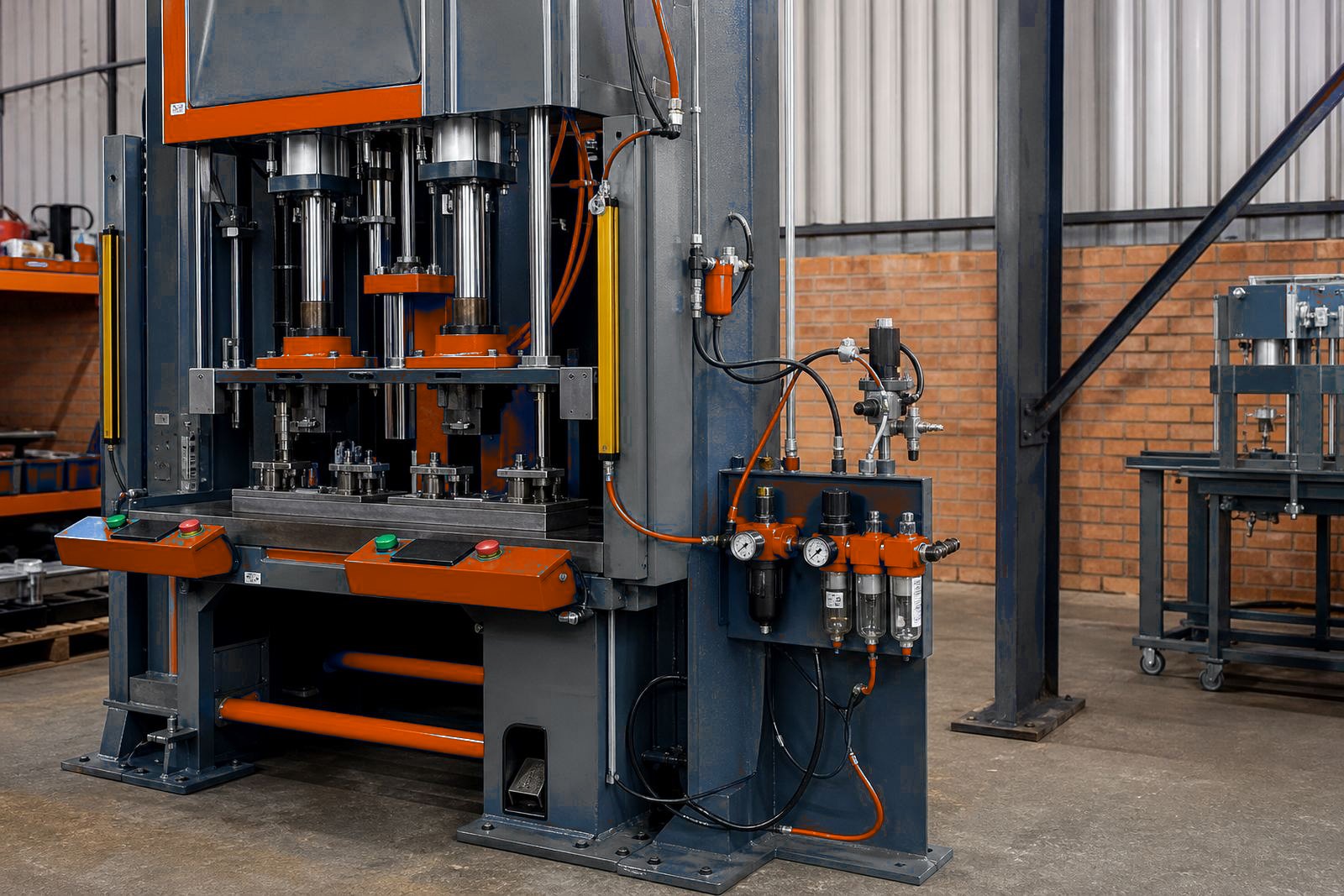
On many jobs the air preparation set starts with a filter, regulator and water trap positioned where the operator and maintenance team can reach it. From there we route pipework or hose to the manifold, then to each station with enough slack for guards and tooling changes but not so much movement that the line rubs or kinks. In coastal areas humidity brings extra moisture into the system, so drainage and separation matter just as much as pressure.
- Air preparation sized to the press demand
- Pressure regulation matched to each station or group of stations
- Moisture control for cleaner cylinder operation
- Routing that leaves room for guarding and tooling access
What gets fitted on the line
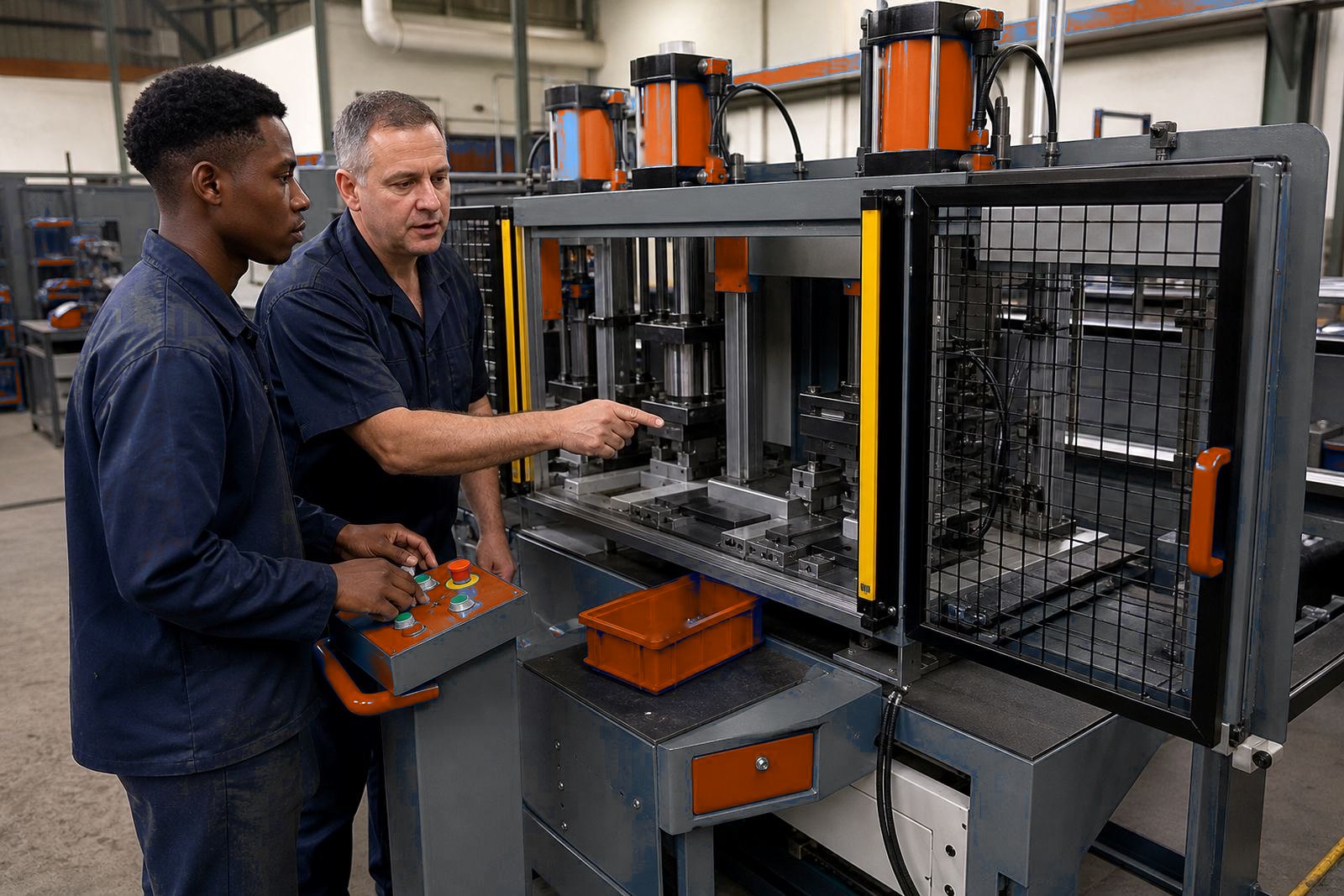
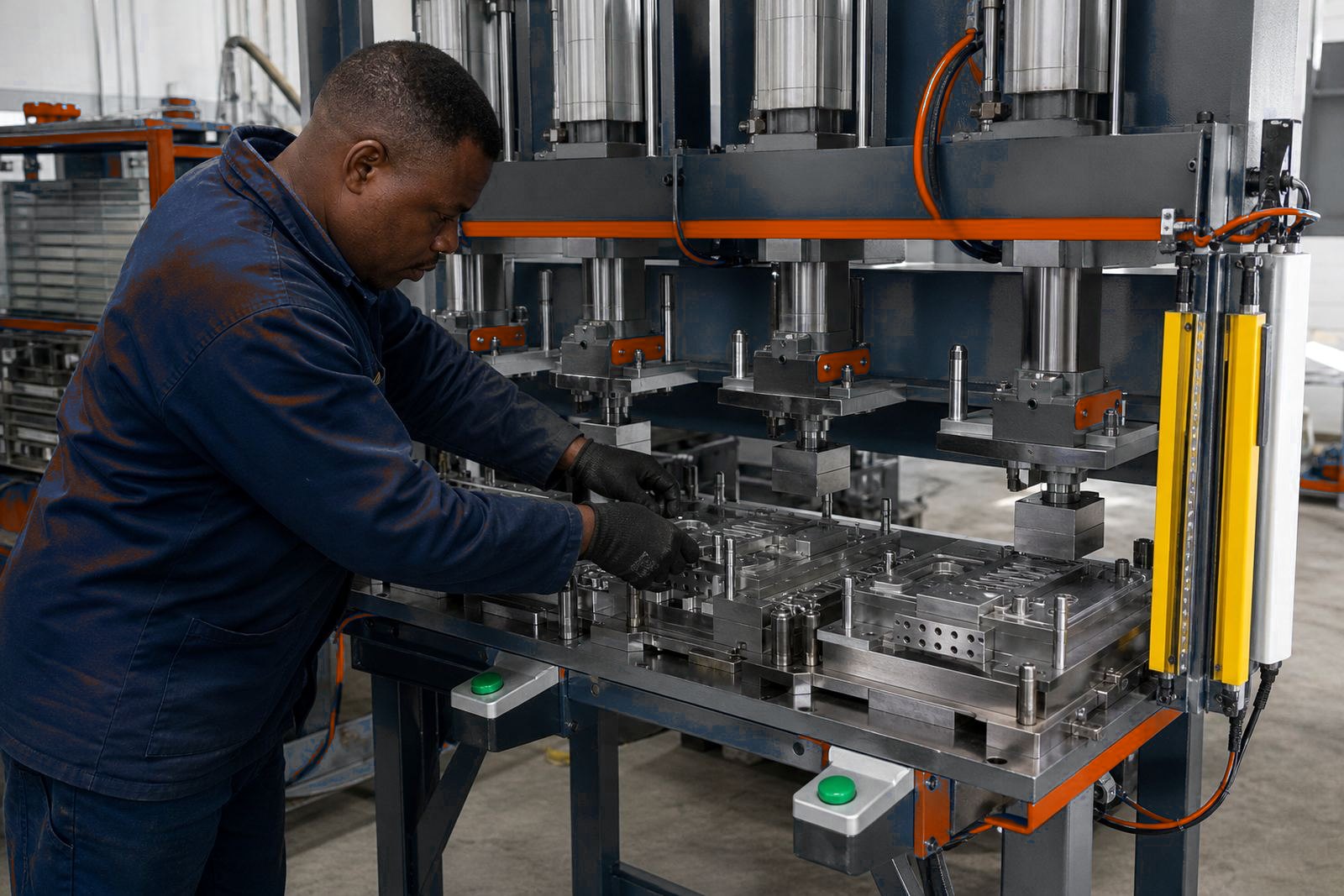
An air line setup for a press is not only about the hose run. It is also about the fittings, isolation points, exhaust path and where the controls sit on the machine. For a two-hand controlled press, the air side has to support predictable cylinder movement and a clean return stroke. Where light curtains are part of the guarding package, the air layout must not interfere with the protected area or crowd the front opening.
We work with push-in fittings, threaded fittings, rigid pipe, flexible hose, quick isolation valves and drain points as the job calls for it. On some lines, each station needs its own regulator. On others, a shared air supply with branch take-offs is enough. The detail depends on whether the station is doing a simple press fit or a heavier operation like riveting or staking that needs more consistent force and a tidy retract path.
- Filters, regulators and water traps
- Isolation valves for safe servicing
- Drain points in sensible positions
- Branch take-offs for multiple stations
- Hose and pipe chosen for the actual duty
The setup work, from first look to running checks
We start by checking the press frame, cylinder positions, tooling arrangement and the route the air must take. That includes the shortest practical path for lines, where the operator stands, where guards swing or lift, and which side of the machine gives cleaner access for future work. A line that looks neat but blocks the tooling area is not useful, so the layout has to serve the job.
Once the route is agreed, the team installs the preparation set, runs the lines, secures them against vibration and checks each station under working pressure. We then look at stroke consistency, cylinder response, leaks at fittings and the practical reach to shut-off points. If a line needs a small change for servicing access, we make it before handover so the machine is easier to live with on the floor.
That part of the job often includes a few practical details people forget at first, like where to mount the gauge, how to keep the drain reachable, and which line should be clearly marked for isolation. Small things, but they matter when the line is used every shift.
Specs that shape the air side of the press
Air line setup follows the machine specifications and is tailored to the layout. A narrow stroke press for light assembly will not ask for the same supply arrangement as a heavier crimping or riveting station. The same applies when a machine has several stations working one after another, because the demand changes as the cycle moves through the tool set.
- Working pressure set to the press and station duty
- Cylinder bore and stroke used to size the air path
- Number of stations taken into account for line loading
- Tooling force and cycle speed considered during setup
- Guarding and light curtain positions allowed for in the route
- Drain and isolation points placed for practical access
We also factor in how the press is used day to day. A pack sealing station may need a cleaner, lighter layout than a form and stake arrangement. A press with frequent tooling changes needs line routing that does not fight the tooling crew. The air side should make the machine easier to use, not harder to reach.
Pricing that follows the machine, not a flat rule
The pricing approach for air line setup depends on the actual machine, the number of stations, the length of the line run, the fittings required and whether the job includes new preparation hardware, rerouting, or clean-up of an existing installation. A short internal layout in a workshop frame is a different job from a full press line with multiple stations and guarded access. The quote follows that difference.
Where the line must work around existing guarding, a two-hand control layout or a light curtain, the install takes more planning and more careful routing. If the air supply needs extra isolation points or a better drain arrangement for easier servicing, that is included in the scope. We keep the explanation plain so the customer can see what is being fitted and why it matters to the press.
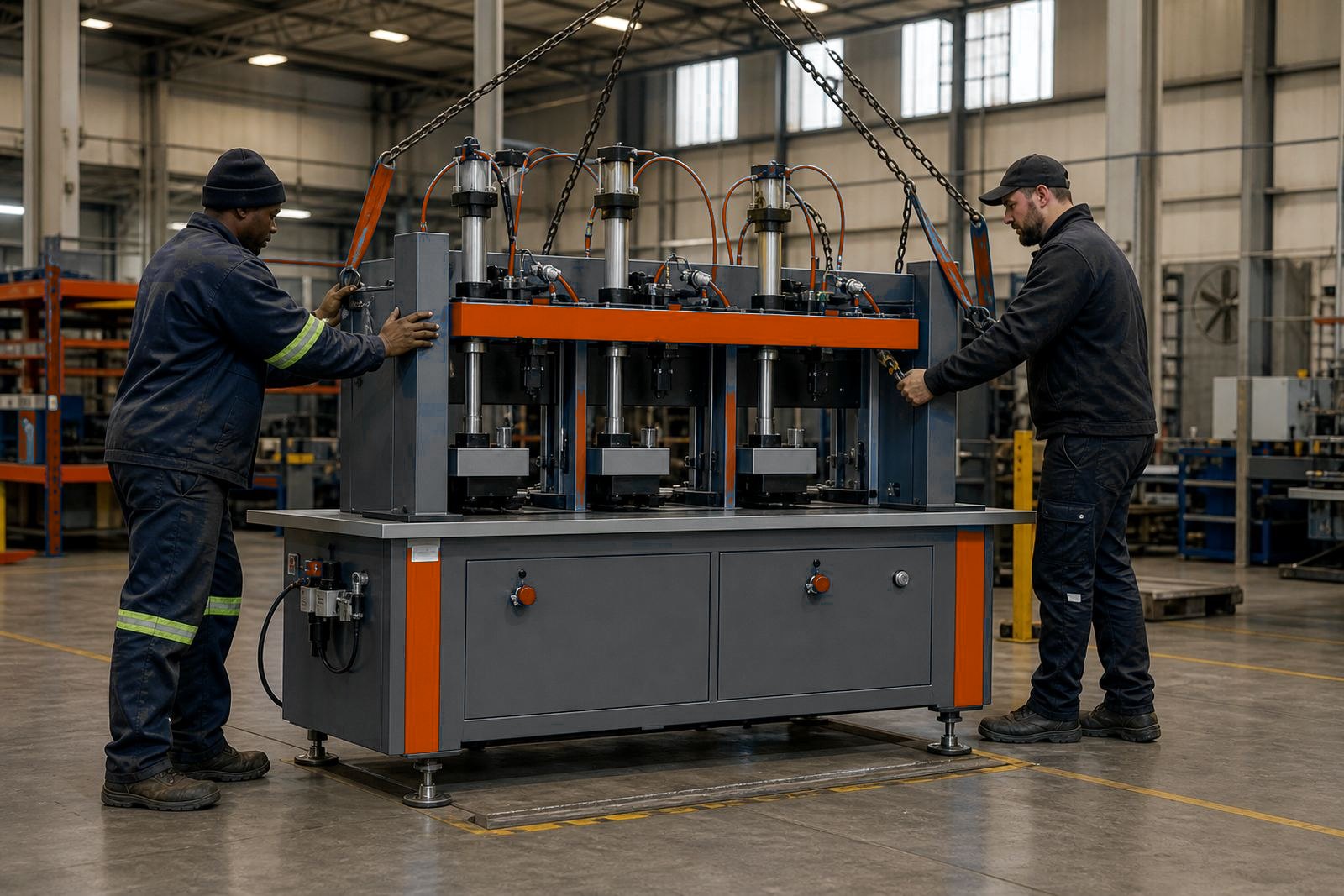
Isando jobs often need workshop coordination around machine access and lifting space, while plant work in Johannesburg, Pretoria, Durban, Gqeberha and East London can bring longer runs, tighter access or more than one machine on the same air supply. The final figure depends on those conditions, plus the tooling arrangement and the condition of the existing line.
Commissioning, handover and support after the line is live
Once the line is in place, commissioning checks make sure the press is getting stable air at the stations that need it. We verify pressure at working points, watch for leaks, confirm the isolation valves are reachable and make sure the cylinder movement suits the stroke setting. If the machine is part of a production line, we also look at how the air setup fits with the operator station and the production flow.
Aftercare is practical. We show the team where the drains are, which parts should be kept clear and how to isolate the line for servicing. If a press is moved, retooled or adapted for a new job, the air layout often needs small changes and we handle those as part of the ongoing support around the machine. The aim is to keep access sensible and the line easy to work on, without turning every adjustment into a disruption.
- Pressure checks at working stations
- Leak checks at fittings and joins
- Isolation and drain points explained on handover
- Practical support for tooling changes and line adjustments
Key facts
| Service | Air Line Setup for multi-station pneumatic presses |
|---|---|
| Typical applications | Assembly, crimping, riveting, staking and pack sealing |
| Air components | Filter, regulator, water trap, isolation valves, gauges and fittings |
| Control interface | Supports two-hand controls and guarded press layouts |
| Machine factors | Station count, cylinder size, stroke and cycle demand |
| Coverage | Isando, Ekurhuleni and sites across South Africa |