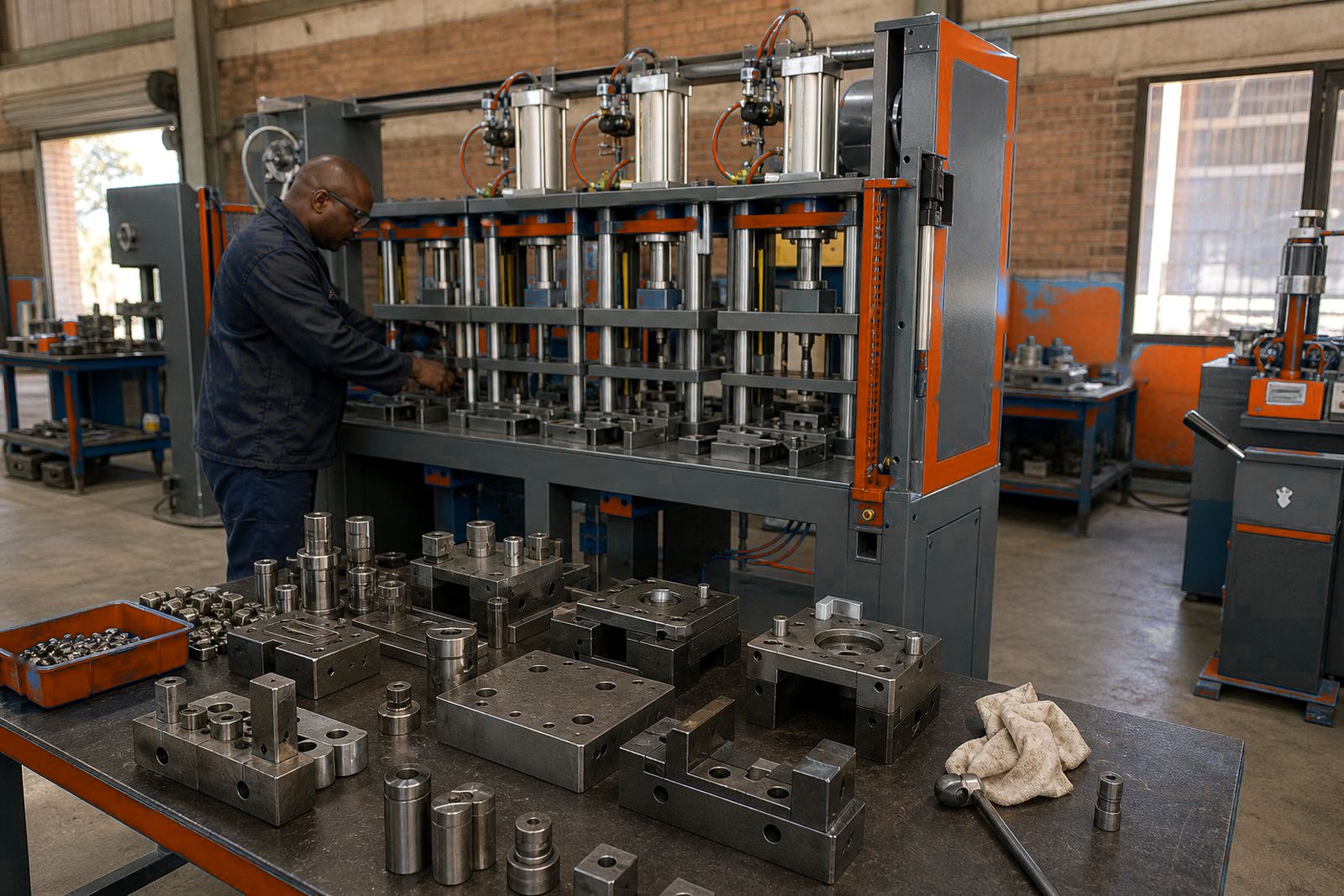
Fixtures that hold the part where the press expects it
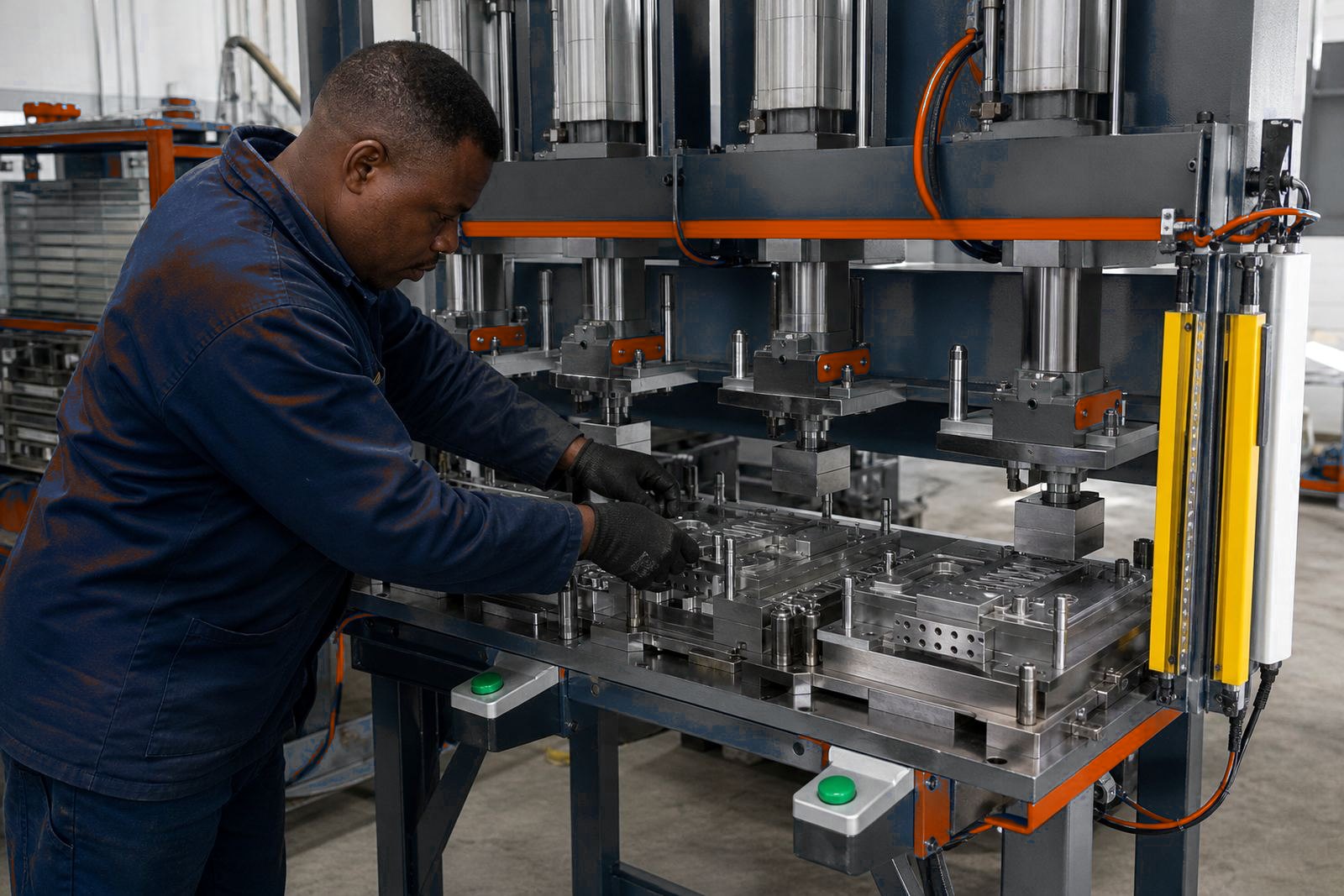
A fixture is the fixed reference point for the full pressing cycle. It keeps the component square, seated and repeatable so the cylinder stroke meets the part in the same position every time. On multi-station pneumatic presses, that means less movement at load-up, cleaner results at the press face and less variation between operators.
We design nests, locating pins, clamps and support blocks to suit the part shape, material thickness and the force needed from the press. The layout can be hand-loaded or built for feed-in handling where the part moves through a set sequence. For factory floors in Gauteng, KwaZulu-Natal and the Eastern Cape, the fixture also has to cope with dust, oil mist and day-to-day handling without drifting out of position.
- Nests for small assemblies and pressed inserts
- Location features for rivets, studs, clips and seals
- Support surfaces that reduce part flex during the stroke
- Tool access that leaves room for safe loading and unloading
What goes into the design work
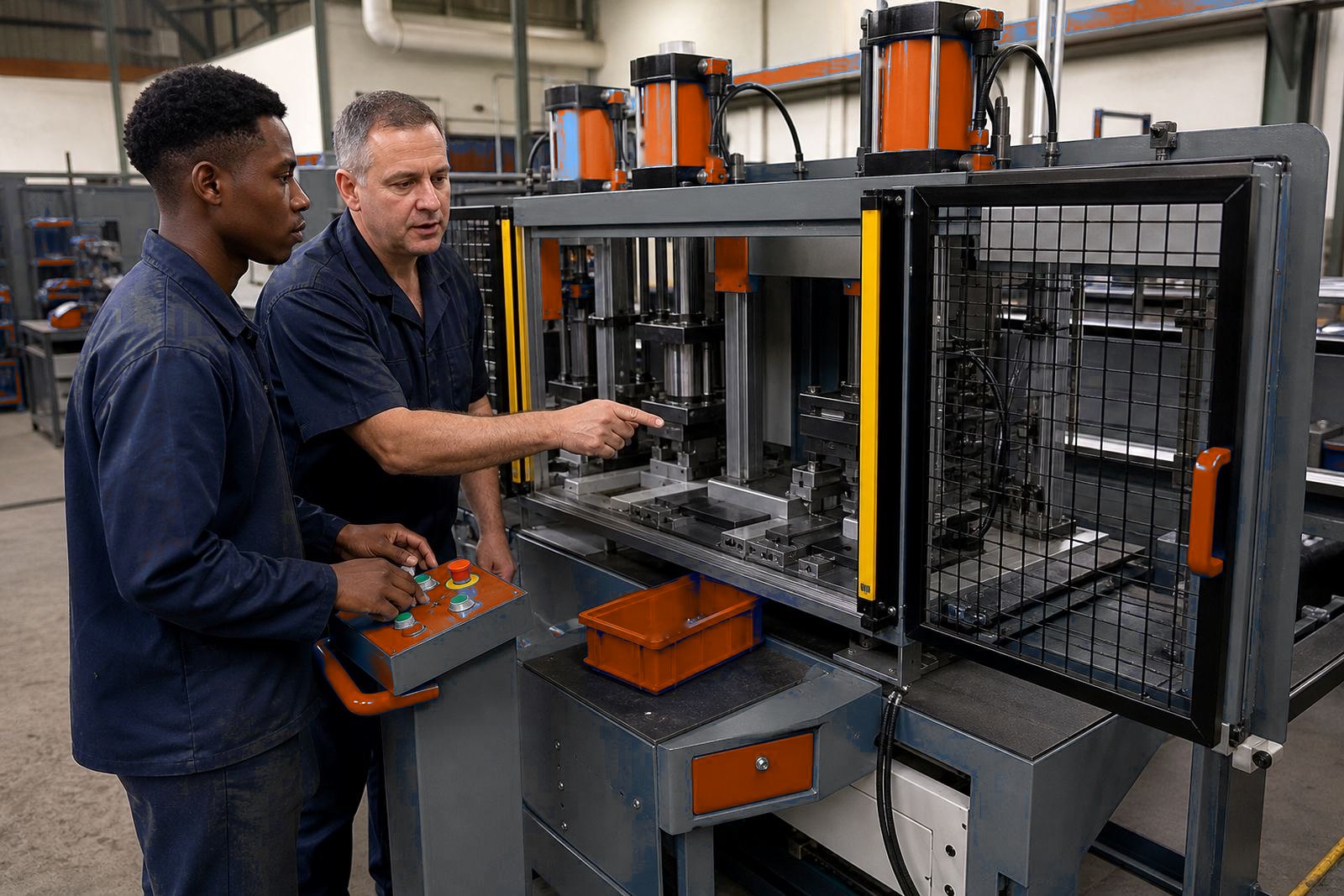
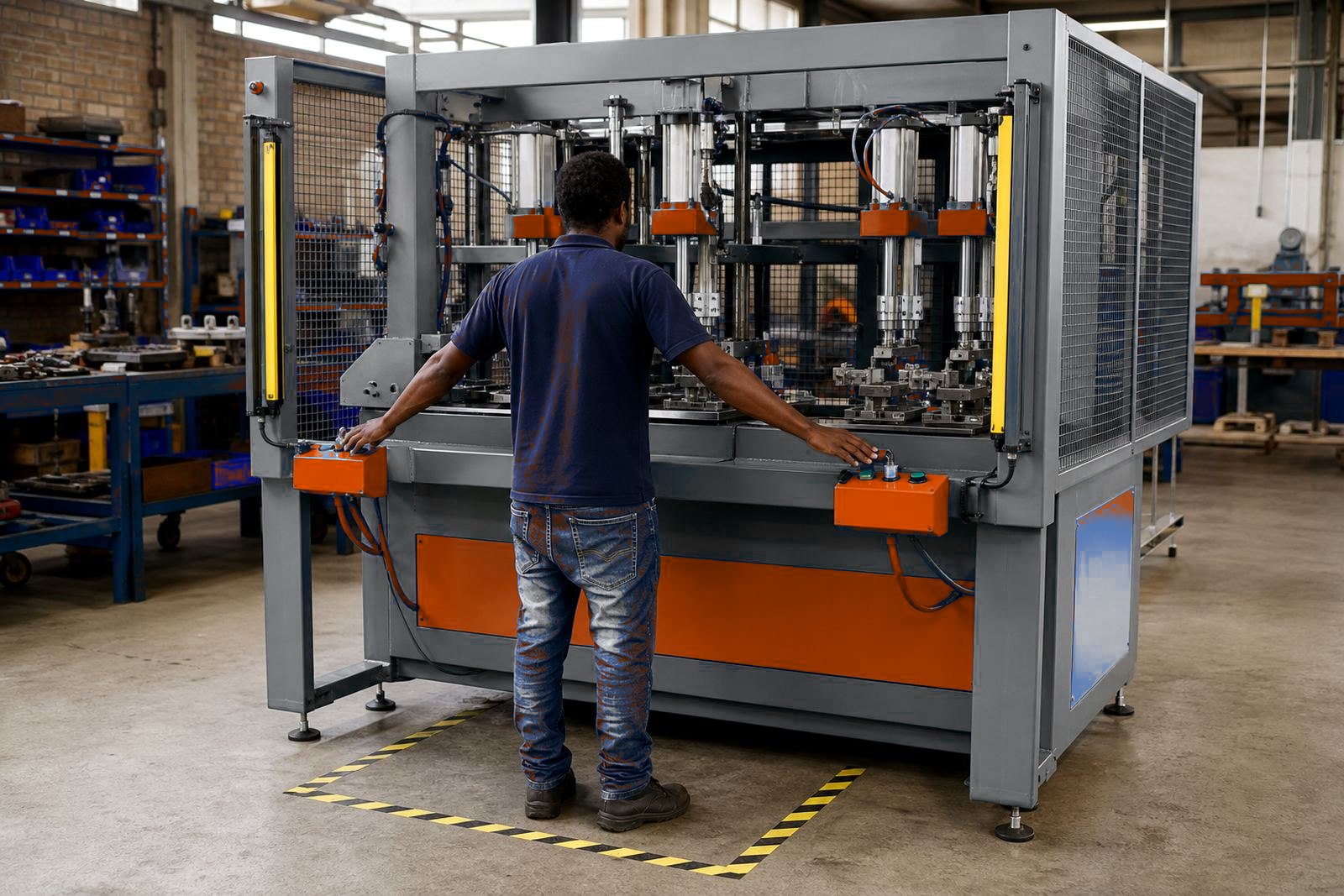
Fixture design starts with the part drawing, sample parts and the job sequence. We look at datum points, loading direction, operator reach and how the press head comes down. The fixture has to match the stroke length, cylinder size, air pressure range and any two hand control or light curtain arrangement on the press.
Our workshop team develops the fixture around practical points: how the operator picks the part up, where the first contact happens, and what needs to be clamped before pressure is applied. If the part is soft, plated or easily marked, we factor that into pad material and contact pressure. When a line needs quick changeover, we build the fixture so the swap does not become a long job at the press.
- Part orientation and datum control
- Clamp points matched to part strength
- Stroke clearance and tool travel checked early
- Guarding and sensor positions considered with the layout
How the design process runs through our Isando workshop
We work from the first sample or drawing through to a tested fixture on the press. That includes design review, tooling concept, fabrication, fit-up, trial pressing and final adjustments. If the job needs guarding or light curtain integration, those details are coordinated with the fixture rather than added after the fact.
Pieter Sauls oversees the overall direction, while Musa Hartnick handles the tooling detail and Johan Ramokgopa leads workshop build quality. Lerato Moagi supports commissioning, so the fixture is checked in the same working context it will face in production. Thandiwe Matlala keeps the project steps lined up, and Anele Engelbrecht handles operator training once the fixture is installed.
- Review of parts, samples and pressing sequence
- Fixture concept and location strategy
- Build, set-up and trial on the press
- Operator handover with practical loading notes
Press details that shape the fixture spec
Fixture design changes with the press size and the job type. A light assembly fixture may only need simple nests and locators, while a riveting or crimping station often needs tighter guidance and stronger support. For pack sealing jobs, the fixture face must keep the pack flat and aligned without damaging the sealing area.
We specify fixtures around the real plant conditions, including compressed air supply, available stroke, clamp sequence and guarding envelope. Where a line uses multiple stations, each station can have its own fixture or shared tooling sections depending on part flow. That makes the press easier to load and easier to repeat through a shift.
- Station count from single press setups to multi-station lines
- Air-driven cylinder capacity matched to the workpiece
- Stroke setting and end position checked against the fixture stack-up
- Two hand controls and light curtains accommodated in the layout
Pricing that follows the part, not a stock formula
Fixture pricing depends on the component shape, number of stations, tooling complexity and whether guarding or sensors are part of the scope. A simple locating nest costs less to build than a fixture that needs precise clamping, hardened wear points and multiple change parts. We price from the job drawing and the production task for each fixture.
When we quote, the figures usually reflect design time, material choice, machining, assembly, fitting and commissioning support. If the fixture must integrate into an existing press line, that can change the detail and the build effort. For factories in Isando, Kempton Park, Boksburg and the wider Johannesburg area, it often helps to see the part and the press together before finalising the scope.
There is no useful shortcut here. A fixture for crimping terminals in a compact housing is a different job from a nest for a larger riveted assembly, even if both sit under the same press frame.
Aftercare once the fixture is in production
Once the fixture is in place, we stay with the practical side of production handover. That means checking loading behaviour, confirming the part sits correctly after the first runs, and sorting out minor changes if the clamp position or stop point needs a tweak. Operator training is part of that handover, because a good fixture still needs the right loading habit.
If the line changes part variant, we can adjust nests, replace wear inserts or alter the tooling face where needed. We also support site visits for commissioning across South Africa, including Johannesburg, Pretoria, Durban, Gqeberha and East London. Coastal sites sometimes need extra attention on corrosion-prone surfaces and stored tooling, especially where humidity is high.
- Loading checks and fit review during handover
- Adjustment of nests, stops and wear points
- Operator guidance for repeatable part placement
- Support for later tool changes and line updates
Key facts
| Fixture types | Nests, locators, clamps, support blocks and change parts |
|---|---|
| Compatible press work | Assembly, crimping, riveting, staking and pack sealing |
| Press features considered | Stroke, air pressure, cylinder size, two hand controls, light curtains |
| Build focus | Accurate part location, safe loading, repeatable cycle positioning |
| Service areas | Isando, Johannesburg, Pretoria, Durban, Gqeberha, East London, Kempton Park and Boksburg |
| Project support | Design, build, commissioning, operator training and production handover |