What press commissioning covers on the floor
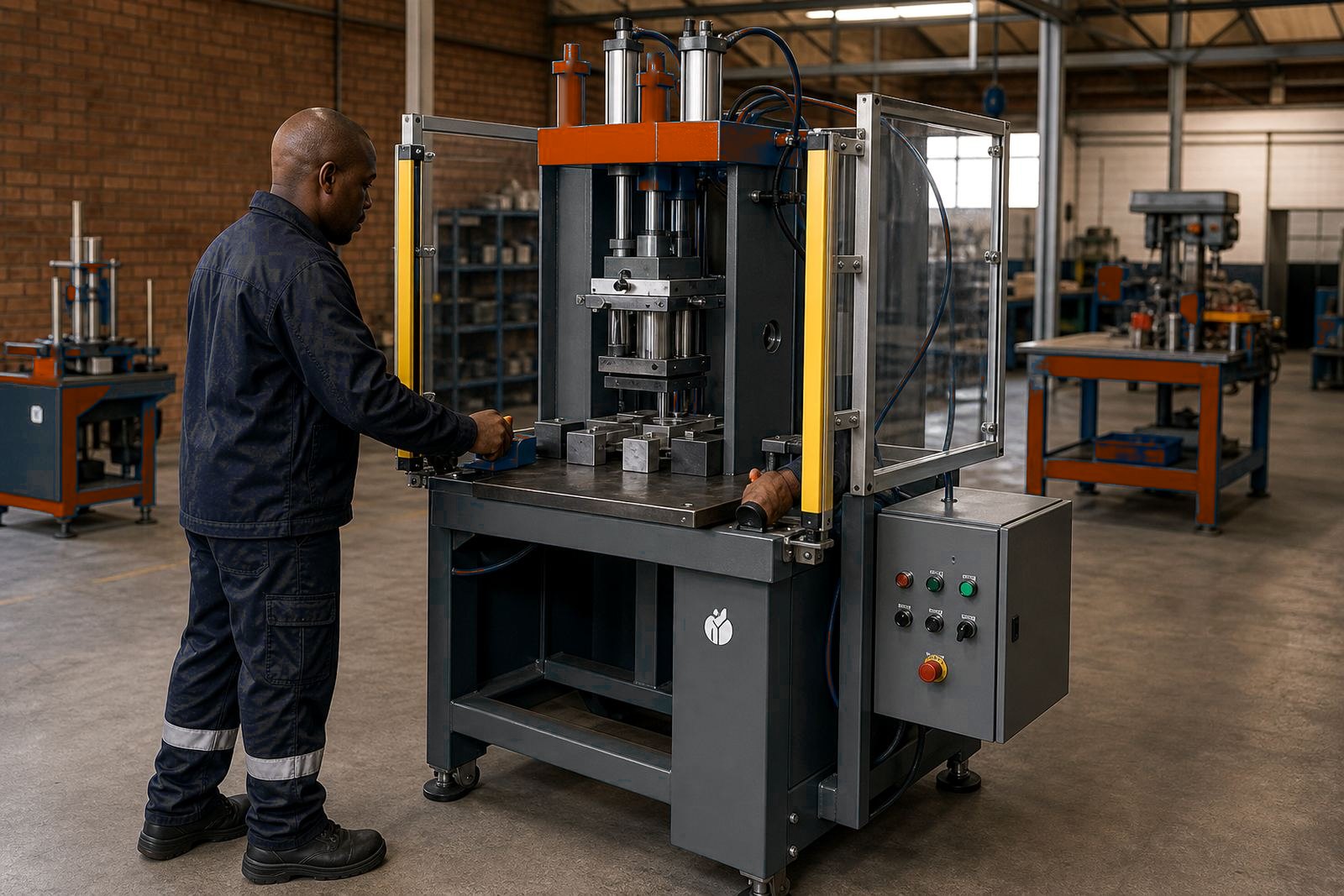
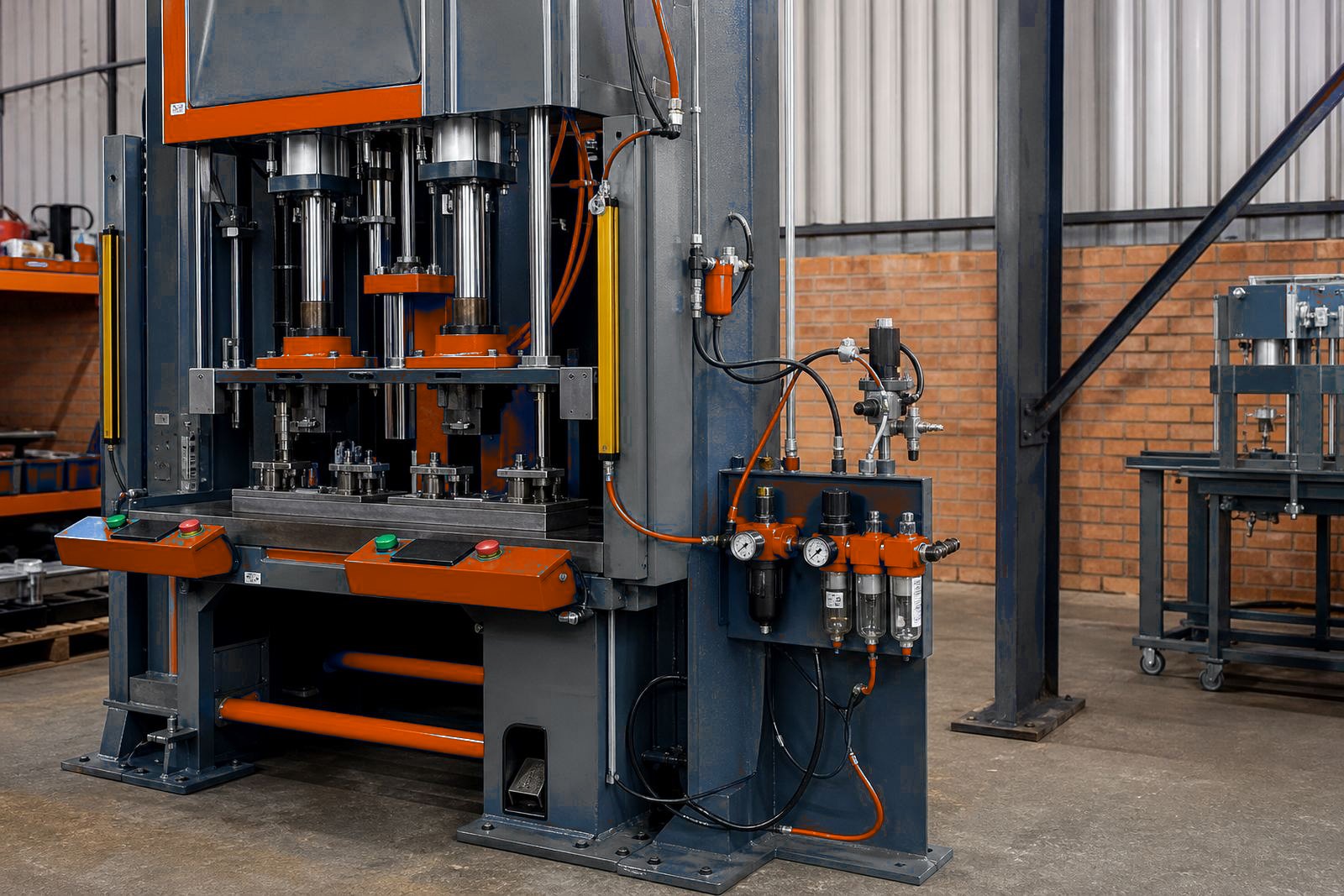
Commissioning is the stage where a press is checked as a working unit, not just as a machine on paper. We look at air supply, cylinder movement, stroke setting, tooling fit, guard positions and the control sequence before regular production starts.
On a multi-station pneumatic press, the work can involve several cylinders, a common frame, transfer tooling or separate nests at each station. We set the machine to suit the job, whether the line is for assembly, crimping, riveting, staking or pack sealing. In humid coastal conditions, and in busy inland factories, small air leaks or poor alignment can upset cycle quality very quickly.
- Start-up inspection of press, tooling and air line setup
- Stroke checks for each station and each tool position
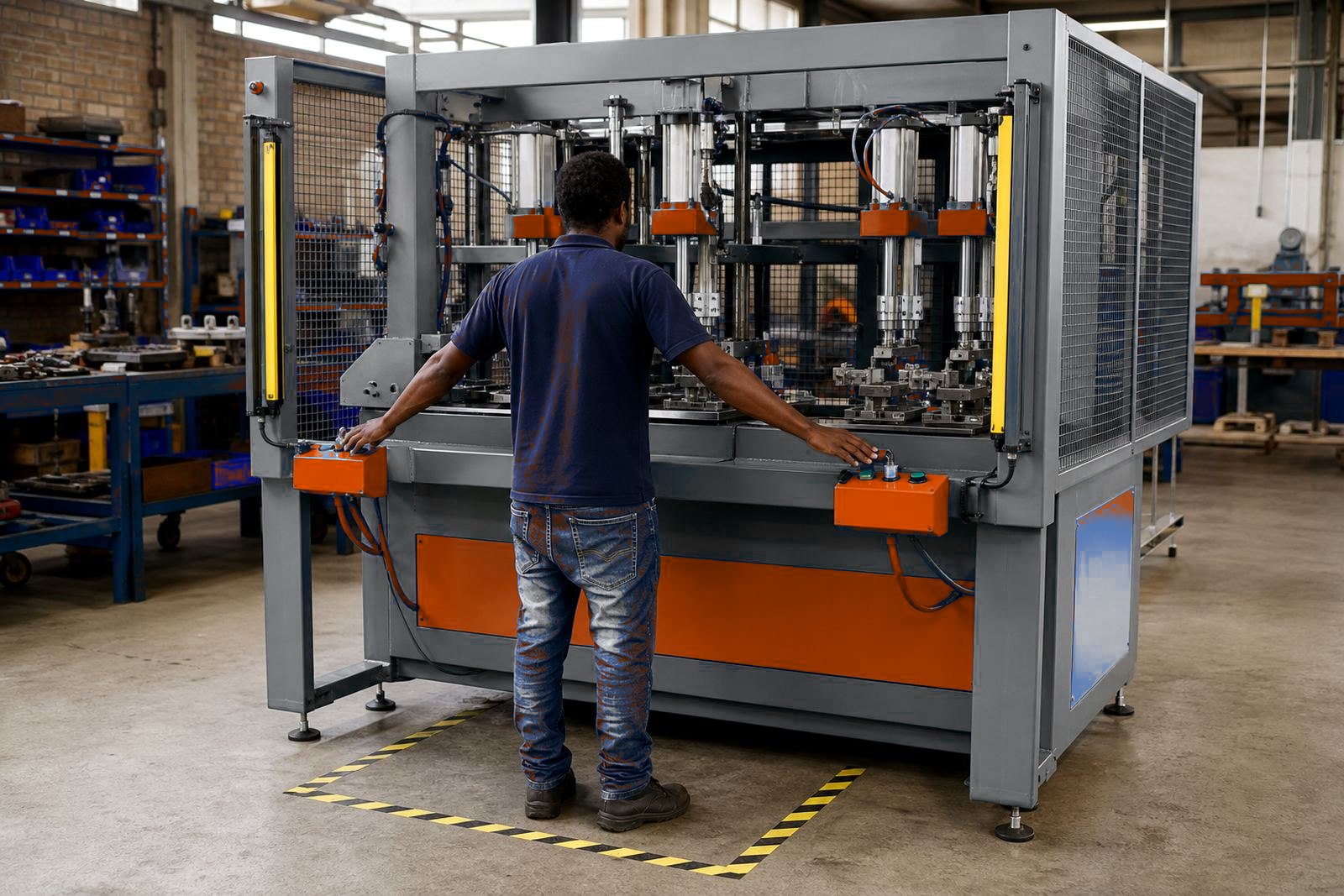
- Two-hand controls and light curtain checks where fitted
- Test cycles with sample parts and setting adjustments
How the commissioning sequence usually runs
We begin with the machine in its installed position and work through the basic settings in a fixed order. Air pressure, ram travel, tool location, guarding, sensors and operator controls are checked before the press is put through repeated test cycles. If the job needs a shorter stroke or a slower closing action, that is set at this stage, not after production has already started.
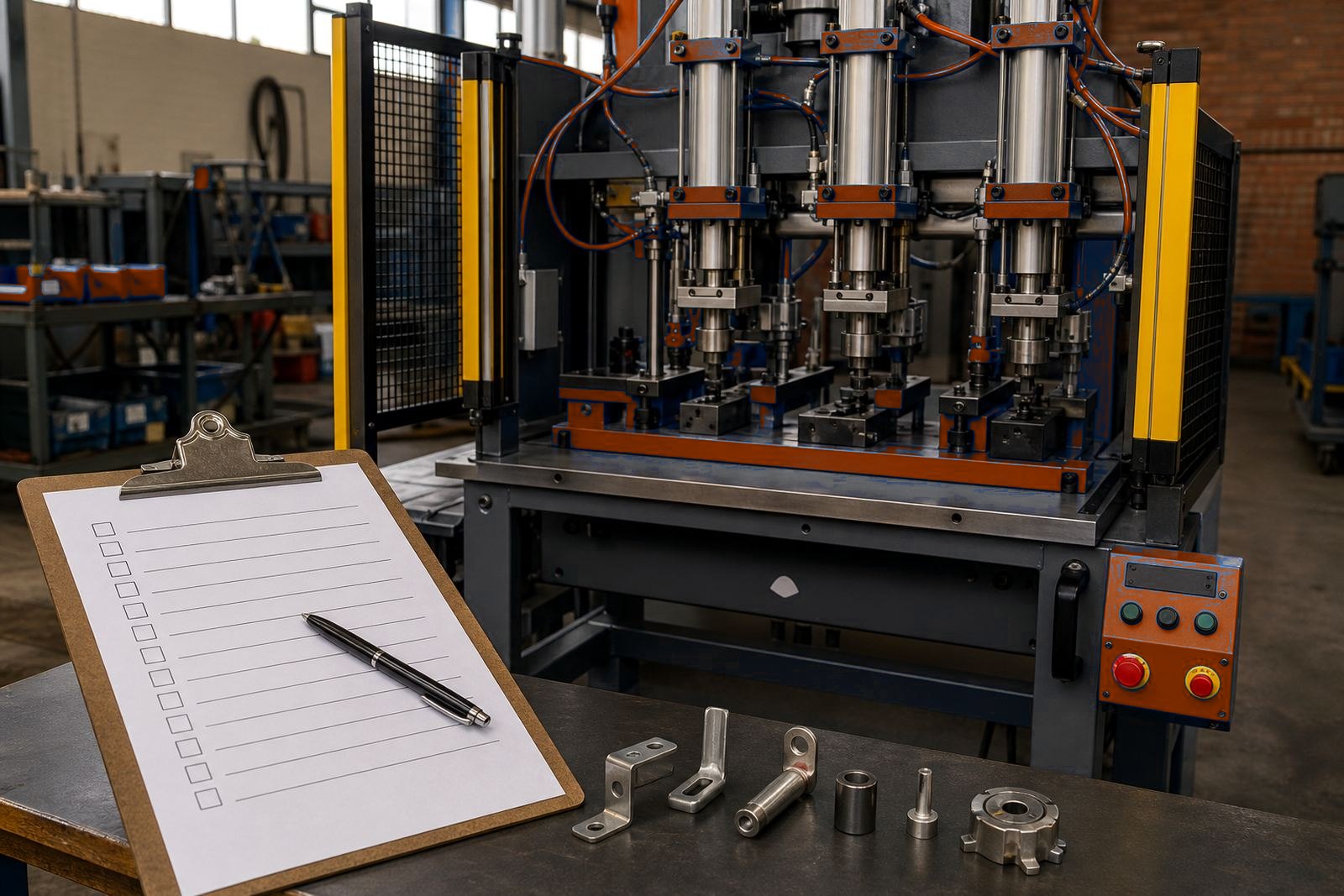
The process is hands-on and practical. Our team checks for misfeeds, uneven crimp depth, poor rivet set, light seal inconsistency or parts shifting between stations. Where needed, fixture design changes or tooling changes are made at the machine, so the job can run with less stop-start handling.
- Machine alignment and air pressure verification
- Stroke setting for the required cycle and part depth
- Guarding checks, including light curtain integration
- Operator familiarisation with the final running method
Press features we set and test
Multi-station pneumatic presses are often built with more than one working position, and each station may need a different force or tool contact point. We set each machine around the actual part, with the force, contact point and stroke needed at each station. That includes checking cylinder action, timing between stations, tool clearance and the point where the part is fully formed or sealed.
For assembly work, the press may be used to locate, fit or lock parts together. For crimping and riveting, the force must be steady and repeatable. For staking, the tool face and travel limit matter. For pack sealing, the platen, heat-free pressure contact and dwell setting have to suit the pack material. A press that is not tuned properly can damage parts or leave inconsistent output across the shift.
Safety checks before the first production run
Safety comes into the commissioning sequence from the beginning. We work with two-hand controls where they are part of the machine design, and we check that the operator can only start the cycle when the system is in the correct state. Light curtains, guards and access points are checked for position and function, with the press set so the operator can load and unload parts without working around unsafe movement.
Where a line includes changing tooling, we also check the changeover method so the new set is seated properly before the press is used again. That matters on plants in Johannesburg, Pretoria, Durban, Gqeberha and East London, where one machine may be asked to do different jobs on different shifts.
- Two-hand control verification
- Light curtain alignment and stop function checks
- Guard access and opening points checked against the cycle
- Tool seating and clamp points confirmed before running
Aftercare once the machine is handed over
Handover support is part of the service, because a press that has just been commissioned still needs the right handling on the floor. We go through operator training, part loading, simple fault spotting and the correct order for starting and stopping the machine. That includes what to watch for if the stroke changes, if air pressure drops or if the part starts to shift in the nest.
After commissioning, the same machine may need a small tooling change, a revised stop point or a tweak to the guarding layout. Our aftercare is focused on keeping the press usable in real production, with clear notes for the team that will run it day to day.
- Operator training on controls, loading and safe cycling
- Production handover notes for the final set-up
- Support for tooling changes and minor setting adjustments
- Guidance on part handling, cycle stability and access points
Turnaround and pricing on a commissioning job
Commissioning time depends on the machine size, the number of stations, the complexity of the tooling and whether guarding or air line setup still needs to be completed. A single press with a straightforward tool set is not the same as a line with multiple stations, custom fixtures and safety devices tied into the control sequence. Site conditions also matter, especially where the machine must be tied into existing production space.
Pricing is based on the scope of work, the level of setup needed and the amount of onsite testing required. We quote for the job as a working process, not as a one-line charge, because each press has its own mechanical and safety checks. If the project includes commissioning, operator training, production handover and tooling changes, the quoted scope reflects that full work package.
Key facts
| Machine type | Multi-station pneumatic presses |
|---|---|
| Station use | Assembly, crimping, riveting, staking and pack sealing |
| Control options | Two-hand controls and light curtain integration |
| Core settings | Air pressure, stroke setting, tooling position and cycle timing |
| Site work | Commissioning, guarding checks, air line setup and handover |
| Area covered | Isando, Johannesburg, Pretoria, Durban, Gqeberha and East London |