Where a light curtain fits into a press cell
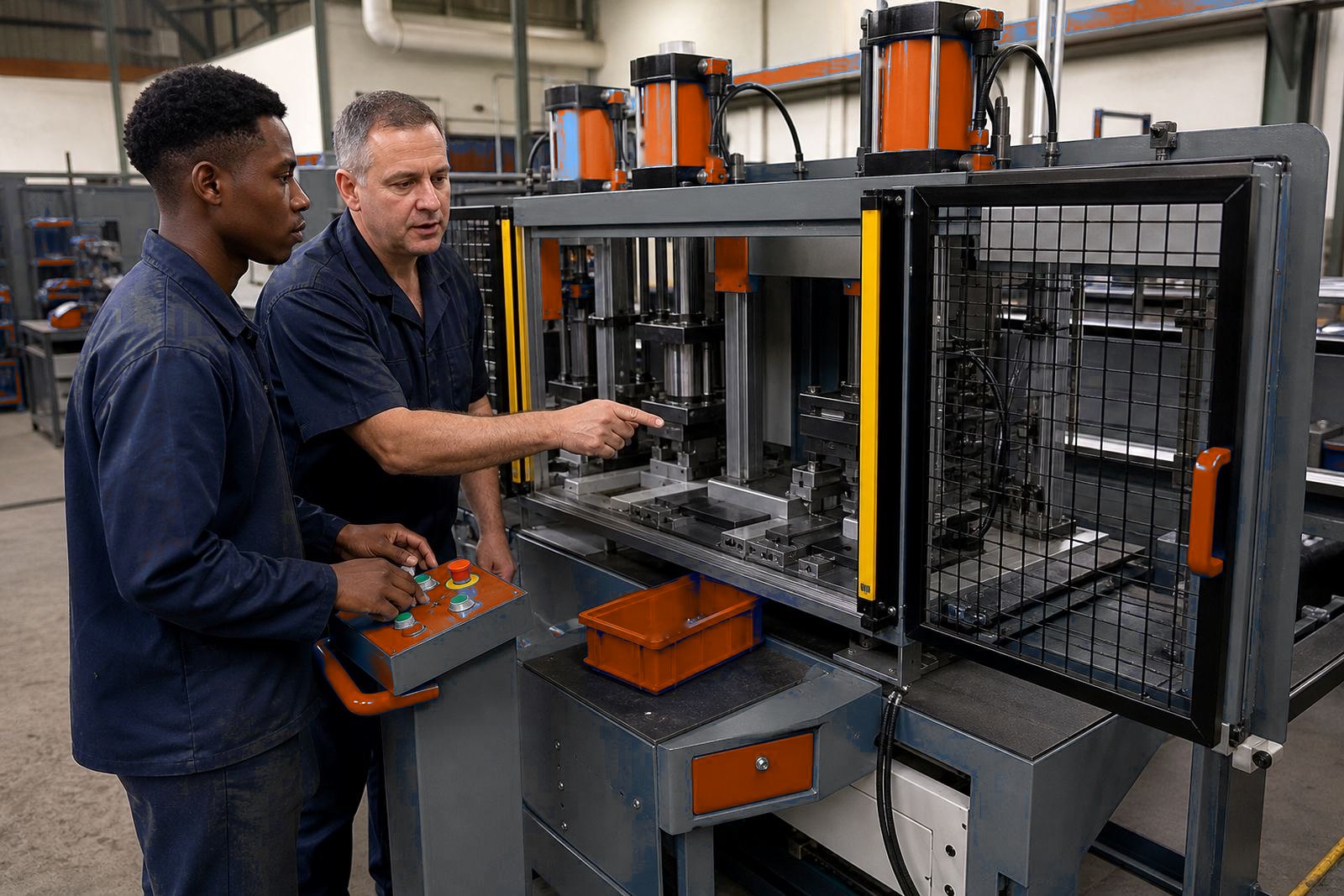
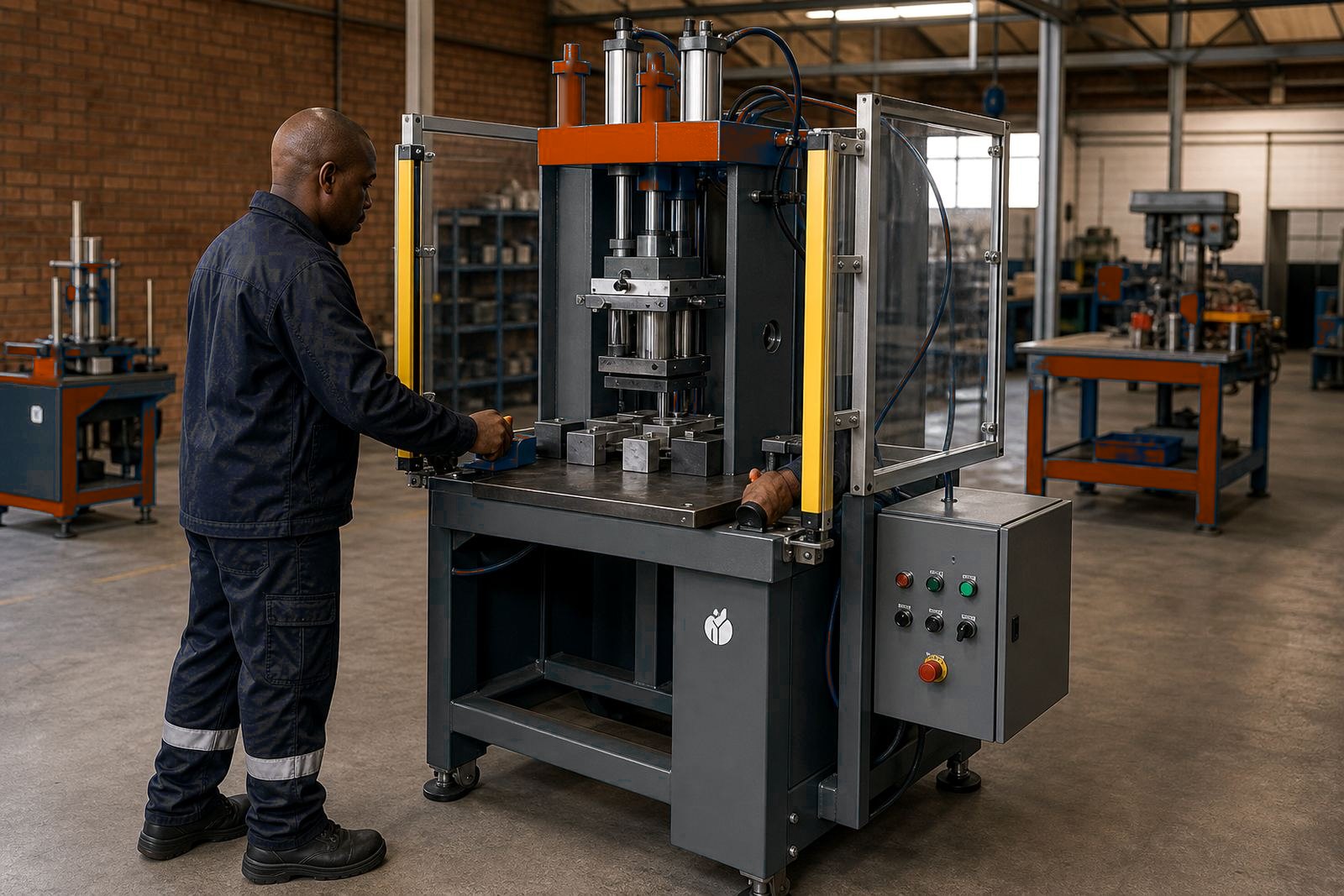
A light curtain is fitted across the access side of a press cell so the machine can run while the operator feeds parts, then stop the cycle when the beam field is broken. In a multi-station pneumatic press, that matters where loading is from the front and the tool path, clamp area or press face stays open during normal work.
We set the curtain position to suit the stroke, the platen height and the hand reach into the working area. That can mean a fixed beam frame at the front of the cell, side guarding where needed, and a safe stop logic that works with the air cylinder and control circuit.
- Front access where parts are loaded by hand
- Cycle interruption before the tool reaches the danger zone
- Suitable for single and multi-station press cells
- Works with two-hand controls and guarded access points
What we build into the integration
Every cell is different, so the integration starts with the press layout, the station count and the job cycle. A curtain may be matched to a press with one cylinder or several cylinders, with beam height, sensing range and reset logic chosen around the way the operator stands and loads.
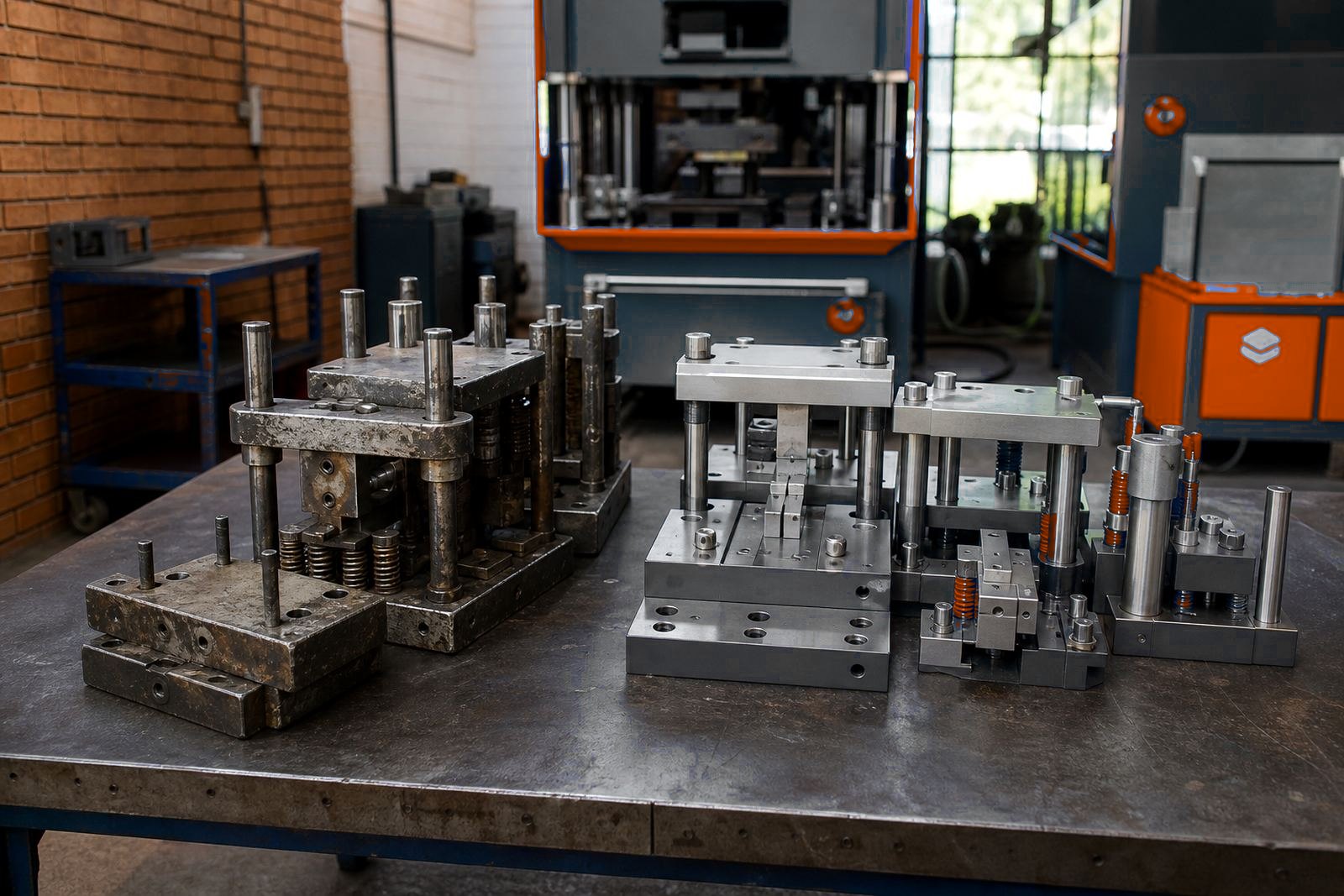
We can include interfacing for two-hand controls, emergency stop devices, fault indication and door or gate interlocks. Where the job needs frequent tool changes, we allow for quick access without leaving exposed pinch points around the tooling or fixture.
- Safety relay and control interface work
- Beam height matched to the access opening
- Reset and restart logic checked against the cycle
- Tool access kept practical for changeovers
From cell study to commissioning
We begin with the actual press cell, not a paper drawing alone. That means checking the stroke, operating pressure, press bed height, loading path, tooling position and the way parts move in and out of the station.
After that, the curtain, brackets, cable routing and control interface are planned around the machine and the floor space. We then install, test the stop function, verify the restart sequence and commission the system with the operator standing at the real working position.
Operator training covers the beam field, safe loading, reset steps, fault checks and the limits of the cell. Where a line runs on multiple stations, we also check that each point of access is covered in a practical way, not only on the drawing board.
Turnaround and pricing structure
The turnaround depends on the number of stations, the extent of guarding, the control changes and whether the job is a retrofit or part of a new press build. A compact single-cell install is very different from a production line with several access points, so the schedule is set around the actual scope.
Our pricing approach is built from the hardware selection, bracket work, wiring, commissioning time and any tooling or guarding changes needed to make the curtain work properly with the press. For factories in Johannesburg, Pretoria, Durban, Gqeberha and East London, travel and site work are included where relevant to the job scope.
- Retrofit or new-build integration can be quoted separately
- Control changes are priced with the cell layout in mind
- Guarding and curtain brackets are treated as part of the system
- Site work is scoped against the press line and access needs
Aftercare once the cell is running
After the system is in production, we stay focused on the beam alignment, bracket security, cable condition and the way operators interact with the reset and restart sequence. Small shifts from vibration, tool changeovers or floor movement can change how a curtain performs, so the cell is worth checking in real use.
When a line changes product or tooling, the curtain position, stop distance and access path may need a review. That is especially common on assembly lines, crimping jobs and pack sealing stations where the hand position changes from one product to the next.
Our support covers practical follow-up on the cell, plus changes to tooling, fixtures, stroke setting or guarding where the process shifts. The aim is a press cell that remains safe to load and still suits the pace of the factory floor.
Key facts
| Typical application | Front access press cells for assembly, crimping, riveting, staking and pack sealing |
|---|---|
| Press types | Single and multi-station pneumatic presses with one or more cylinders |
| Safety interface | Light curtain with stop, reset and restart logic |
| Control options | Two-hand controls, emergency stop devices and interlocks |
| Working details | Beam height, sensing range, stroke and access opening matched to the cell |
| Service area | Isando, Johannesburg, Pretoria, Durban, Gqeberha, East London, Kempton Park and Boksburg |