What the two-hand control station has to do
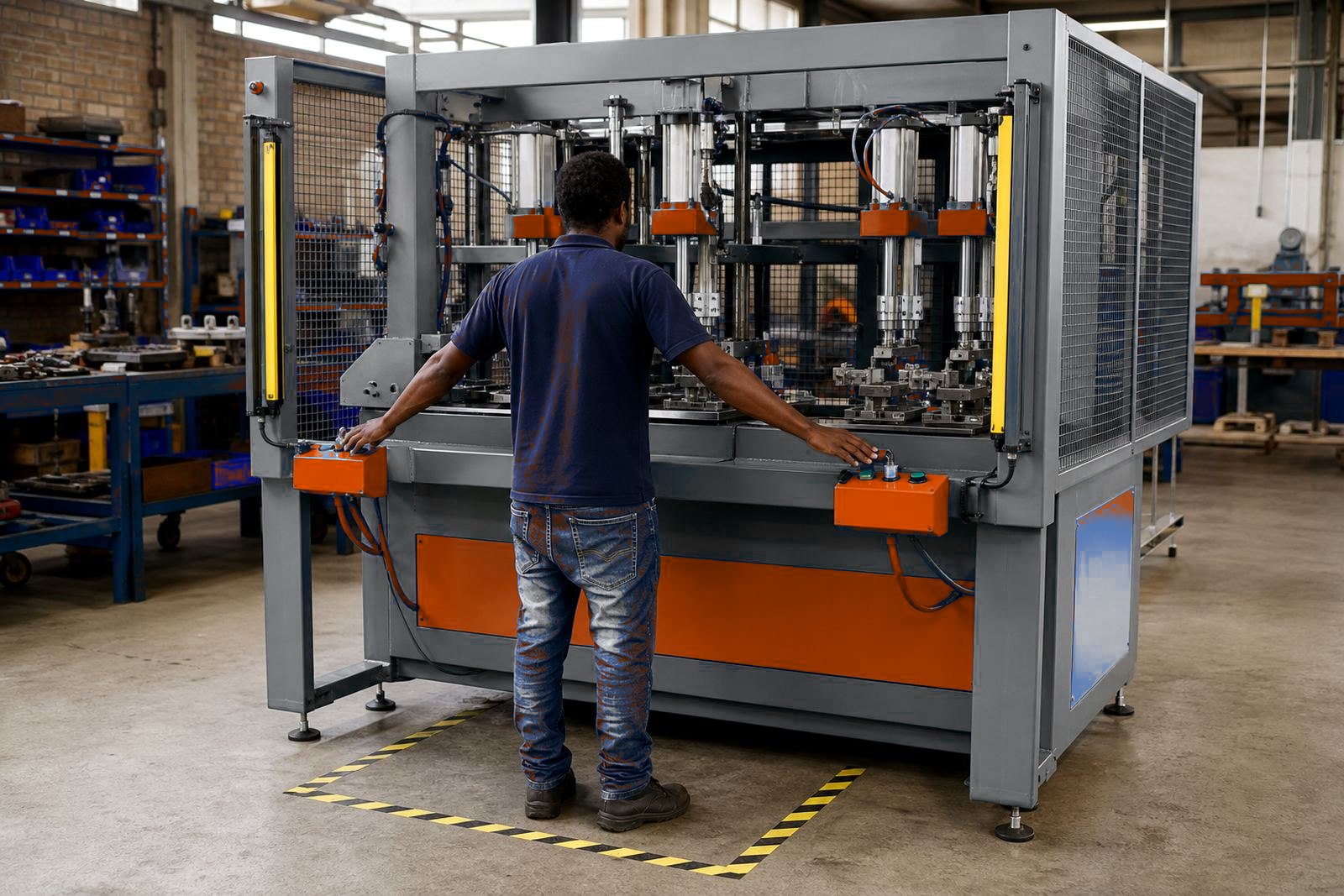
A two-hand control should stop casual cycling and keep the operator in a clear stance before every press stroke. On a pneumatic press that means the two palm buttons must be spaced correctly, wired or plumbed into the control logic, and matched to the ram travel, stroke length and guard position. If the press is being used for crimping, riveting, staking or pack sealing, the controls need to suit the way the part is loaded and removed, not just the machine frame.
We set up two-hand control systems for single-station and multi-station presses, including bench units and floor standing frames. The layout changes with part size, tool depth, air pressure and the time the operator needs to place the work. In some jobs the buttons sit close to the opening. In others they belong on a stand, a panel or a fixture rail so the operator keeps a sensible posture through the shift.
What is included in the setup
The work usually starts with the press, the tooling and the way the part enters the station. We then define the control sequence, add the two-hand devices, check the guard position and set the release so the ram cannot drop on a partial press of one button. Where a light curtain is part of the job, it needs to work with the two-hand control and the physical guarding, not fight it.
- Two palm button station set-up and placement
- Control logic for safe cycle start and cycle hold
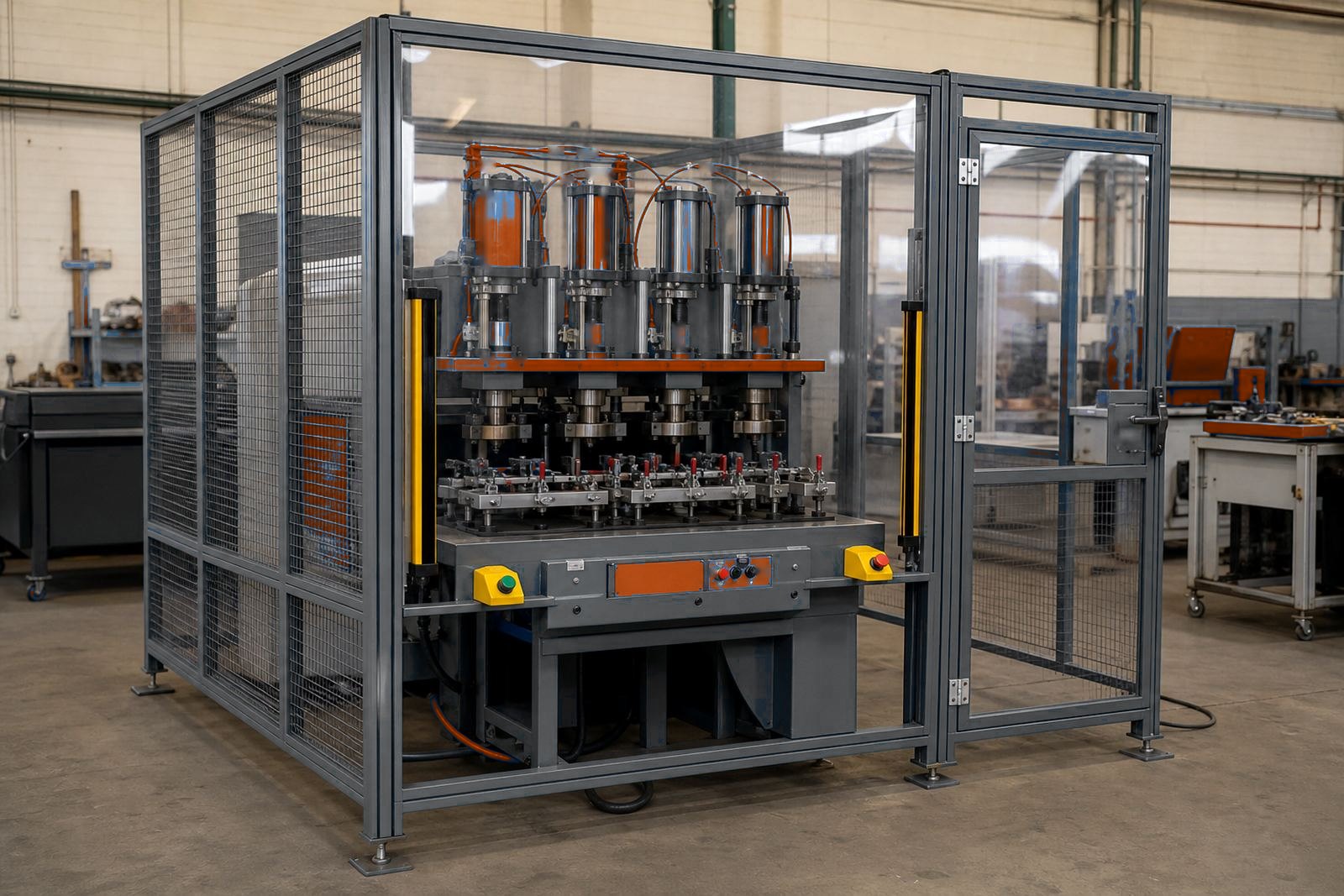
- Guard alignment around the working opening
- Light curtain integration where the job needs it
- Stroke setting and ram travel checks
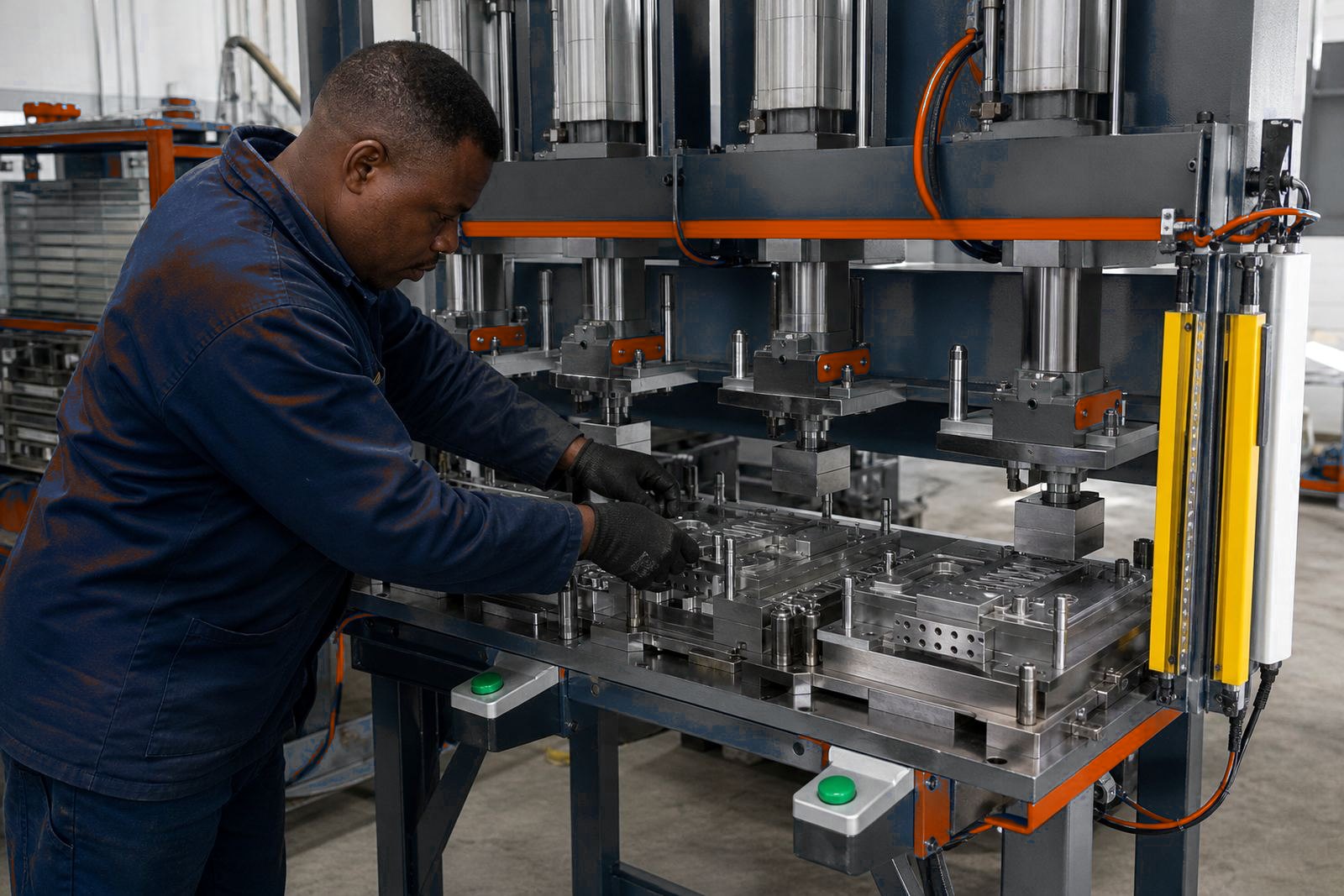
- Tooling checks for crimping, riveting, staking or sealing
- Operator walk-through and production handover
We also look at air supply quality, cylinder movement and the machine reset routine. If the press is being used on a high duty line, the controls must hold up to repeated cycles without forcing the operator into an awkward reach or a rushed load position.
How we approach a new press or retrofit
Some jobs begin on a new build. Others are retrofits on presses already in service. A retrofit needs careful checking because the air cylinder, valves, two-hand buttons, guards and tooling may all have been installed by different hands over time. We measure the working envelope, confirm the stroke and test how the press behaves at the intended line pressure before any final fixing.
Where the press is part of a multi-station line, we also check the handover from one station to the next. That matters on assembly work where the part moves from crimping to riveting, or from staking to a sealing station. The control routine must suit the pace of the line and the way the operator loads each part, otherwise the machine is safe on paper but clumsy on the floor.
- Inspection of frame, slide, cylinders and tooling space
- Review of line pressure and air line setup
- Placement of buttons, guards and any light curtain
- Testing of stroke, return and reset sequence
- Final tuning with the actual workpiece in place
Commissioning, training and production handover
Once the hardware is in place we commission the controls with the press running in its actual work cycle. That includes checking that both hands are required to start the stroke, that the ram stops where it should, and that the operator can load and remove the part without reaching into the danger area. We also confirm the guard openings, the two-hand timing and the release sequence after a cycle.
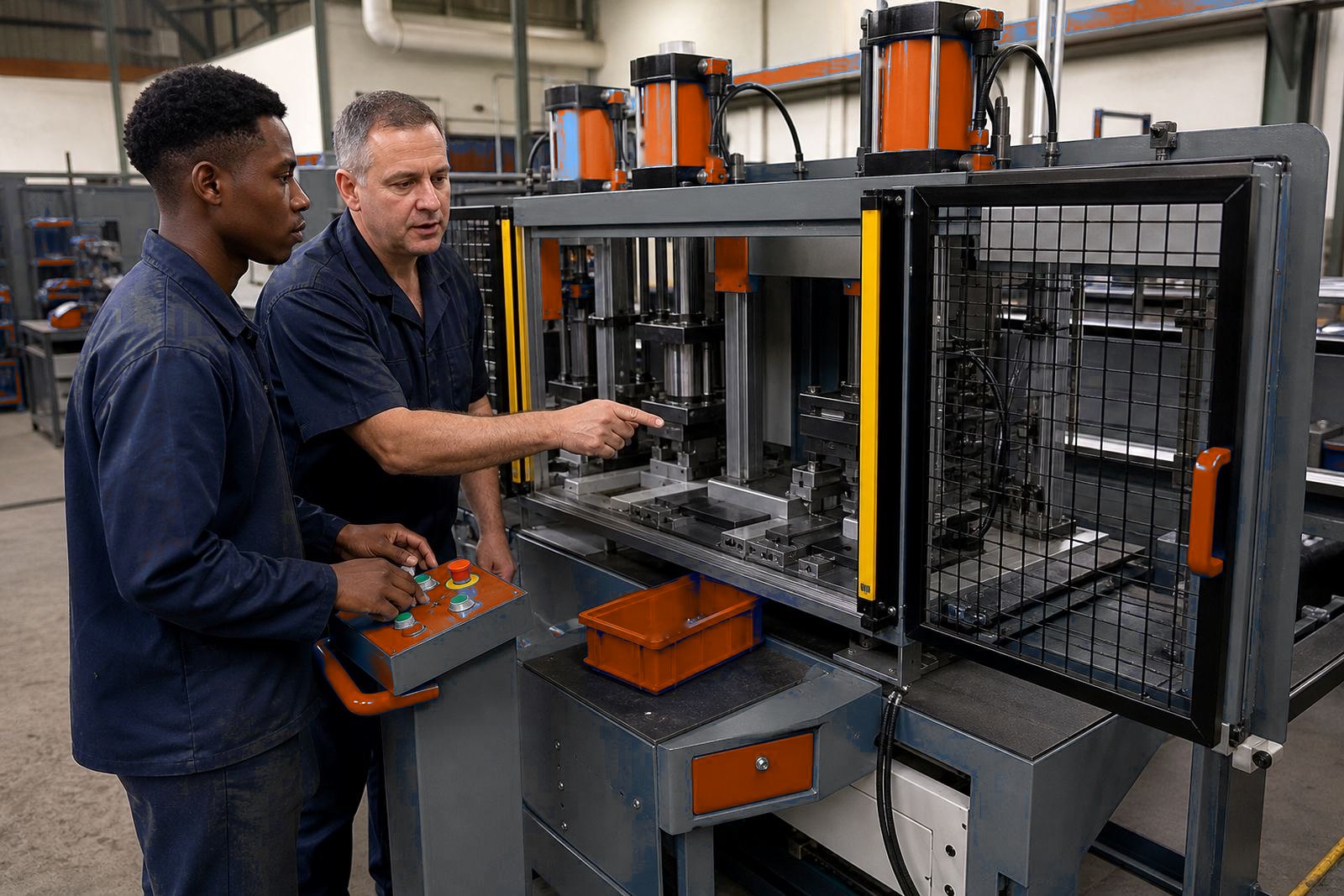
Operator training covers the routine on shift, what the signals mean, how to reset after a stoppage, and how to spot a button or guard issue before it interrupts the line. On some sites the training is short and practical. On others the team needs a more careful handover because the press sits inside a larger assembly process with several stations working in sequence.
Our commissioning work runs across Isando, Johannesburg, Pretoria, Durban, Gqeberha and East London, with project work for factories in Kempton Park and Boksburg as well. The detail changes from site to site, but the aim stays the same: a control setup that suits the job and the people operating it.
Pricing is shaped by the control job itself
Two-hand control pricing depends on the press size, the number of stations, the type of control hardware, the guarding around the opening and whether the job needs a full retrofit or a clean fit on a new machine. A simple single-station press with standard buttons is not priced the same as a multi-station line with light curtain integration, custom tooling and site commissioning.
We quote from the machine details, the workpiece, the stroke requirement and the plant layout. That lets us price the actual control work instead of padding for guesswork. If the job needs fixture changes, air line setup or a modified handover routine, those items sit in the scope so the factory knows what is being done and what the final station will include.
For larger projects, the programme may be split into design, build, installation and commissioning stages. That keeps the spending tied to the machine build and the production plan. It also helps when a line is being upgraded while the factory still needs to run the old process for a period.
Aftercare for the operating team
After handover, the practical questions are usually about setup checks, button placement and how the controls should behave after a tool change. We support those matters with follow-up adjustments, control checks and training refreshers where the process changes. If the press is later fitted with different tooling, a new fixture or a changed stroke, the two-hand routine may need to be reset to suit the new working gap.
On production floors in coastal towns, humidity and dust can affect air fittings, seals and button reliability, so the hardware needs a sensible inspection habit. We keep the focus on the actual press station, not on paperwork for its own sake. The aim is a control set-up that stays comfortable for the operator and predictable for the supervisor watching the line.
Clients contact us through our enquiry form when they need a two-hand control arrangement for a new press or an older machine that now needs a safer way of working.
Key facts
| Press types | Single-station and multi-station pneumatic presses |
|---|---|
| Control method | Two palm buttons with cycle start interlock |
| Typical uses | Assembly, crimping, riveting, staking and pack sealing |
| Working components | Air cylinders, valves, stroke stops, guards and light curtains |
| Scope options | Custom tooling, site installation, commissioning and training |
| Coverage | Isando base with work across Johannesburg, Pretoria, Durban, Gqeberha and East London |