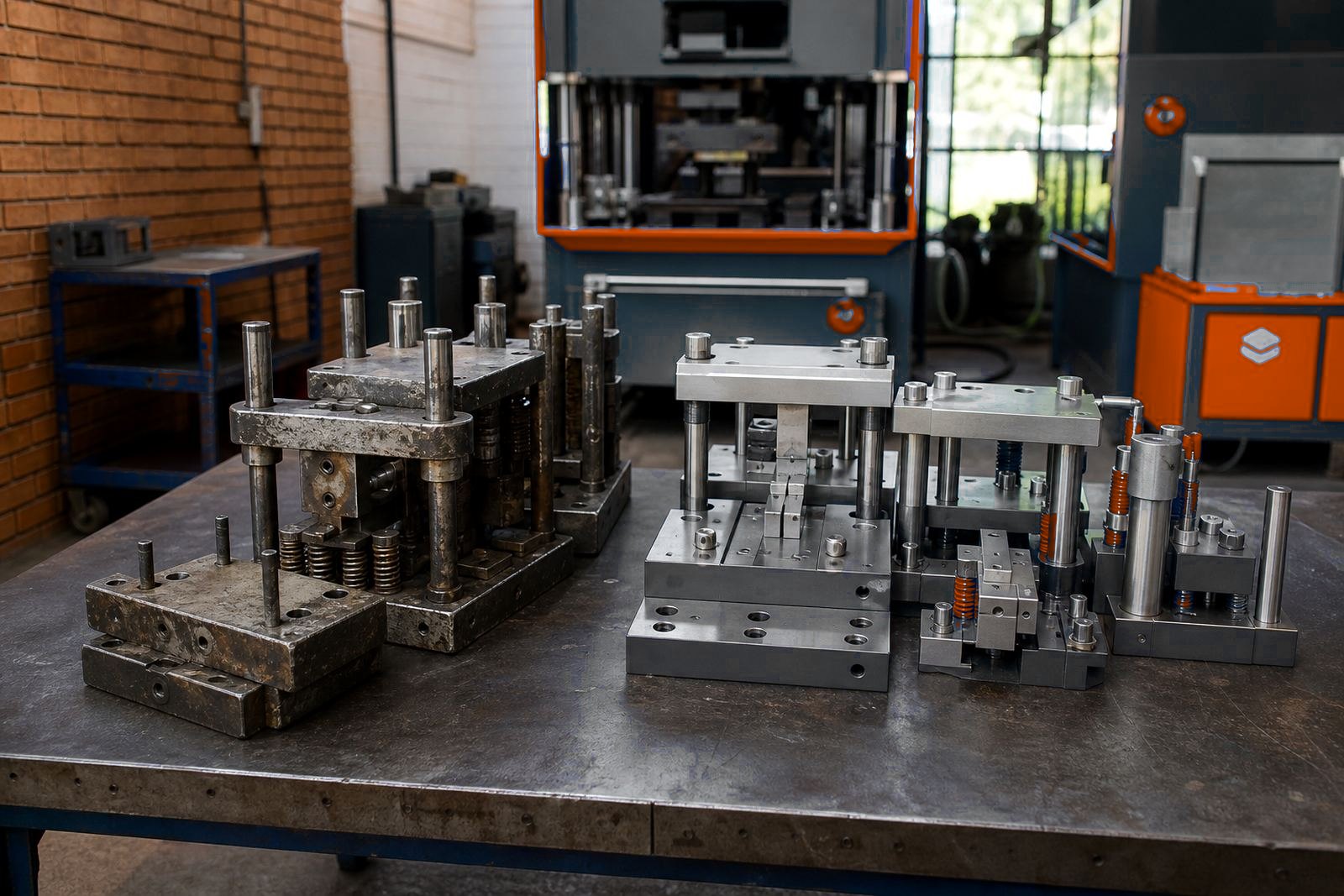
Our tooling is built around the part, not the part around the tooling.
Every tooling job starts with the component itself, its material, edge condition, hole pattern and the way it must sit under pressure. A punch, nest, locator set or forming head has to guide the part squarely into the working zone, then hold it there while the pneumatic cylinder completes the stroke. For assembly work, that may mean a clean insertion or a controlled press fit. For crimping, it may mean a fold that closes evenly around a terminal or sleeve. For riveting and staking, the tooling needs to manage force transfer so the finished joint is formed without deforming nearby features.
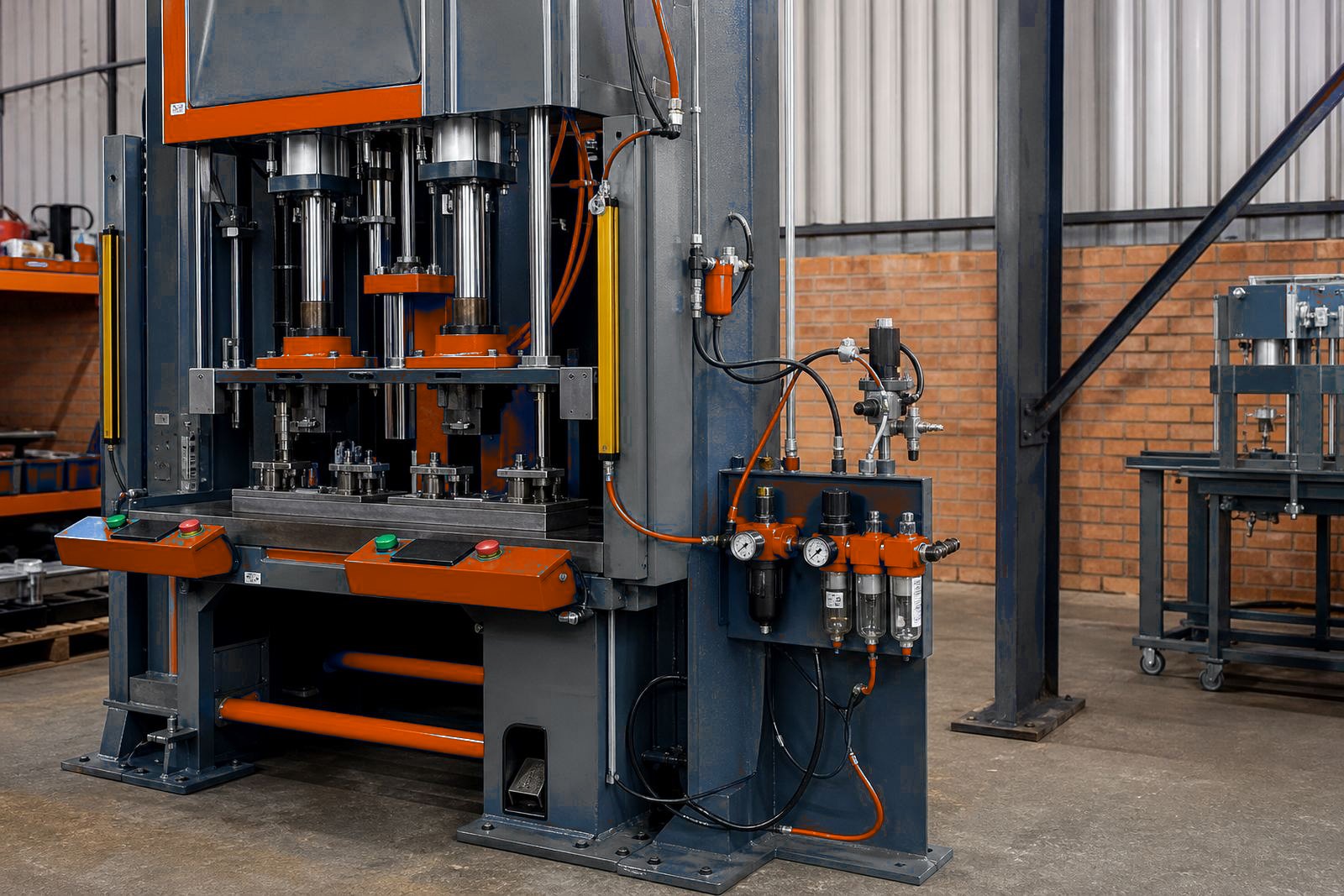
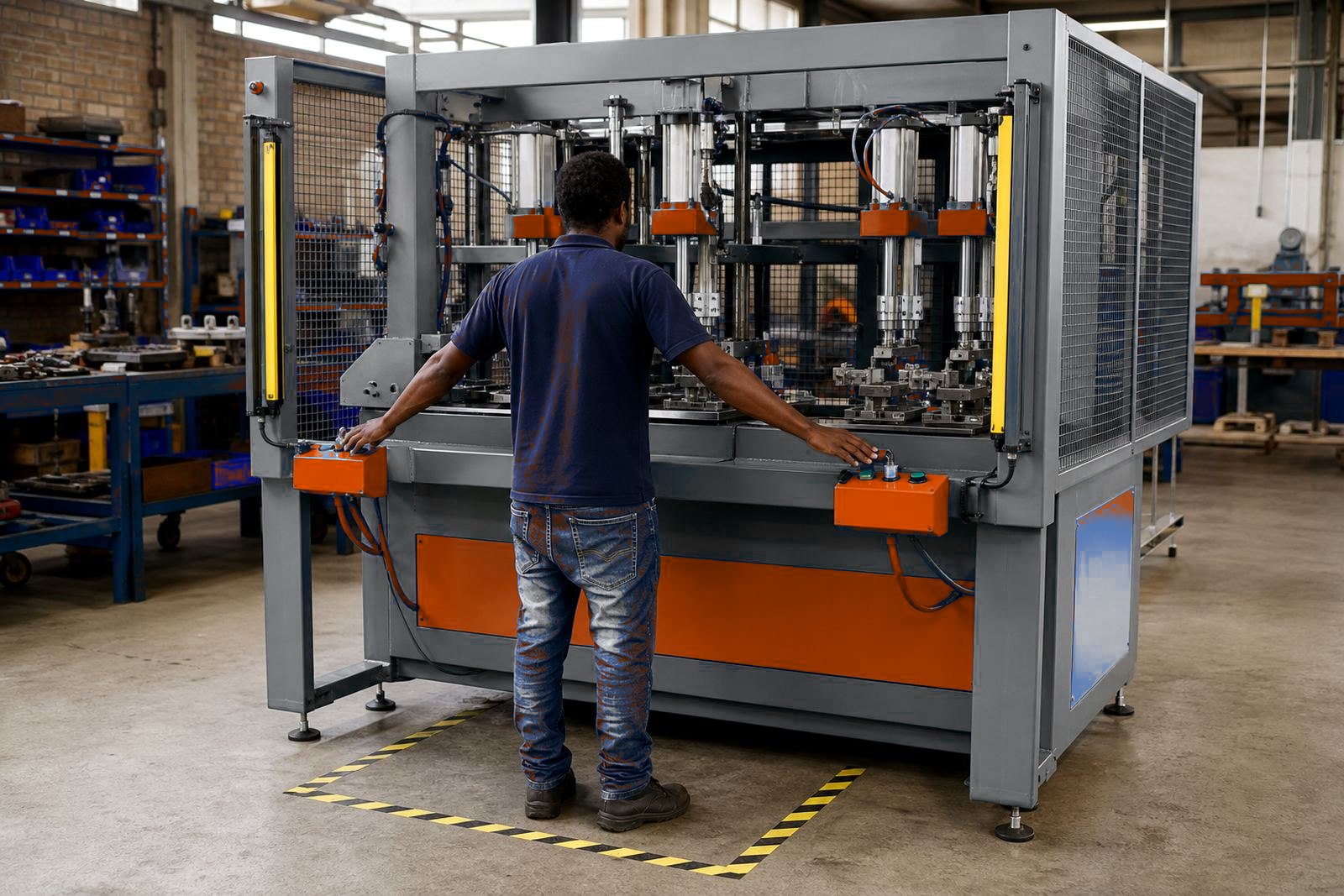
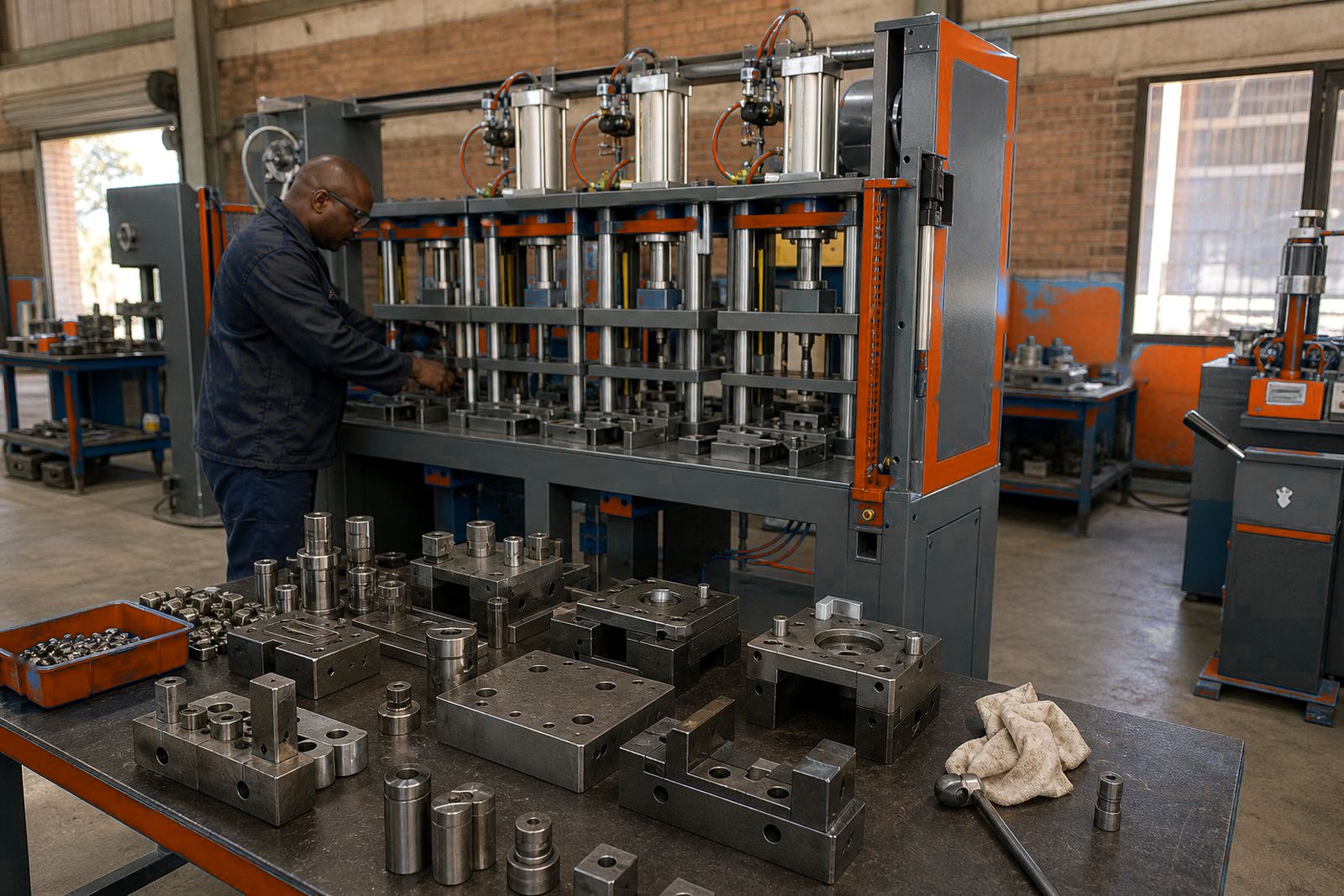
We build tooling for single stations and multi-station presses, including layouts where one operator loads at one point and the press carries out several operations in sequence. The tooling can be set up for repeat stroke depth, fixed stop positions, interchangeable nests and dedicated part orientation. Where a job needs it, the tooling can also work with two-hand controls and light curtains so the press only cycles when the operator is clear and the component is seated properly.
What is included in a tooling package
A complete tooling package can cover the working tool, locating features, guarding interfaces and the checks needed before production handover. The build may include hardened wear areas, adjustable stops, guide bushes, removable inserts and quick-change parts where the production schedule calls for more than one component. In pack sealing applications, the tool set may also control the seal face, compression height and dwell position so the pack closes evenly across the seal line.
- Tool design to suit the component geometry and force path
- Fixture details for part location, repeatability and operator loading
- Forming, crimping, riveting or staking inserts as needed
- Integration points for two-hand controls and light curtains
- Guarding clearances around the stroke area and pinch zones
- Tool change planning for mixed production runs
Tooling is matched to the press station count, cylinder size and available air pressure so the system works as a set. That matters when one station is used for pre-forming and another for final closure, or where a second station handles a different size part on the same frame.
The design and build sequence on our floor
We begin with part samples, drawings or a working sample from the line. From there, the tooling layout is mapped against the press footprint, cylinder stroke, operator reach and the point where the component must be held during the cycle. Once the concept is fixed, the tooling is detailed for manufacture, with attention to clamp position, guide alignment and the exact depth that the stroke must travel.
The workshop build includes fitting, trial runs and adjustment before the tooling leaves Isando. If the job needs site installation, the tooling is set into the press frame, connected to the air line and checked under production conditions. Stroke setting, sensor positions and guarding fit are verified on site, then the operator sequence is walked through in plain steps so the line team knows how the tooling behaves under load.
- Initial review of the part and required operation
- Tool concept and station layout
- Workshop manufacture and fit-up
- Press trial, stroke setting and finish checks
- On-site commissioning where required
- Operator training and handover of the working set-up
Tooling for assembly, crimping, riveting, staking and sealing
Different jobs place different demands on the tool face. Assembly tooling needs steady alignment and enough guidance to prevent side loading. Crimping tooling must close the material evenly without tearing or crushing it. Riveting tooling has to support the rivet and the parent material while force is transferred through the joint. Staking tooling needs a controlled point of contact so the formed head or boss stays consistent from part to part. Pack sealing tooling works to a defined compression and dwell pattern so the seal is formed without distorting the pack body.
Air pressure, cylinder bore and stroke length all shape the result. A larger bore gives more force, while stroke setting controls how far the ram travels and where the forming happens in the cycle. Where the job is sensitive, we can set positive stops and fine adjustments so the tool works within the target window instead of relying on guesswork. That is useful on lines with mixed part thicknesses, coated surfaces or components that change slightly with temperature and storage.
Guarding is included in the tooling discussion from the start. If a hand could reach into the danger zone, the press needs proper protection through fixed guards, interlocked panels, light curtains or a two-hand control layout that matches the station design. The aim is to make the working area clear and the cycle deliberate, without slowing the line more than the job requires.
Pricing that follows the tooling complexity
Tooling pricing depends on the number of stations, the amount of machining, the material specification and the amount of fitting needed to reach the final result. A simple locating nest for one operation sits in a different bracket from a multi-station setup with changeable inserts, guarding interfaces and sensor points. If the job needs commissioning on site, that work is priced separately from the build so the scope stays clear from the start.
We keep the cost discussion practical. The right way to price custom tooling is to match it to the component, the cycle count and the production outcome. For some jobs, the main cost driver is precision machining. For others, it is the amount of development needed to get the press stroke, tooling and operator sequence aligned on the first stable run. Materials, wear parts and any later tool changes are discussed as separate line items when required.
Because many clients run production in stages, we can also quote for tooling only, tooling plus guarding, or a full package that includes air line setup, press commissioning and operator training. That makes it easier to plan the job around a capex cycle without mixing every item into one lump sum.
Aftercare once the press is in production
Once the tooling is in use, the focus shifts to fit, wear and repeatability. We look at how the part seats, how the formed feature behaves after repeated cycles and whether the guides, stops or inserts need adjustment. If a production team changes part thickness, material or cycle sequence, the tooling may need a revised stop setting or a different insert profile to keep the finish consistent.
Support can include tooling changes, replacement inserts, stroke checks and advice on handling parts that arrive with burrs, oil or surface variation. Where a line uses multiple stations, we also help with changeover so operators can move between jobs without damaging the nesting or altering the press setup by accident. That is especially useful where humidity, handling or storage conditions affect the component before it reaches the press.
For teams in Johannesburg, Pretoria, Durban, Gqeberha and East London, the same practical handover applies: a tool that can be cleaned, loaded and set without confusion is easier to run in a factory that already has enough moving parts. Our contact form is the place to send drawings, samples or a plain description of the job.
Key facts
| Press type | Multi-station pneumatic press tooling |
|---|---|
| Working operations | Assembly, crimping, riveting, staking, pack sealing |
| Control options | Two-hand controls, light curtain integration |
| Typical setup items | Locating nests, guides, inserts, stops, guarding interfaces |
| Service areas | Isando, Johannesburg, Pretoria, Durban, Gqeberha, East London, Kempton Park, Boksburg |
| Support included | Design, workshop build, site commissioning, operator training |