When a press frame stays, but the part moves on
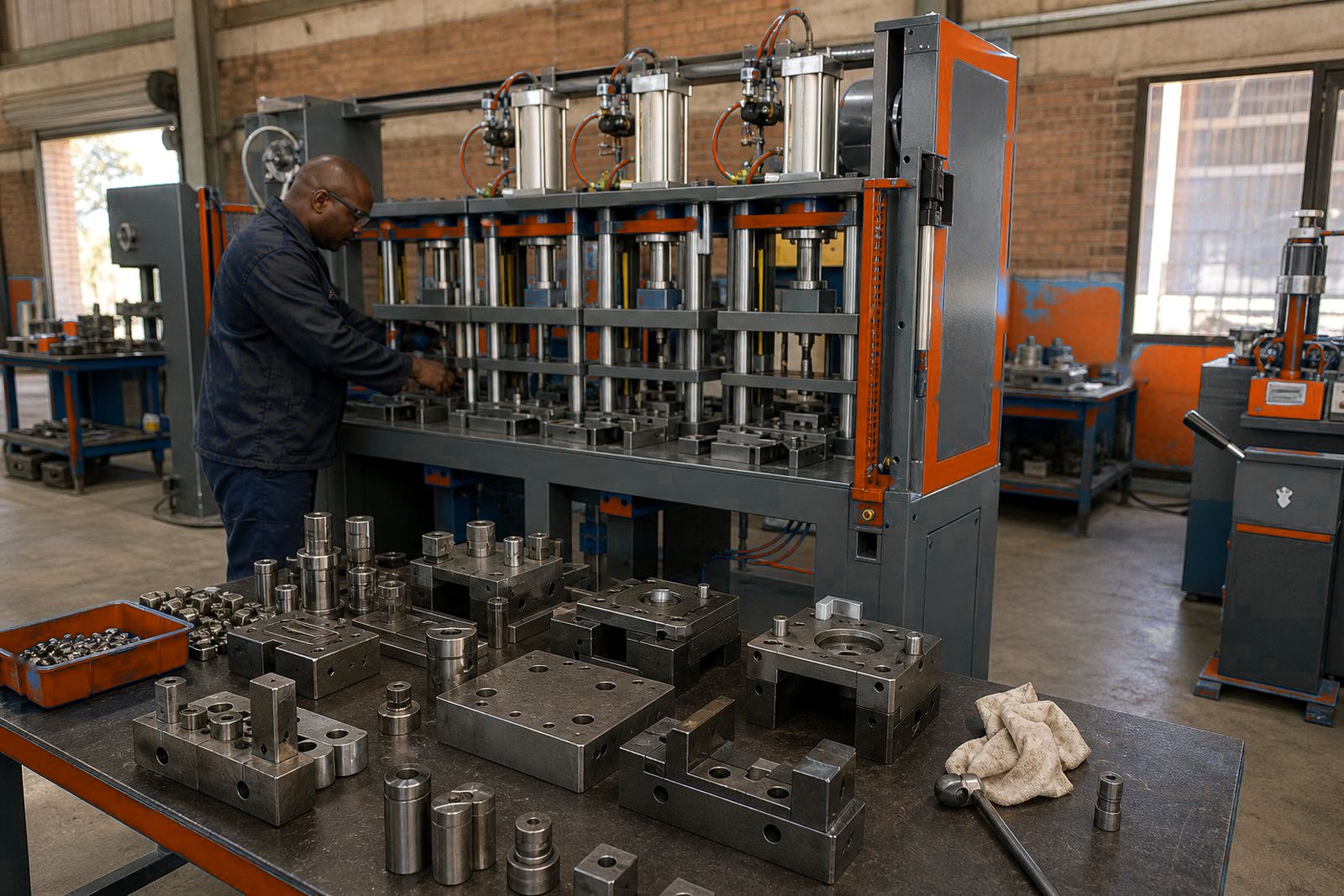
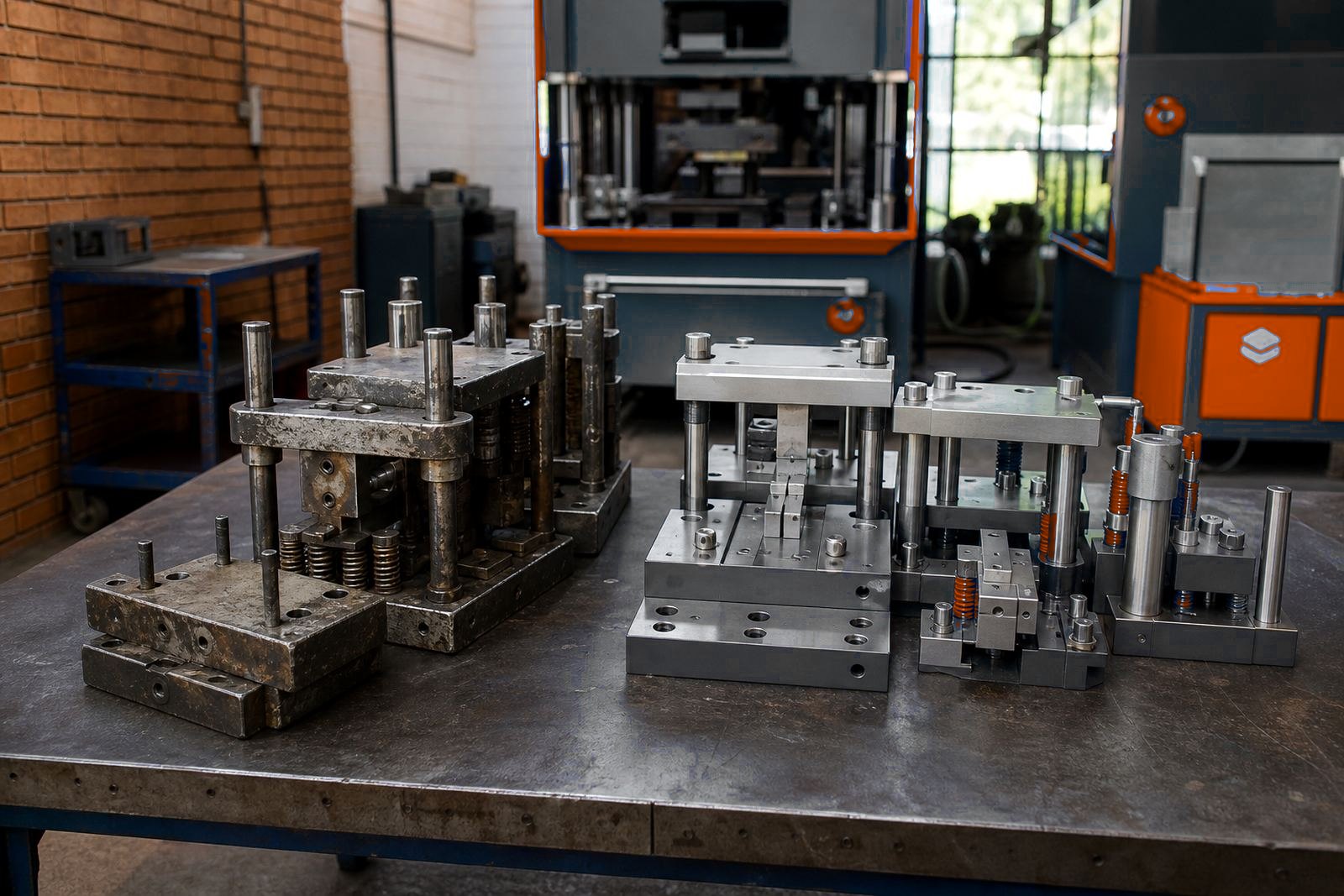
A tooling change is not a full rebuild. It is the practical work of adjusting the working face of a pneumatic press so the machine matches a revised component, a new variant, or a tighter assembly step. That can mean new nests, revised punches, a changed die profile, a different locating method, or a handover from one pack format to another. On multi-station presses, each station needs to meet the next one cleanly, so the change has to respect the cycle and not just the part drawing.
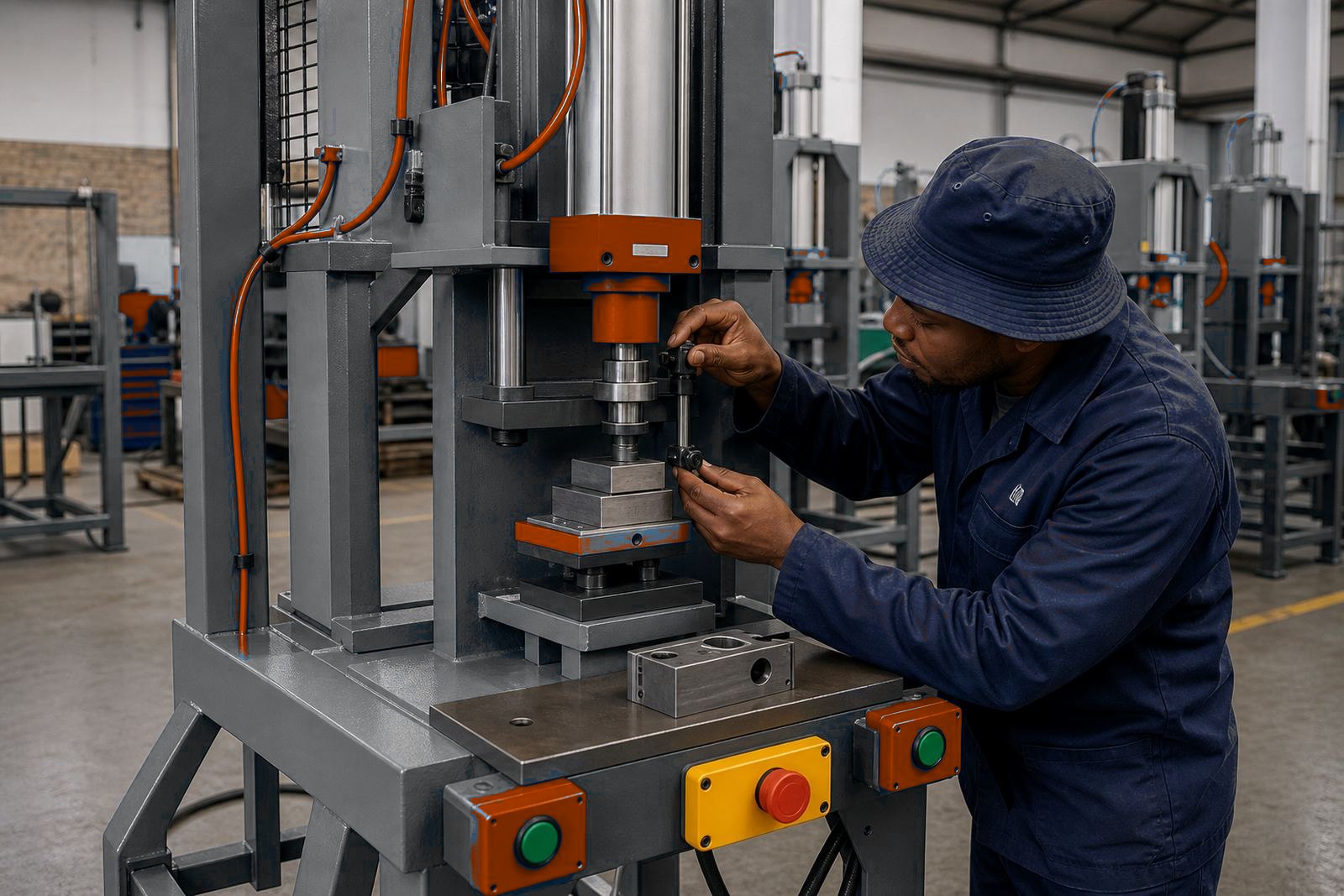
Our work covers single-cylinder and multi-cylinder press frames, hand-fed stations, operator loaded fixtures and semi-automatic lines. We deal with stroke setting, tooling height, part location, clamp position and the contact points that affect repeatability. If the job needs crimping one month and staking the next, the change has to protect the base frame, the guides and the safety set-up while giving the operator a clear working area.
- Revised tooling for altered part geometry
- New station inserts for variant production
- Fixture updates for location and repeatability
- Tooling swaps on existing press frames
What we look at before we alter a tool
Before any cutting or machining, we check the press frame, available stroke, cylinder capacity, working height and the way the part feeds into the station. Air pressure matters because a pneumatic press only performs well when the tool load sits inside the available force range. If the press runs at 6 bar or 7 bar in your plant, the tooling must still deliver clean action without overloading seals, fasteners or guide parts. We also look at the cycle, because a longer dwell or a faster stroke can change the seal, crimp or rivet outcome.
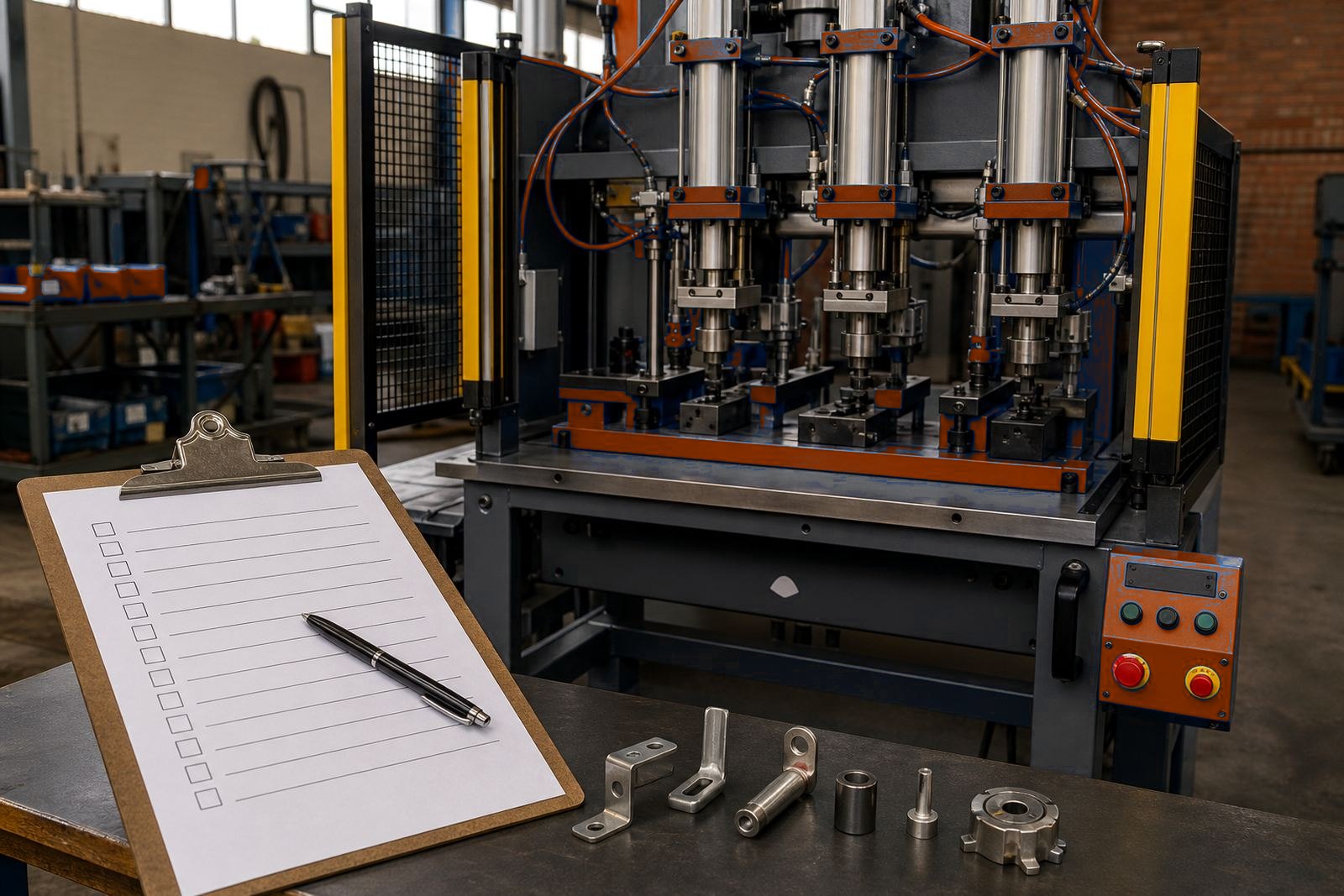
Tooling changes often reveal small issues that were hidden by the old part. A new liner can shift the grip point. A heavier blank can need better support. A revised cap or clip can require a new lead-in. We check guarding, two-hand controls and light curtain positions too, because a change at the tool face can alter the safe reach and access zone. The result has to suit the operator as well as the component.
- Press force matched to the new duty
- Stroke length checked against the part stack
- Tool clearances verified for safe access
- Guarding and sensing reviewed after the change
We carry out the tooling change in our workshop.
Where the press frame can be brought to Isando, the workshop route gives us better control over fit-up, testing and adjustment. Musa Hartnick handles tool design, while Johan Ramokgopa oversees the workshop side and the sequence of the work. We strip the affected tooling, inspect wear points, remake only the sections that need changing and keep usable parts in service where it makes sense. That approach helps when a line has several stations and only one station needs the revision.
Some tooling changes are straightforward, others need a deeper alteration. A crimp station may need a new punch face and a different stop. A riveting station may need altered support dies and a better locator. A pack sealing station may need a revised thermal or pressure contact interface, depending on the application. We machine, fit, trial and adjust until the parts seat properly and the press behaves the same way from one cycle to the next.
- Strip-down and inspection of the affected station
- Tool remake, insert change or fixture modification
- Trial fit on the press frame
- Cycle checking and final adjustment
Site changes on live South African lines
Not every press can leave the line. For factories in Johannesburg, Pretoria, Durban, Gqeberha and East London, we can carry out tooling changes on site when the frame, floor position or line layout makes that the better route. That is common on production lines that sit between conveyors, feeders or adjacent stations, where moving the machine would create more work than the change itself. In those cases, the hand tools, measuring gear and spare inserts travel to the line and the adjustment happens at the station.
On site work includes isolating the press, checking the air line setup, confirming the stroke stop and proving the controls after the tool has been altered. If the press is part of a guarded station with two-hand controls or a light curtain, we test that the operator can still load and unload without reaching into the working zone. The aim is to leave the press ready for real production, not just ready for a test part.
- On-site adjustment for fixed production lines
- Air line and control checks after fitting
- Guarding, light curtain and two-hand review
- Station proofing with production parts
Turnaround and pricing without guesswork
Tooling changes vary in scope. A small locator change may need a short shop visit and a few new parts. A deeper variant change may call for remachining, new support plates and a longer trial. Turnaround is shaped by the size of the alteration, the condition of the existing tooling and whether the press stays in Isando or remains on site. We do not turn every change into a full rebuild, and we do not trim a serious job into a quick patch. The work follows the part and the machine.
Pricing is built from the actual labour, material and machining required. Where possible, we separate the change into clear items so you can see what belongs to tool modification, what belongs to fitting and what belongs to commissioning. That matters on multi-station presses, because one station may be unchanged while another needs a full remake. The quote approach stays tied to the hardware and the time on the press, not to a loose estimate pulled from thin air.
- Quoted to the actual tool work required
- Separate line items for remake and fitting
- Clear split between workshop and on-site work
- Suitable for single stations or full lines
Aftercare once the new part is running
Once the changed tooling is in production, we stay involved through production handover and the first operating checks. Anele Engelbrecht covers operator training where the method has changed, so the team knows how to load the part, read the cycle and spot a poor seat before it turns into scrap. If the tooling has a revised stop, a different clamp position or a changed eject action, the operator needs a clear routine for the new set-up.
We also leave practical notes on wear points, fasteners, alignment marks and the settings that matter most during the first production run. That helps when the line moves from trial parts to regular output. If a new variant is planned later, the existing change record gives the workshop a clean starting point. It saves time, avoids confusion and keeps the press frame useful for the next revision.
- Operator handover for the changed station
- Practical notes on settings and wear points
- Support for first production runs
- Records kept for future variant changes
Key facts
| Press types | Multi-station pneumatic presses |
|---|---|
| Typical work | Assembly, crimping, riveting, staking, pack sealing |
| Working force | Matched to available air pressure and cylinder size |
| Motion control | Stroke setting, stop adjustment and dwell control |
| Safety options | Two-hand controls, light curtains and guarded access |
| Coverage | Isando workshop plus site work across South Africa |